
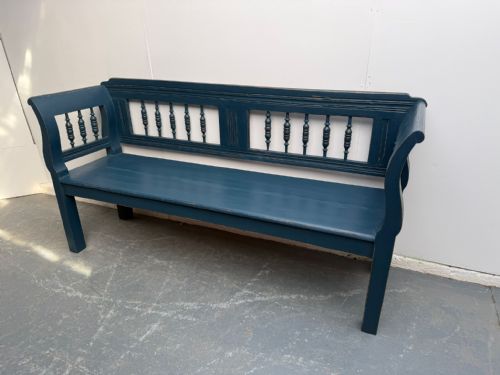

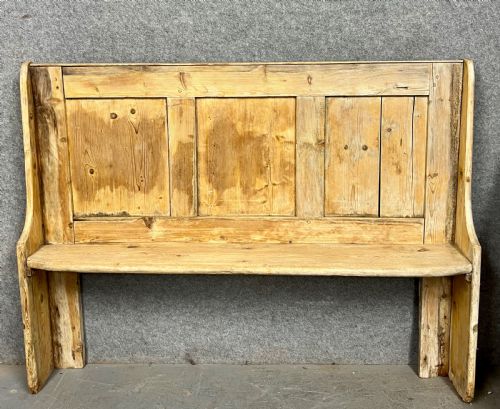

Traditional Church Pew Bench
A traditional church pew bench brings ecclesiastical gravity and robust utility into a domestic interior.
Traditional Church Pew Bench
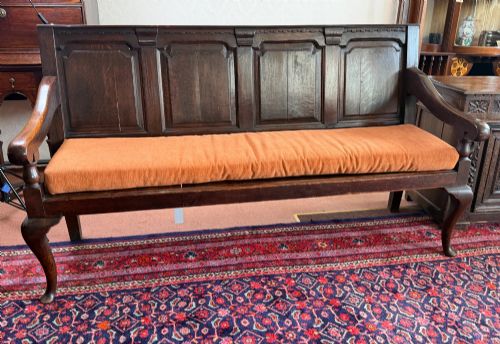
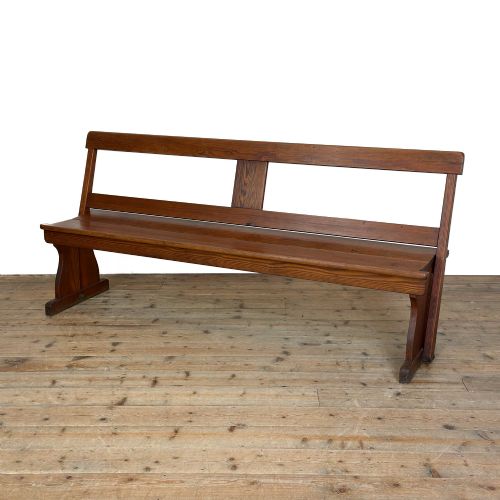
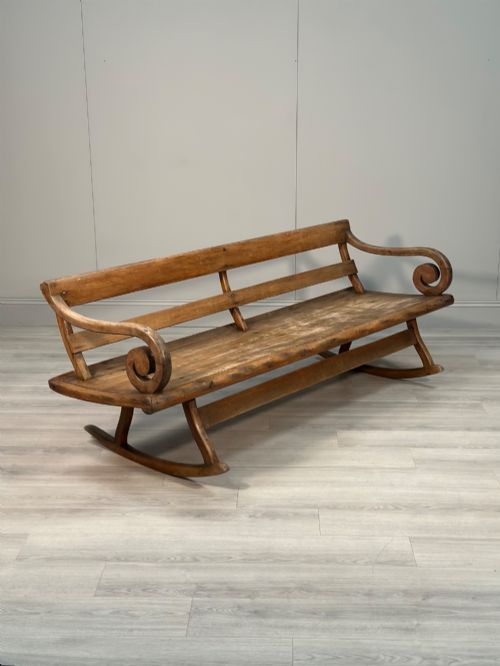
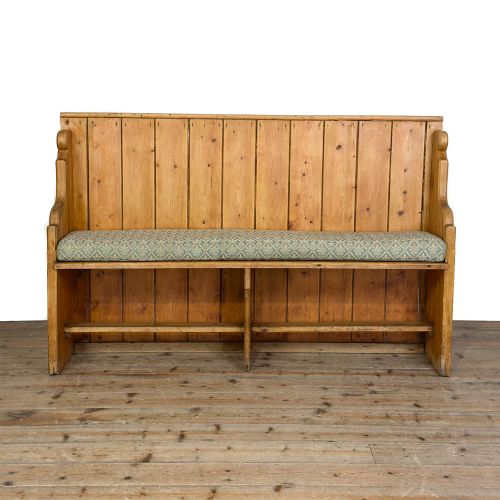
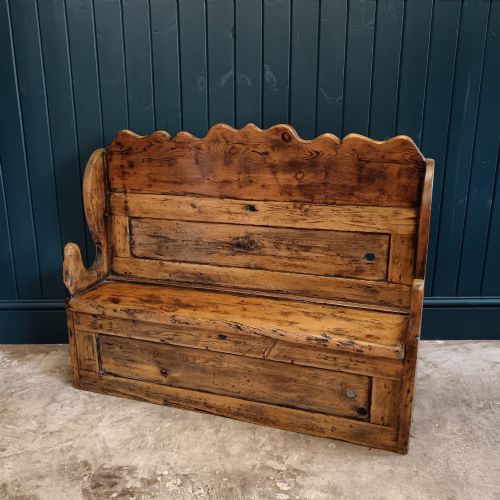
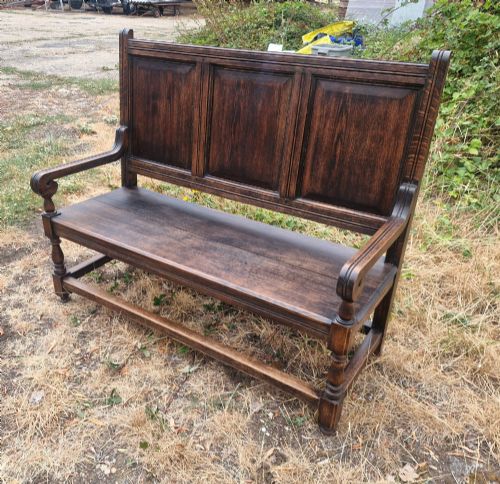
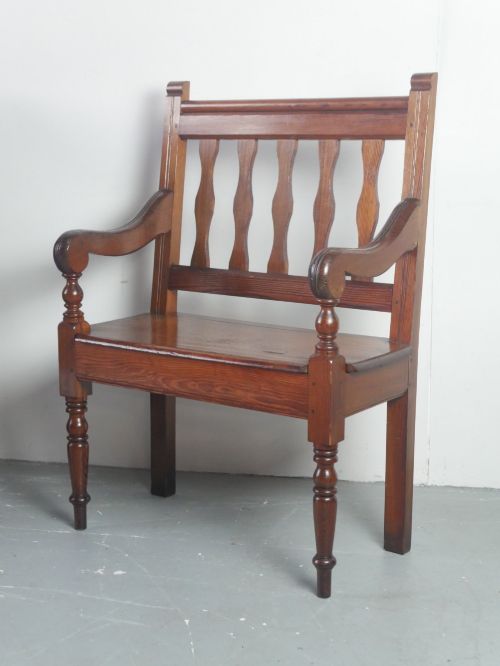
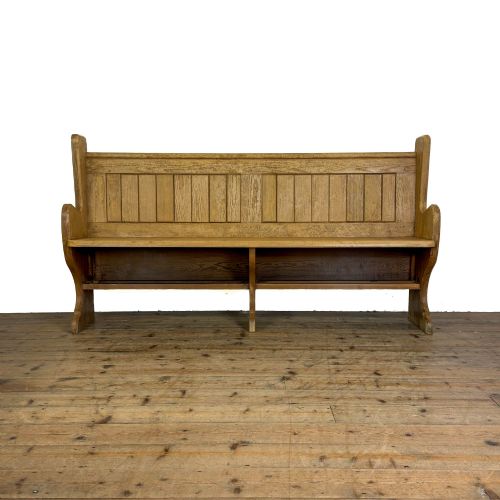
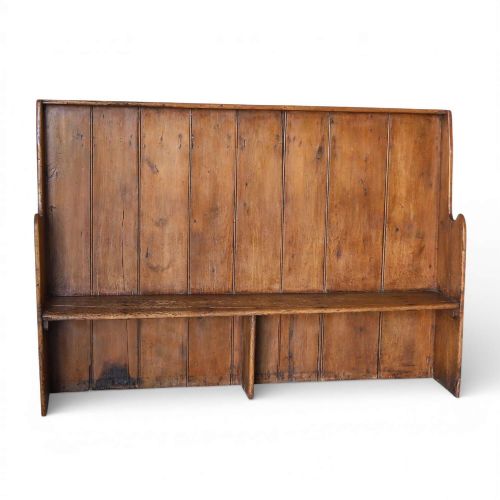
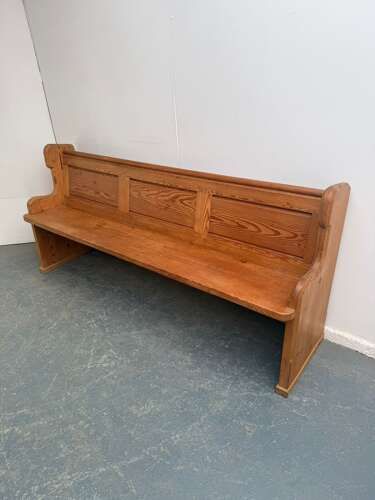
A traditional church pew bench serves as a linear seating arrangement originating from ecclesiastical, chapel and domestic vernacular settings. These pieces encompass forms ranging from straightforward open pews to enclosed settles with high backs and storage compartments.
Most examples encountered on this page date from the nineteenth century, including Victorian periods, alongside earlier eighteenth-century iterations and Edwardian variations. They function effectively in hallways, kitchens and dining spaces where substantial seating is required.
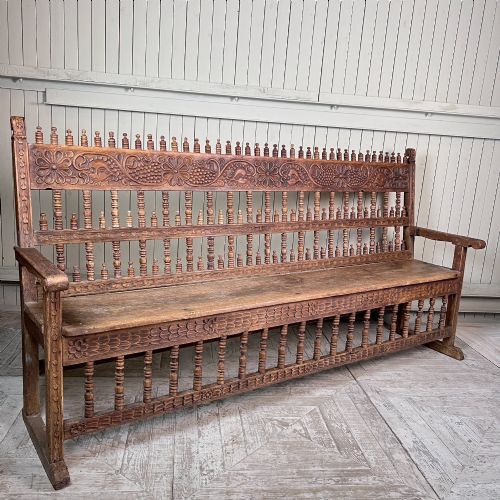
The selection includes regional interpretations such as English country pieces, Welsh settles, Spanish colonial hardwood benches and European painted examples. Buyers select them for their historical character and architectural presence.
Materials and construction methods
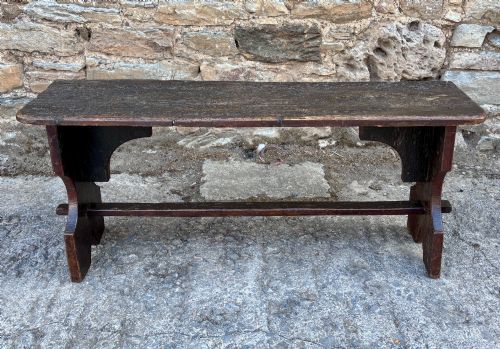
Makers relied primarily on timber such as pine, pitch pine, oak, elm and mixed hardwoods to construct these benches. Construction often involved solid boards joined with traditional framing, panel work and sturdy trestle supports.
Surfaces exhibit various treatments including waxed finishes, honey brown patina, carved detailing and original paint schemes like blue or regional colours. Storage variants integrate hinged seats opening to reveal compartment boxes beneath.
One stubborn Victorian pine bench retains its original painted markings specifically naming the chapel at Llanfair.
Factors of quality and build
Quality rests upon the integrity of the timber, the honesty of the construction and the retention of original surfaces. Pieces retaining genuine patination, uncompromised structural frames and untouched painted finishes stand superior to heavily restored examples.
Proportion and scale also dictate distinction, particularly in slim hallway variants or monumental high-back settles. Refined joinery, thoughtful carving and authentic provenance, such as chapel markings, elevate the standing of a piece.
The Traditional Church Pew Bench Glossary
- Settle
- A wooden bench with a high back, solid arms and frequently a box base for storage. This form shielded occupants from draughts in older domestic interiors.
- Patina
- The surface sheen and colour developed through age, use and waxing. It distinguishes genuine antique timber from modern reproductions.
- Trestle
- A supporting framework consisting of a horizontal beam fixed to two splayed legs. It provides stable ground support for long tavern or refectory benches.
- Hardwood
- Timber derived from broad-leaved deciduous trees such as oak and elm. These materials offer dense, durable properties suitable for heavy-use seating.
- Chapel pew
- A linear bench specifically manufactured for religious assembly spaces. They often feature simple open backs or book rests attached to the rear.
Traditional Church Pew Bench: Frequently Asked Questions
Where should I place a long bench?
These pieces suit narrow hallways, long corridors, or large farmhouse kitchens where linear seating is practical. They also anchor dining tables or sit against prominent living room walls.
Ensure you measure the available floor space and clearance carefully, as high-back settles and long pews demand considerable visual and physical room.
How do I care for antique pine?
Maintain the timber by dusting regularly with a soft cloth and occasionally applying a traditional beeswax to nourish dry surfaces. Avoid placing wooden benches near direct heat sources or in damp environments.
Protect original paint or waxed finishes from moisture by using pads beneath items placed on the seat.
Are these benches comfortable for daily seating?
Many traditional designs feature upright wooden backs and solid seats intended for communal gathering rather than lounging. Their ergonomics reflect historical utility rather than modern cushioned upholstery.
Adding loose textiles, cushions, or sheepskins provides extra comfort while preserving the underlying antique wood.
How do I date an older wooden bench?
Examine the construction methods, tool marks, timber shrinkage and the wear patterns on the seat and feet. Hand-cut joinery, pegged joints and natural patination typically indicate nineteenth-century or earlier manufacture.
Compare the style, such as Jacobean revival details or Victorian painted finishes, with documented regional furniture types.