


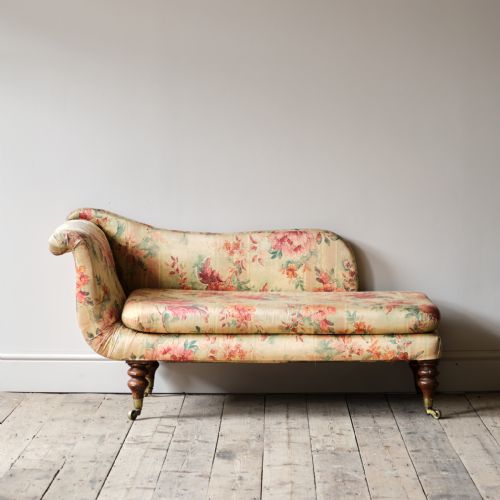


Traditional Chaise Lounge
A traditional chaise lounge offers the perfect spot for daytime reclining, combining architectural timber frames with deep, elegant upholstery.

Traditional Chaise Lounge
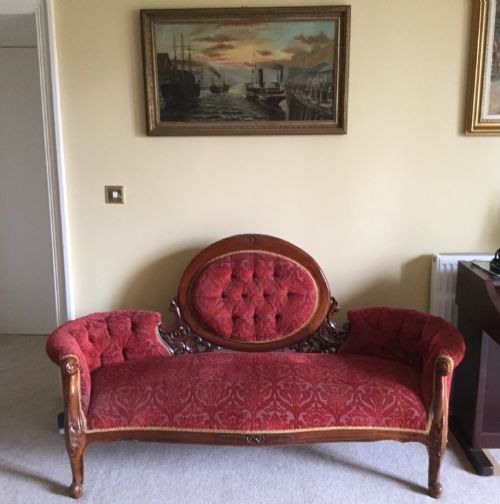
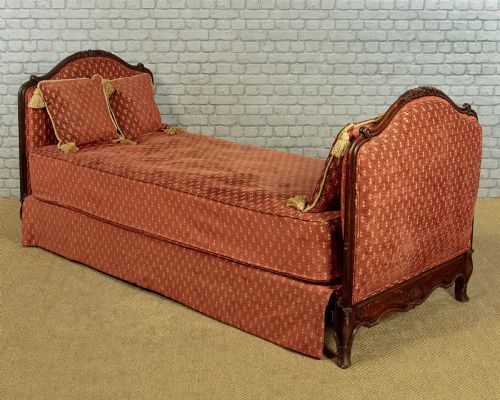
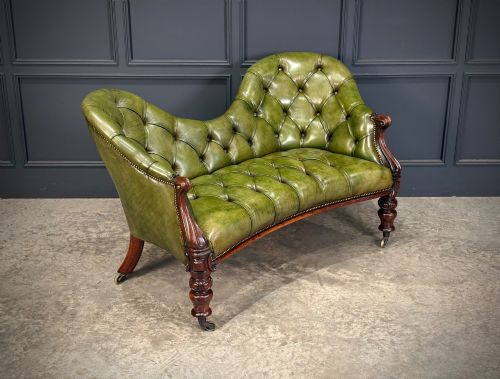
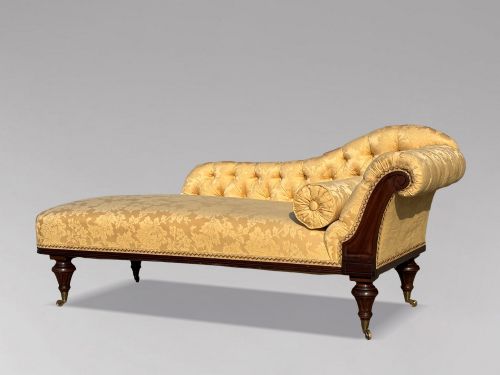
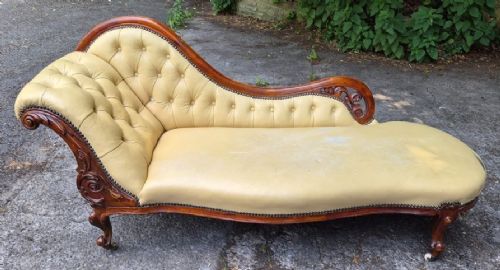
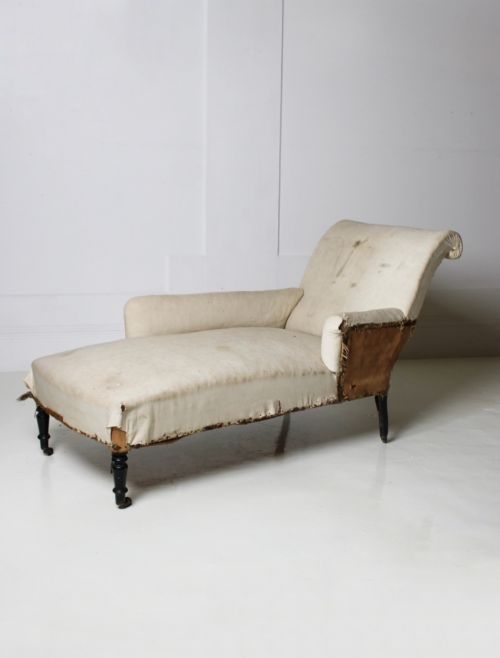
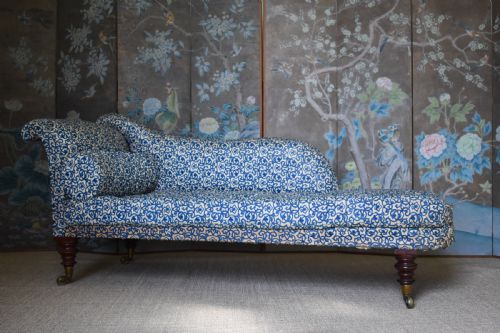
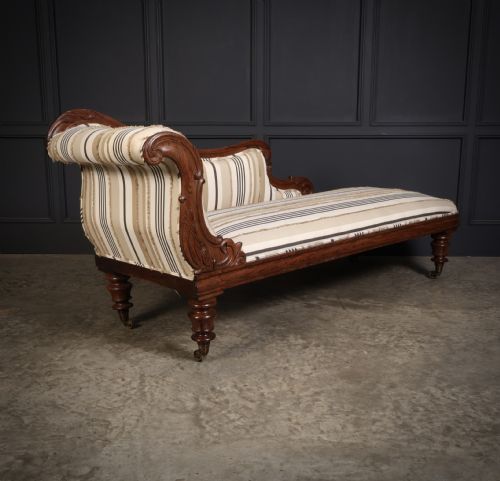
A traditional chaise lounge provides an elongated seat designed for semi-recumbent resting, appearing primarily across nineteenth-century and Victorian iterations in this collection. These pieces range from substantial mahogany double-ended sofas to buttoned leather day beds and reception salon seating.
Makers and workshops of the period such as Howard and Sons, Jas Shoolbred, and Hampton and Sons shaped these forms, often working within Regency, William IV, and Victorian stylistic frameworks. The typical meeting on this page is a carved mahogany or rosewood frame paired with velvet, leather, or brocade upholstery.
Materials and construction methods
Construction relies heavily on dense timbers like mahogany, rosewood, and general hardwoods for the structural frames, frequently featuring carved details and exposed polished wood. Brass accents and concealed storage compartments also appear within the cabinetry.
Upholstery techniques involve traditional horse hair fills and sprung settee bases supporting outer layers of velvet, calico, fabric, and deep-buttoned leather. Drop arms and double spoon-backs require specialised joinery and tensioning to maintain their reclining profiles.
The inventory incorporates specialist forms including drop arm designs, double-ended sofas, and concealed storage day beds.
Distinctions in craftsmanship and finish
Quality separates along the integrity of the timber framing and the sophistication of the carving, where fluid hand-carved lines outshine mechanical uniformity. The choice of primary wood, such as figured rosewood or rich mahogany, elevates the standing of the piece.
The standard of upholstery work dictates the longevity and comfort of the lounge, with traditional horse hair fills and buttoning requiring precise hand-work. Pieces bearing attribution to recognised makers like Howard and Sons carry superior structural and historical pedigree.
Howard and Sons·Jas Shoolbred·Hampton and Sons
The Traditional Chaise Lounge Glossary
- Double ended sofa
- A couch with raised scroll ends of equal height at both extremities. This form allows the user to recline comfortably facing either direction.
- Horse hair fill
- A traditional stuffing material gathered from horse manes and tails. It provides resilient, breathable internal support for deep upholstery.
- Spoon-back
- A padded chair or sofa back curved in the concave shape of a spoon. It fits the human spine closely and is typical of mid-Victorian seating.
- Drop arm
- A moveable armrest mechanism that lowers on a hinge. This allows the lounge to convert between a seated sofa and an extended day bed.
Traditional Chaise Lounge: Frequently Asked Questions
How do I place a chaise lounge in a room?
Position the piece away from direct sunlight to protect sensitive timber and upholstery materials. Ensure the raised headrest faces the desired focal point of the interior.
Allow sufficient floor clearance around the extended length to maintain balance within the room layout. These seats function well angled in large reception spaces or placed against a primary wall.
Were these lounges used for sleeping?
These pieces served primarily for daytime resting, reading, and receiving visitors while in a semi-reclined posture. They were not intended to replace a standard night bed.
The sprung bases and horse hair fills provide firm support for short periods of relaxation rather than overnight sleep.
How do I care for antique leather upholstery?
Maintain leather surfaces by dusting regularly with a soft, dry cloth to prevent abrasive particle buildup. Apply specialist leather balms periodically to keep the material supple.
Avoid placing the lounge near heat sources or radiators, which can cause historical leather and underlying horse hair fill to dry out and crack.
How do I distinguish Regency from Victorian styles?
Regency designs draw inspiration from classical antiquity, typically displaying cleaner architectural lines, subtle brass inlay, and restrained mahogany or rosewood framing.
Victorian pieces generally embrace heavier proportions, deeper buttoning, rich velvet or leather coverings, and more exuberant carved wooden details.