



Traditional Caucasian Hall Runner
A traditional caucasian hall runner brings bold geometric motifs and rich natural dyes directly into a narrow corridor, offering instant warmth and authentic regional character.
Traditional Caucasian Hall Runner
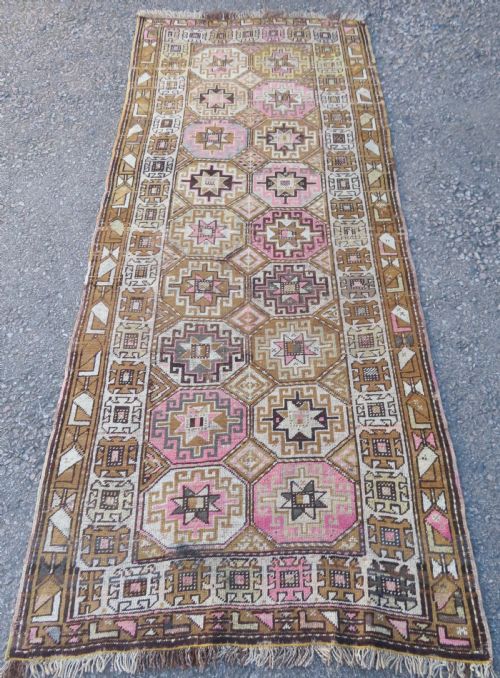
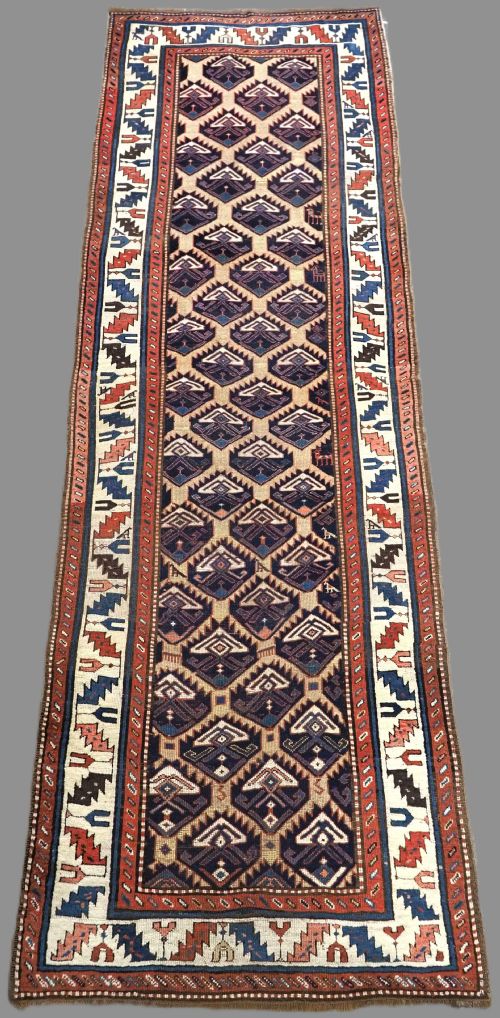
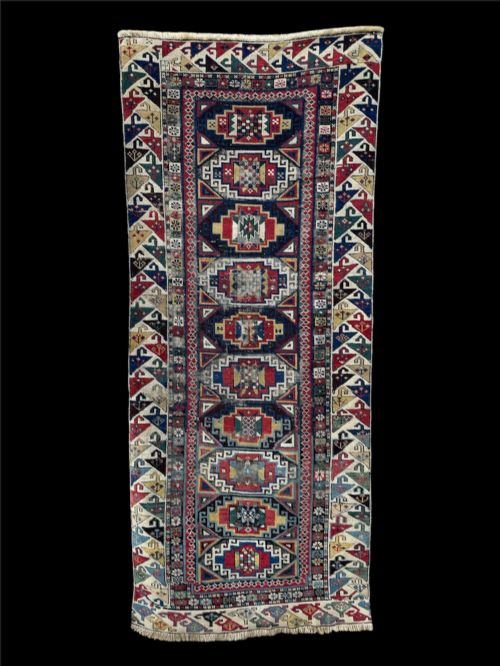
A traditional caucasian hall runner is a long, narrow textile designed specifically for corridors and passageways. The pieces seen here span the nineteenth century up to the early twentieth century, showing distinct regional weaves from the Caucasus.
Buyers will most frequently encounter formats identified by specific weaving regions such as Gendje, Shirvan, Kazak, Kuba, Talysh, and Karabagh. These runners often feature elongated proportions suited to hallways and narrow spaces.
Styles range from Caucasian traditional and tribal designs to Kurdish tribal and Persian tribal influences. The unifying element is a narrow, linear format combined with geometric field patterns.
How they were made
The pieces listed rely entirely on wool, hand-spun wool, and cotton foundations. Weavers worked by hand on upright looms, knotting the pile firmly to withstand heavy use in busy hallways.
Colour is achieved through natural dyes derived from local plants and minerals. This traditional dyeing method results in subtle tonal shifts within individual yarns over time.
Traditional Caucasian Hall Runner Retail Price Guide 2026
Typical asking prices for traditional caucasian hall runner among the pieces listed under this phrase on Sellingantiques today, from the lower quarter to the upper quarter. They describe what is for sale here now, not the wider market.
Listings feature pieces dated across the nineteenth century and early twentieth century, utilising hand-spun wool and natural dyes.
What varies in quality
Quality in a traditional caucasian hall runner rests upon the precision of the geometric drawing and the saturation of the natural dyes. Sharply defined medallions, lattice patterns, and boteh motifs indicate confident weaving.
The handle and density of the wool pile also separate finer examples from simpler village work. Finer knots create crisper lines in borders and field designs, while retaining a supple drape across the floor.
The Traditional Caucasian Hall Runner Glossary
- Runner
- A long, narrow carpet format intended for corridors, staircases, and hallways. These pieces balance length with a constrained width.
- Natural Dyes
- Colourants extracted from plants, insects, and minerals rather than synthetic chemical sources. They age with a distinct patina and soft variation.
- Boteh
- A stylised almond or pear-shaped motif of Persian origin often found within tribal runner designs. It represents a floral or cypress sprout.
- Lattice Design
- An open network of criss-crossing lines forming diamonds or compartments across the field of the rug. This geometric structure is common in regional Caucasian weaving.
- Pile
- The upright surface yarn of a rug, formed by knotted wool loops sheared to an even length. The density of this pile dictates the weight and durability of the runner.
Traditional Caucasian Hall Runner: Frequently Asked Questions
Where should I place a runner?
A traditional caucasian hall runner is traditionally suited to narrow corridors, entrance hallways, and long passageways where floorboards need protection and visual warmth.
Because of their elongated proportions, they also function effectively in galleries or beside large pieces of bedroom furniture.
How do I care for antique wool runners?
Regular gentle vacuuming without a rotating brush roll keeps dust from settling deep into the wool pile. Professional cleaning should be undertaken periodically by specialists familiar with antique vegetable-dyed textiles.
Keeping the runner out of direct, harsh sunlight helps preserve the natural dye colours over decades of use.
How do I identify regional styles?
Regional identification relies on specific palette choices, border arrangements, and structural motifs. For instance, pieces from areas like Shirvan or Talysh often display distinct geometric rigidity and specific medallion layouts.
Comparing knot structure and wool characteristics provides further clues to a runner's exact Caucasian origin.
Are these runners durable enough for daily use?
Hand-spun wool and sturdy cotton foundations make these historical textiles surprisingly resilient for everyday foot traffic. The dense knotting used by tribal weavers creates a robust surface designed to withstand regular domestic wear.
Using a quality underlay prevents slipping and cushions the wool against hard flooring.