
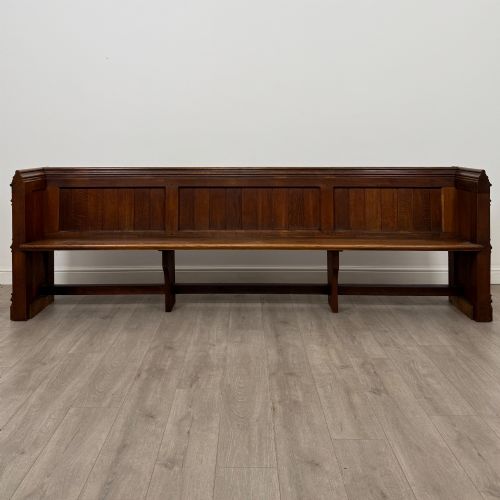


Traditional Carved Wooden Settle
A traditional carved wooden settle brings heavy timber seating and high backs into a hallway or living space.
Traditional Carved Wooden Settle
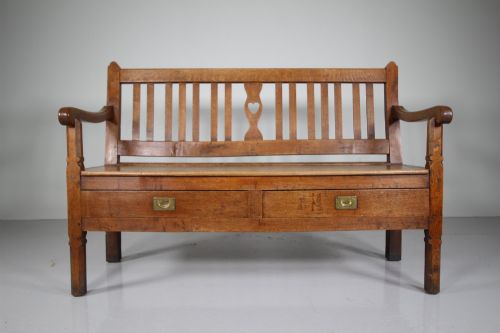
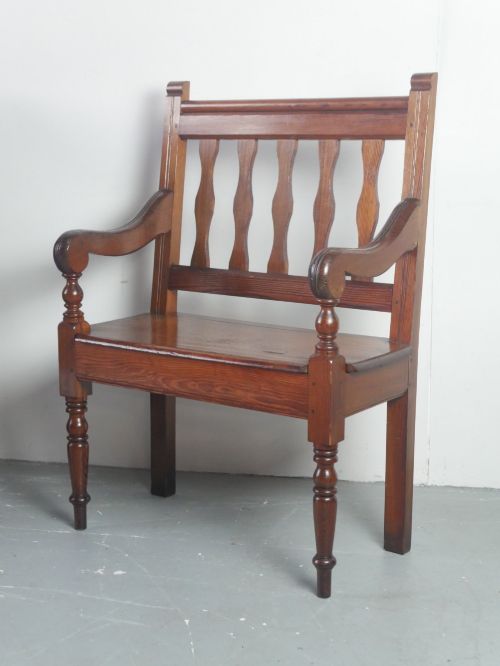
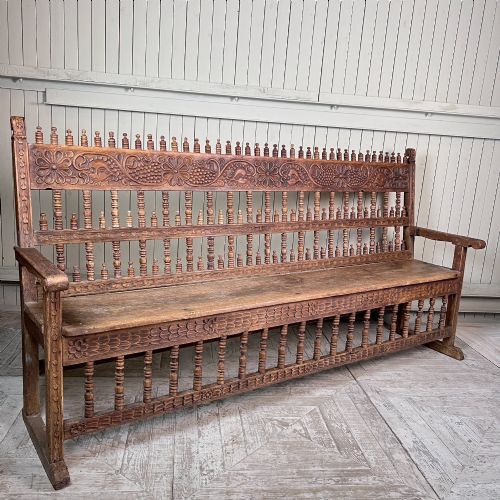
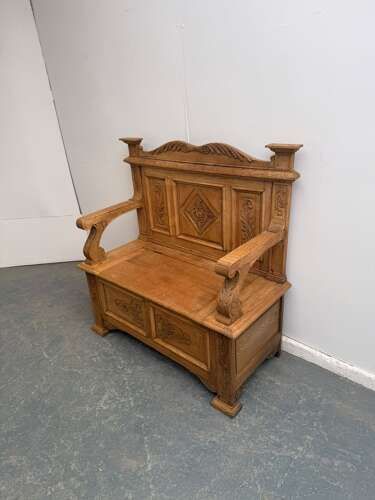
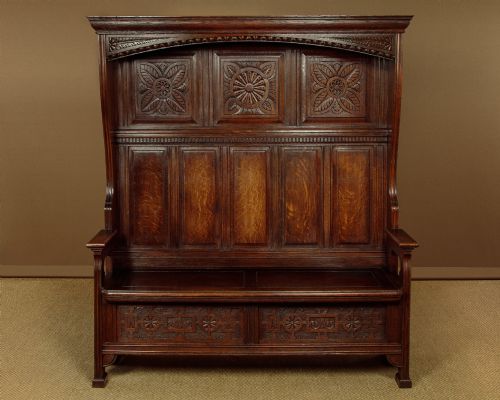
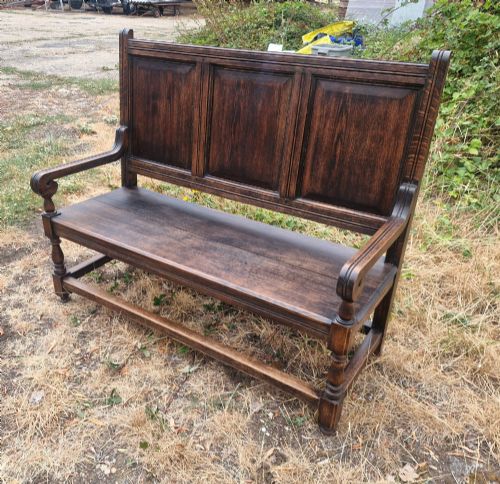
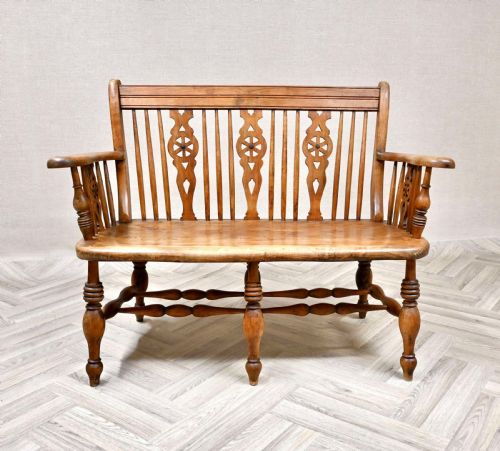
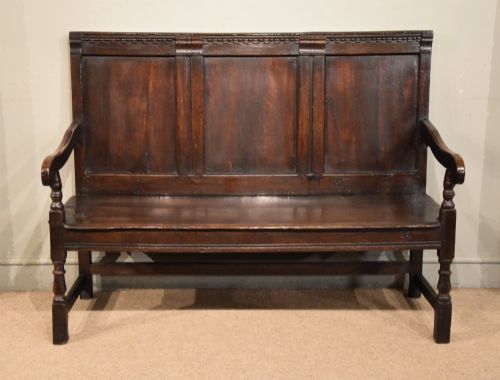
A traditional carved wooden settle is a sturdy high-backed bench designed to keep out draughts in older homes. Most pieces found here date from the eighteenth and nineteenth centuries, alongside Edwardian and later interpretations.
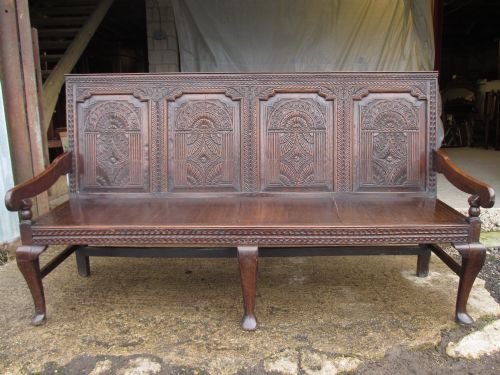
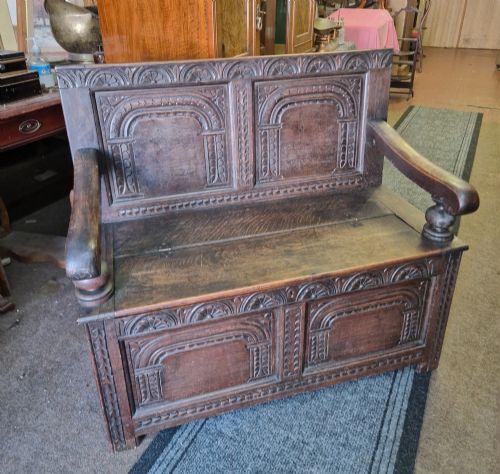
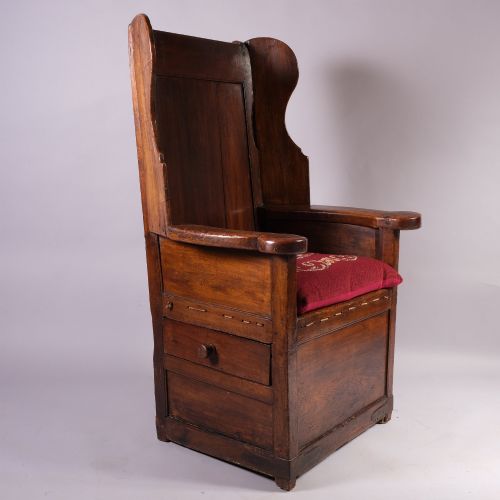
The form typically incorporates panelled backs, arms, and enclosed lower sections that double as storage boxes or lift-up seats. Regional variations include Welsh, Spanish Colonial, and English country examples.
Makers shaped these benches primarily for domestic halls, kitchens, and communal spaces where solid seating was essential. Buyers encounter everything from simple oak planks to elaborate canopy tops and folk art carvings.
Assessing quality and craftsmanship
Quality rests in the integrity of the timber, the depth and crispness of the hand-carved details, and the survival of original surfaces. Pieces retain more value when panels remain unwarped and structural joints show genuine age without excessive modern repairs.
Proportion and scale distinguish finer vernacular pieces from standard workshop output. Desirable examples maintain balanced arms, integrated storage boxes, and unaltered proportions that reflect their original period of manufacture.
Some nineteenth-century examples doubled as tweed window seats or boot stores, proving our ancestors loved multitasking furniture just as much.
The Traditional Carved Wooden Settle Glossary
- Settle
- A wooden bench with a high back and solid arms, often featuring a box seat for storage. It was designed to block cold air drafts in traditional dwellings.
- Monks Seat
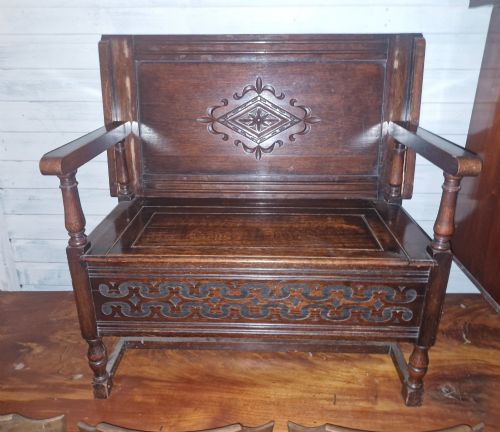
- A convertible bench featuring a fold-over top that transforms the backrest into a table surface. These versatile items became popular in later revival periods.
- Canopy Top
- An architectural hood projecting above the backrest of a settle. This feature trapped body heat and protected the occupant from falling drafts.
- Vernacular
- Architecture or furniture built by local craftsmen using regional materials and traditional techniques. These items reflect the specific customs and needs of their geographic area.
Traditional Carved Wooden Settle: Frequently Asked Questions
What is a traditional carved wooden settle?
A traditional carved wooden settle is a heavy bench with a high panelled back and arms designed to block cold draughts.
They served as primary seating in domestic hallways and living rooms, frequently incorporating storage boxes beneath the seat.
How were settles used originally?
Occupants placed them near hearths or in entryways where solid, high-backed seating offered protection from cold air currents.
The enclosed base also provided secure storage for household goods, blankets, or boots.
Where should I place a settle today?
These benches fit naturally in large hallways, boot rooms, or against spacious living room walls where their height can anchor the room.
Their substantial timber presence requires adequate floor space to let the carved details and panel work stand out.
How do I identify older settles?
Examine the timber joints, peg construction, and wear patterns on the seat and armrests to gauge the age of the piece.
Hand-cut joinery and period-appropriate wood species such as oak or pine typically indicate eighteenth or nineteenth-century origin.