
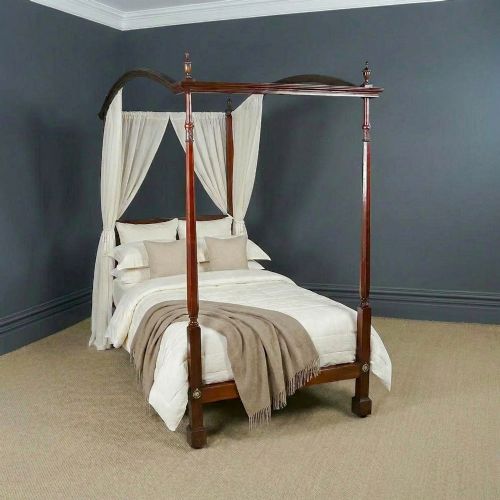


Traditional Canopy Bed Frame
A traditional canopy bed frame brings architectural presence to a bedroom, offering draped overhead shelter through centuries of timber and metal craftsmanship.
Traditional Canopy Bed Frame
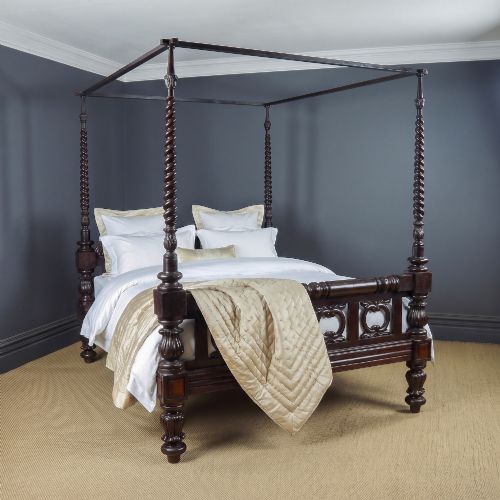
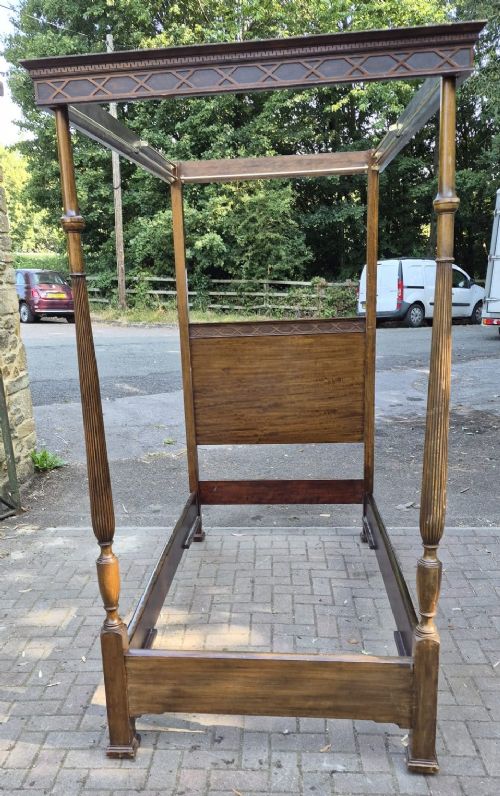
A traditional canopy bed frame comprises upright posts supporting an overhead tester, encompassing forms from four poster beds to half tester bedsteads. When you search for a traditional canopy bed frame, you encounter substantial furniture designed to create an enclosed sleeping space.
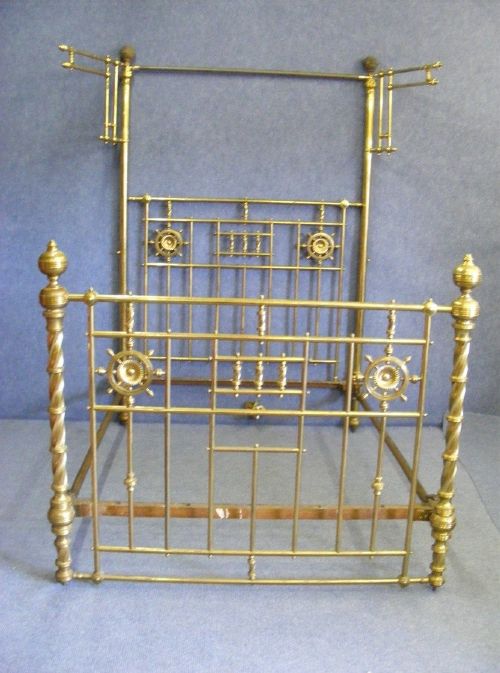
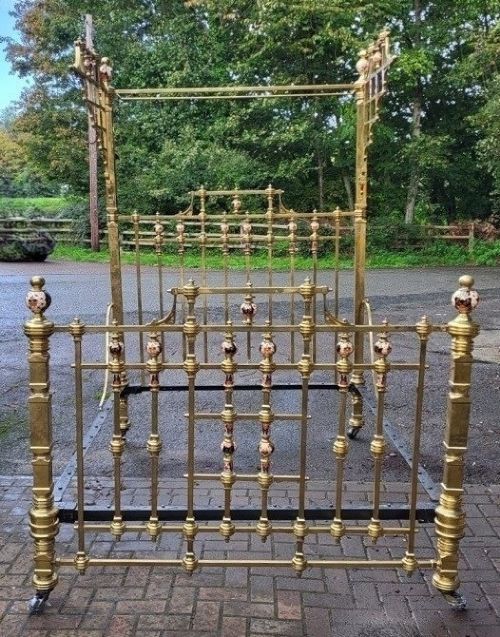
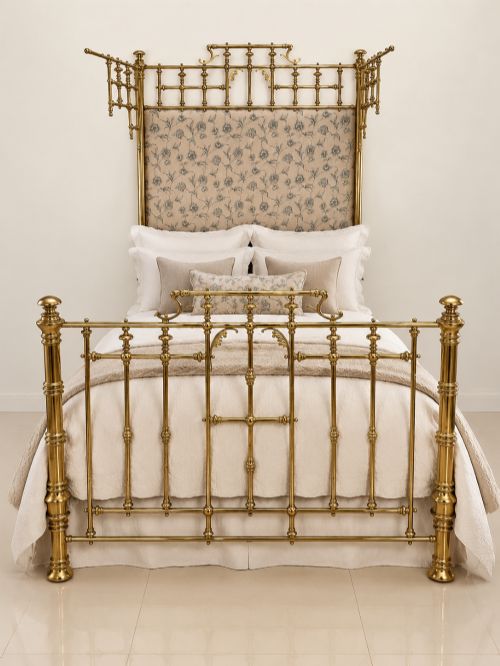
The selections span diverse eras, with Victorian brass and iron frames appearing alongside earlier oak, mahogany, and Chinese hardwood examples. Edwardian interpretations in the Georgian style and regional variations like colonial or painted Regency designs recur frequently.
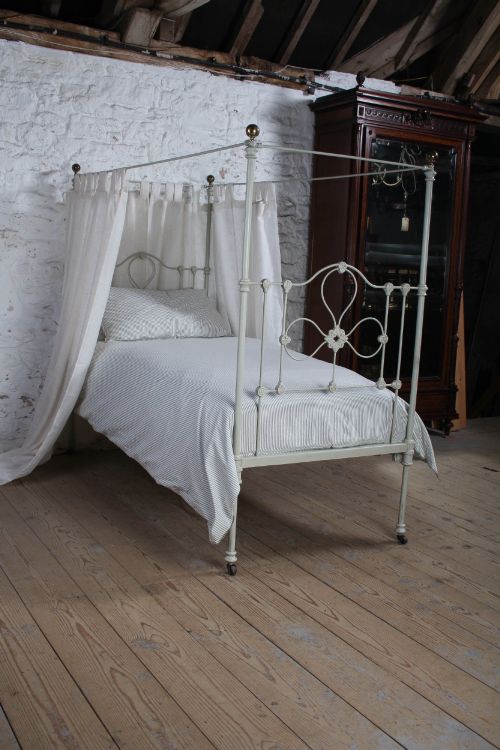
Makers ranged from large commercial firms such as Heals of London and R W Winfield to anonymous rural workshops producing sturdy seventeenth-century oak tester beds. These pieces vary from simple single iron frames to exhibition quality double and king size proportions.
Materials and construction
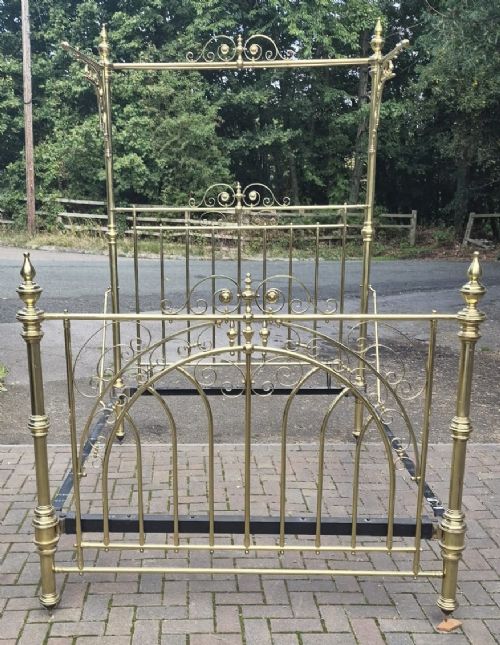
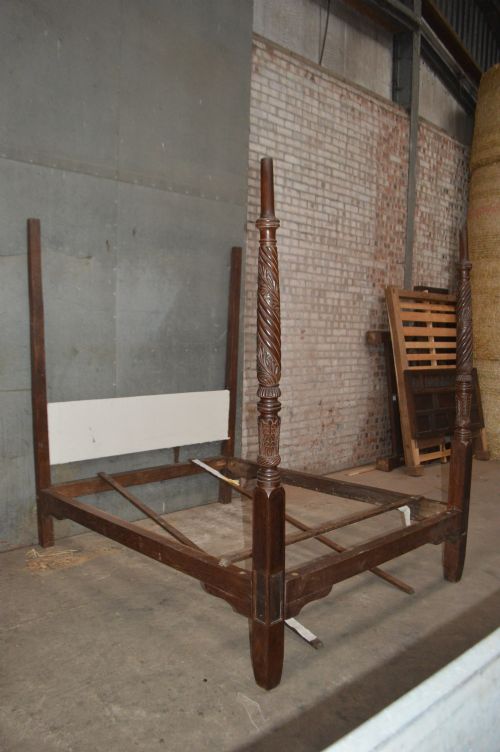
Makers utilised solid timbers including oak, mahogany, and hardwood, often employing hand carved decoration to embellish the structural posts and headboards. Metal examples combined cast iron and brass components, sometimes featuring porcelain details alongside painted finishes or red lacquer.
Joinery techniques relied on traditional framing methods appropriate to the period, supporting overhead testers and fabric dressings. Artisans constructed these beds to support substantial weight while maintaining decorative elegance across various revival styles.
Listings feature periods spanning from the seventeenth century through the Victorian and Edwardian eras, utilising brass, mahogany, oak, and painted finishes.
Quality variations
Distinctions in quality emerge through the depth of hand carving, the gauge and finish of brass work, and the selection of dense hardwoods. Exhibition quality pieces demonstrate superior finishing on hidden surfaces and more intricate decorative programmes.
Proportion and scale also dictate distinction, where lower height frames or grander king size proportions maintain balanced architectural lines. The integrity of the original construction and the weight of the metal or timber components separate standard production from exceptional examples.
Heals of London·Howard and Sons·R W Winfield
The Traditional Canopy Bed Frame Glossary
- Four poster bed
- A bed with four vertical columns supporting a canopy tester above. This form provides a commanding focal point within a bedroom.
- Half tester bedstead
- A bed featuring a wall-mounted or post-supported canopy that covers only the head portion of the bed. It offers a lighter visual weight than a full four poster.
- Tester
- The flat canopy or soundboard positioned over a bed frame. It traditionally held fabric curtains to retain warmth.
- Marriage bed
- An ornate bed created to celebrate a wedding, often featuring auspicious carvings or red lacquer finishes. These pieces carry deep cultural symbolism.
- Bedstead
- The framework of a bed, constructed to support mattress foundations. It excludes the mattress and bedding itself.
Traditional Canopy Bed Frame: Frequently Asked Questions
How do I style a traditional canopy bed frame?
Pair the architectural frame with neutral walls to let the timber or metal structure define the room. Incorporate simple or draped fabrics depending on the historical weight of the piece.
Keep surrounding furniture understated to maintain the bed as the primary focal point of the interior scheme.
Are these beds standard modern mattress sizes?
Historical dimensions vary considerably from current manufacturing standards, encompassing single, double, queen, and king size proportions. Measure the internal frame carefully before sourcing a mattress.
Custom or adapted mattress supports are frequently required to fit antique bedstead dimensions properly.
What is the difference between brass and iron frames?
Brass frames utilise polished metal tubing and cast components to create a bright, decorative presence. Iron versions offer a heavier structural core, often combined with brass accents for contrast.
Both metals emerged strongly during the nineteenth century, moving away from heavy timber construction.