
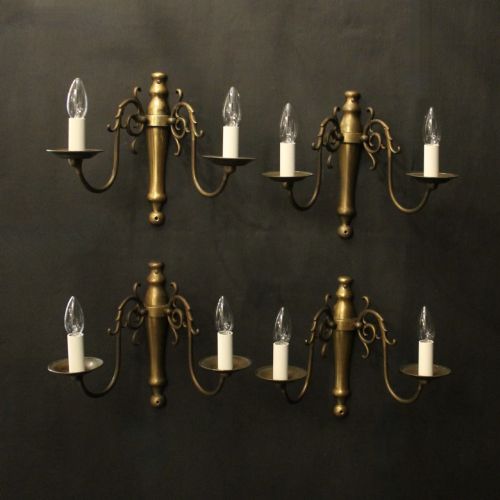
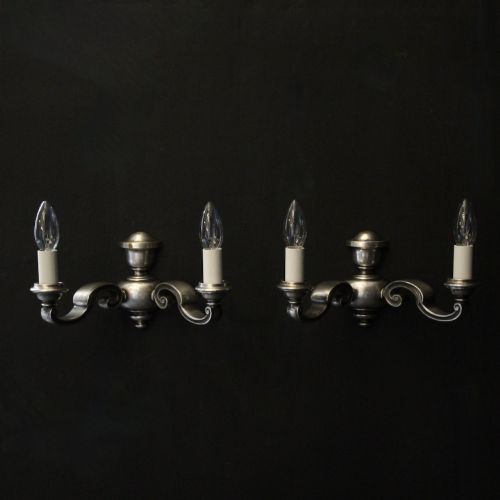
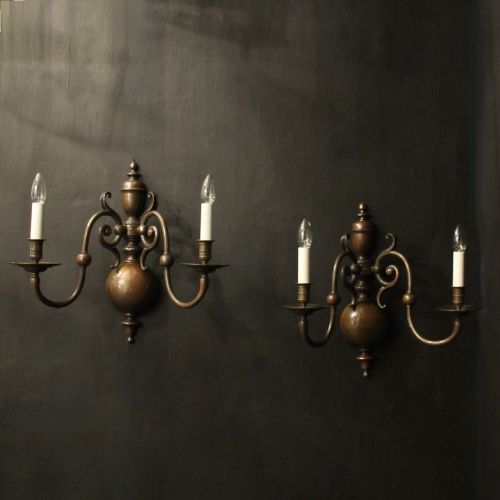
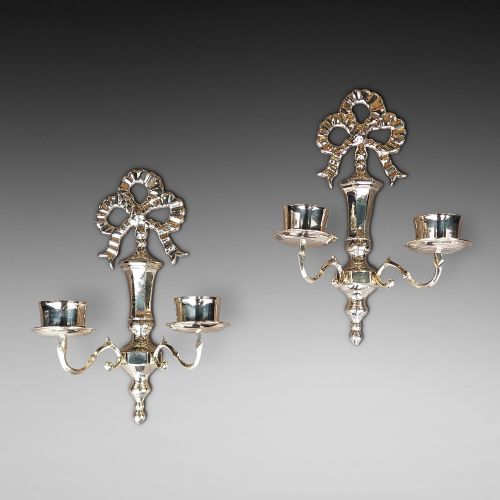



Traditional Candle Wall Sconces
Traditional candle wall sconces bring historic illumination to a room, offering warm metalwork and classic form for atmospheric wall lighting.
Traditional Candle Wall Sconces
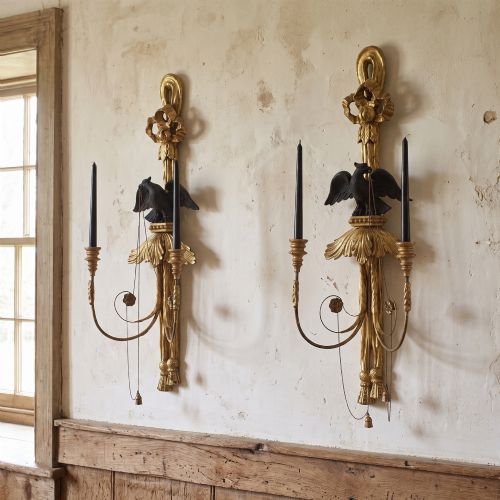
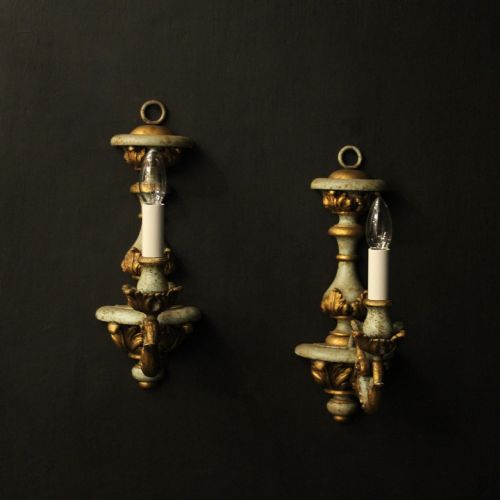
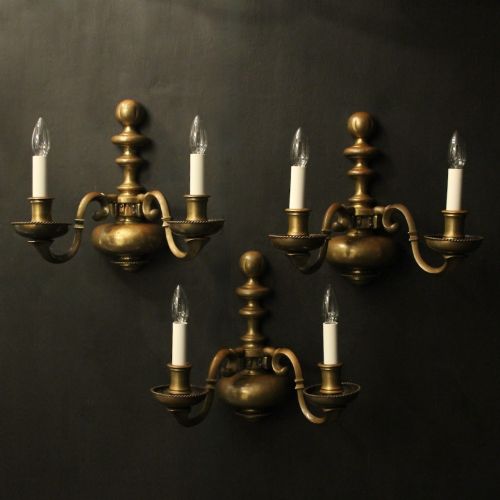
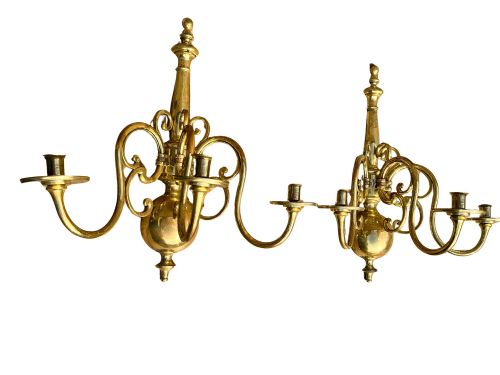
Traditional candle wall sconces are wall-mounted fixtures designed to hold candles, appearing across periods from the eighteenth century through to the 1930s. When you search for traditional candle wall sconces, you encounter pairs and sets cast in brass, bronze, silver plate, and wrought iron.
The selections span English, French, and Italian origins, incorporating styles such as Gothic Revival, French Rococo, and Georgian Revival. Wall lights and wall sconces form the primary objects, alongside occasional larger arrangements.
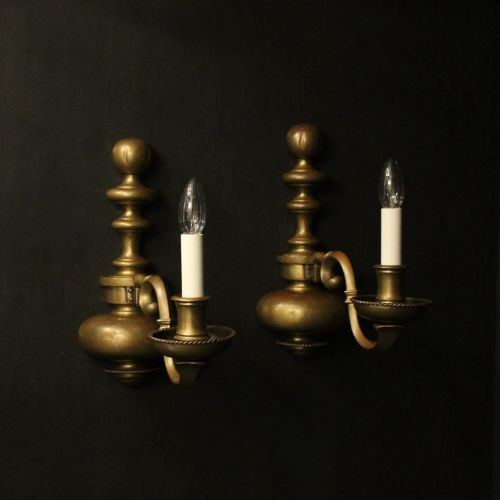
Victorian and Edwardian examples sit alongside nineteenth-century and early twentieth-century pieces, reflecting domestic lighting needs across generations. Brass forms the most common metal, frequently shaped into single, twin, or multi-branch lighting brackets.
How they were made
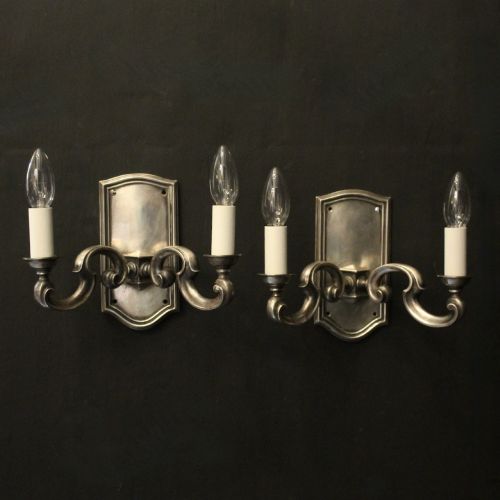
Metals dominate the construction of these pieces, utilising cast brass, bronze, and wrought iron shaped into arms and backplates. Silver plating and gilding frequently finish the metal surfaces, adding reflective qualities to the wall brackets.
Carved wooden elements appear in giltwood and oak examples, particularly within revival pieces from the Georgian and Rococo styles. Glass and crystal components occasionally supplement the metal frames, reflecting candle flame across the room.
Gothic entrance halls gain immediate drama from ecclesiastical brass torch sconces that once lit stone corridors.
What varies in quality
The refinement of the casting and metalwork dictates the distinction between standard and superior pieces. Heavier gauge brass and carefully chased bronze display sharper detail in decorative motifs such as acanthus leaves or neoclassical urns.
The integrity of the construction, from the fit of the joints to the stability of the backplates, separates workshop standards. Surface finishes, whether patinated bronze, repolished brass, or original silver plating, maintain different levels of preservation and depth.
F. and C. Osler
The Traditional Candle Wall Sconces Glossary
- Wall sconce
- A bracket fixed to a wall for holding candles or electric lamps. These fixtures project outward to illuminate hallways, drawing rooms, and entrance spaces.
- Backplate
- The flat or shaped metal section that fastens directly against the wall surface. It supports the weight of the candle arms extending forward.
- Giltwood
- Wood, typically carved gesso-coated timber, covered with gold leaf or metal leaf. This technique creates a bright, reflective surface popular in revival decorative pieces.
- Pricket
- A sharp metal spike on a candleholder designed to impound the base of a wax candle. This form appears frequently in ecclesiastical and earlier lighting pieces.
- Repoussé
- A metalworking technique where the metal is hammered from the reverse side to form a raised design in relief. It adds texture and ornamentation to sconce backplates.
Traditional Candle Wall Sconces: Frequently Asked Questions
How do I mount traditional wall sconces safely?
Wall sconces require secure fixing to wall studs or appropriate masonry anchors given the weight of cast brass or bronze. Ensure the backplate sits flush against the wall surface to support the projection of the arms.
Professional installation is recommended if converting historical candle brackets to wiring, or when hanging heavier multi-branch fixtures safely.
Can historical candle sconces be wired for electricity?
Many sconces from the nineteenth and early twentieth centuries adapt readily to concealed wiring through the central backplate. Electric sockets can be fitted onto the candle drip pans without altering the outward appearance of the metalwork.
Consult a qualified electrician to assess internal channels and ensure historical components remain protected during any conversion process.
How should I clean antique brass and bronze?
Dust metal surfaces regularly with a soft, dry cloth to prevent the accumulation of grime within chased details. Avoid harsh chemical polishes that strip away the aged patina built up over decades of use.
Unlacquered brass and bronze benefit from occasional gentle cleaning with specialised metal care products applied sparingly according to the metal type.
What rooms suit traditional wall sconces best?
Entrance halls and dining rooms provide traditional settings where paired wall lights create balanced illumination at eye level. They function effectively flanking mirrors, doorways, or fireplaces to add layered lighting depth.
Placing sconces lower on walls mimics historical candle-lit environments, though height must account for clearance and furniture placement.