


Dark Bronze Sconces
Dark bronze sconces bring deep, patinated metalwork and historic candle-lighting forms into rooms that need architectural weight.
Dark Bronze Sconces
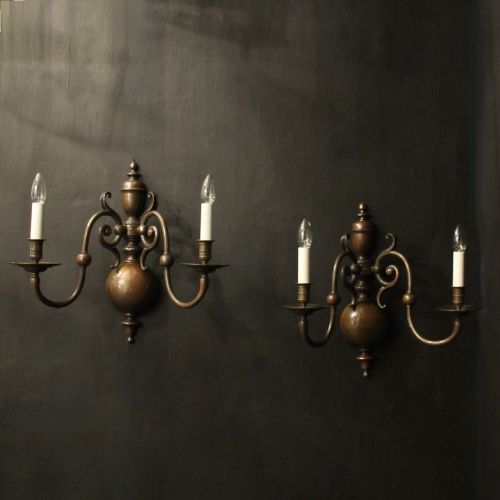
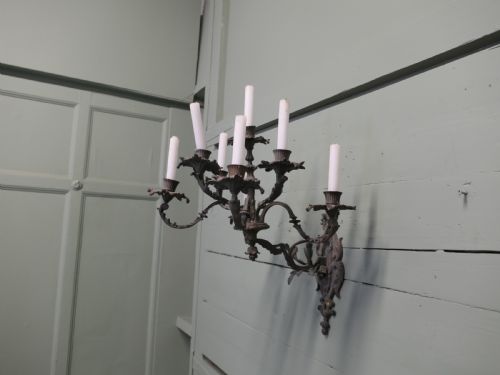
When you search for dark bronze sconces, you are looking at cast metal wall lights and conversion pieces spanning the Regency, Victorian, and early twentieth-century periods. These fixtures emerge in forms ranging from simple torch brackets to multi-armed Gothic and French Rococo designs.
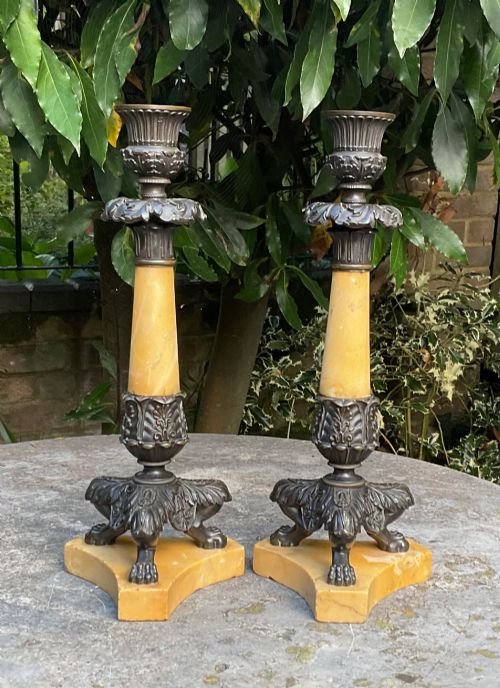
The pieces on this page are predominantly paired wall lights and candlesticks adapted for illumination, often incorporating marble bases, onyx, or contrasting ormolu highlights. French origins appear frequently alongside English examples, reflecting nineteenth-century Grand Tour influences and revivalist tastes.
Makers and designers drew upon Renaissance, Baroque, and Neo-Grec vocabularies, resulting in figurative elements such as putti, mermen, and soldiers supporting the candle holders. Whether mounted in an entrance hall or a drawing room, these dark metal objects anchor a wall with substantial historic presence.
Materials and construction
Foundry work relies on bronze and brass castings, occasionally supplemented by spelter in more decorative or figurative Victorian domestic pieces. Metal components are frequently patinated to achieve deep, dark tones, contrasting directly with bright ormolu details or polished brass highlights.
Stonework integration involves turned marble or onyx bases that add structural stability and visual contrast to the dark metal bodies. Glass elements, mirror plates, and crystal drops appear on girandoles and chandeliers to reflect candle or gas light.
Victorian mermen and stoic Renaissance soldiers bravely moonlight as heavy-duty candle holders without dropping a single tear of wax.
Factors of quality
The refinement of the casting separates standard production from superior examples, visible in the crispness of chased details on figures, foliage, and scrollwork. Heavier bronze gauge and solid stone bases indicate a higher grade of manufacture compared to lighter metal alloys.
Integrity of surface patination and originality of the combined elements dictate desirability, particularly where marble, ormolu, and bronze meet. Pieces retaining matching components and period mounting brackets demonstrate better preservation over time.
The Dark Bronze Sconces Glossary
- Patinated bronze
- Bronze that has been chemically or naturally treated to darken its surface colour. This finish protects the metal and provides the characteristic historic tone.
- Ormolu
- Gilt bronze produced by applying a finely ground high-carat gold mercury amalgam to a bronze object. It creates bright golden highlights against dark patinated bronze.
- Girandole
- A branched wall light or candlestick featuring a mirror backplate. The reflective glass serves to amplify the illumination of the candles.
- Spelter
- An alloy of zinc and lead used as a less expensive substitute for bronze in nineteenth-century casting. It is softer and often carries a painted or patinated finish.
- Candelabra
- A multi-branched candlestick designed to hold several candles simultaneously. These pieces often feature removable upper branches for varied display.
Dark Bronze Sconces: Frequently Asked Questions
Are these wall lights wired for electricity?
Many historical wall lights originate as candle holders or gas brackets that require professional conversion for modern electrical wiring. Some pieces arrive already adapted, while others remain in their original form.
Consult a qualified electrician to assess internal wiring channels and ensure safe installation on domestic walls. Retaining the original aesthetic while meeting modern safety standards is standard practice for historic lighting.
How do I date a bronze wall light?
Examine the casting quality, fixing screws, and stylistic vocabulary to determine the period of manufacture. Nineteenth-century pieces frequently display revivalist traits from Gothic, Renaissance, or French Rococo movements.
Compare the patination and wear patterns around mounting points with known examples from the Regency and Victorian eras. Material combinations like bronze paired with onyx or marble often point towards specific decades of production.
Where should I place sconces in a room?
Mount wall sconces at eye level on either side of a fireplace, mirror, or doorway to create balanced ambient illumination. Ensure the projection of the arms suits the traffic flow of the hallway or reception room.
Pair them with complementary antique candlesticks on mantelpieces to unify the decorative scheme of the interior. The dark bronze tones work effectively against both pale panel walling and rich historic paint colours.