


Victorian Bronze Sconce Pair
A victorian bronze sconce pair brings heavy metalwork and period illumination directly to a wall, offering rich historical character for atmospheric interiors.
Victorian Bronze Sconce Pair
A victorian bronze sconce pair comprises matching wall lights or converted candlesticks designed to hold candles or gas jets, spanning the Victorian and Edwardian eras. These pieces emerge from periods including the nineteenth century and around eighteen ninety, incorporating styles such as Neoclassical, Rococo Revival, and Art Nouveau.
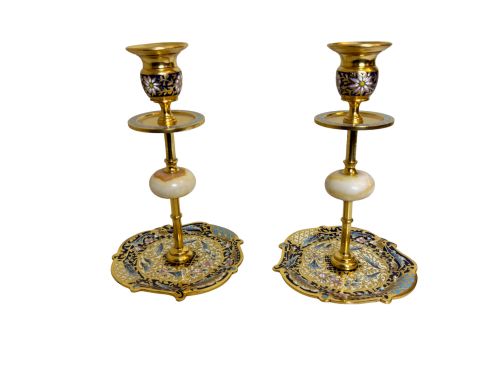
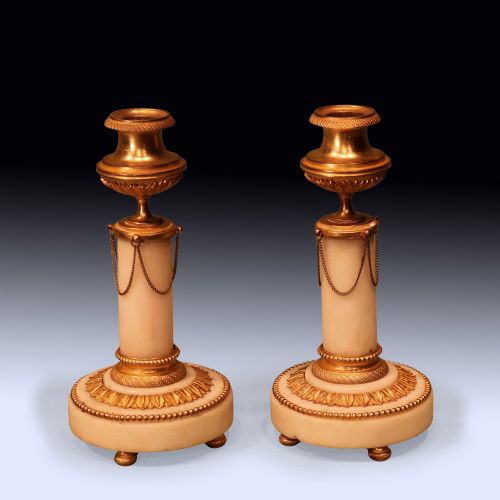
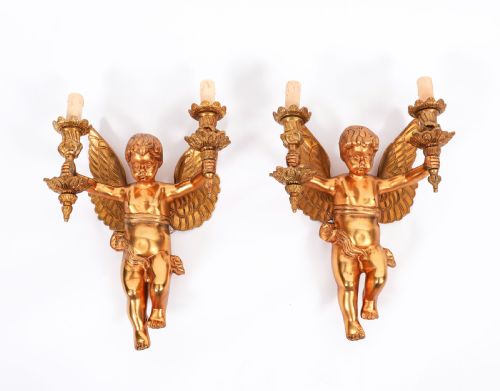
The objects take various forms on this page, from figurative double candlesticks and torch entrance hall wall lights to wall-mounted mermaid candle holders and Italian Grand Tour brass lights. Buyers encounter materials like cast bronze, gilt bronze, brass, ormolu, champleve enamel, onyx, and white marble across these domestic fittings.
Materials and construction
The manufacture of these lighting pairs relies heavily on metal casting techniques using bronze, brass, and ormolu, frequently paired with stone elements such as white marble and onyx. Molten metals are cast into detailed moulds to form figural elements, scroll arms, and backplates, then finished with chased surface work.
Decorative surface treatments incorporate gilt highlights, champleve enamel panels, and polished stonework. Components are mechanically joined with threaded fixings or pins, while surviving examples display the patination and tooling marks characteristic of nineteenth-century workshop production.
Mermaids and Renaissance soldiers share wall-lighting duties with classical cherubs in nineteenth-century domestic schemes.
Assessing craftsmanship and finish
The integrity of the original surface patination and gilding distinguishes finer pieces from later interventions. Weight, balance, and the precision with which separate cast components join together indicate the standard of workshop output.
Liberty·E.G Paris
The Victorian Bronze Sconce Pair Glossary
- Ormolu
- Gilt bronze produced by applying a mercury and gold amalgam to a bronze base and heating it. This technique creates a durable golden finish seen on decorative mounts and candelabra.
- Champleve
- An enamelling technique where troughs or cells are hollowed out of a metal surface and filled with vitreous enamel powder before firing. The resulting coloured patterns sit flush with the surrounding metal.
- Grand Tour
- A cultural journey undertaken by nineteenth-century travellers who collected souvenirs such as small bronzes and classical antiquities. Items from this tradition often reflect classical Italian motifs.
- Girandole
- A branched wall sconce or candle holder featuring a reflective backplate, designed to multiply the light cast by candles. These fixtures combine structural armatures with decorative wall brackets.
- Spelter
- A zinc alloy frequently used as a cheaper substitute for bronze in nineteenth-century figural casting. It is softer than bronze and typically takes a bronze-coloured paint or patinated finish.
Victorian Bronze Sconce Pair: Frequently Asked Questions
How do I install antique wall sconces?
Most period wall lights require mounting blocks or secure wall anchors to support the weight of bronze and marble fittings. Professional installation ensures that the wiring or structural attachment meets current safety standards without compromising the historic fabric.
For non-electrified pairs intended solely for display or wax candles, mounting heights should reflect eye level and the surrounding architectural proportions of the room.
Were these lights originally for gas or candles?
Nineteenth-century lighting fixtures served both candle and gas purposes depending on the domestic space and date of manufacture. Gas wall lights often feature threaded nozzles or internal channels designed to carry gas lines to burners.
Candle sconces rely on open drip pans and sockets sized for standard taper candles. Many surviving examples have subsequently been adapted for electrical wiring during the twentieth century.
How do I clean antique bronze safely?
Dusting with a soft, dry brush removes surface particles without disturbing the underlying patination. Avoid abrasive cleaners, commercial metal polishes, or chemical dips that strip away historical surface oxidation.
Wax applied sparingly can protect exposed bronze and brass surfaces from atmospheric moisture. Stone elements like marble and onyx require damp cloths without acidic detergents.
What is the difference between brass and bronze?
Bronze is an alloy primarily composed of copper combined with tin, resulting in a dense metal that takes a deep, dark brown or golden-brown patina. Brass is an alloy of copper and zinc, which produces a brighter, more yellowish metallic tone.
Victorian makers utilised both metals interchangeably depending on whether the desired finish was gilt, polished brass, or dark patinated bronze.