



Traditional Camel Back Couch
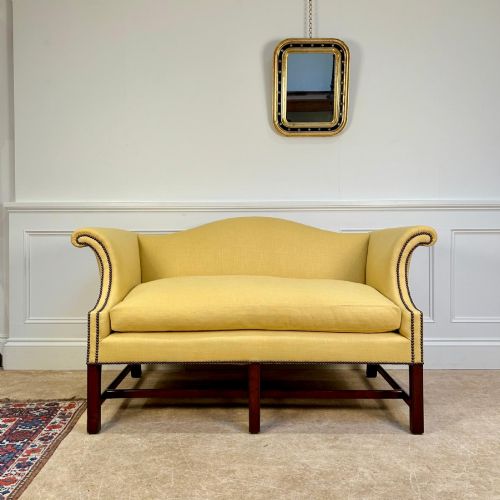
A traditional camel back couch offers a sweeping serpentine silhouette and generous proportions that anchor a formal room.
Traditional Camel Back Couch
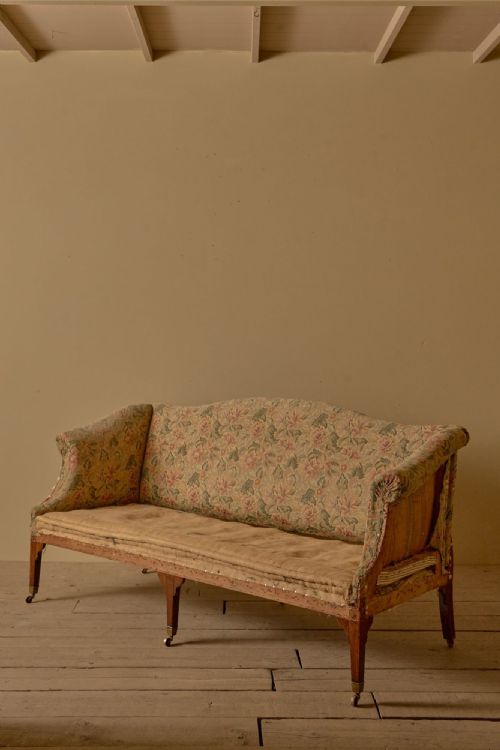
A traditional camel back couch is a distinct seating form defined by its arched crest rail, which dips down toward the arms in a continuous, graceful line. When you examine this selection, you encounter pieces that span several distinct periods, including the eighteenth century, the nineteenth century, the Edwardian era, and the mid-twentieth century.
The inventory on this page draws heavily on historic revival styles and regional vernaculars, presenting you with Georgian style, Chippendale style, Hepplewhite revival, and English country house aesthetics. These forms range from compact, small-scale settees to wider three-seat sofas featuring serpentine fronts.
The origins of these couches trace through traditional cabinetmaking traditions, where makers adapted classical proportions for domestic comfort. You will find that most examples combine upholstered bodies with exposed wooden legs, often manifesting the characteristic curved lines associated with Queen Anne and Chippendale designs.
How they were made
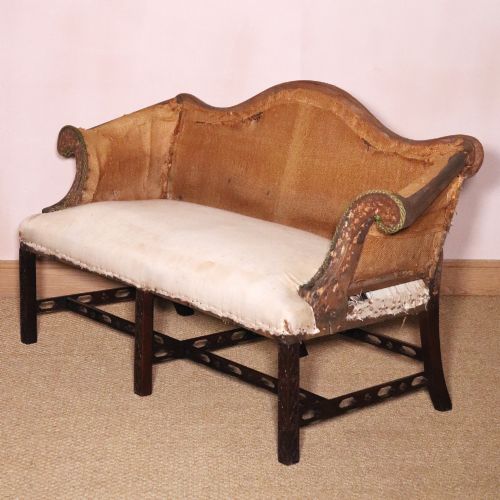
Makers constructed the foundational frames of these couches from solid timbers such as mahogany and general wood, ensuring structural rigidity beneath the upholstery. Joinery techniques relied on traditional framing methods that supported the pronounced arch of the backrest and the curved serpentine front rails.
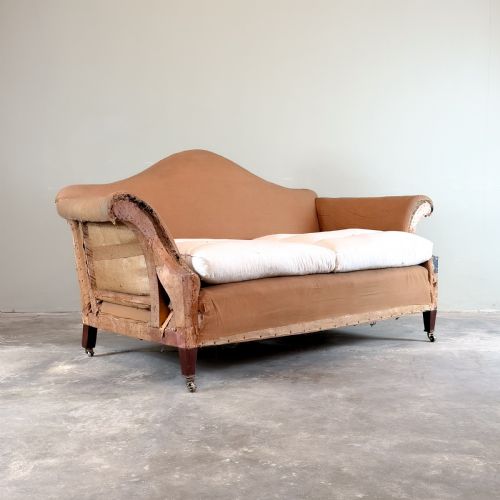
The upholstery build-up utilised traditional stuffing materials, including burlap and cotton, layered to achieve the firm, tailored contours characteristic of the style. Outer coverings then employed durable textiles such as damask and various patterned fabrics to finish the exterior surface.
Traditional Camel Back Couch Retail Price Guide 2026
Typical asking prices for traditional camel back couch among the pieces listed under this phrase on Sellingantiques today, from the lower quarter to the upper quarter. They describe what is for sale here now, not the wider market.
Listings feature pieces spanning the eighteenth century to the mid-twentieth century, constructed from mahogany, wood, brass, fabric, cotton, damask, and burlap.
What varies in quality
The distinction between ordinary and superior examples rests in the handling of the timber frame and the precision of the carved details. Finer pieces exhibit crisp lines along the serpentine crest and refined leg work, whereas simpler versions show more restrained execution.
Proportion and scale dictate the visual success of the piece, with better examples maintaining harmonious relationships between the height of the camel hump and the length of the seat. The tightness of the upholstery application and the quality of the chosen textile further separate basic production from accomplished cabinet work.
The Traditional Camel Back Couch Glossary
- Camel back
- A sofa or settee featuring a distinctive arched backrest that resembles the hump of a camel, sloping downward toward the arms. This contour forms the primary visual signature of the furniture type.
- Serpentine
- A furniture line or front that curves outward in the centre and inward toward the ends in a continuous wave shape. This contour adds movement and depth to the frame.
- Chippendale style
- A decorative aesthetic drawing from the eighteenth-century designs of Thomas Chippendale, typically characterised by carved mahogany frames and subtle classical motifs. It remains a dominant reference point for these couches.
- Hepplewhite revival
- A nineteenth or twentieth-century interpretation of the lighter, more elegant furniture forms associated with George Hepplewhite. Pieces in this manner often display tapered supports and refined proportions.
- Settee
- A small or medium-sized upholstered seat for multiple persons, often used interchangeably with sofa in historic contexts. These pieces offer compact alternatives to larger multi-seat couches.
Traditional Camel Back Couch: Frequently Asked Questions
What is a traditional camel back couch?
A traditional camel back couch is an upholstered seating form defined by a distinctive arched backrest that resembles a camel's hump, sloping gracefully down toward the arms. These pieces typically feature exposed wooden legs and curved fronts.
Originating in earlier centuries as formal drawing-room seating, the design persists through various revival periods, offering a formal silhouette that remains popular in traditional interiors.
How do I identify the period of a sofa?
Identifying the period involves examining the timber species, the character of any exposed carving, and the underlying construction methods used in the frame. Eighteenth-century and nineteenth-century examples often display distinct patination on the mahogany and hand-forged metal or brass hardware.
Later Edwardian and mid-twentieth-century pieces tend to feature lighter internal framing and standardised revival details, reflecting the manufacturing standards of their respective decades.
Where were these couches used?
Historically, these couches occupied formal drawing rooms, parlours, and reception spaces within English country houses and town residences. Their refined profiles suited them for polite company and social entertaining.
In modern settings, they function effectively as statement pieces in living rooms or studies, providing formal seating while maintaining an open visual footprint.
How do I live with antique upholstery?
Living with older upholstery requires an appreciation for traditional padding materials like cotton and burlap, which respond best to gentle, regular maintenance rather than heavy modern cleaning methods. Protecting the fabric from direct sunlight preserves both the textile and the underlying structure.
Positioning the couch away from direct heat sources ensures that the wooden frame and internal stuffing remain stable over years of daily domestic use.