

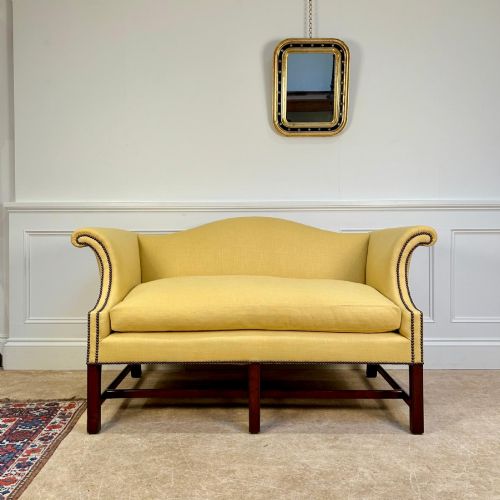
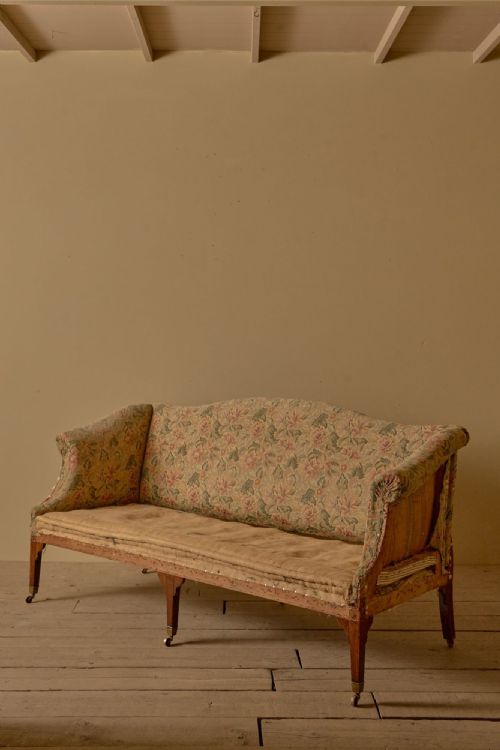
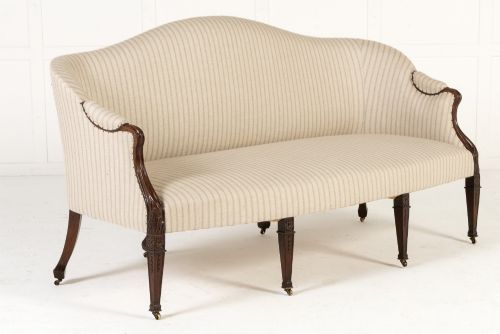
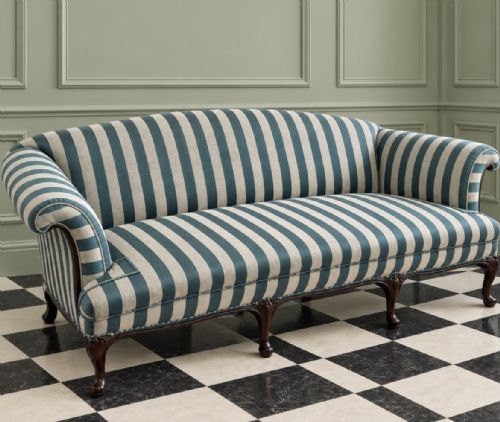


Mahogany Camelback Settee
A mahogany camelback settee offers a graceful arched silhouette and sturdy timber frame that anchors a formal room with timeless dignity.
Mahogany Camelback Settee
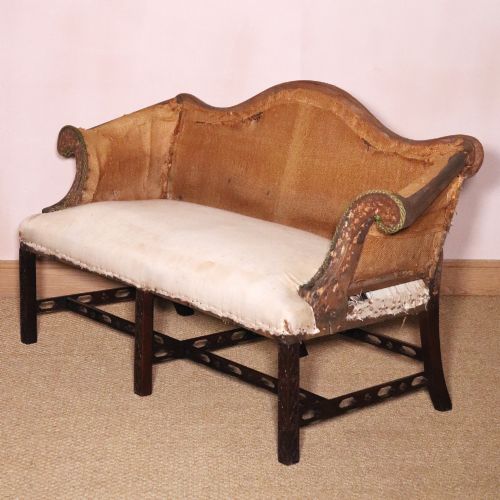
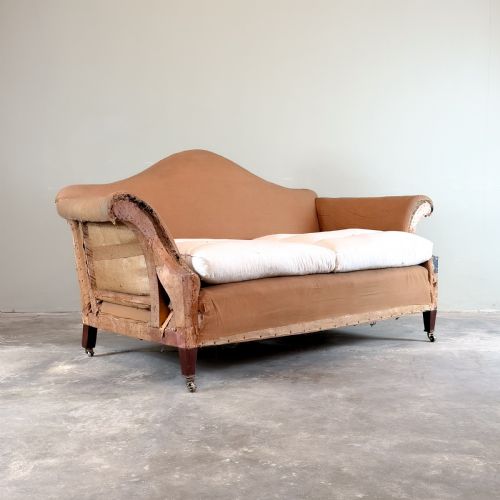
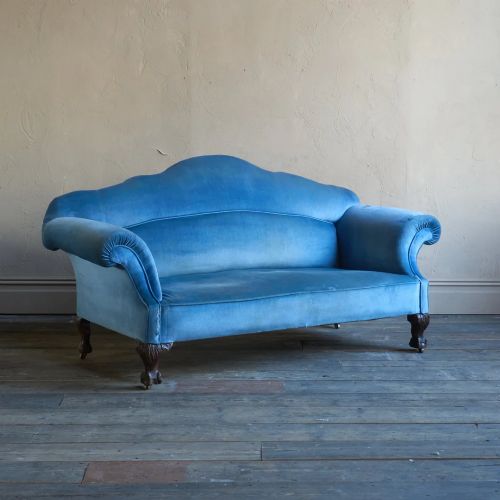
A mahogany camelback settee is a traditional upholstered seating piece defined by its characteristic undulating crest rail and solid wood frame. When searching this phrase, buyers encounter examples originating from the eighteenth century through to the mid twentieth century.
The selection on this page spans distinct design revivals alongside genuine period examples. Pieces range from straightforward Edwardian interpretations to nineteenth century Chippendale style revivals and eighteenth century originals.
Formats vary from standard settees to serpentine front designs and pairs of matching seats. Most examples utilise mahogany as the primary frame timber paired with various upholstery fabrics.
How they were made
Makers constructed the structural frames of these settees using solid mahogany, often shaping the timber to form the characteristic camel back profile and supportive legs. Joinery methods relied on traditional techniques to ensure stability across the long seat rail and back supports.
Upholstery techniques evolved across the periods represented, incorporating traditional foundations beneath outer coverings of damask, velvet, hessian, calico, and general fabric. Certain nineteenth century and earlier pieces integrate carved details such as ball and claw feet directly into the mahogany woodwork.
Mahogany Camelback Settee Retail Price Guide 2026
Typical asking prices for mahogany camelback settee among the pieces listed under this phrase on Sellingantiques today, from the lower quarter to the upper quarter. They describe what is for sale here now, not the wider market.
Listings feature mahogany frames paired with various textiles including damask, velvet, hessian, and calico upholstery across multiple historical periods.
What varies in quality
Quality in these settees rests upon the crispness of the timber carving and the architectural proportions of the frame. Earlier eighteenth century examples and fine revival pieces exhibit more refined serpentine lines and superior joinery execution compared to later commercial production.
The integrity of the underlying frame and the quality of the mahogany timber dictate the lasting value of the piece. Subtle details such as the contour of the camel crest and the execution of leg supports separate standard upholstery frames from masterworks.
The Mahogany Camelback Settee Glossary
- Camelback
- A sofa or settee back featuring a distinctive undulating curve resembling a camel's hump. This profile provides both visual elegance and ergonomic shoulder support.
- Serpentine front
- A furniture front configuration that curves outward in the centre and concaves inward toward the ends. This shape adds dynamic movement to the timber frame below the seat cushions.
- Chippendale style
- A decorative design vocabulary inspired by eighteenth-century cabinetmaker Thomas Chippendale. It frequently incorporates ornate carved mahogany elements, including ball and claw feet.
- Hepplewhite style
- A neoclassical furniture design characterised by lighter proportions and elegant tapering legs. Settees in this style often display refined shield or camel back outlines.
- Damask
- A reversible figured fabric traditionally woven from silk, wool, or linen. It is frequently utilised as upholstery on formal period seating.
Mahogany Camelback Settee: Frequently Asked Questions
How do I date a mahogany camelback settee?
Dating relies on examining the timber characteristics, construction methods, and stylistic cues present in the mahogany frame. Eighteenth-century pieces display different joinery and timber patination compared to Edwardian or later revival pieces.
Secondary indicators include the specific profile of the camel back and the presence of period upholstery foundations. Comparing the carved details against documented furniture styles helps narrow down the decade of manufacture.
What is the difference between George III and Chippendale styles?
George III style encompasses the broader neoclassical and palladian trends spanning the reign of that British monarch. It covers a wide spectrum of refined domestic furniture designs from the latter half of the eighteenth century.
Chippendale style specifically references the rococo and Chinese-influenced aesthetics popularised during the middle of the eighteenth century. This style often highlights elaborate mahogany carvings and ball and claw feet.
Are these settees comfortable for daily use?
These settees were originally designed for formal reception rooms rather than relaxed lounging. The upright posture and structured back support suit formal seating arrangements.
Modern comfort depends entirely on the internal upholstery padding and spring systems installed within the frame. Many buyers update the internal webbing and padding while retaining the historic exterior appearance.
How should I care for antique mahogany timber?
Maintain antique mahogany by keeping the furniture away from direct sunlight and steady heat sources. Extreme temperature fluctuations cause the timber and traditional joinery to dry out and split.
Apply quality beeswax sparingly and buff gently with a soft cloth to nourish the wood grain. Avoid commercial spray polishes that contain silicones and build up over time.