



Traditional British Marine Painting
Traditional British marine painting captures the enduring relationship between coastal communities and the sea through historic oil and watercolour works.
Traditional British Marine Painting
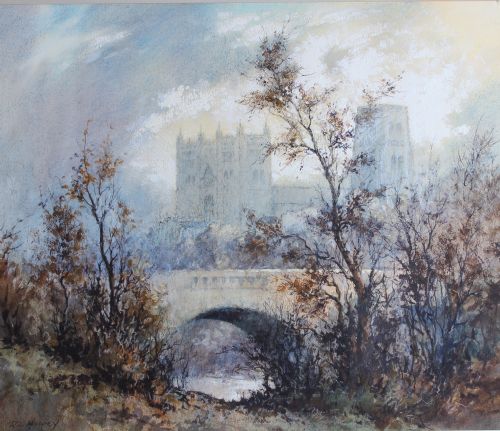
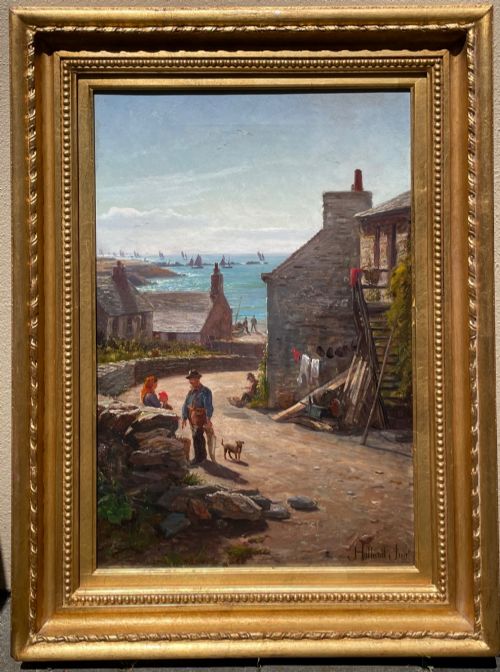
Traditional British marine painting records coastal landscapes, bustling fishing harbours, and maritime shipping scenes across the nineteenth and twentieth centuries. When you search for this phrase, you encounter depictions of specific locations such as Cornwall, Scarborough, and the Isle of Man.
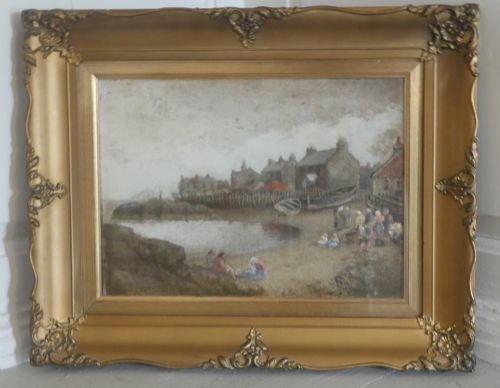
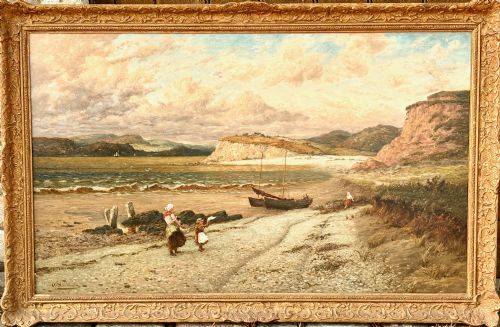
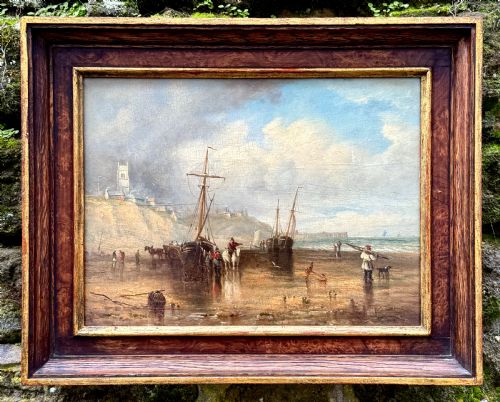
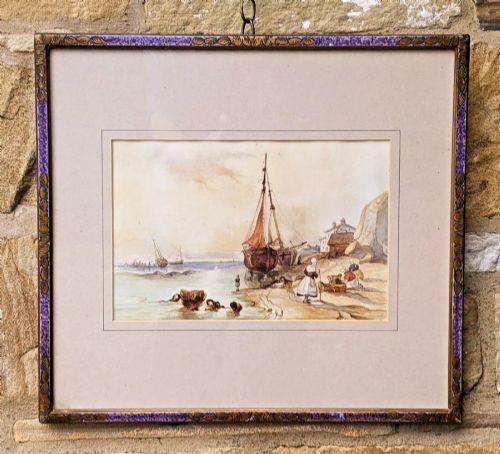
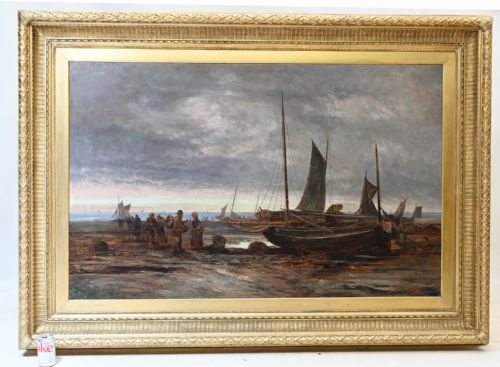
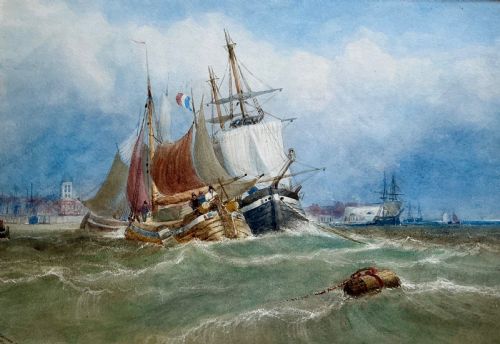
The works on this page appear primarily as oil paintings on canvas or panel, alongside detailed watercolour paintings on paper. These pieces range from intimate coastal watercolours to large Victorian maritime canvases recording everyday maritime life.
Subjects frequently include fishing boats, harbour walls, local trade, and coastal inhabitants working along the shore. The selection spans the Victorian era through the Edwardian period and into the mid-twentieth century.
Judging quality in marine works
Quality rests upon the artist's handling of natural light, atmospheric conditions, and the convincing movement of water. Superior examples demonstrate confident brushwork and accurate anatomical or architectural detail in the depiction of shipping and coastal structures.
Compositional strength and the artist's ability to ground human activity naturally within the coastal landscape elevate a piece. Weaker works often rely on formulaic arrangements and stiff, repetitive forms without true observation of marine environments.
Listings feature 19th Century, Victorian, Edwardian, and mid-20th Century periods using canvas, paper, oil paint, watercolour pigment, wood, and giltwood.
Edward Mills·William Banks Fortescue·Thomas Creswick·Robert Leslie Howey·John Holland·Henry Barlow Carter·James Kyd·Stanley Leader·John McDougal·George Hamilton Constantine·William Pitt·George Henry Knight·Thomas Rose Miles·Owen Bowen·Walter Sweet·Herbert James·William Edward Webb·Walter Holmes·George Smith·John James Wilson·Ralph Hedley·Edward Fletcher·William Shayer·James Aitken·J De Breanski
The Traditional British Marine Painting Glossary
- Seascape
- A work of art depicting the sea, coastal views, or maritime activity. These pieces focus heavily on water, weather conditions, and coastal topography.
- Watercolour
- A painting method where water-soluble pigments are suspended in a water-based solution on paper. This technique allows for luminous washes representing sky and water.
- Oil on Canvas
- Pigment mixed with drying oil applied to a woven fabric support stretched over a wooden frame. This medium permits rich impasto and deep tonal layering.
- Giltwood
- Wood carved and covered with a thin layer of gold leaf or gold paint. Period frames of this material enhance the visual presence of traditional paintings.
Traditional British Marine Painting: Frequently Asked Questions
What periods do these paintings cover?
The works span from the nineteenth century through the Victorian and Edwardian eras up to the mid-twentieth century. Artists recorded coastal scenes during periods of significant maritime and industrial change.
Most pieces date from the Victorian period, reflecting a strong national interest in coastal topography and maritime commerce.
Where do the depicted locations come from?
The scenes represent actual British and domestic coastal locations, including Cornish harbours like St Ives and Mousehole, Yorkshire fishing towns, and the Thames. Artists travelled directly to these ports to sketch and paint from life.
Local landmarks such as Durham Cathedral, Hastings Castle, and St Michael's Mount frequently anchor the geographical context of the artwork.
How do I care for a watercolour marine painting?
Works on paper require protection from direct sunlight to prevent the watercolour pigments from fading over time. Conservation-grade framing with acid-free mounts helps preserve the paper.
Display watercolours in rooms with stable humidity levels to protect both the paper support and the historic frame.
What subjects besides ships appear in traditional marine art?
Beyond shipping vessels and the open sea, artists recorded the daily labour of coastal communities. Scenes frequently feature fisher folk, kelp gatherers, and merchants packing goods for market.
Harbour architecture, coble boats, and domestic beach activities form an integral part of the narrative captured in these historic works.