




Traditional British Landscape Artwork
Traditional british landscape artwork brings the countryside, rivers and coasts of past centuries into the room through oil and watercolour.
Traditional British Landscape Artwork
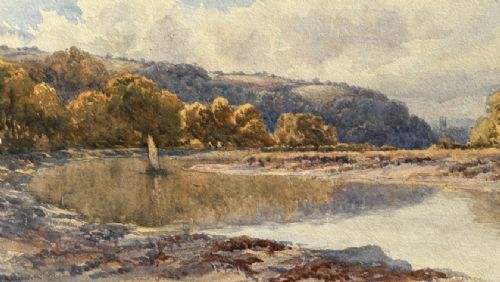
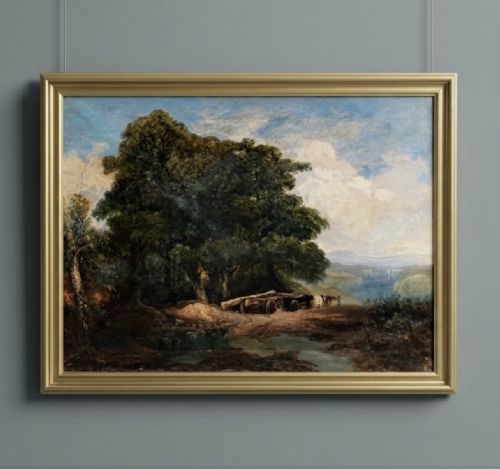
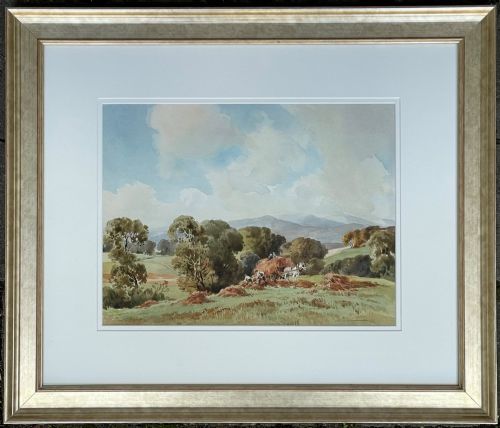
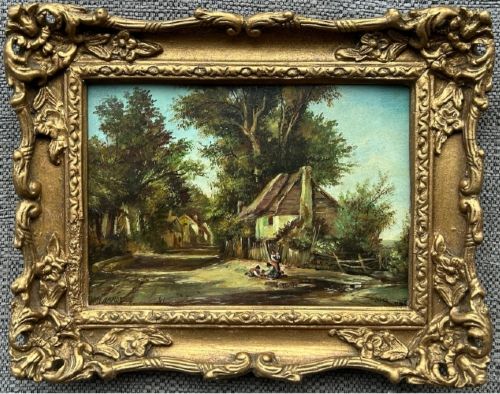
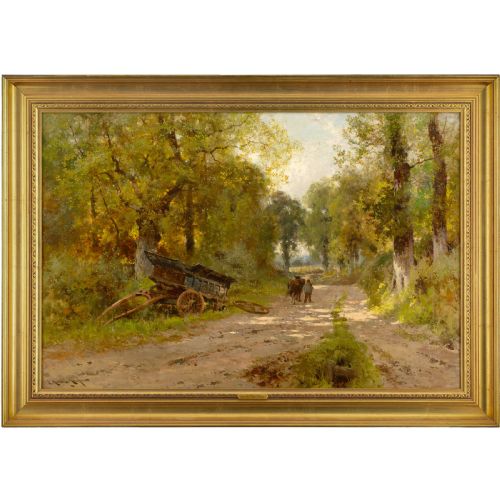
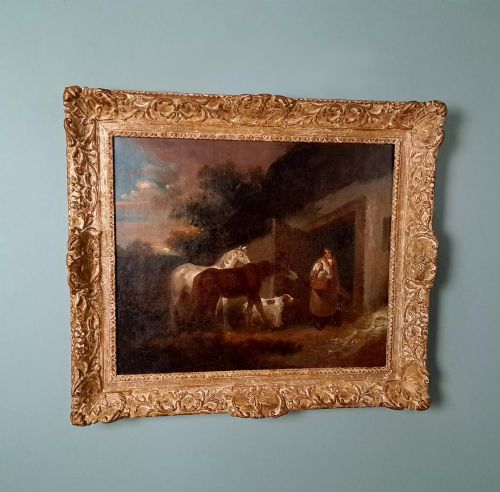
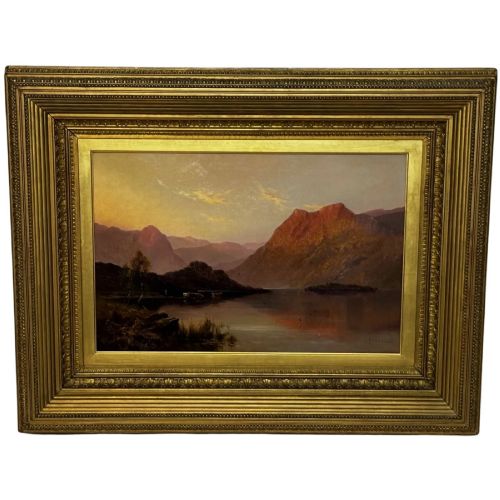
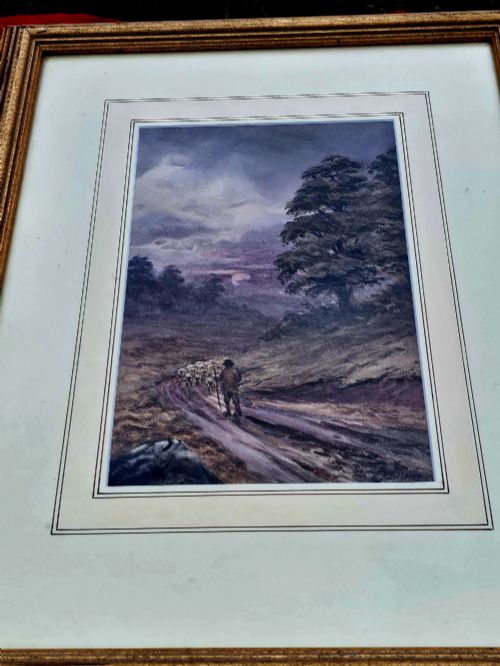
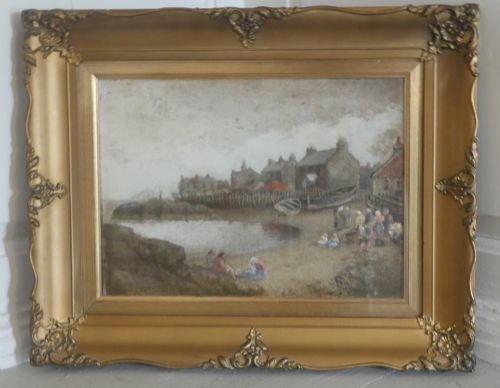
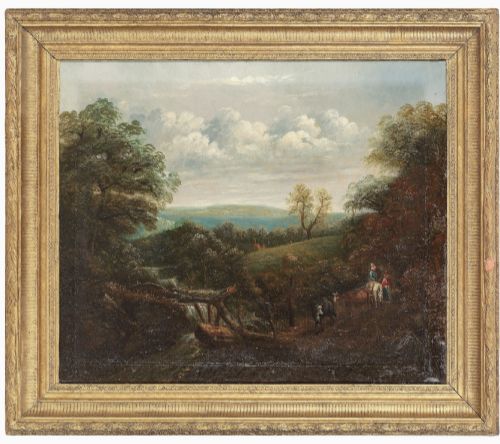
Traditional british landscape artwork captures rural scenes, pastoral valleys, coastal harbours and woodland views across the nineteenth and early twentieth centuries. These paintings range from expansive canvas oils to intimate watercolour studies on paper or wood panel.
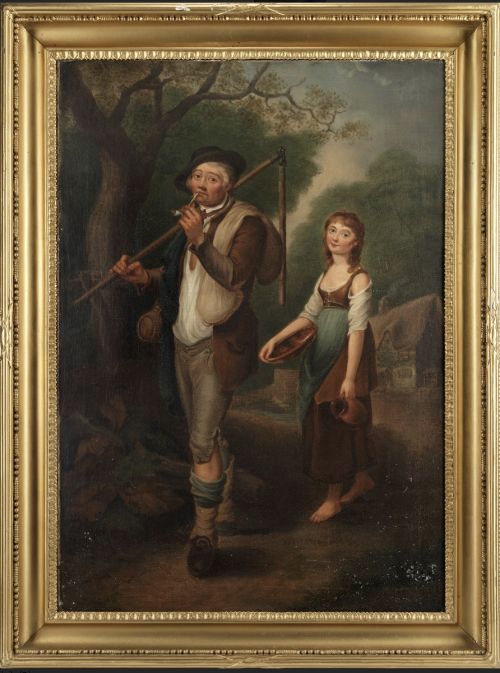
The works reflect regional schools and individual observation, depicting livestock, rivers, cottages and figures within rural settings. Victorian and Edwardian examples dominate the selection, showing how artists recorded the topography and changing light of the British countryside.
Materials and techniques
Artists worked primarily with oil on canvas or wooden panel, and watercolour on paper, often framing the finished pieces in giltwood. Pigments were applied to build texture and depth, capturing atmospheric effects such as sunsets, woodland shadows and river mists.
Support materials varied from stretched canvas and heavy watercolour paper to wooden boards, each influencing how the paint settled and aged. Many surviving works retain their original frames, which complement the scale and palette of the painting.
Works attributed to the Victorian British School appear alongside signed pieces by regional landscape painters.
Judging quality in landscape works
Quality rests upon the artist's handling of light, perspective and atmospheric depth within the composition. Stronger pieces demonstrate confident brushwork and a balanced tonal range that brings life to the foliage, water or sky.
The depth of detail in the background elements and the natural integration of figures or livestock distinguish more accomplished works from routine topographical views. Preservation of the original paint surface and the appropriateness of the framing also influence the standing of a piece.
Richard Sebastian Bond·William H Myers·Tom Campbell·Alfred Young Nutt·Percy Lancaster·William Howard Hardy·John Horace Hooper·William Joseph Shayer Senior·Alfred Fontville de Breanski Jr·EJ Letheren·Edward Mills·William Banks Fortescue·Thomas Barker of Bath·Thomas W Lascelles·William Joseph Boyes·David Bates·Thomas Smythe·Walter Heath Williams·Robert Thorne Waite·John Smith Atherton·Thomas Creswick·George Oyston·George Wright·Alfred G Morgan·Russell Sidney Reeves
The Traditional British Landscape Artwork Glossary
- Oil on Canvas
- Pigment mixed with drying oil applied to a woven fabric stretched across a wooden frame. This medium allowed artists to build rich textures and deep colour gradations.
- Watercolour
- A paint consisting of colour suspended in a water-soluble binder, traditionally applied to paper. It produces transparent washes of colour ideal for capturing atmospheric sky and water effects.
- Giltwood
- Wood carved and coated with gold leaf or a gold-coloured finish, commonly used for traditional picture frames. The reflective surface enhances the artwork it surrounds.
- British School
- A term used to describe works produced by artists trained or working within Britain whose specific identities remain unrecorded or grouped by national tradition. It links anonymous paintings to the prevailing stylistic methods of their era.
Traditional British Landscape Artwork: Frequently Asked Questions
How do I care for antique oil paintings?
Keep oil paintings away from direct sunlight and dramatic shifts in temperature to protect the canvas and paint layers. Dust the surface gently with a soft, dry brush without applying pressure.
Avoid using liquid cleaners or attempting to wash the paint surface yourself. Professional conservation is recommended if the canvas requires cleaning or structural repair.
What is the difference between oil and watercolour landscapes?
Oil paintings use thick pigments on canvas or wood, offering rich textures, deep shadows and vibrant colour blending. They are generally more robust and traditionally hung without glass protection.
Watercolours use transparent washes on paper, creating lighter and more delicate atmospheric effects. They require framing behind glass to protect the paper from moisture and dust.
How can I tell the period of a landscape painting?
The style of dress worn by figures, the framing methods and the types of pigments provide clues to the era of creation. Victorian and Edwardian works often reflect specific approaches to rural realism and pastoral subjects.
Signatures, stretcher construction and labels on the reverse of the canvas or panel also help narrow down the date of execution.
Where should I hang a traditional landscape?
Select a wall with stable ambient conditions away from radiators, damp areas and direct afternoon sun. Positioning the artwork at eye level allows the composition and brushwork to be appreciated fully.
Pairing the scale of the painting with the wall space ensures the piece commands the room properly without feeling crowded by surrounding furniture.