




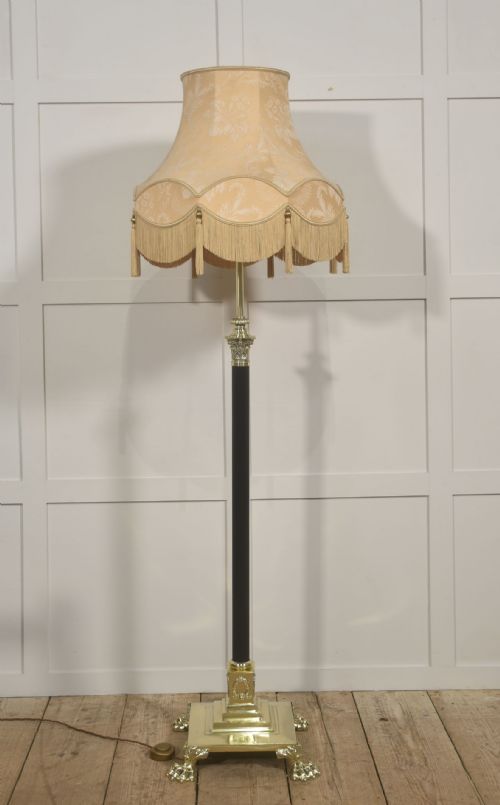


Traditional Brass Standard Lamp
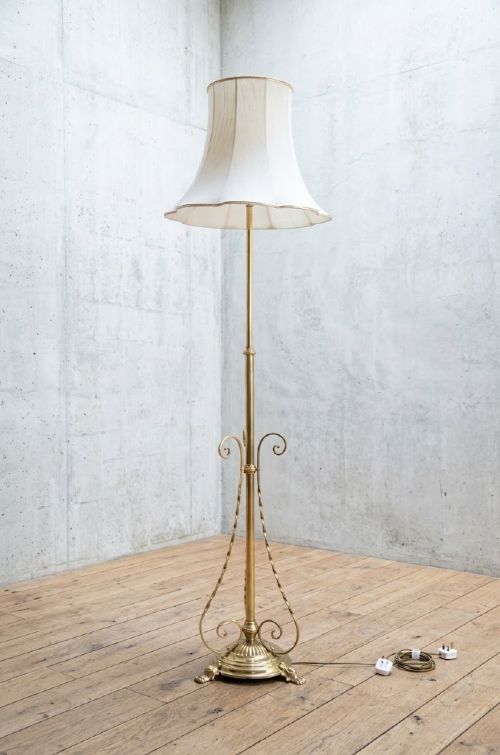
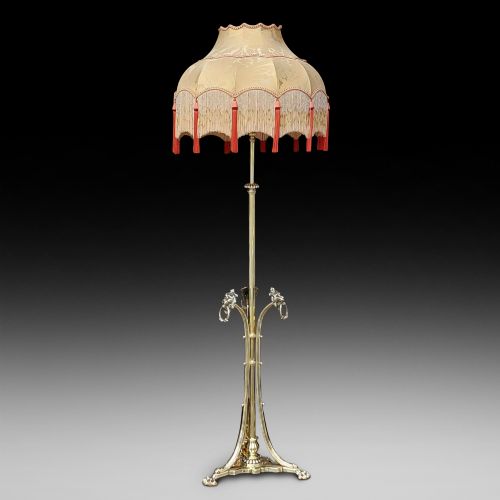
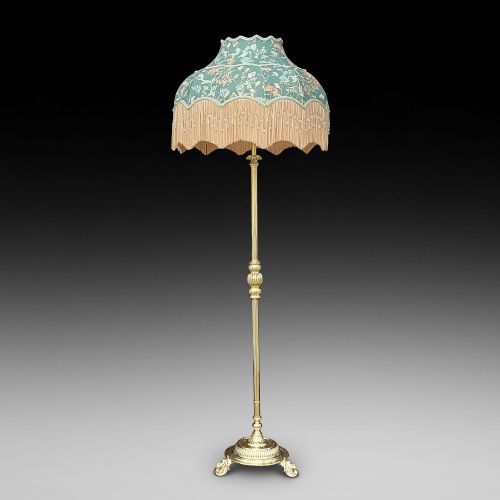
A traditional brass standard lamp brings substantial height and warmth to a room, standing ready beside a reading chair with period presence.
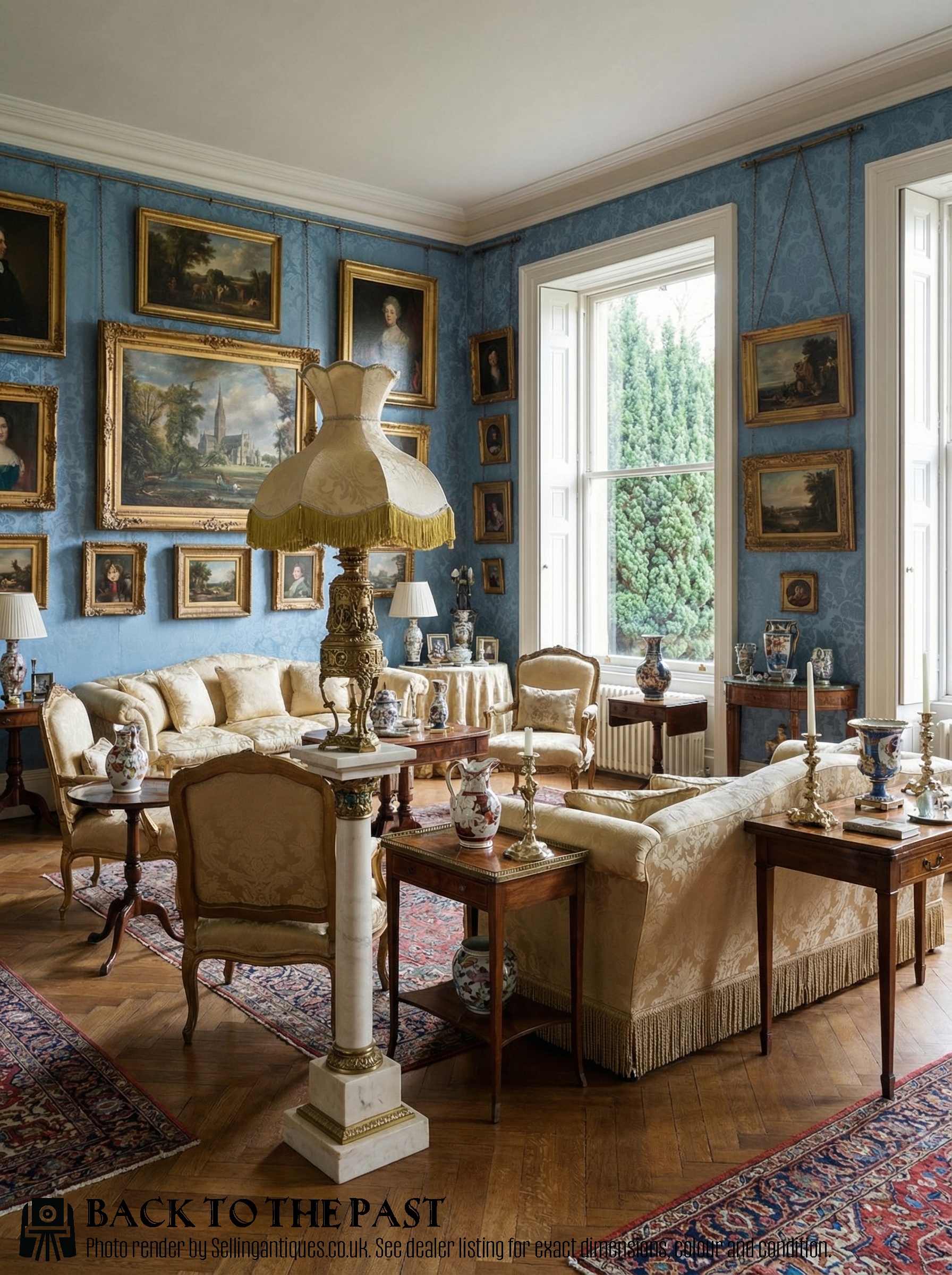
Traditional Brass Standard Lamp
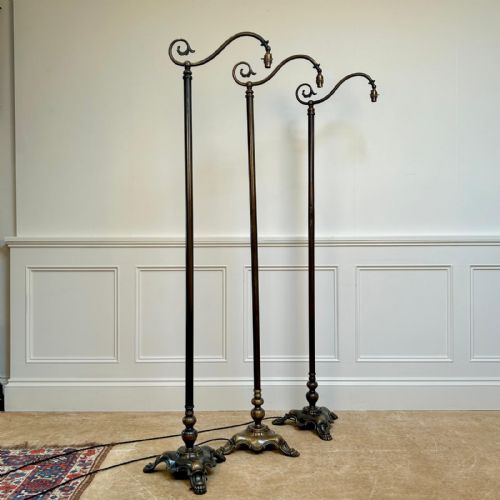
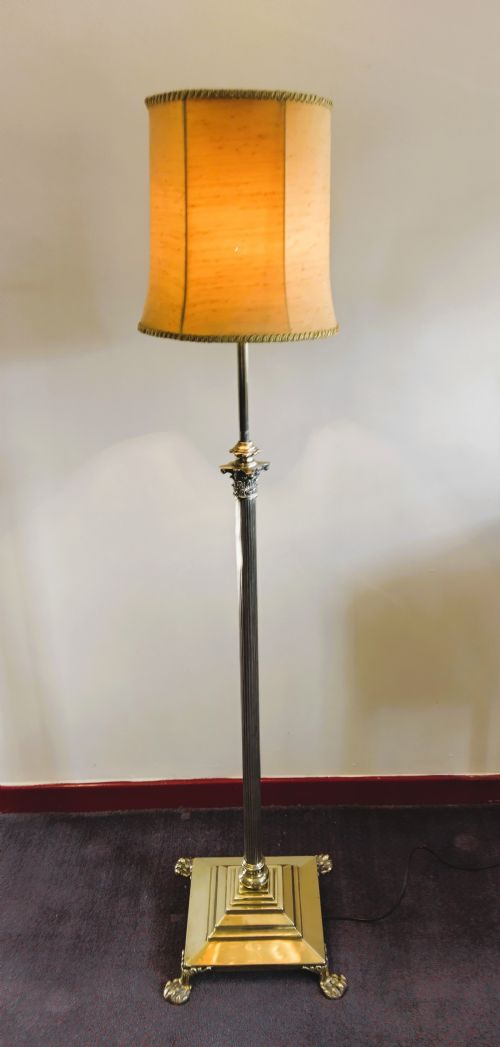
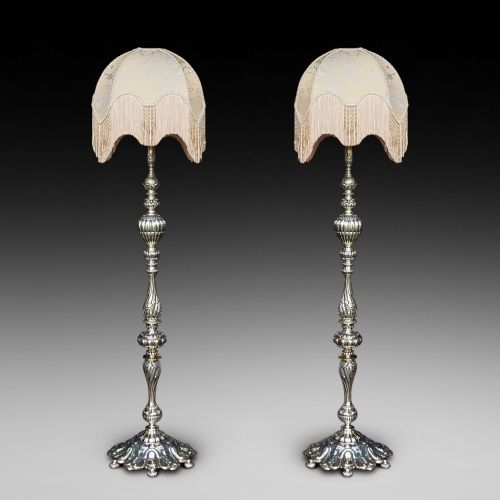
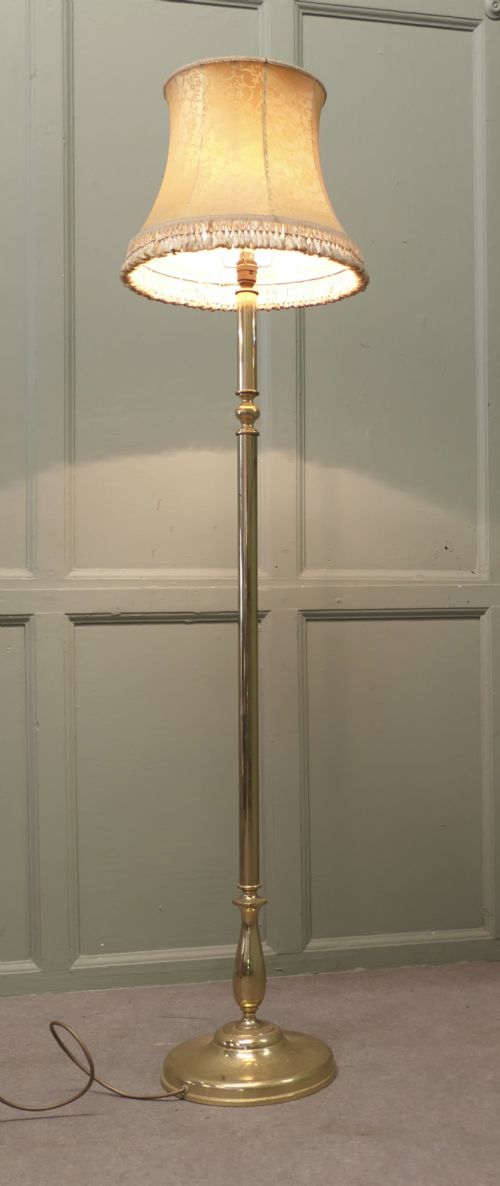
When you search for a traditional brass standard lamp, you find upright floor lighting designed to illuminate larger sitting spaces from an elevated position. The pieces listed here span the Victorian, Edwardian, and early twentieth-century periods, capturing styles from plain columns to ornate revival forms.
You meet heavy cast metal pillars, telescopic stems, and adjustable heights designed to suit various seating arrangements. Many examples retain elements of their original conversion history, moving from oil burning mechanisms to electric fittings.
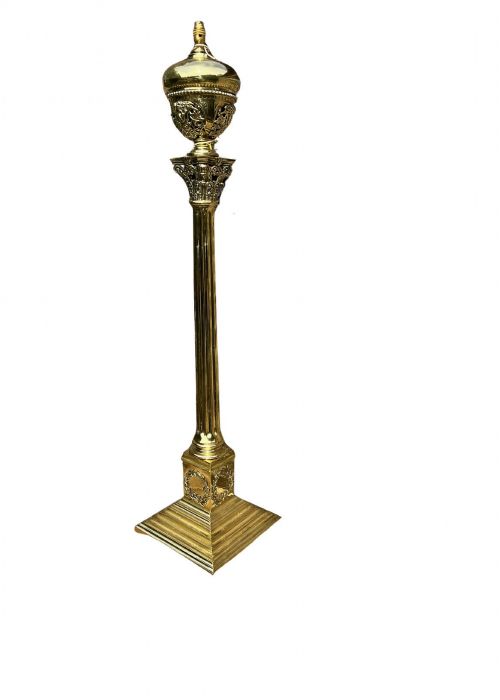
The prevailing aesthetic draws on Neoclassical, Arts and Crafts, and Art Nouveau design vocabularies. Corinthian capitals, tripod bases, and stepped tiers recur frequently across the inventory.
How they were made
Maker workshops utilised brass as the principal structural and decorative metal, often combining it with copper, cast iron, and marble to add weight and stability to the base. Metal components were cast, turned on lathes, and joined with threaded fixings or rivets.
Telescopic mechanisms allowed inner sliding tubes to raise and lower the light source, held in place by thumbscrews or collar adjustments. Surface patination developed naturally over decades of handling, whilst shades incorporated fabric, silk, and fringed trimming.
Some telescopic columns hide decades of adjusting fingerprints beneath their sliding collars.
What varies in quality
Quality rests in the heft of the metalwork and the precision of the telescopic adjustment mechanism. Heavy gauge brass and solid weighted bases separate substantial floor pieces from lighter, more utilitarian stands.
Casting detail dictates distinction, visible in the sharpness of floral openwork, Corinthian fluting, and the rigidity of tripod legs. Original components, including collars and key switches, elevate the integrity of the piece.
Messenger·Whytock & Reid
The Traditional Brass Standard Lamp Glossary
- Telescopic
- A shaft design featuring an inner sliding tube that allows the overall height of the lamp to extend or contract. This mechanism frequently relies on a friction collar or thumbscrew to secure the position.
- Corinthian column
- A vertical support styled after classical architecture, featuring an ornate capital decorated with acanthus leaves. This form appears often on grander Victorian and Edwardian examples.
- Bouillotte
- A style of adjustable reading lamp originating in France, typically featuring a central stem and a painted metal or fabric shade. These pieces often incorporate a small basin base.
- Arts and Crafts
- A design movement prioritising honest construction, hand-finished surfaces, and simple materials over industrial ornament. Standards in this style often show hammered textures and restrained geometric lines.
- Tripod base
- A three-legged floor support providing stability for tall standards, frequently finished with pad feet or claw details. This arrangement prevents tipping when the stem is fully extended.
Traditional Brass Standard Lamp: Frequently Asked Questions
Were these lamps converted from oil?
Many Victorian and Edwardian floor lamps began life as oil-burning standards before being adapted for electricity during the twentieth century. You can often spot evidence of this in the burner assembly remnants or threaded galleries at the top of the stem.
Conversions were standard practice as homes modernized, and today these pieces function safely with modern wiring whilst retaining their original metal bodies.
How do I clean brass safely?
Dust the metal regularly with a soft, dry cloth to prevent the buildup of grime in the decorative crevices of the casting. Avoid harsh chemical polishes that strip away the aged patination and leave the surface unnaturally bright.
If cleaning is necessary, use a mild soapy solution on a damp cloth, drying immediately with a lint-free towel to protect the original metal finish.
What shades suit these lamp stands?
Fabric shades featuring silk, pleated interiors, or traditional fringe work complement the proportions of heavy floor standards. The scale of the shade should balance the visual weight of the brass column and its weighted base.
Edwardian and Victorian examples often pair well with empire or bell-shaped silhouettes that echo the period of the metalwork.