
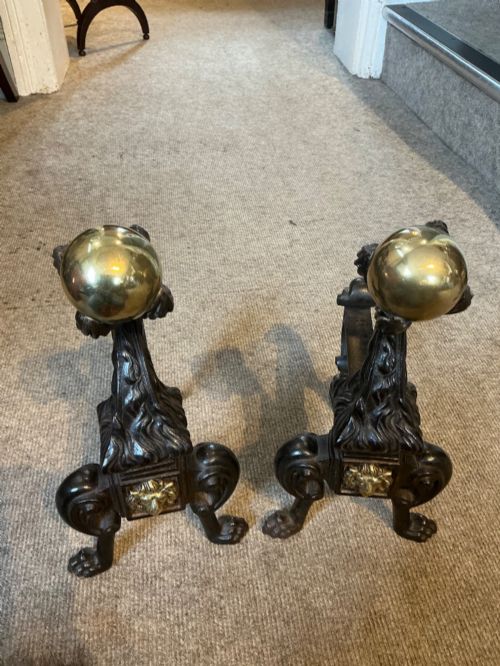


Traditional Brass Log Dogs
Traditional brass log dogs hold your firewood securely within the hearth while bringing bright metalwork to the fireplace.
Traditional Brass Log Dogs
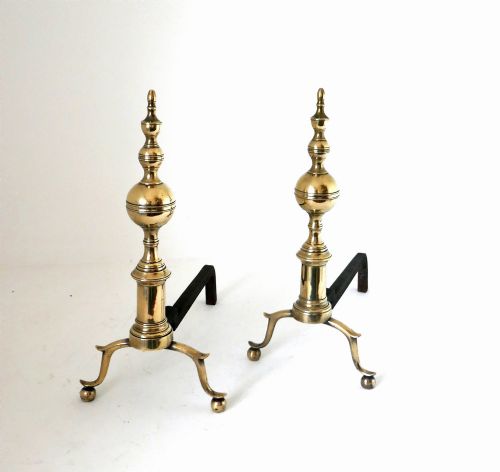
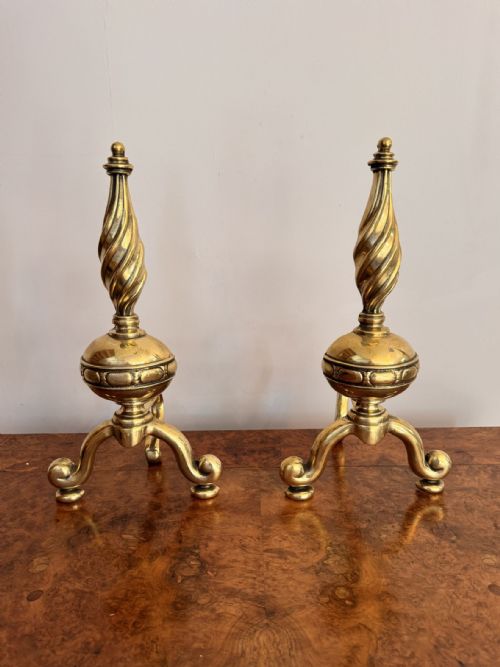
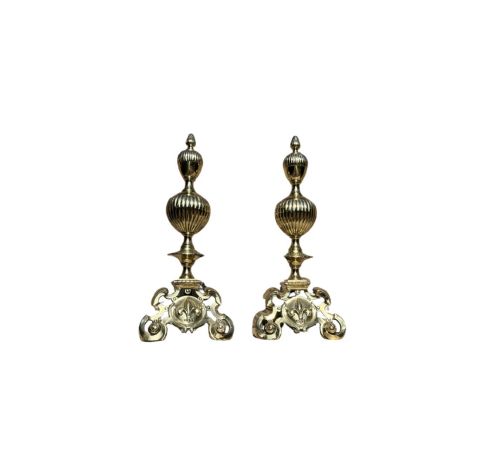
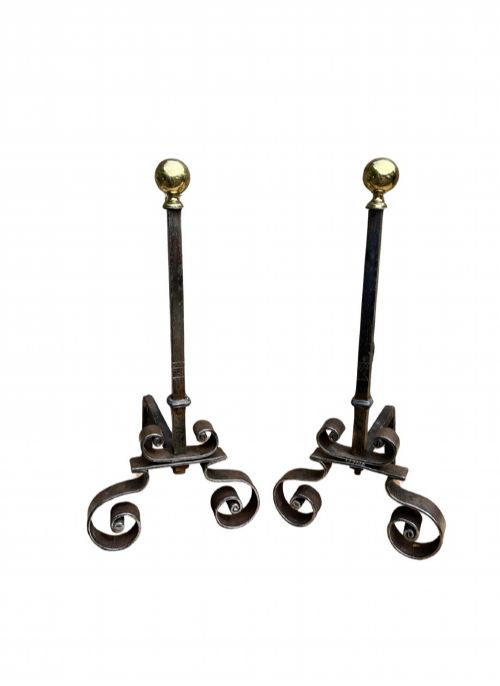
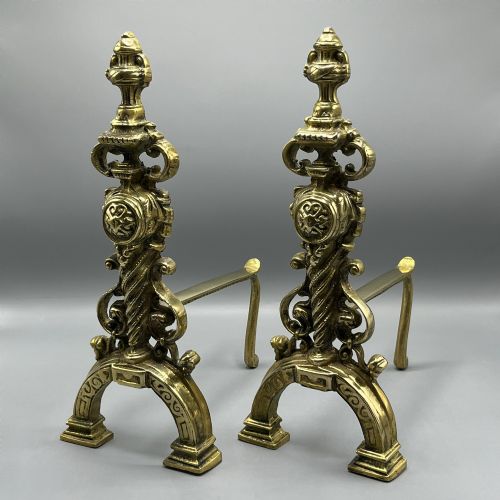
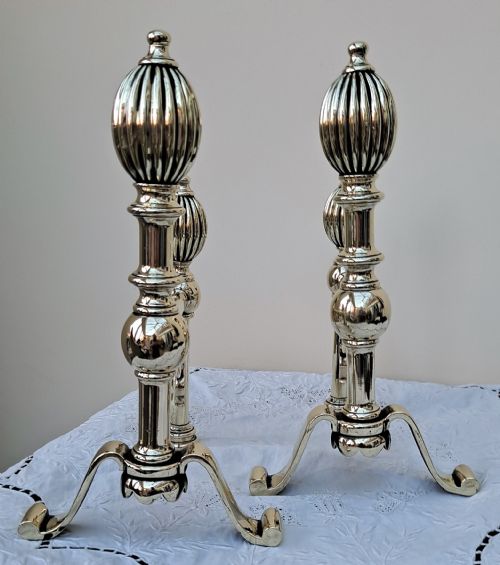
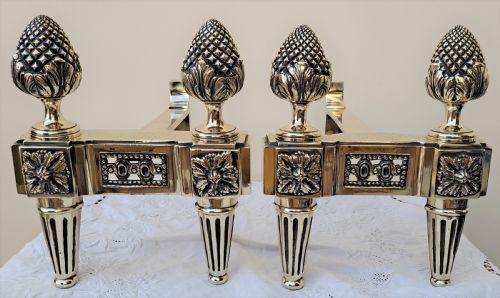
Traditional brass log dogs, also known as andirons or fire dogs, stand inside the fireplace to support logs above the hearth floor and improve air circulation. They appear frequently in Victorian and Georgian forms, alongside French and Dutch baroque revival styles.
The selection here includes solid brass examples alongside pairs combining brass with iron, copper, or steel. These fireplace accessories range from simple nineteenth-century utilitarian pairs to ornate monumental pieces designed for larger hearths.
Materials and construction methods
Foundry workers cast brass and iron components into detailed shapes, utilising traditional moulds to create sturdy fire dogs and grates. Artisans then joined these metal parts with wrought iron or steel supports to withstand intense hearth heat.
Surface finishes range from polished solid brass to gilt brass and combinations with copper fire tool rests. Iron parts provide structural weight at the back while bright brass fronts face the room.
Materials span solid brass, cast iron, wrought iron, copper, steel, and gilt brass across eighteenth, nineteenth, and early twentieth-century examples.
Judging quality and craftsmanship
Heavier castings and thicker gauge metals separate substantial hearth furniture from lighter decorative versions. The crispness of the casting detail on the brass fronts indicates the skill of the original workshop.
Original matching pairs maintain balanced proportions and uniform patination across both standards. Integrated ironwork stability and secure joins dictate how well the pieces handle heavy logs.
The Traditional Brass Log Dogs Glossary
- Andiron
- A horizontal support raised on legs, used in pairs to hold burning wood in an open fireplace. They protect the hearth floor and allow air to circulate beneath the logs.
- Fire basket
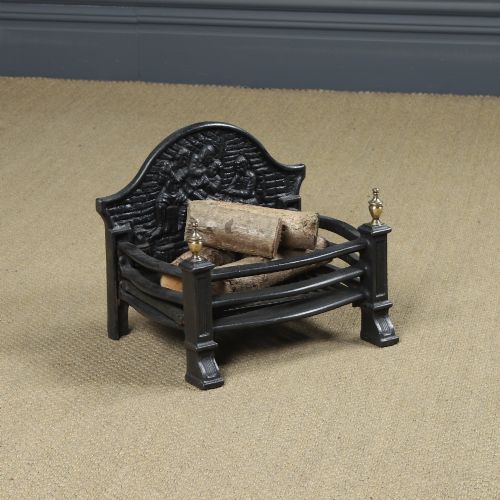
- A metal grate holding fuel within the fireplace, often combined with decorative side plates and integrated log dogs. These units contain the fire compactly.
- Gilt brass
- Brass coated with a thin layer of gold or gold-coloured finish to enhance brilliance. This treatment appears on formal nineteenth-century pairs.
- Wrought iron
- Iron beaten into shape by a smith rather than cast in a mould. This tough material forms the functional billets and structural shafts of many fire dogs.
Traditional Brass Log Dogs: Frequently Asked Questions
How do I use log dogs?
Place a pair of log dogs inside the hearth with the vertical decorative fronts facing outward into the room. Lay your logs across the horizontal bars so air can circulate underneath for a steady burn.
Ensure the iron billets at the back sit securely on the hearth floor to bear the weight of the firewood safely.
Are these suitable for modern fireplaces?
Many traditional pairs fit standard open masonry hearths quite well. Measure your fireplace depth and opening width before selecting a pair to ensure proper clearance.
Larger monumental pairs require substantial hearth space, whereas smaller nineteenth-century versions suit compact openings.
How do I clean brass log dogs?
Dust the metal regularly with a soft cloth to prevent soot accumulation. Avoid harsh chemical cleaners that strip away the aged patination accumulated over centuries.
Gentle wiping preserves the historic surface while keeping the metal bright near the fire.
What is the difference between andirons and log dogs?
The terms describe the same fundamental hearth furniture used to support logs. Regional variations and different periods tended to favour one name over the other.
Both serve the dual purpose of keeping wood elevated and framing the fireplace visually.