


Traditional Boat Wall Art
Traditional boat wall art brings maritime history into rooms through maritime watercolours, oil paintings and wood carvings.
Traditional Boat Wall Art
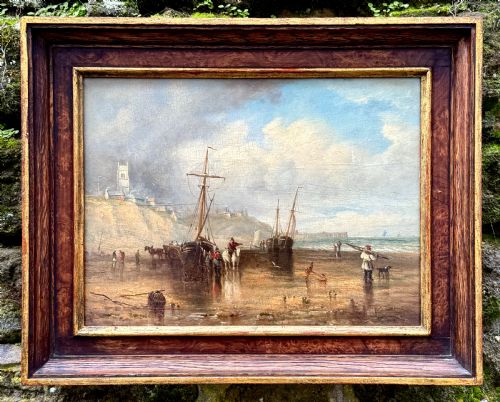
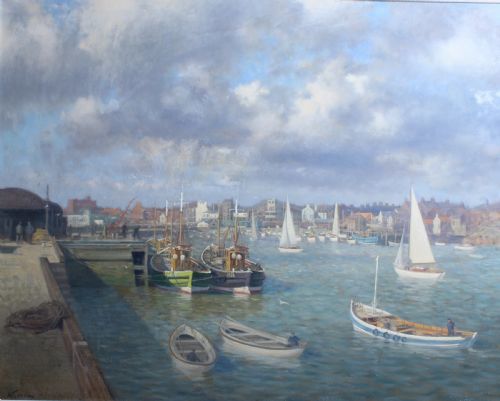
Traditional boat wall art comprises maritime watercolours, oil paintings and painted wood objects depicting harbours, coastal shipping and fishing vessels. Pieces span the nineteenth century through the mid-twentieth century, recording British and European maritime scenes.
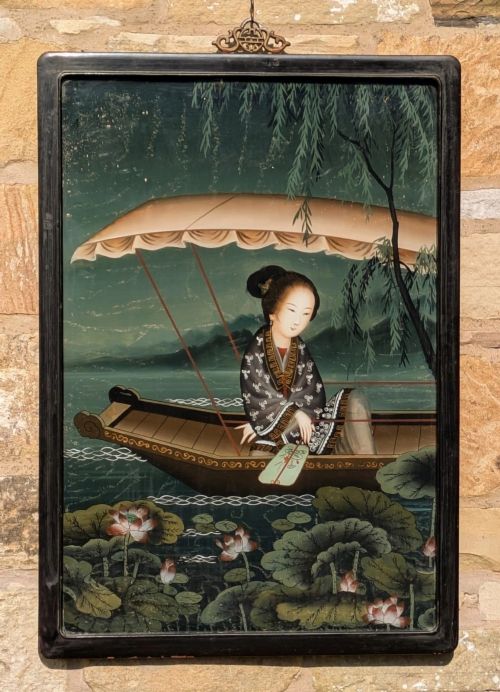
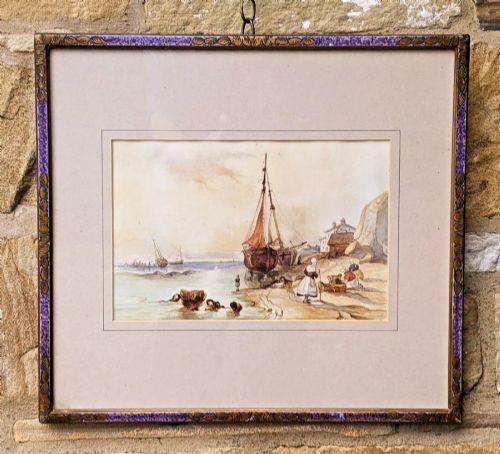
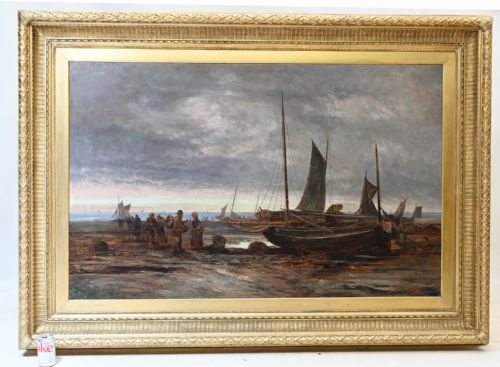
Oil paintings on canvas and board dominate the selection, alongside detailed watercolours on paper and reverse glass paintings. Subjects range from large Cornish fishing trawlers to quiet river landscapes with boats.
Framed watercolours and oils are the primary forms encountered, often housed in period giltwood or ebonised frames that suit the nautical subject matter.
Materials and construction
Painters utilised oil paint and watercolour on stretched canvas, wood panels and paper, applying pigment to capture coastal light and water movement. Frames constructed from giltwood and oak enclose many of the works.
Three-dimensional objects such as ship wheels utilise solid wood components, painted in red or left in natural oak finishes to endure maritime use.
Deep red paint clings stubbornly to a small Welsh ship's wheel from Carmarthenshire.
Distinctions in quality
Quality rests on the precision of brushwork and the artist's command of light, atmosphere and maritime architecture. Finer works display accurate rigging and detailed coastal figures rather than generic vessel shapes.
The choice of framing contributes to the overall standard, with original giltwood or ebonised surrounds adding context to the painted canvas or paper beneath.
Thomas Creswick·Walter Goodin·Thomas Bush Hardy·Benjamin Williams Leader·Frederick Waters Watts·Ernest F. Hill·George Henry Knight·Paul H Ellis·Edward Henry Holder·William Edward Webb·Owen Bowen·Micheal Matthews·Robert Leslie Howey·Pieter Cornelis Dommersen·George Marks·Alfred Montague
The Traditional Boat Wall Art Glossary
- Seascape
- A work of art depicting the sea, coastlines and marine vessels. These compositions focus on maritime activity and coastal weather.
- Giltwood
- Wood carved and covered with a thin layer of gold leaf. This material frequently appears on period frames surrounding nineteenth-century paintings.
- Watercolour
- A painting method where water-soluble pigments are suspended in a water-based solution. Paper serves as the primary support for these transparent washes.
- Reverse painting on glass
- An art technique where the image is painted directly onto the back of a glass panel and viewed from the front. This method creates a glossy surface finish.
- Ship's wheel
- A steering mechanism used aboard watercraft, constructed from timber with distinct handles radiating from a central hub.
Traditional Boat Wall Art: Frequently Asked Questions
What periods do these paintings come from?
The works span from the early nineteenth century through the mid-twentieth century. Artists recorded coastal scenes and harbour views across the Victorian and Edwardian eras.
Selections include dated pieces from the eighteen-sixties and nineteen-fifties, reflecting changing artistic approaches to maritime subjects over time.
How should I hang heavy oil paintings?
Large oil paintings on canvas require secure fixings into wall studs or appropriate masonry anchors. The substantial weight of framed canvas and timber demands robust support.
Ensure the hanging wire and wall hooks match the poundage of the specific piece to maintain stability.
Are watercolours sensitive to light?
Watercolours on paper react to direct sunlight and bright indoor illumination over extended periods. Pigments fade if exposed to intense ultraviolet rays.
Positioning these works away from direct south-facing windows preserves the original tones of the paper and paint.
What subjects appear in these works?
Compositions feature fishing trawlers in Cornish harbours, sailing vessels on Dutch estuaries, and quiet river banks with boats. Scenes capture everyday maritime life and coastal topography.
Depictions range from calm waters near bridges to stormy coastal waters with three-masted schooners.