




English Maritime Seascape
These English maritime seascape works capture coastal harbours, fishing boats and stormy waters across the nineteenth and twentieth centuries.
English Maritime Seascape
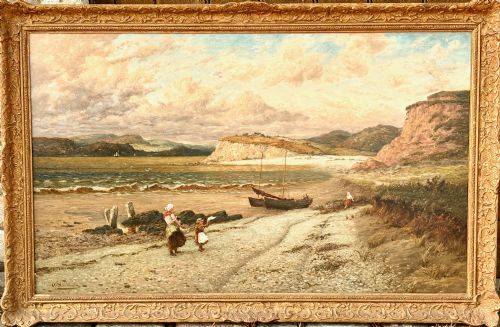
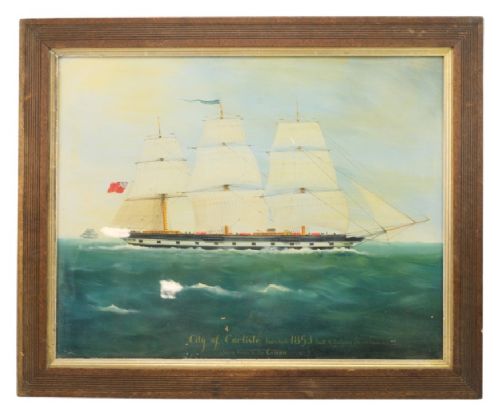
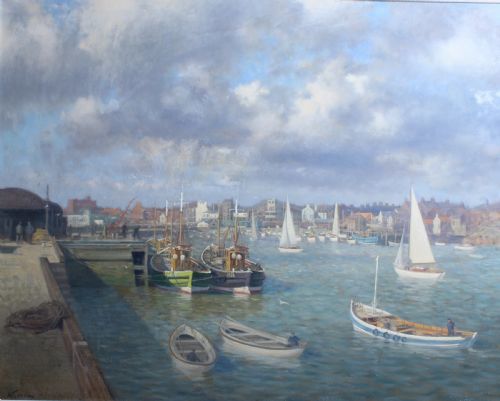
When you search for an english maritime seascape, you encounter painted depictions of coastal life, harbours and vessels along the British shore. These pieces range from intimate watercolours of Cornish fishing ports to large oil paintings of stormy seas and bustling piers.
You are most likely to meet nineteenth-century works on paper and canvas, reflecting the Victorian fascination with coastal topography and marine labour. Mid-century examples also appear, carrying the subject into later decades through oil and watercolour mediums.
The subjects focus heavily on specific coastal locations such as Scarborough, St Ives and various southern pleasure piers. Local fishing vessels, luggers and rolling waves dominate the compositions, framing the sea as a working environment rather than a mere backdrop.
Materials and technique
Artists relied primarily on oil on canvas or board, alongside watercolour applied to paper, capturing the translucent quality of water and the heavy atmosphere of coastal weather. These traditional mediums allowed painters to render the shifting light on chalk cliffs and the spray of choppy seas.
Frames play a significant role in the physical structure of these works, with period giltwood settings frequently encasing the canvases. The craftsmanship extends from the detailed brushwork of the marine painters to the construction of the supporting wooden frames and glass protection.
Several Victorian artists clearly preferred painting wet pebble beaches to staying dry in their studios.
Distinctions in quality
The strength of a composition rests on the artist's command of atmospheric light and maritime detail, distinguishing spirited depictions of crashing waves from stiff topographical records. Superior examples convey motion and weather with confident brushwork rather than rigid adherence to technical drafting.
Provenance and attribution elevate certain works, particularly when signed by established marine artists or linked directly to known coastal regions. The integration of original period framing also marks the difference between a standard decorative canvas and a preserved historical artefact.
James Orrock·William Banks Fortescue·Walter Goodin·William Edward Webb·Charles Napier Hemy·Richard Harry Carter·George Morland·John Bell·Frederick William Hattersley·Alfred Henry Vickers·Percy Brooke·Thomas Bush Hardy·Joseph Newington Carter·Lennard Lewis·Daniel Sherrin·Thomas Rose Miles·Robert Leslie Howey·Edward Fletcher·William Shayer·Fred Dade·Walter J Hall·George Marks·Henry Bright
The English Maritime Seascape Glossary
- Watercolour
- A paint consisting of pigment suspended in a water-soluble binder. It is applied to paper to achieve translucent washes of colour.
- Giltwood
- Wood that has been carved and covered with a thin layer of gold leaf. This material is common in traditional antique picture frames.
- Lugger
- A small fishing vessel carrying lug sails on one or more masts. These boats frequently feature in nineteenth-century coastal art.
- Aquatint
- A printmaking technique that produces tonal effects resembling watercolours. It creates graduated areas of dark and light on paper.
English Maritime Seascape: Frequently Asked Questions
What periods do these seascapes cover?
The listings span from the Regency era through the Victorian period and into the mid-twentieth century. Most examples cluster in the late nineteenth and early twentieth centuries.
This timeframe captures the height of British marine painting and topographical coastal art. Styles shift from academic realism towards early impressionist interpretations of light and water.
Where were these coastal scenes painted?
Artists worked across diverse British shores, recording specific harbours, beaches and chalk cliffs. Popular locations include Cornwall, Yorkshire, Norfolk and the south coast of England.
Many works document working ports and local fishing fleets rather than idealized vistas. This provides a clear record of maritime trade and coastal communities during the industrial age.
Are these paintings signed by the artists?
Many pieces feature visible signatures, monograms or contemporary inscriptions identifying the creator or the specific coastal location. Attribution is often supported by period exhibition labels or documented artist biographies.
Works without visible signatures are frequently attributed to specific nineteenth-century British schools based on technique, subject matter and material composition.
How should I care for antique watercolours?
Works on paper require protection from direct sunlight to prevent the fading of watercolours and the yellowing of the paper support. Stable humidity levels prevent damp damage and foxing.
Displaying these pieces away from heat sources and utilising UV-filtering glass ensures the long-term preservation of the pigment and the surrounding mount board.