



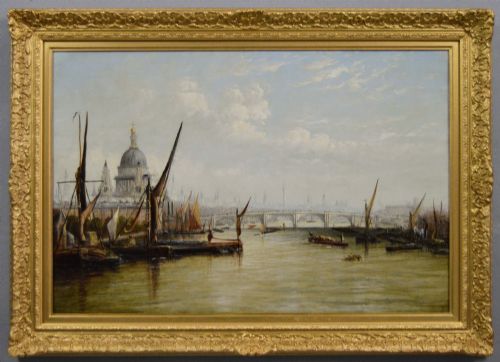
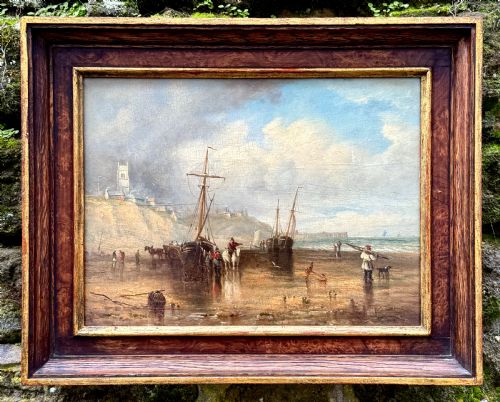
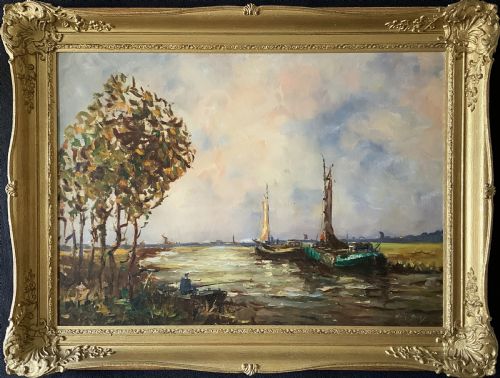
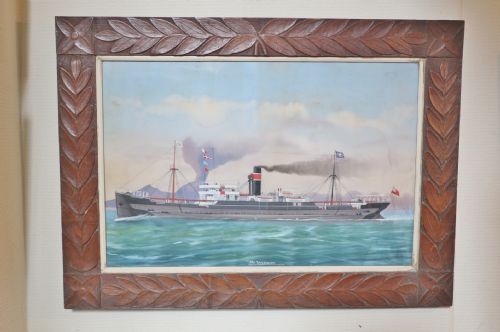
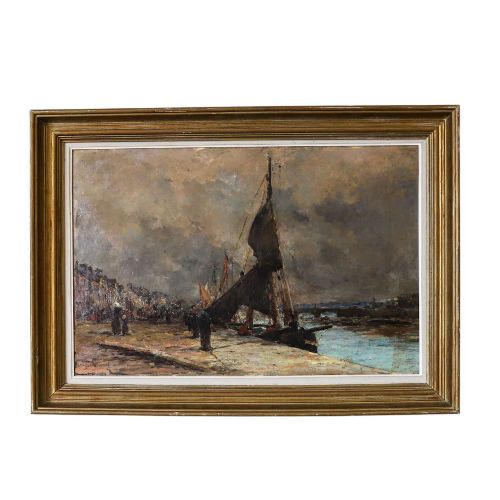
Framed Boat Oil Painting
When you search for a framed boat oil painting, you are looking at coastal views, harbour scenes, and deep-water shipping rendered in oil paint and held within period wooden surrounds.
Framed Boat Oil Painting
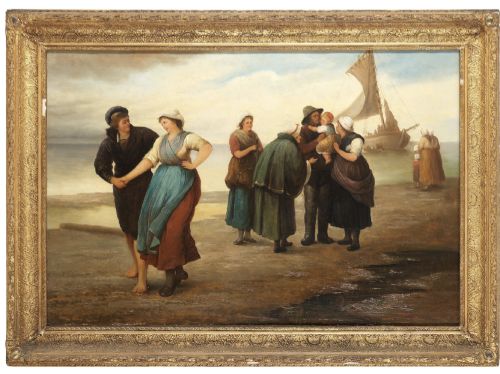
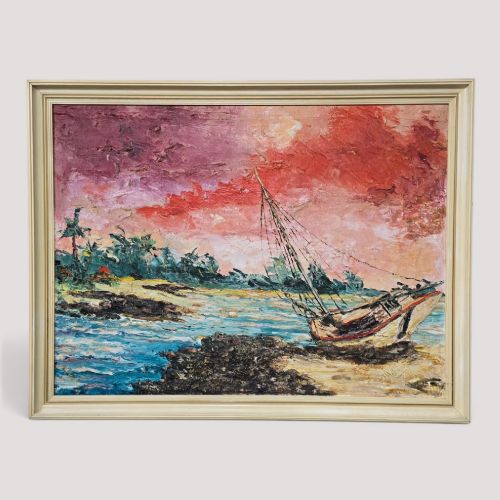
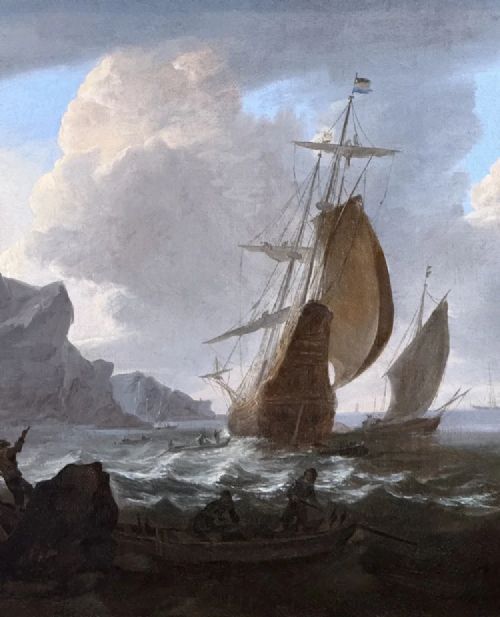
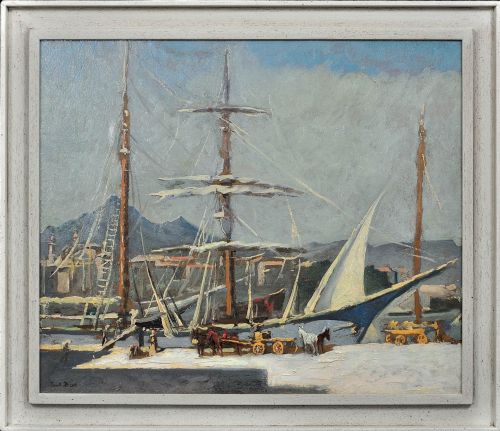
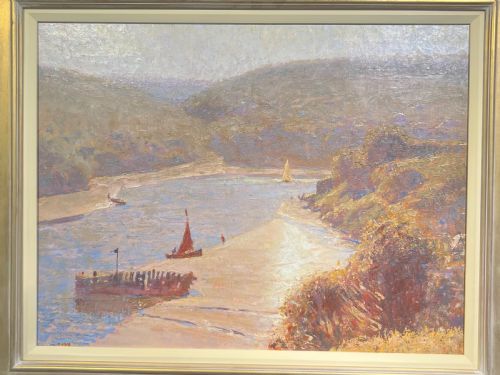
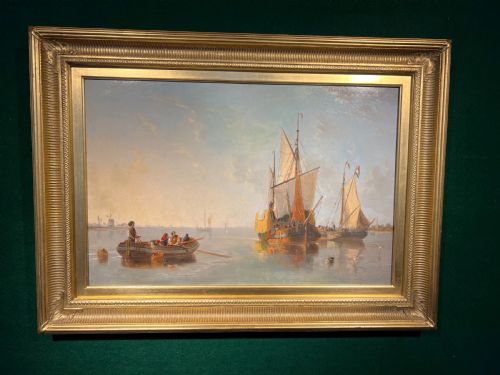
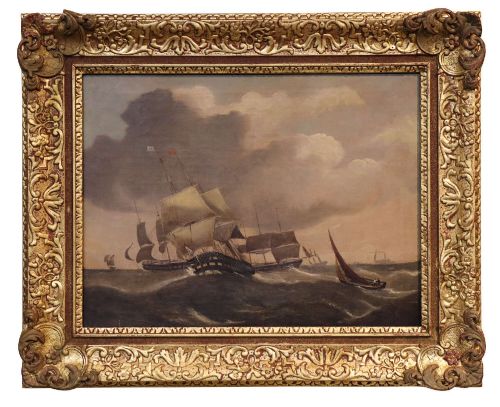
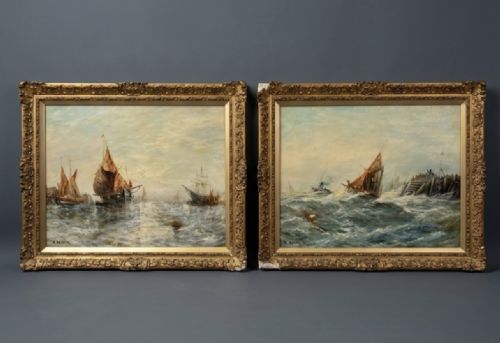
A framed boat oil painting captures maritime life, ranging from early nineteenth-century shipping in heavy seas to mid-century harbour scenes and abstract coastal impressions. The versions most frequently encountered on this page date from the Victorian period through to the mid-twentieth century, reflecting changing artistic approaches to the sea.
Compositions vary from tranquil canalscapes and bustling fishing ports to dramatic gales and night seascapes. Artists recorded specific locations across Britain, France, Italy, and the Netherlands, working on canvas, board, or wood panel.
The accompanying frames form an integral part of these works, often finished in gilt or giltwood to complement the maritime subject matter. These pieces document commercial shipping, leisure sailing, and coastal communities through distinct historical lenses.
How they were made
These works rely primarily on oil paint applied to canvas, wood panels, or composition boards, using techniques that evolved from tight nineteenth-century academic realism to looser impressionist and impasto brushwork. Pigments were layered to capture the shifting light on water and the texture of wooden vessel hulls.
The supporting frames are constructed from wood, frequently embellished with carved or moulded ornament and finished with layers of gilt or giltwood. Many of these frames are original to the paintings, showing period joinery and hand-applied gilding.
Several artists painted stormy seas so convincingly that viewers can almost smell the salt spray and tar.
What varies in quality
Quality in a framed boat oil painting rests on the artist's command of maritime atmosphere, anatomy of rigging, and movement of water. Stronger examples display confident brushwork that conveys the weight of vessels and the luminosity of coastal skies, whereas weaker works can appear stiff or formulaic in their depiction of waves.
The relationship between the artwork and its frame also determines the integrity of the piece. Superior examples retain their original gilt or giltwood surrounds, which enhance the visual depth of the painting without masking the canvas.
B. Nash·Francis Moltino·Thomas Creswick·Willem Bos·John Wilson Carmichael·John Moore of Ipswich·Richard B. Spencer·William Henry Williamson·Bernard Benedict Hemy·Walter Goodin·Abraham Hulk I·Elisabeth Bardon·William Edward Webb·Edward Matthew Elliott·Charles Napier Hemy·Jean-Baptiste Olive·Raymond Picque·Gabriel Dauchot·Gustave De Bréanski·Pieter Cornelis Dommersen·Adrian Van Porten·Franklin D. Briscoe
The Framed Boat Oil Painting Glossary
- Canvas
- A heavy woven fabric stretched across a wooden frame to serve as a support for oil painting. It provides a textured surface that interacts with the applied pigment.
- Giltwood
- Wood carved and coated with a thin layer of gold leaf or metallic powder. This finish was widely applied to nineteenth-century picture frames to catch ambient light.
- Impasto
- A technique where paint is laid onto a surface in thick layers that stand out visibly. This method adds tactile dimension to the depiction of churning water or cloudy skies.
- Panel
- A flat piece of wood or board used as a rigid support for painting instead of flexible canvas. Panels were frequently utilised for smaller maritime studies and board works.
Framed Boat Oil Painting: Frequently Asked Questions
How do I date a framed boat oil painting?
Dating relies on the style of the vessel, the costume of any figures, and the construction methods of the frame. Pigments and stretcher frames also offer clues to the period of creation.
Signatures, exhibition labels on the reverse, and regional painting styles help narrow the decade in which the work was produced.
Were these paintings made to be framed?
Yes, oil paintings on canvas or panel were routinely fitted into decorative surrounds to protect the edges and complete the presentation. The frame often reflects the aesthetic tastes of the era in which the artwork was finished.
Original frames are valued for their period harmony with the maritime scene inside them.
How should I care for an oil painting?
Keep the artwork away from direct sunlight and significant fluctuations in temperature and humidity to prevent the canvas or wood panel from warping. Gentle dusting with a soft, dry brush is sufficient for routine maintenance.
Avoid using water or chemical cleaners on the paint surface or the gilt frame.
What subjects appear besides boats?
Maritime oil paintings frequently incorporate coastal architecture, lighthouses, bustling harbours, and distant shorelines alongside the vessels. Figures engaged in unloading cargo or launching fishing boats also populate these scenes.
Skies dominate many compositions, capturing meteorological conditions from clear sunrises to heavy gales.