30,701  PAGES BROWSED TODAY PAGES TODAY 163 ANTIQUES UPLOADED TODAYNEW ARRIVALS
163 ITEMS ADDED TODAY
Sort Order
Items Per Page
Browse Categories
Sort order
Relevant Links
Items per page
ID #SA1168940
FOR SALE
£4,700
Email
Save
River Landscape Oil Painting of Figures on a Boat Near Aylesford Bridge by Frederick Waters Watts
Benton Fine Art
for sale €5,499     $5,969
£4,700
Benton Fine Art

Benton Fine Art

Sellingantiques Verified Since Sep 2012
View Dealers Stock Page
  • About Us
    Specialists in 19th & early 20th century original oil paintings by listed artists
  • Trade Associations
    Benton Fine Art is a registered member of LAPADA  BADA  CINOA
Id #SA1168940
PDF SHARE
SAVE

River Landscape Oil Painting of Figures on a Boat Near Aylesford Bridge by Frederick Waters Watts

19th century
For Sale by Benton Fine Art
Description

Frederick Waters Watts

British, (1800-1870)

Aylesford Bridge, Kent

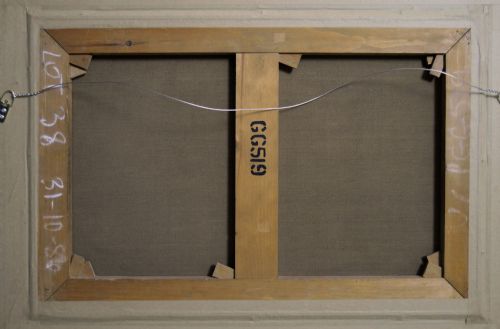
Oil on canvas, unsigned, stencil mark to the stretcher

Image size: 19.5 inches x 29.25 inches

Size including frame: 25.5 inches x 35.25 inches
Provenance: Christie’s Fine Victorian Pictures, 31 October 1986, lot 38.

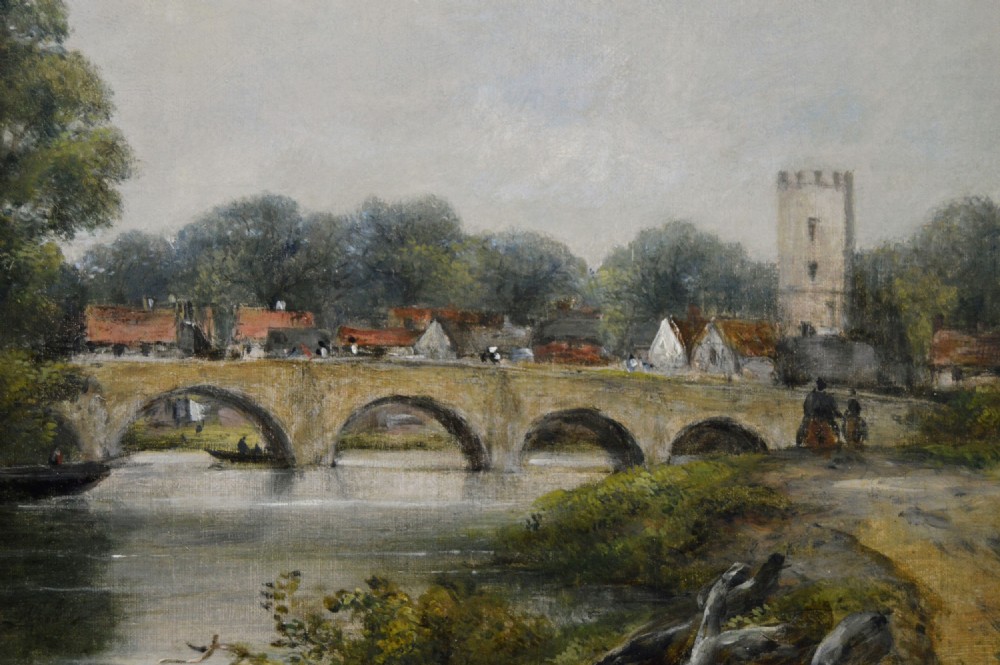
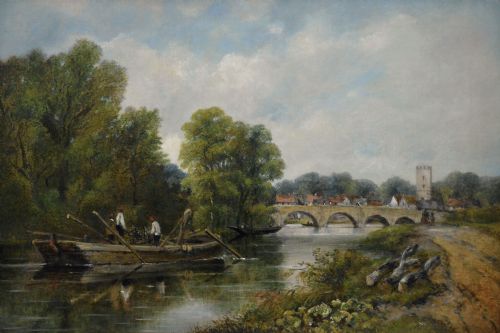
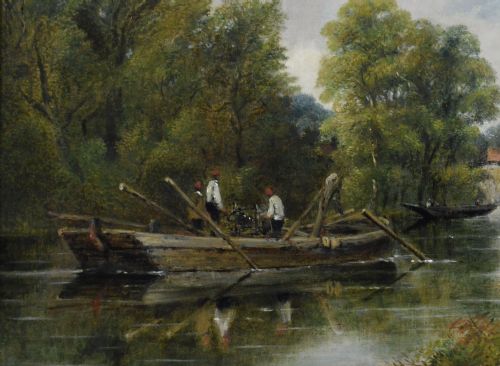
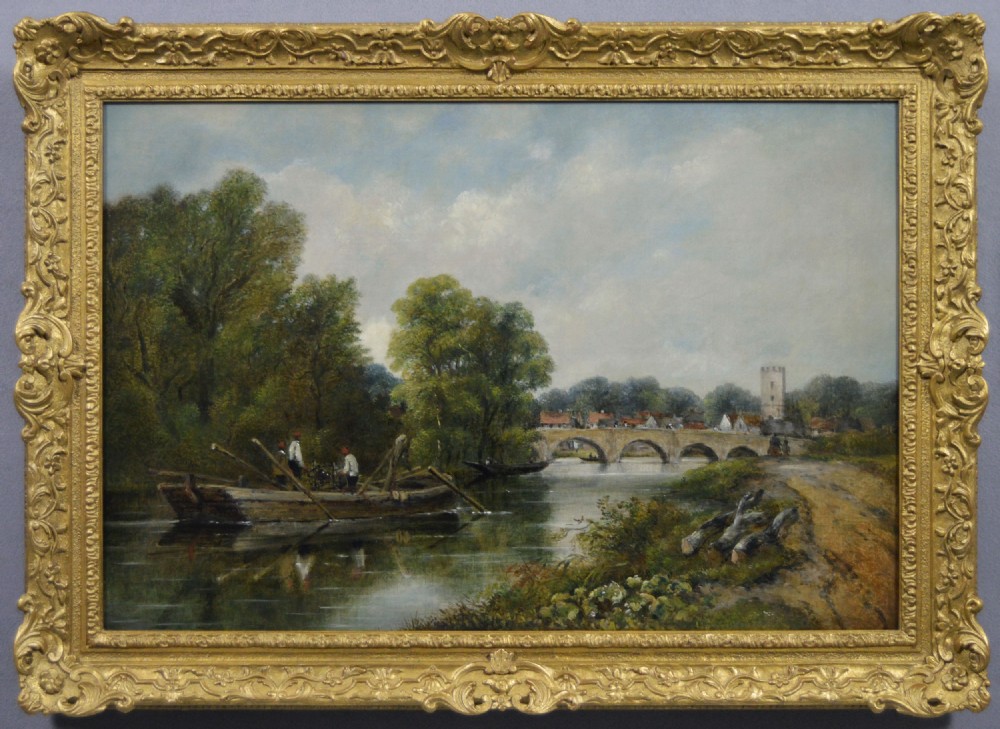
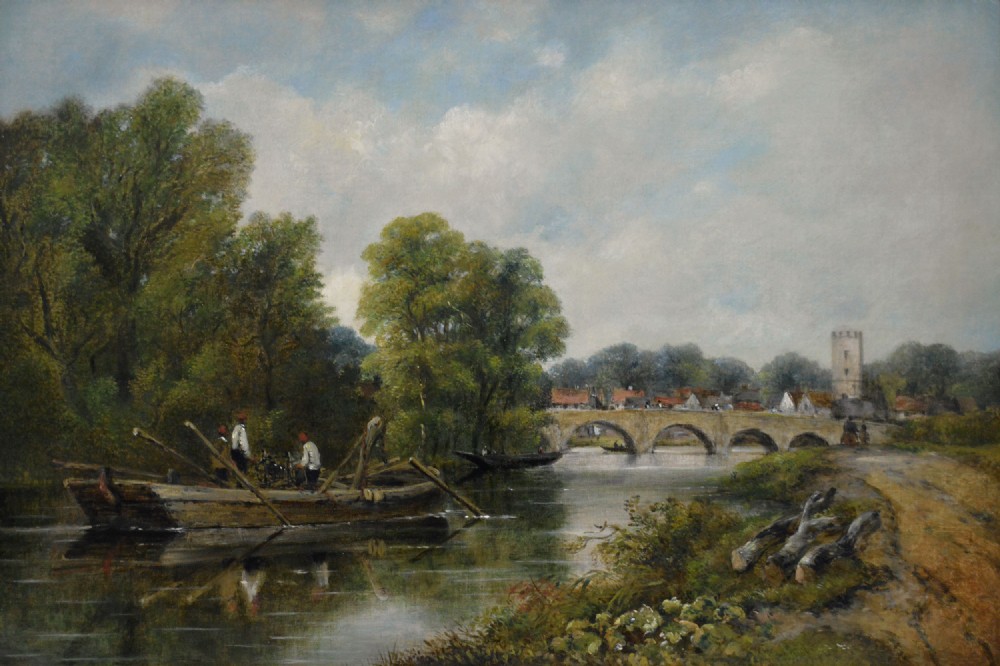
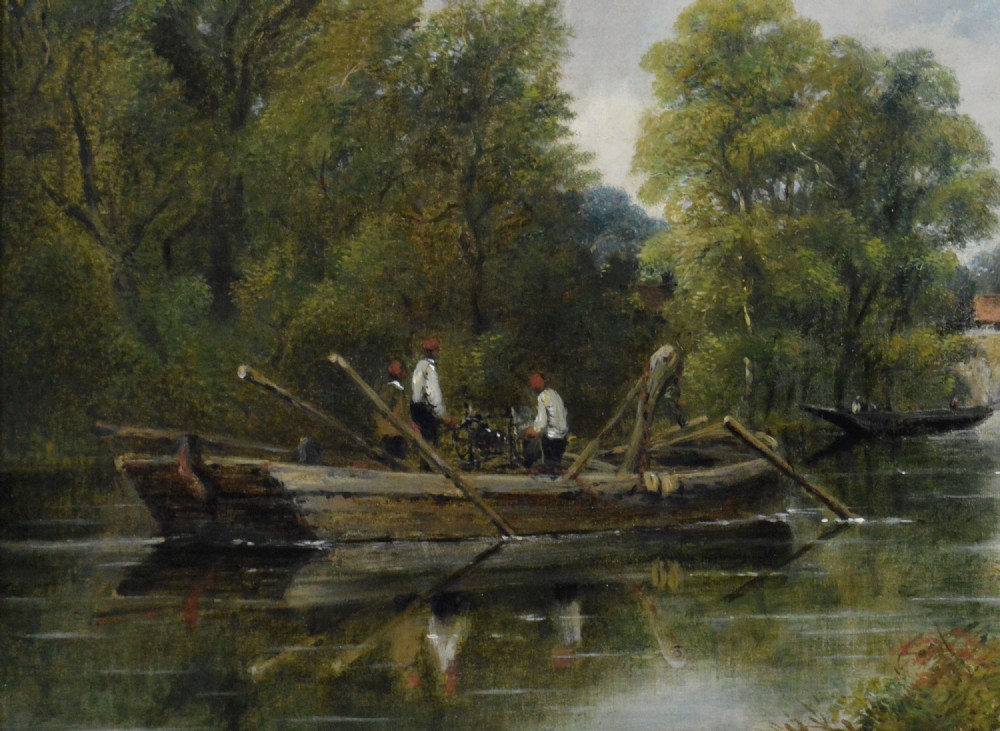
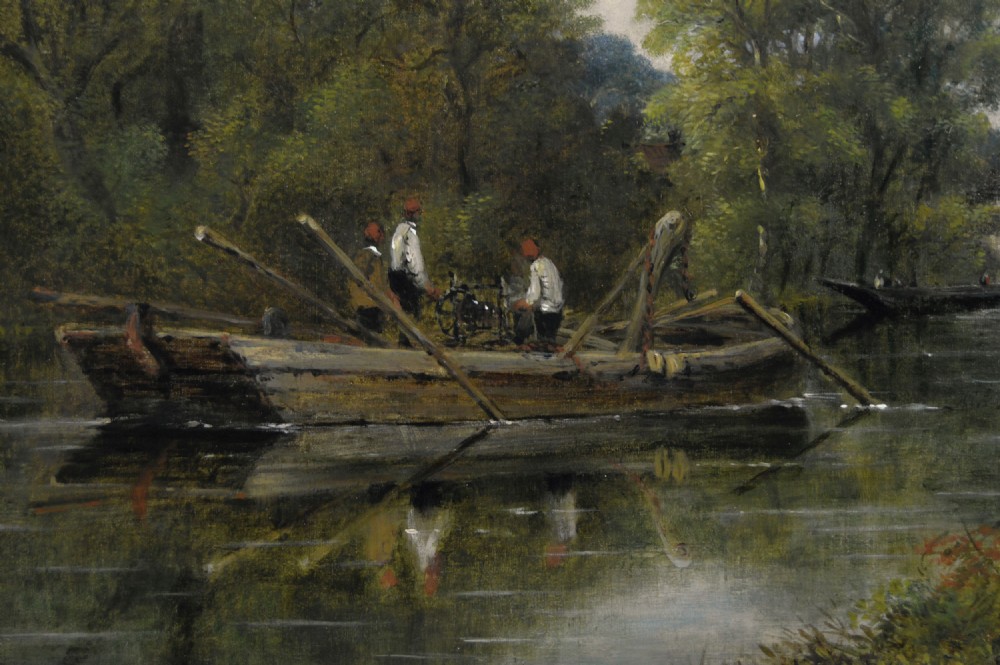
A fine painting of figures on a boat near Aylesford Bridge by Frederick Waters Watts. To the left of the painting a boat with a winch and three figures can be seen moored by the side of the river Medway. Meanwhile, other figures on horseback are shown travelling on the opposite bank towards St Peter and St Paul’s church. Although this painting is unsigned, which wasn’t unusual for Watt’s, it bears all the hallmarks of his style and subject matter; from the colour palette to the treatment of the figures, water and trees, boat and buildings.
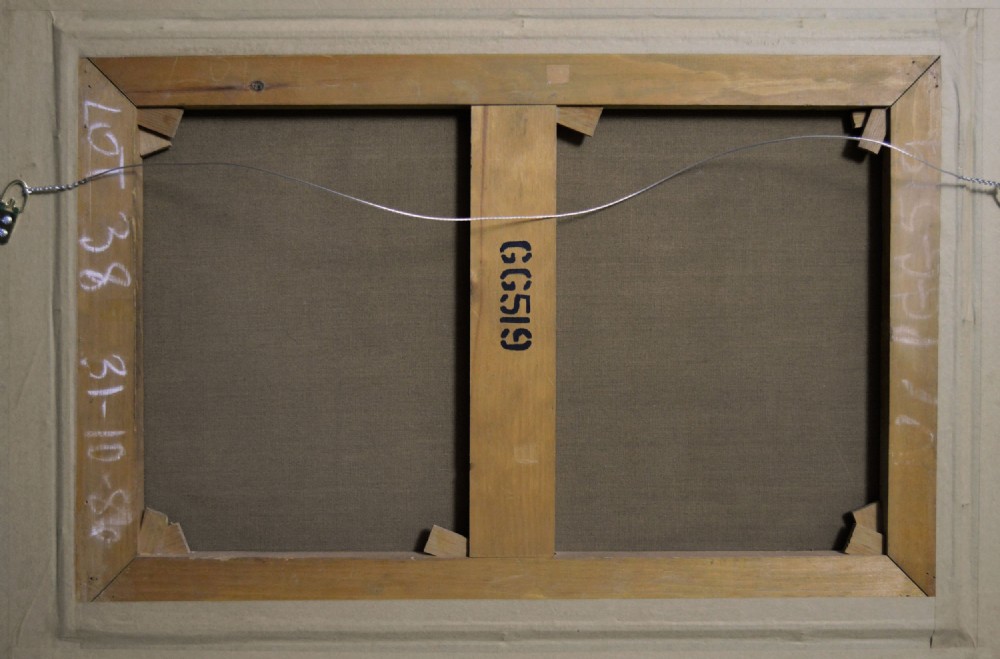
At some point, the original title of the painting was lost, however, careful investigation has identified the location as Aylesford Bridge in Kent. Further research also revealed that Watts exhibited a work entitled ‘Aylesford Bridge’ at the British Institution in 1826, no. 20. A work with the same title was later exhibited at the RA in 1835, no. 670. Many of his paintings at the RA were previously exhibited elsewhere, strongly indicating the two works are one in the same. The reverse of the painting bears Christie’s marks and stencil from the Fine Victorian Pictures sale on 31 October 1986, lot 38, where it was catalogued as by Frederick Waters Watts.
Frederick Waters Watts was born in St Albans on 7 October 1800, the son of William Watts and his wife Mary (née Eyre). His father was a landowner from Hoxton and his mother was the daughter of the Reverend Ambrose Eyre of Cambridge. Although little is known about his early life, his father’s income would have meant he received a good education. In 1817, he enrolled at the Royal Academy under the name William Watts. He later reverted to his full name, most likely to avoid confusion with the artist and engraver William Watts (1752-1851).
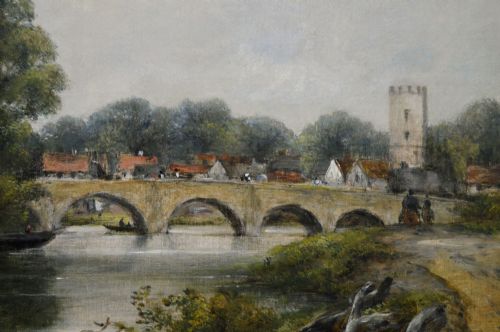
At the RA schools, he won a number of silver medals and began exhibiting at the RA in 1821. By this point, he was living in Hampstead High Street and in 1823 started exhibiting at the British Institution and from 1825 at Royal Society of British Artists. He was influenced by Constable who also resided in Hampstead; although there is no evidence they ever met. The vast majority of his subject matter was of landscapes and many of his paintings featured rivers and bridges, such as this fine example. He travelled throughout the UK and visited Wales, Herefordshire, Devon, Kent, Hampshire and Scotland. In 1827 he visited France where he spent time in Rouen.
Watts married Jane Dorothy Gibbon on 28 April, 1836 and the couple lived at 6 Union Terrace, Hampstead. By 1838, he had moved to 1 Haverstock Terrace where he was to spend the next 30 years. From his base, he travelled around the country, often painting a number of different views of the areas he visited.
His first wife Jane died in 1853 and in 1857 he married Juliana Louisa Grimwood. Sometime towards the end of the 1860’s moved to Lawn Road in Hampstead where he died on 4 July, 1870. His work is held in numerous public collections including the Ashmolean, Chepstow Museum, Government Art Collection, Maidstone Museum, Museum of London, National Trust, River & Rowing Museum, Royal Society of Arts, Southampton City Art Gallery, Towneley Hall Art Gallery, V&A and Walker Art Gallery.
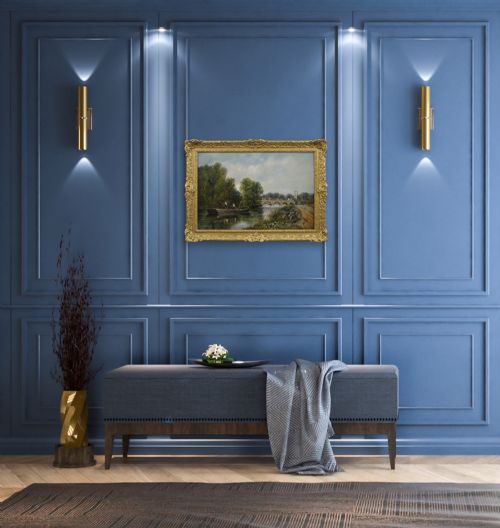
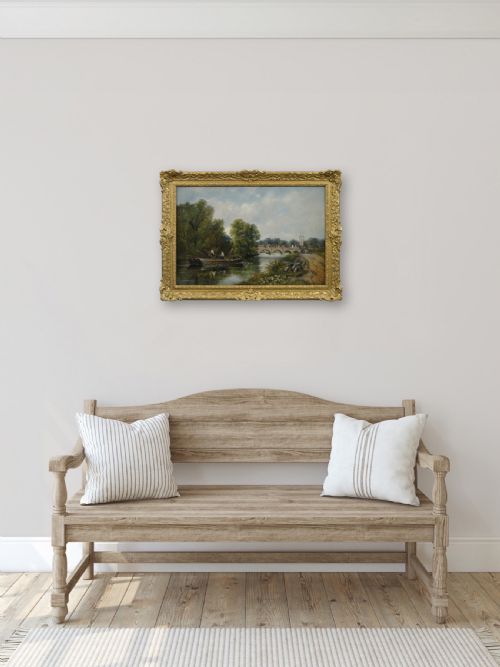
Presentation: The work is housed in a new, English made gilt frame which is in excellent condition.

Condition: As with all of our original antique oil paintings, this work is offered in ready to hang gallery condition, having been professionally cleaned, restored and revarnished.

© Benton Fine Art

Physical Dimensions
Height
65cm (25.59")
Width
89.5cm (35.24")
Depth
7cm (2.76")
Declaration

Benton Fine Art has dated this River Landscape Oil Painting to the 19th Century.

Reference Numbers
Sellingantiques Reference
SA1168940
Dealers Notes

Members of the British Antique Dealers Association (BADA) the London and Provincial Antique Dealers Association (LAPADA).

We use a professional, fully insured and tracked door to door service for our UK and international deliveries. Please contact us for further information and shipping quotes.

Viewing is by APPOINTMENT ONLY. However, we can also arrange for you to view the item in your home, depending on the location.

For a wider range of stock please visit www.bentonfineart.com.

If you would like to purchase this item or have any questions, please email us at pictures@bentonfineart.com or call 07710 540549.

© Benton Fine Art

Description
Frederick Waters Watts

British, (1800-1870)

Aylesford Bridge, Kent

Oil on canvas, unsigned, stencil mark to the stretcher

Image size: 19.5 inches x 29.25 inches

Size including frame: 25.5 inches x 35.25 inches

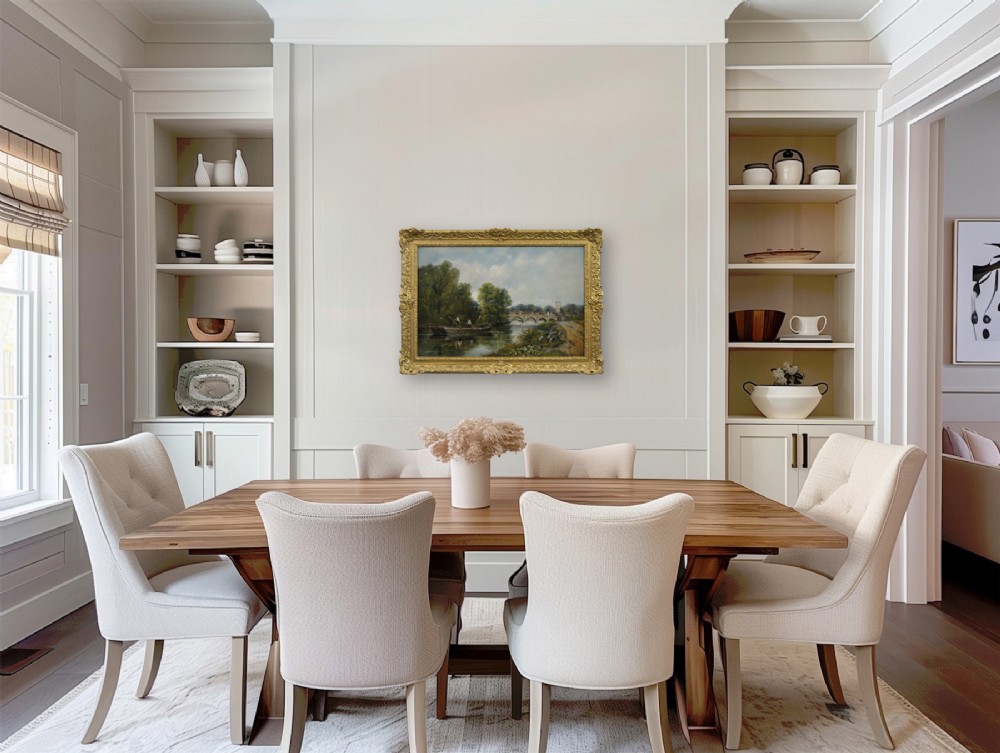
fig 1. A 19th-century river landscape oil painting depicting figures on a barge near an arched stone bridge, housed in an ornate carved giltwood frame.
fig 1. River Landscape Oil Painting of Figures on a Boat Near Aylesford Bridge by Frederick Waters Watts

Provenance: Christie’s Fine Victorian Pictures, 31 October 1986, lot 38.

A fine painting of figures on a boat near Aylesford Bridge by Frederick Waters Watts.

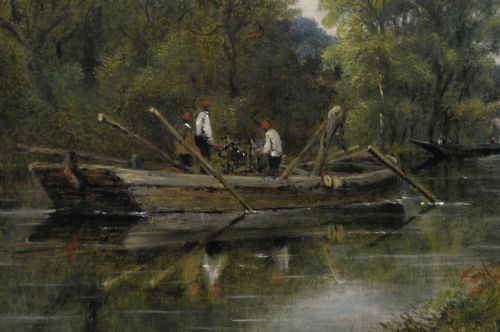
To the left of the painting a boat with a winch and three figures can be seen moored by the side of the river Medway.
Benton Fine Art

Meanwhile, other figures on horseback are shown travelling on the opposite bank towards St Peter and St Paul’s church. Although this painting is unsigned, which wasn’t unusual for Watt’s, it bears all the hallmarks of his style and subject matter; from the colour palette to the treatment of the figures, water and trees, boat and buildings.

fig 2. A 19th-century river landscape oil painting depicting figures on a barge near an arched stone bridge, housed in an ornate carved giltwood frame.
fig 2. River Landscape Oil Painting of Figures on a Boat Near Aylesford Bridge by Frederick Waters Watts

At some point, the original title of the painting was lost, however, careful investigation has identified the location as Aylesford Bridge in Kent. Further research also revealed that Watts exhibited a work entitled ‘Aylesford Bridge’ at the British Institution in 1826, no. 20. A work with the same title was later exhibited at the RA in 1835, no. 670. Many of his paintings at the RA were previously exhibited elsewhere, strongly indicating the two works are one in the same. The reverse of the painting bears Christie’s marks and stencil from the Fine Victorian Pictures sale on 31 October 1986, lot 38, where it was catalogued as by Frederick Waters Watts.

fig 3. A 19th-century river landscape oil painting depicting figures on a barge near an arched stone bridge, housed in an ornate carved giltwood frame.
fig 3. River Landscape Oil Painting of Figures on a Boat Near Aylesford Bridge by Frederick Waters Watts

Frederick Waters Watts was born in St Albans on 7 October 1800, the son of William Watts and his wife Mary (née Eyre). His father was a landowner from Hoxton and his mother was the daughter of the Reverend Ambrose Eyre of Cambridge. Although little is known about his early life, his father’s income would have meant he received a good education. In 1817, he enrolled at the Royal Academy under the name William Watts. He later reverted to his full name, most likely to avoid confusion with the artist and engraver William Watts (1752-1851).

fig 4. A 19th-century river landscape oil painting depicting figures on a barge near an arched stone bridge, housed in an ornate carved giltwood frame.
fig 4. River Landscape Oil Painting of Figures on a Boat Near Aylesford Bridge by Frederick Waters Watts

At the RA schools, he won a number of silver medals and began exhibiting at the RA in 1821. By this point, he was living in Hampstead High Street and in 1823 started exhibiting at the British Institution and from 1825 at Royal Society of British Artists. He was influenced by Constable who also resided in Hampstead; although there is no evidence they ever met. The vast majority of his subject matter was of landscapes and many of his paintings featured rivers and bridges, such as this fine example. He travelled throughout the UK and visited Wales, Herefordshire, Devon, Kent, Hampshire and Scotland. In 1827 he visited France where he spent time in Rouen.

fig 5. A 19th-century river landscape oil painting depicting figures on a barge near an arched stone bridge, housed in an ornate carved giltwood frame.
fig 5. River Landscape Oil Painting of Figures on a Boat Near Aylesford Bridge by Frederick Waters Watts

Watts married Jane Dorothy Gibbon on 28 April, 1836 and the couple lived at 6 Union Terrace, Hampstead. By 1838, he had moved to 1 Haverstock Terrace where he was to spend the next 30 years. From his base, he travelled around the country, often painting a number of different views of the areas he visited.

fig 6. A 19th-century river landscape oil painting depicting figures on a barge near an arched stone bridge, housed in an ornate carved giltwood frame.
fig 6. River Landscape Oil Painting of Figures on a Boat Near Aylesford Bridge by Frederick Waters Watts

His first wife Jane died in 1853 and in 1857 he married Juliana Louisa Grimwood. Sometime towards the end of the 1860’s moved to Lawn Road in Hampstead where he died on 4 July, 1870. His work is held in numerous public collections including the Ashmolean, Chepstow Museum, Government Art Collection, Maidstone Museum, Museum of London, National Trust, River & Rowing Museum, Royal Society of Arts, Southampton City Art Gallery, Towneley Hall Art Gallery, V&A and Walker Art Gallery.

fig 7. A 19th-century river landscape oil painting depicting figures on a barge near an arched stone bridge, housed in an ornate carved giltwood frame.
fig 7. River Landscape Oil Painting of Figures on a Boat Near Aylesford Bridge by Frederick Waters Watts

Presentation: The work is housed in a new, English made gilt frame which is in excellent condition.

Condition: As with all of our original antique oil paintings, this work is offered in ready to hang gallery condition, having been professionally cleaned, restored and revarnished.

© Benton Fine Art

Height
65cm (25.59")
Width
89.5cm (35.24")
Depth
7cm (2.76")
Date of Manufacture

Benton Fine Art has dated this River Landscape Oil Painting to the 19th Century.

Reference Numbers
Sellingantiques Ref
SA1168940
Benton Fine Art
Benton Fine Art
Sellingantiques verified Since Sep 2012

Specialists in 19th & early 20th century original oil paintings by listed artists

Dealer Profile

You can view the stock and full dealer information on the Benton Fine Art Profile Page

Trade Associations

Benton Fine Art is a registered member of LAPADA  BADA  CINOA
PDF SHARE
SAVE
A 19th-century river landscape oil painting depicting figures on a barge near an arched stone bridge, housed in an ornate carved giltwood frame.
1 / 9
Archive I A 19th-century river landscape oil painting depicting figures on a barge near an arched stone bridge, housed in an ornate carved giltwood frame.

River Landscape Oil Painting of Figures on a Boat Near Aylesford Bridge by Frederick Waters Watts
Archive II A 19th-century river landscape oil painting depicting figures on a barge near an arched stone bridge, housed in an ornate carved giltwood frame. View II
Archive III A 19th-century river landscape oil painting depicting figures on a barge near an arched stone bridge, housed in an ornate carved giltwood frame. View III
Archive IV A 19th-century river landscape oil painting depicting figures on a barge near an arched stone bridge, housed in an ornate carved giltwood frame. View IV
Archive V A 19th-century river landscape oil painting depicting figures on a barge near an arched stone bridge, housed in an ornate carved giltwood frame. View V
Archive VI A 19th-century river landscape oil painting depicting figures on a barge near an arched stone bridge, housed in an ornate carved giltwood frame. View VI
Archive VII A 19th-century river landscape oil painting depicting figures on a barge near an arched stone bridge, housed in an ornate carved giltwood frame. View VII
Archive VIII A 19th-century river landscape oil painting depicting figures on a barge near an arched stone bridge, housed in an ornate carved giltwood frame. View VIII
Archive IX A 19th-century river landscape oil painting depicting figures on a barge near an arched stone bridge, housed in an ornate carved giltwood frame. View IX
Enlarged Archival View
Telephone 07710 540 549
Location
Near Broadway
Worcestershire
United Kingdom

By appointment only.
Verified Since Sep 2012
Items For Sale 212
Benton Fine Art
Benton Fine Art
Verified Since Sep 2012
View Dealer Info
Location: Near Broadway, Worcestershire, United Kingdom, , By appointment only.
Verified
Sep 2012
For Sale
212
A 19th-century river landscape oil painting depicting figures on a barge near an arched stone bridge, housed in an ornate carved giltwood frame.
River landscape oil painting of figures on a boat near Aylesford Bridge by Frederick Waters Watts
Ref: SA1168940
A 19th-century river landscape oil painting depicting figures on a barge near an arched stone bridge, housed in an ornate carved giltwood frame.
Detail View 1
Detail View 2
Detail View 3
Detail View 4
Detail View 5
Detail View 6
Detail View 7
Detail View 8
Archival Detail
Every single antique dealer on our platform is individually approved by our internal team. We verify their professional trade history, ethical standards, and photographic quality to ensure a secure, high-standard buying environment. Upon joining, every dealer agrees to a strict 9-point code of conduct. While issues can occasionally arise, our dealers typically resolve them swiftly and directly with the buyer. In fact, since our founding in 2002, Sellingantiques has only had to step in to help resolve an issue on roughly five occasions—a true testament to the quality of our dealers and their dedication to your happiness.
Our dealers are highly experienced in packing and shipping fragile, high-value antiques. Because you are in direct contact with the dealer, you will be able to easily go through all available shipping and insurance options together to ensure your item arrives safely.
Antiques are the ultimate green purchase. By choosing historical pieces over newly manufactured goods, you completely eliminate the carbon footprint of modern mass production while preserving exceptional, timeless craftsmanship.

19th-century British river landscape paintings are defined by their naturalistic focus on rural waterways, stone bridges, and countryside life, heavily influenced by Romantic artists like John Constable. These works capture atmospheric light, detailed foliage, and everyday industrial or rural activity along English rivers.

Paintings from this period were predominantly executed using oil paints mixed with natural pigments on woven linen or cotton canvas. They were typically framed in heavy carved timber frames decorated with gesso and gold leaf gilding.

Authentic period paintings exhibit natural age-related craquelure across the paint surface, historic canvas stretching techniques, and age marks on the rear stretcher bars. The frame should show genuine gilding wear, dark oxidisation, or plaster composition visible beneath areas of rubbed gold leaf.

Position the framed canvas as a central focal point above a fireplace mantelpiece or console table in a living room or study. Pair it with neutral wall colours and minimalist contemporary furniture to allow the detailed brushwork and rich gilded frame to stand out.

Display the painting away from direct sunlight, radiators, and areas of high humidity to prevent cracking and canvas warping. Clean the gilding gently with a soft dry brush, and consult a professional conservator for any canvas cleaning or varnish removal.
items
Add keywords to the filter
Price
£100
£250000
Era
Movements
Material
Origin
Stock Location
Freshness
Online Payments
Categories