


Traditional Bedroom Nightstands
Traditional bedroom nightstands are sturdy bedside pieces built in mahogany, walnut, and oak to hold evening necessities close at hand.
Traditional Bedroom Nightstands
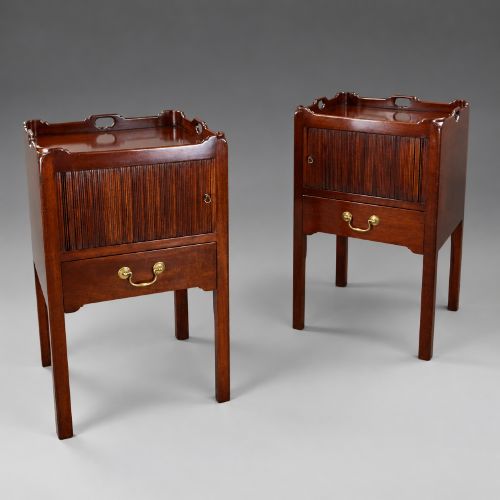
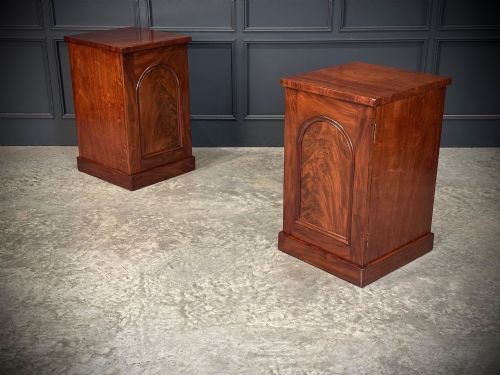
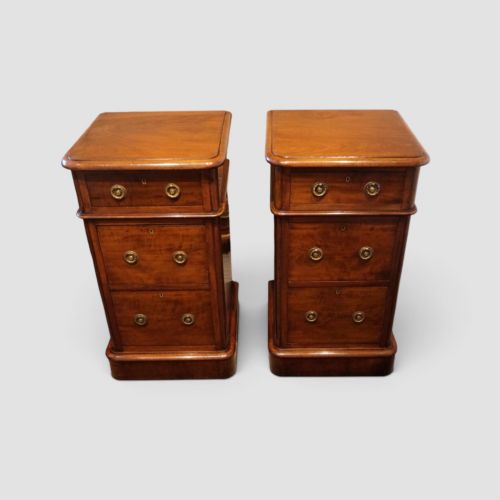
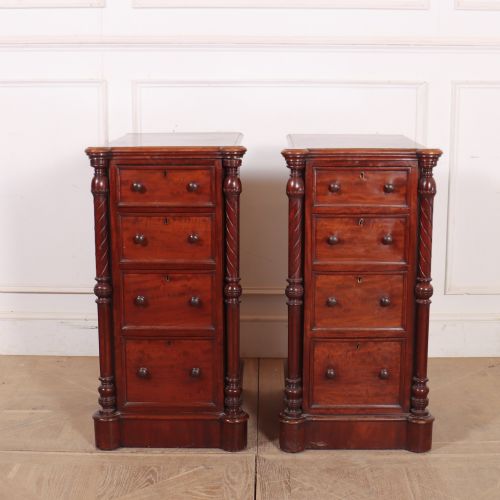
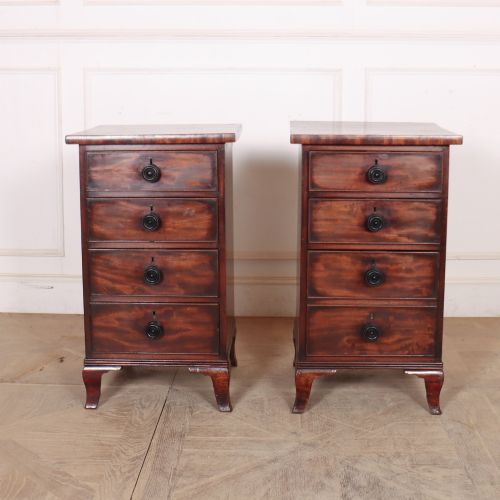
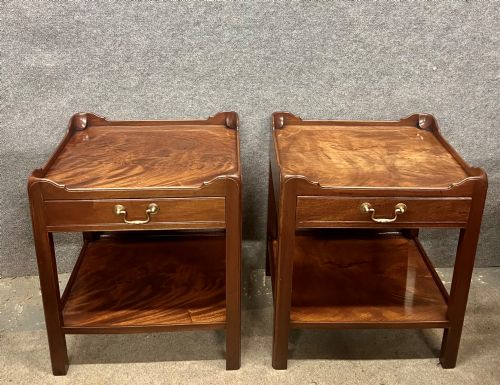
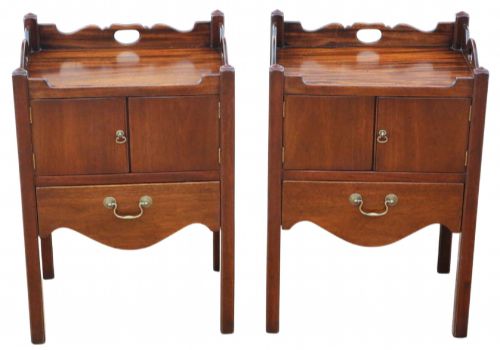
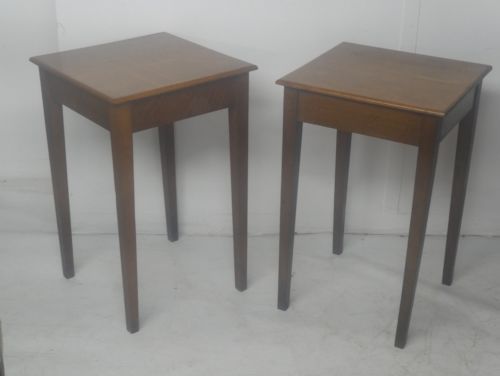
Traditional bedroom nightstands encompass bedside cabinets, cupboards, tables, and small chests dating from the nineteenth and early twentieth centuries. These pieces serve functional roles beside a bed while displaying period forms such as Georgian, Victorian, and Edwardian designs.
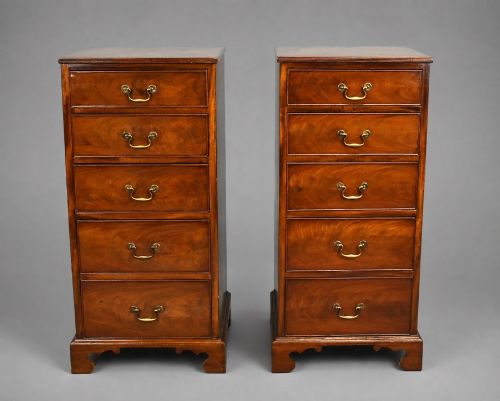
Most examples appear as matched pairs, featuring door enclosures or stacked drawers to keep personal items out of sight. Formats range from tall mahogany chests to compact walnut lamp tables and drop-flap variations.
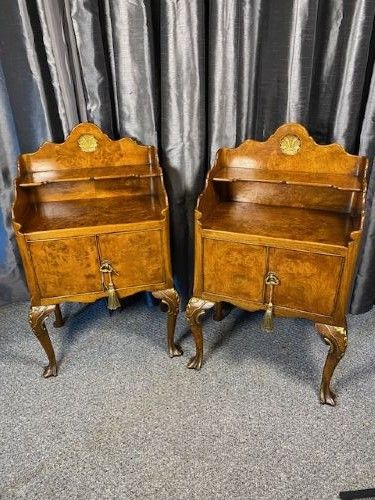
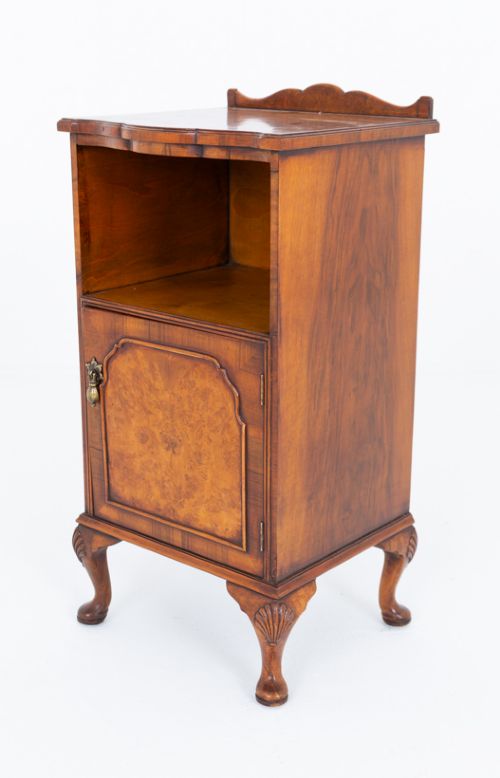
The selection draws on vernacular and revival styles, including Queen Anne Revival and George III interpretations. Woods span plain and figured timbers, finished to highlight natural grain patterns.
How traditional bedroom nightstands were made
Cabinet makers constructed these pieces primarily from solid hardwoods such as mahogany and oak, frequently applying flame mahogany or burr walnut veneers to primary surfaces. Brass hardware appears on drawers and cupboard doors.
Joinery techniques prioritize structural endurance, utilising traditional drawer construction and framed doors. Surface finishes rely on polishing methods that protect the timber while accentuating the figure of the wood.
Some nightstands feature drop-flaps, offering secret spots for midnight reading.
What varies in quality
The standard of timber selection sets apart different tiers of execution, with figured veneers and rich grain patterns marking out finer workshops. Simple utility pieces rely on plainer structural timbers.
Proportion and decorative restraint distinguish exceptional examples from standard production. Cabinetry with balanced proportions and well-executed revival styling reflects greater workshop investment.
Edwards & Roberts
The Traditional Bedroom Nightstands Glossary
- Flame mahogany veneer
- A sliced layer of mahogany wood displaying a distinct flame-like figure. It decorates the primary exterior surfaces of finer cabinets.
- Burr walnut
- A prized timber harvested from walnut tree growths that produces intricate, swirling grain patterns. It is used extensively on revival pieces.
- Drop-flap
- A hinged panel that lowers to extend a surface or provide access. This mechanism appears on select compact tables.
Traditional Bedroom Nightstands: Frequently Asked Questions
How were nightstands used historically?
Historically, these cabinets held chamber pots, water jugs, and nighttime reading material within easy reach of the bed.
Enclosed cupboards kept personal belongings concealed, while top surfaces accommodated lamps and clocks.
Are nightstands sold in pairs?
Many listings comprise matched pairs created for twin beds or balanced bedroom arrangements.
Single pieces also appear, reflecting historical production where furniture was commissioned individually.
Which woods are most common?
Mahogany forms the majority of nineteenth-century examples, appearing in both solid timber and veneered formats.
Walnut and burr walnut gain prominence in Edwardian and revival pieces, alongside occasional uses of oak.
How do I identify the period?
Period identification relies on wood selection, hardware types, and stylistic revival cues such as Queen Anne or Georgian motifs.
Victorian and Edwardian constructions display distinct proportion and joinery methods corresponding to their manufacturing eras.