





Three Tier Nightstands
Three tier nightstands offer stepped surfaces for bedside storage, combining tiered platforms with compact footprints to hold lamps and books.
Three Tier Nightstands
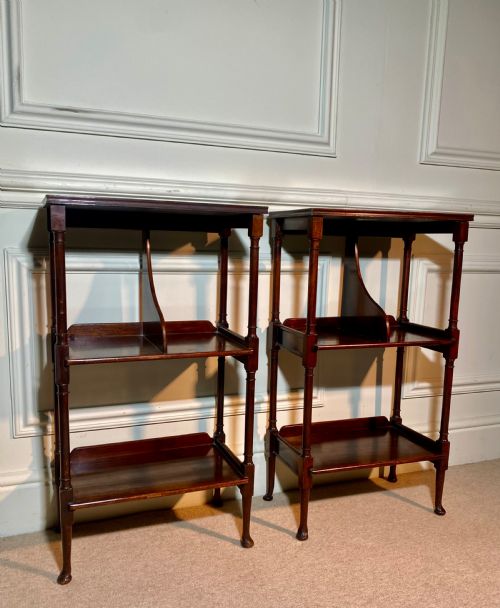
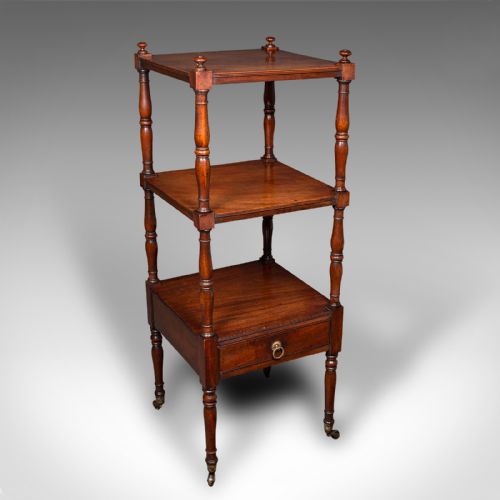
When you search for three tier nightstands, you encounter a selection of tiered bedside tables, etageres, and whatnots spanning the Georgian, Victorian, Edwardian, and early twentieth-century periods. These pieces provide multiple open shelves arranged vertically, offering practical surface area without demanding extra floor space in the bedroom.
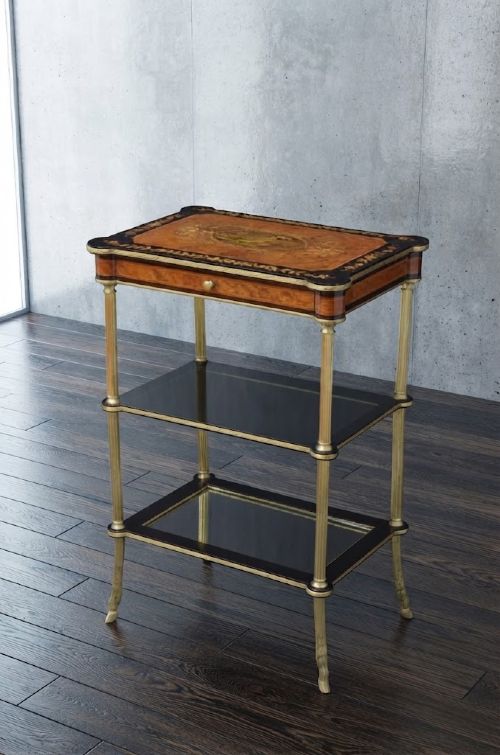
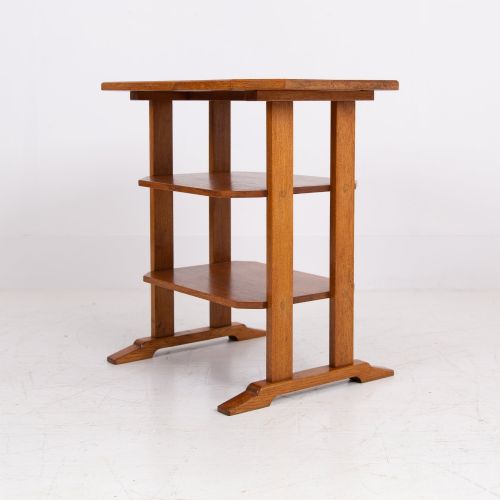
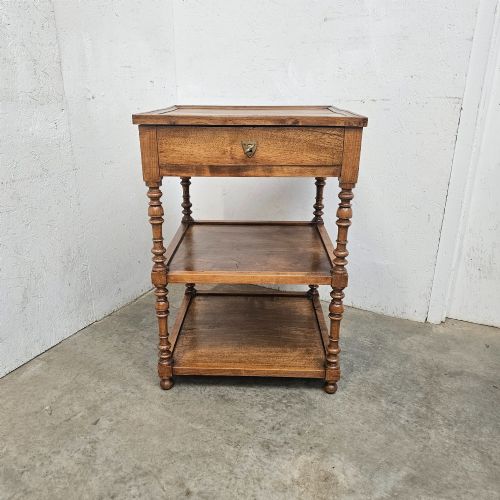
The assortment on this page includes French ebonised and inlaid side tables, walnut turned-leg etageres, mahogany open bookcases, and brass-mounted campaign washstands. Regional variations range from French provincial designs to English Georgian and Cotswold School oak interpretations.
You will most frequently meet side tables and etageres adapted for bedside use, alongside traditional whatnots and display stands. These multi-level pieces combine utility with decorative presence, using tiered construction to organise nightly essentials within arm's reach.
How they were made
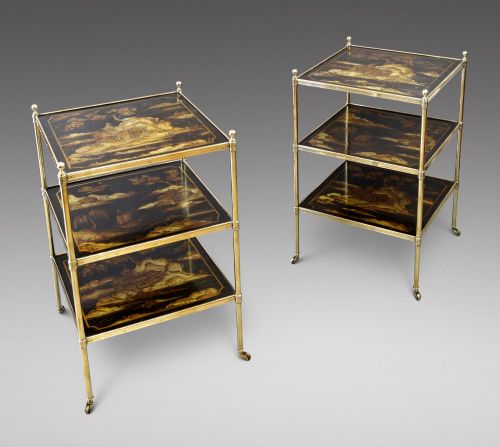
Cabinetmakers constructed these pieces using timber frames in mahogany, walnut, oak, fruitwood veneer, and ebonised wood, often reinforced with brass mounts, gilt metal, or turned legs. Canework, marble inserts, and mirrored tiers appear across nineteenth-century examples to provide contrasting surface textures.
Joinery methods varied according to the period and style, from Georgian framing to Edwardian marquetry inlay and painted finishes. Turned supports and brass fittings secured the multiple tiers, while polished surfaces protected the underlying wood.
Some nineteenth-century washstands now happily hold midnight reading glasses instead of porcelain ewers.
What varies in quality
Quality in these tiered tables rests on the selection of timber veneers, the crispness of marquetry inlay, and the stability of the vertical supports. Superior examples feature well-figured mahogany or walnut, balanced proportions across all three tiers, and neatly integrated materials such as marble or mirror glass.
The refinement of brass mounts, turned legs, and edge detailing separates standard production pieces from finer workshop creations. Construction integrity in the joints and the precise alignment of stacked shelves determine the enduring strength of the piece.
The Three Tier Nightstands Glossary
- Etagere
- A piece of furniture consisting of a set of open shelves for displaying small objects or holding bedside items.
- Whatnot
- An open set of shelves used for storage or display, popular in Georgian and Victorian interiors.
- Marquetry
- Decorative veneer work arranged in intricate patterns on furniture surfaces.
- Campaign
- Portable furniture designed for travel, typically featuring brass corners and recessed handles.
- Canework
- Woven cane or wicker material incorporated into panels or shelves for texture.
Three Tier Nightstands: Frequently Asked Questions
What defines a three tier nightstand?
These pieces feature three distinct levels of shelving or surface space arranged vertically to hold bedside items.
They combine the compact footprint of a bedside table with the storage capacity of an etagere or whatnot.
How were three tier nightstands used historically?
Earlier versions served as washstands, display etageres, or general side tables before adapting to bedside use.
Multiple tiers allowed owners to keep lamps, books, and personal objects organised within a small bedroom footprint.
What woods appear in these tables?
Cabinetmakers utilised mahogany, walnut, oak, and fruitwood veneer alongside ebonised wood.
Hardwoods provided the structural strength needed to support multiple stacked platforms.
How do I date a three tier nightstand?
Stylistic markers such as Georgian proportions, Edwardian marquetry, or Victorian turned legs indicate the period of manufacture.
Materials like brass mounts, canework, and mirrored tiers also align with specific nineteenth and twentieth-century design movements.