




Small Mahogany Whatnots
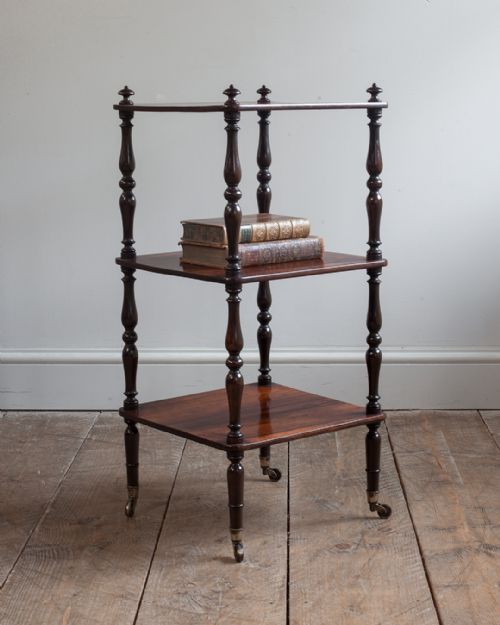
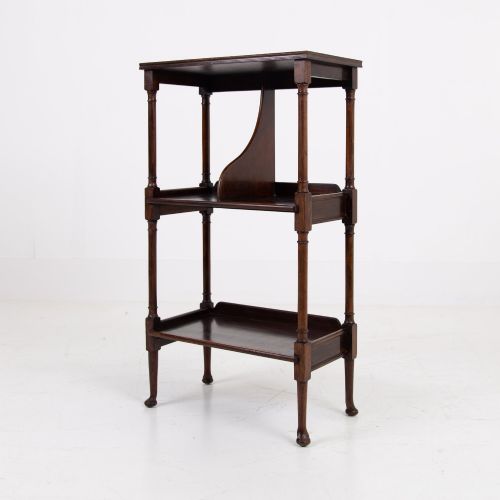
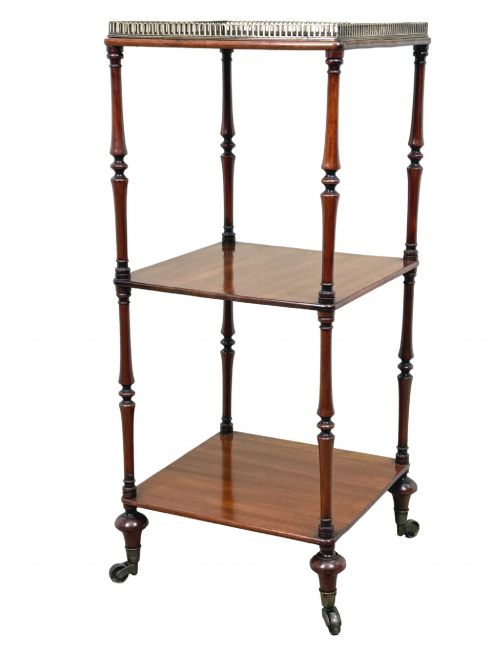
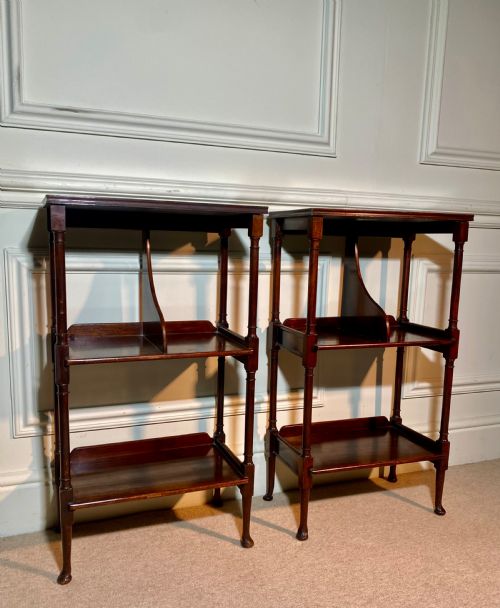
Small mahogany whatnots are tiered shelving units designed to hold books and ornaments in compact spaces.
Small Mahogany Whatnots
Small mahogany whatnots are open display pieces found across the Regency, Victorian, and Edwardian periods. They appear as tiered shelving units, étagères, and small bedside tables made primarily from mahogany.
Buyers browsing this selection will most frequently encounter compact 19th-century examples featuring multiple shelves supported by slender uprights. These versatile stands served various domestic functions from side tables to bedside night stands.
Construction and Materials
Makers utilised solid mahogany and mahogany veneers, occasionally incorporating rosewood details, brass elements, and glass or velvet surfaces. These woods were shaped into tiered structures ranging from waterfall fronted open shelves to inlaid display tables.
Joinery techniques supported multiple open tiers designed for displaying small objects and books while maintaining a slender profile. Structural additions such as brass fittings or inlaid decoration distinguished specific period pieces from simpler utility shelving.
Listings feature small mahogany whatnots spanning the Georgian, Regency, Victorian, and Edwardian periods, alongside Edwardian bedside night stands.
Judging Quality and Craftsmanship
The distinction between standard utility pieces and finer examples rests upon timber selection, decorative refinement, and structural proportion. Pieces attributed to specific workshops display superior handling of mahogany and more considered proportions.
Inlaid decoration, refined turning on the supports, and thoughtful edge detailing elevate certain examples above plain functional shelving. The integration of brass fittings or rosewood accents further separates the upper tier of items from straightforward domestic furniture.
Gillows
The Small Mahogany Whatnots Glossary
- Whatnot
- A piece of furniture consisting of a set of open shelves for displaying small objects or books. These developed in the 18th century and remained popular through the Victorian era.
- Étagère
- A piece of furniture consisting of a series of open shelves for displaying ornaments. The term is often used interchangeably with whatnot.
- Regency
- A British design period spanning the early 19th century, characterised by classical restraint and influences from antiquity. Pieces from this era often feature clean lines and dark timbers.
- Mahogany
- A durable, reddish-brown tropical hardwood prized for furniture making due to its stability and rich grain. It formed the primary material for the majority of pieces in this category.
Small Mahogany Whatnots: Frequently Asked Questions
What is a small mahogany whatnot used for?
These pieces were originally designed for displaying ornaments, holding books, and keeping small items close to hand in sitting rooms or bedrooms.
Today, they function well as compact side tables, bedside stands, or open shelving units in smaller modern rooms.
How do I date a small mahogany whatnot?
Dating relies upon identifying stylistic markers from periods such as Regency, Victorian, or Edwardian. Construction details and timber choices also help narrow the decade of manufacture.
Earlier pieces from the Georgian and Regency eras typically display finer proportions and specific classical design motifs.
Are these pieces sturdy enough for daily use?
Most examples are constructed with multiple tiers supported by slender uprights designed for light display rather than heavy storage. Placing lighter books and decorative objects on the shelves ensures stability.
Regular placement on level flooring prevents undue strain on the slender vertical supports and joints.
What is the difference between a whatnot and an étagère?
While both terms describe multi-tiered open shelving units, étagère is a French term sometimes associated with lighter, more decorative display furniture. In practice, the two words often describe very similar forms.
Both types served the same domestic purpose of holding books and ornaments in style.