



Traditional Beach Seascape Painting
These traditional beach seascape painting works capture shorelines and harbours with enduring fidelity, offering collectors a direct view into maritime history.
Traditional Beach Seascape Painting
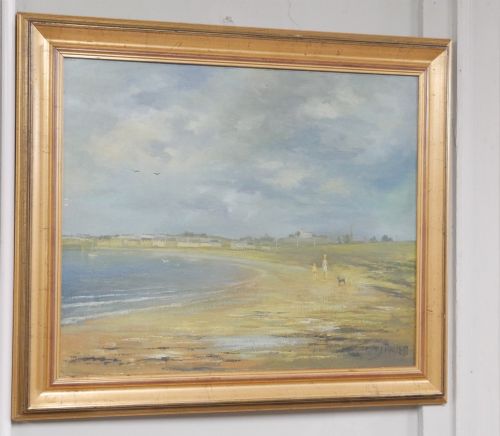
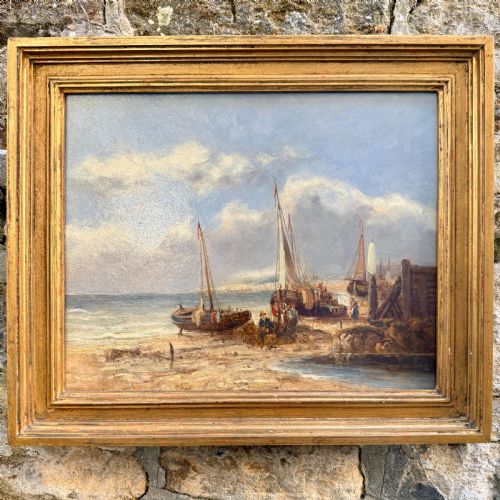
A traditional beach seascape painting captures coastal life, sandy shores, and maritime views across the nineteenth and early twentieth centuries. These works record bustling fishing communities, rocky inlets, and quiet tidal flats with observed accuracy.
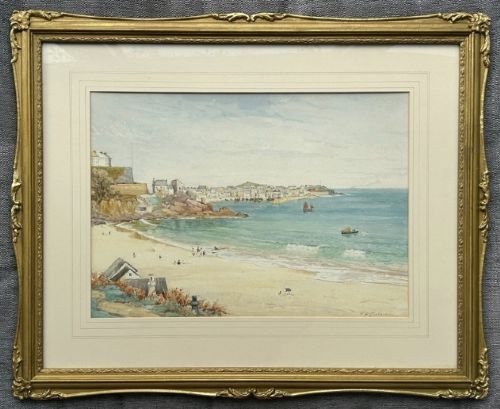
The pieces on this page mostly span the Victorian era up through the nineteen-twenties, encompassing British impressionism and maritime fine art. Subjects range from St Ives harbour and Scottish borders to Devon chalk cliffs and coastal wrecks.
Collectors encounter both oil on canvas and delicate watercolour paintings, often preserved in period frames of gold leaf or ebonised wood. These paintings bring historical atmosphere and coastal geography directly into domestic spaces.
How traditional beach seascape painting pieces were made
Artists utilised oil paint on canvas or watercolour on paper to capture the shifting light and moisture of coastal environments. Brushwork ranges from tight, academic realism to looser impressionistic applications that convey sea spray and sand.
Finished works found protection within wooden frames, occasionally enhanced with gold leaf gilding or hand enamelled polychrome decoration. These framing choices reflect the aesthetic standards of the nineteenth and early twentieth centuries.
Traditional Beach Seascape Painting Retail Price Guide 2026
Typical asking prices for traditional beach seascape painting among the pieces listed under this phrase on Sellingantiques today, from the lower quarter to the upper quarter. They describe what is for sale here now, not the wider market.
Artists frequently added local fishermen and families gathering kelp on pebble beaches to give scale to vast coastal horizons.
What varies in quality
Quality rests upon the artist's command of light, atmosphere, and topographical accuracy within the coastal setting. Superior examples demonstrate confident handling of water, sky, and human figures actively engaged on the shore.
The preservation of the paint surface and the originality of the period frame contribute significantly to a piece's integrity. Intact canvas supports and minimal restoration distinguish the finest works from heavily retouched examples.
William Banks Fortescue·James Webb·Owen Bowen·William Edward Webb·George Smith·William Shayer·J De Breanski·George Marks
The Traditional Beach Seascape Painting Glossary
- Oil on Canvas
- Pigment bound in drying oil applied to a stretched woven fabric support. This medium allowed artists to build rich textures and deep tones suitable for dramatic maritime scenes.
- Watercolour Painting
- Pigments suspended in a water-soluble vehicle applied to paper. This technique yields translucent washes that capture the pale light of coastal skies and shallow tides.
- Victorian Marine
- An art style focusing on ships, coastal views, and naval subjects produced during the reign of Queen Victoria. These works emphasise topographical detail and dramatic weather conditions.
- Gold Leaf
- Gold beaten into extremely thin sheets used to gild picture frames. It provides a warm, reflective border that complements the palette of traditional paintings.
- Ebonised Frame
- Timber treated to imitate ebony wood, creating a dark, uniform finish. This framing style gained popularity in the nineteenth century for contrasting with luminous oil and watercolour works.
Traditional Beach Seascape Painting: Frequently Asked Questions
What subjects appear in these paintings?
The artworks depict coastal scenes, harbour activities, fisher folk, and specific locations such as St Ives, Hastings Castle, and Devon chalk cliffs. Painters focused on the daily interactions between people and the sea.
Views also record shipwrecks, tidal flats, and quiet sunsets along British and foreign shores. Each composition reflects the specific topography and atmospheric conditions observed by the artist.
How do I care for watercolour paintings?
Watercolour paintings require protection from direct sunlight to prevent the fading of delicate pigments on paper. Displaying them away from moisture sources safeguards the paper support and painted surface.
Glazing with appropriate conservation glass helps shield the work from dust and environmental pollutants. Stable indoor humidity levels ensure the paper does not warp or degrade over time.
How are oil paintings preserved?
Oil paintings on canvas need stable temperatures and low humidity to prevent the cracking of paint layers. Regular, gentle dusting with a soft brush keeps the surface clear of particulate accumulation.
Avoiding harsh chemical cleaners preserves the original varnish and underlying pigment. Professional conservation can address any structural weakening of the canvas support if required.
How do I date a traditional seascape?
Dating relies on stylistic clues, framing materials, and the documented active periods of the artists involved. Victorian works often feature specific palette choices and framing techniques characteristic of the nineteenth century.
Expository notes on the reverse, artist signatures, and subject identification further help narrow the timeframe of creation. Comparative study with dated works by the same painter provides the most reliable chronological placement.