




Antique Shore Scene Oil
These antique shore scene oil works capture coastal life and maritime activity on canvas, prized by collectors for their atmospheric depth and historic British and European settings.
Antique Shore Scene Oil
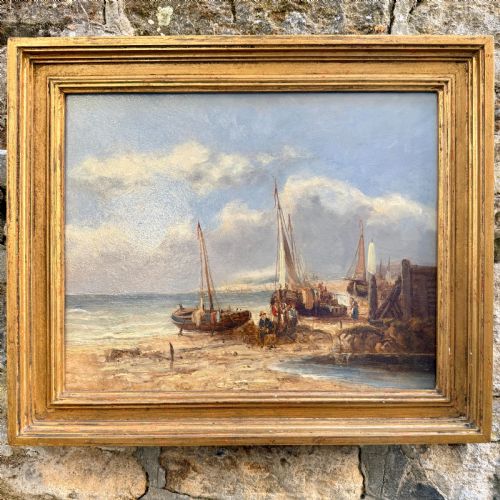
An antique shore scene oil brings coastal landscapes, rocky beaches, and maritime activities into the interior, capturing maritime life across various European locations. When you search for antique shore scene oil, you encounter works ranging from Victorian coastal views to mid-century impressions.
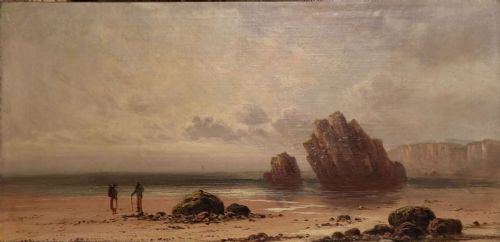
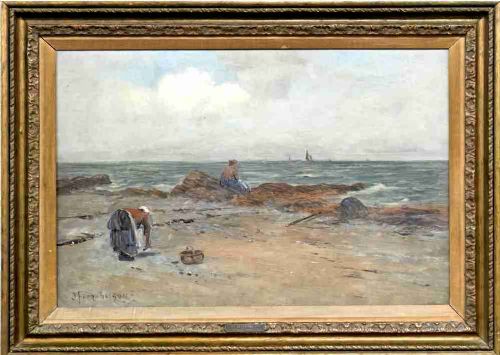
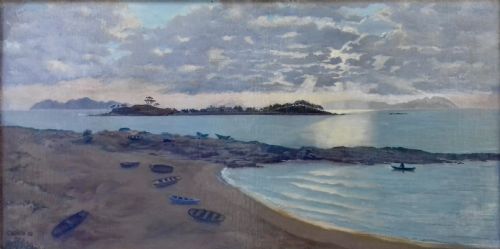
The pieces on this page span the nineteenth and twentieth centuries, featuring British, Scottish, Dutch, and Spanish coastal views. Common subjects include figures on rocky beaches, fishing boats, oyster pickers, and lake sailing landscapes.
Victorian marine traditions and nineteenth-century realism dominate the earlier examples, while mid-century impressionism represents the later developments in maritime painting. These works provide a visual record of historic shorelines and working waterfronts.
Materials and construction
These works utilise oil paint applied to canvas, capturing the texture of water, sand, and sky through layered brushwork. The physical support typically consists of woven canvas stretched over wooden frames.
Many of these paintings retain their original framing, incorporating wood with gold leaf, gilt wood, or gilded finishes. The application of gilt frames enhances the visual weight and period character of the canvas.
Materials recorded across the inventory include wood, gold leaf, and gilt finishes applied to canvas paintings.
Assessing quality in coastal oils
Quality in these coastal works rests on the handling of light and atmosphere, distinguishing evocative depictions of weather and water from mechanical renderings. The articulation of figures and boats within the landscape demonstrates the painter's ability to balance scale and perspective.
The integration of the canvas with its period frame contributes significantly to the overall integrity of the piece. Surviving examples that retain their original gilt wood framing preserve the complete historical presentation intended by the maker.
Joseph Farquharson R.A.·Owen Bowen·Robert Macaulay Stevenson·Charles McAuley·Pieter Cornelis Dommersen·Henri Cadiou
The Antique Shore Scene Oil Glossary
- Oil paint
- A slow-drying paint made by combining pigment particles with a drying oil, typically linseed oil. This medium allows for rich colour blending and textured impasto applications.
- Canvas
- A heavy woven fabric, usually linen or cotton, stretched tightly across a wooden frame to serve as the surface for painting. It provides a durable and flexible support for oil applications.
- Gilt wood
- Wood that has been treated with a thin layer of gold leaf or metallic powder to give a golden appearance. Frames finished in this manner were standard for framing nineteenth-century paintings.
- Marine landscape
- A genre of art that depicts the sea, ships, beaches, and coastal views. These compositions focus heavily on maritime activity and coastal weather conditions.
- Impressionism
- An art style developed in the nineteenth century characterised by relatively small, thin, yet visible brush strokes and an emphasis on accurate depiction of light. It appears in several British and Scottish works from later periods.
Antique Shore Scene Oil: Frequently Asked Questions
What subjects appear in these paintings?
These works depict coastal landscapes, rocky beaches, fishing boats, and figures gathering oysters along the shore. Locations range from British and Scottish borders to Dutch and Spanish waters.
Artists record both quiet evening scenes with clouds over bays and active maritime settings involving sailing vessels and working boats.
How do I date a shore scene?
Dating relies on stylistic markers, artist attribution, and framing materials that align with nineteenth and twentieth-century periods. Victorian works often show traditional marine realism, while mid-century pieces reflect impressionistic tendencies.
Examining the canvas preparation and the construction of the wooden stretcher provides further clues to the age of the piece.
How should I display these frames?
These works require stable indoor environments away from direct sunlight and excessive humidity to protect the oil paint and canvas. Proper wall placement preserves both the structural integrity of the wooden stretcher and the delicate surface of the paint.
Matching the gilt wood frame to a suitable wall space allows the reflective gold leaf finish to catch natural room light effectively.
What is Victorian marine realism?
This style focuses on detailed, accurate representations of coastal topography, ships, and maritime workers under specific weather conditions. Painters working in this tradition prioritised careful observation of natural light and sea spray.
Canvas works from this movement often feature dramatic sea stacks and rugged shorelines rendered with precise brushwork.