




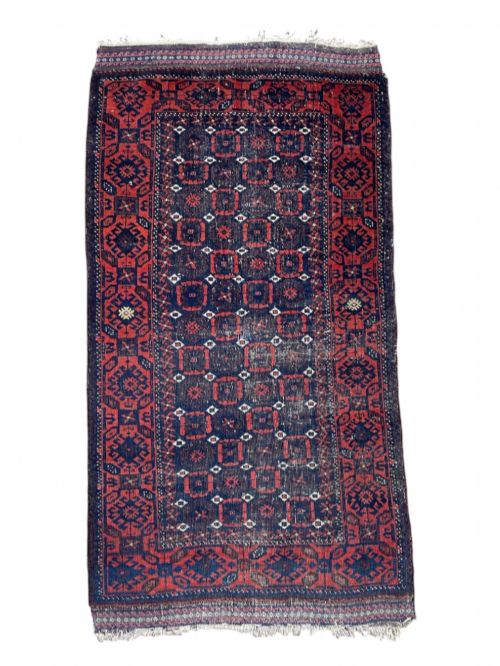


Traditional Baluch Runner
A traditional baluch runner brings the rich, geometric artistry of nomadic weavers into a hallway with deep wool piles and enduring tribal character.
Traditional Baluch Runner
When searching for a traditional baluch runner, buyers encounter hand-woven tribal floor coverings originating from regions spanning Afghanistan, Persia, and Khorasan. These pieces encompass various formats including runners, area rugs, and main carpets produced by nomadic and village groups.
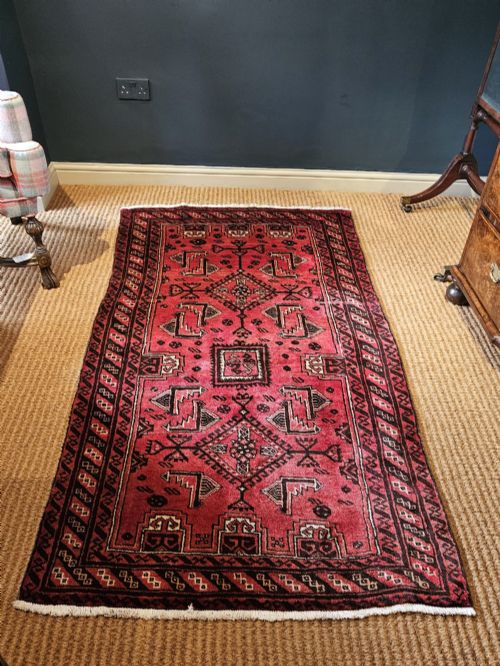
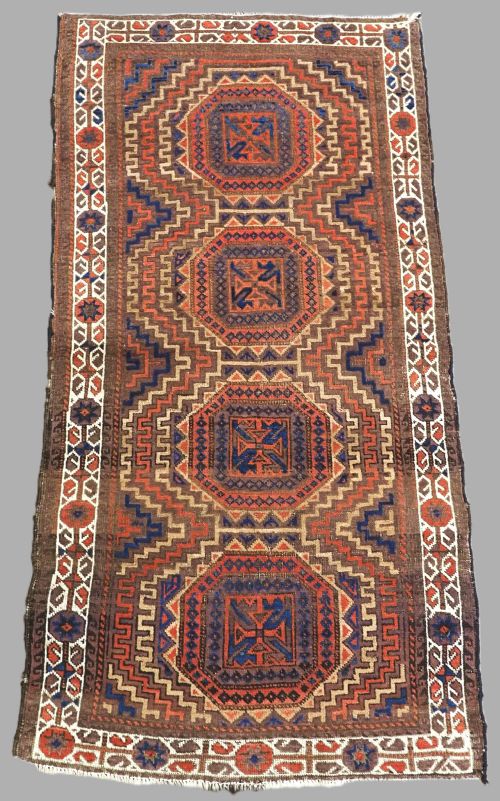
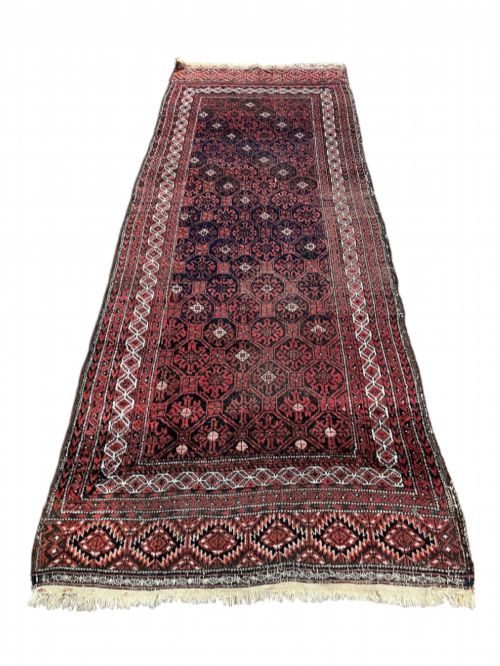
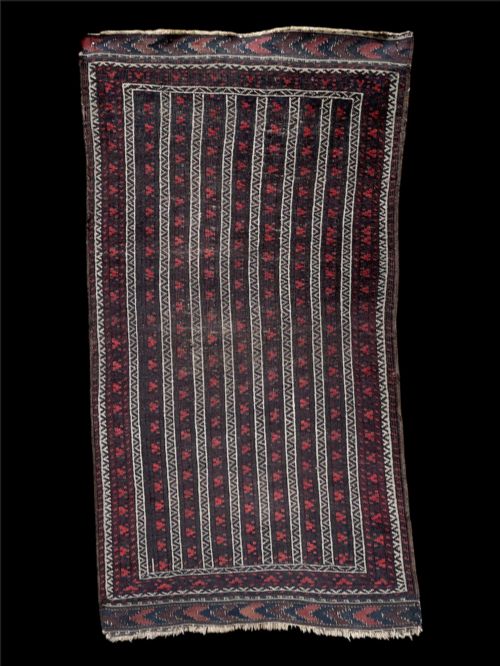
The inventory on this page demonstrates examples attributed to specific tribal groups such as the Salar Khani, Timuri, Mahdad Khani, and Mushwani. The forms range from narrow runners and kilims to double mihrab prayer rugs and sofres, spanning periods from the nineteenth century into the early twentieth century.
Most items present characteristic motifs like guls, mina khani lattice patterns, and kalam donneh designs woven on wool foundations. These textiles reflect the utilitarian and decorative traditions of weavers working across the borderlands of western Afghanistan and north-east Persia.
How they were made
The construction of these textiles relies primarily on wool, hand-spun wool, and pure wool, often combined with goat hair and cotton for structural integrity. Weavers utilised natural dyes to achieve deep red grounds, aubergine tones, and rich contrasting shades.
The pieces are hand-woven, incorporating techniques that produce durable pile carpets alongside flat-woven kilims. Many examples utilise structures woven in multiple parts or employ sturdy selvedges designed for nomadic daily use.
The listings span the nineteenth century through the 1930s, featuring wool, goat hair, and natural dyes across tribal runner and rug formats.
What varies in quality
Quality in these tribal textiles depends heavily on the fineness of the wool spin and the complexity of the design execution. Tighter knotting and well-rendered motifs, such as crisp mina khani lattices or distinct guls, distinguish finer village and nomadic work from simpler productions.
The depth and preservation of the natural dyes also influence the character of each piece. Variations in the handling of traditional formats, such as prayer rugs or directional runner layouts, reflect the individual skill of the weaver.
Salar Khani Tribe·Mahdad Khani Tribe·Yaqoub Khani Tribe·Mushwani Baluch·Timuri
The Traditional Baluch Runner Glossary
- Gul
- A medallion motif frequently repeated across tribal carpets and rugs. This octagonal design often serves as a primary clan identifier in Baluch weaving.
- Mihrab
- An arch-shaped design element representing a prayer niche, commonly found in rugs intended for devotional use. Double versions feature two such arches.
- Sofre
- A spread or cloth used for sharing meals or processing dough in nomadic households. These functional dining textiles often double as finely patterned floor coverings.
- Kalam Donneh
- A motif resembling a pencil box or curved paisley shape, frequently arranged in rows across western Afghan and Baluch weavings.
Traditional Baluch Runner: Frequently Asked Questions
How do I care for an old wool runner?
Vacuum gently without a rotating brush roll to protect the hand-spun wool fibres and natural dyes. Keep the piece out of direct sunlight to prevent fading and rotate it periodically for even wear.
Professional cleaning should be handled by specialists familiar with antique tribal textiles and natural dye stabilisation.
Where were these tribal rugs made?
These textiles originate from regions spanning western Afghanistan and north-east Persia, including the Khorasan and Sistan provinces. Nomadic and village groups such as the Timuri and Salar Khani produced them across these borderlands.
Production methods and regional motifs often reflect the specific tribal affiliations of the weavers working in these areas.
How are different tribal designs identified?
Tribal attribution relies on recurring design elements such as specific gul shapes, kalam donneh motifs, and mina khani lattices. Colour palettes, including deep aubergine grounds and red wool tones, also point toward particular regional workshops.
Structural details like goat hair edges and hand-spun foundations further assist in distinguishing pieces from groups like the Mahdad Khani or Timuri.