





Traditional Asian Console Table
These traditional asian console table pieces bring centuries of regional Chinese craftsmanship into a room.
Traditional Asian Console Table
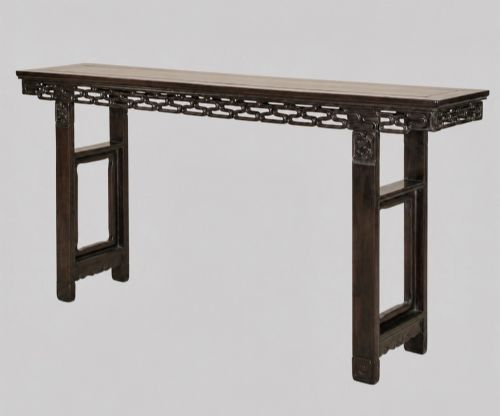
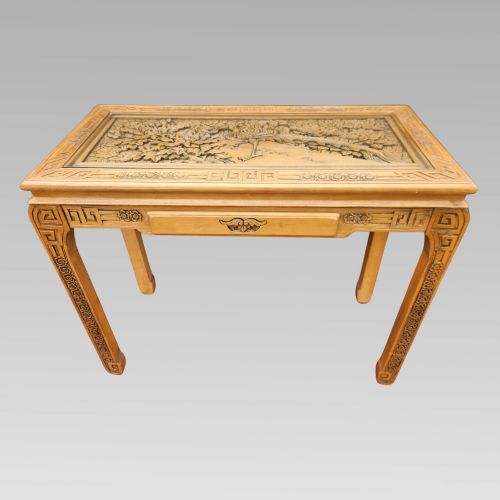
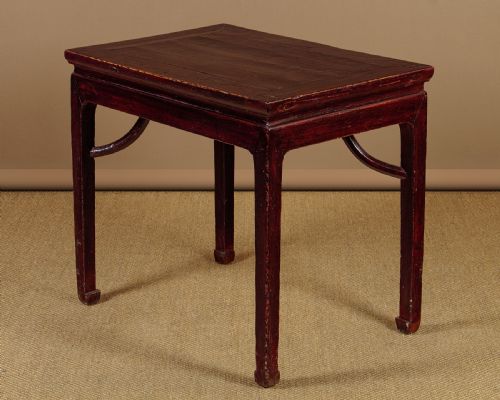
A traditional asian console table encompasses forms such as altar tables, writing desks, side tables, and trestle tables originating from China across the eighteenth, nineteenth, and early twentieth centuries. These tables frequently emerge in styles spanning Qing Dynasty, Chinese provincial, and Chinese export designs.
Elm and hardwood dominate the pieces seen here, alongside lacquered wood variants featuring brass hardware and occasional marble inserts. Buyers encounter formats ranging from large altar tables to small side cabinets and demilune tables.
The regional diversity of these tables reflects centuries of Chinese woodworking traditions, with provincial workshops producing functional furniture designed for domestic and ceremonial spaces. Each piece carries structural traits unique to its period of origin, from Kangxi period design influences to late Qing Dynasty construction.
Materials and Construction
Cabinetmakers utilised dense timbers such as elm, camphorwood, and various hardwoods, constructing sturdy frames with traditional joinery that accommodated wood movement over decades. Plank tops and corner leg joints provided the structural stability required for heavy altar tables and writing desks.
Surfaces frequently received applications of red or black lacquer, sometimes paired with marble tops or accented with brass mounts and drawer pulls. These protective and decorative finishes highlight the grain of the underlying timber while defining the visual character of export and regional pieces.
Traditional Asian Console Table Retail Price Guide 2026
Typical asking prices for traditional asian console table among the pieces listed under this phrase on Sellingantiques today, from the lower quarter to the upper quarter. They describe what is for sale here now, not the wider market.
Some elm tables incorporate a specific regional timber variety known locally as locust wood.
Evaluating Quality and Detail
Quality rests in the integrity of the original timber and the crispness of any carved detailing, particularly on altar tables and writing desks where proportions dictate the visual balance. Finer examples display harmonious grain patterns in elm or hardwood alongside well-preserved lacquer surfaces.
The condition of original brass fittings and the retention of early lacquer finishes distinguish more substantive items from simpler utility pieces. Structural cohesion in the leg joints and corner construction reveals the competence of the workshop behind the work.
The Traditional Asian Console Table Glossary
- Altar table
- A traditional table type characterised by a long, narrow rectangular top, often with upturned flanges at the ends. These pieces originally served ritual functions in Chinese households before finding use as console tables.
- Elm
- A resilient timber commonly utilised in Chinese furniture making for its visible grain and structural toughness. Cabinetmakers favoured it for provincial side tables and desks.
- Qing Dynasty
- The final imperial dynasty of China, spanning from sixteen forty-four to nineteen twelve. Many tables on this page date to the late phases of this period.
- Lacquer
- A durable natural resin applied in multiple coats to wood surfaces to create a smooth, protective finish. Red and black lacquer variations appear frequently on export tables.
- Trestle table
- A table design featuring a horizontal beam supported by two vertical legs or trestles. This construction method provides high stability for heavy hardwood tabletops.
- Demilune
- A half-moon shape used for console tables designed to sit flat against a wall. These tables often appear in pairs within interior schemes.
Traditional Asian Console Table: Frequently Asked Questions
What is a traditional asian console table?
These pieces comprise antique Chinese tables built in forms such as side tables, altar tables, and writing desks.
Craftsmen produced them primarily in elm, hardwood, and lacquered wood during the eighteenth, nineteenth, and early twentieth centuries.
How were altar tables used originally?
Altar tables served ceremonial and ritual purposes within traditional Chinese homes, often holding ancestral tablets or ritual vessels.
Today, their narrow proportions make them suitable for use as console tables in hallways and living spaces.
What woods should I expect to find?
Elm and dense Asian hardwoods form the majority of the material evidence on these tables.
Camphorwood, timber variants, and lacquered wood surfaces also appear across various regional styles.
How do I identify a Qing Dynasty piece?
Qing Dynasty pieces date between sixteen forty-four and nineteen twelve, encompassing styles from regional workshops and export centres.
Examinations of the joinery, timber ageing, and lacquer application help indicate the period of production.
Where should I place a console table?
These narrow tables suit hallways, corridors, and living rooms where floor space is limited.
Their flat tops accommodate lamps and decorative objects while maintaining a shallow profile against walls.