

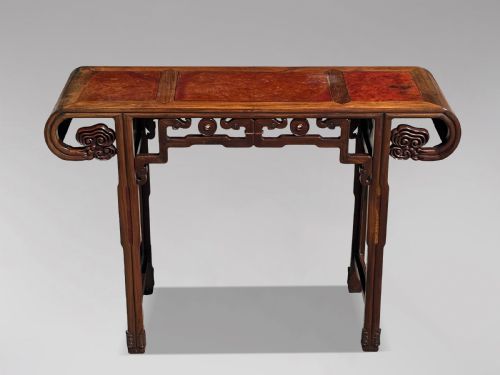


Hardwood Chinese Altar Table
These hardwood chinese altar table pieces bring grounded structure and rich timber grain to an interior.
Hardwood Chinese Altar Table
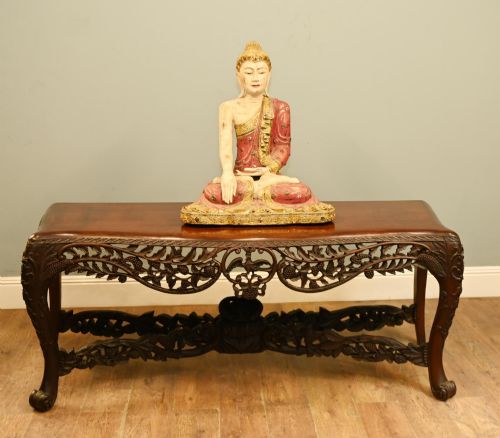
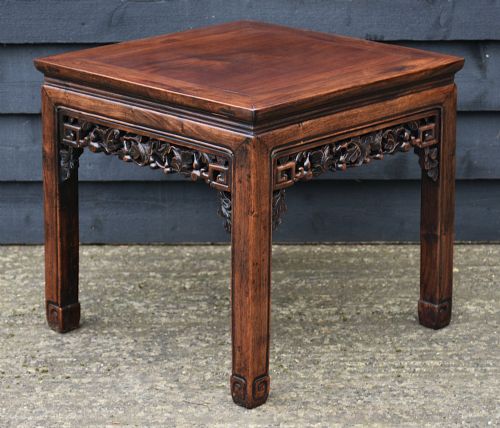
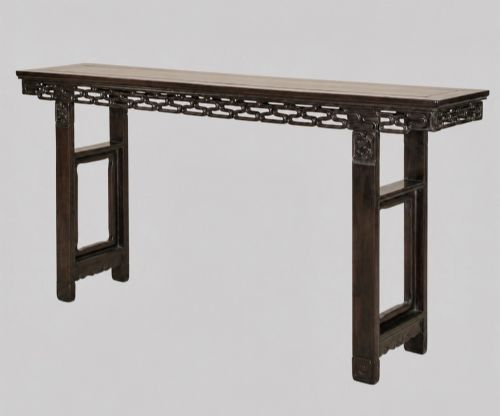
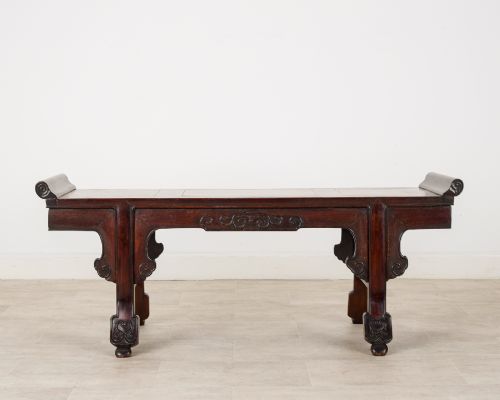
A hardwood chinese altar table is a sculptural form originating in domestic and ritual spaces, most often seen here as nineteenth-century Qing Dynasty examples constructed from dense timbers. These pieces range from narrow console shapes with upturned ends to broader rectangular side tables and low bench forms.
The selection centres heavily on nineteenth-century craftsmanship, including pieces dated around eighteen-eighty and eighteen-ninety alongside earlier eighteenth-century corner leg examples. They appear in formats suited to modern placement, functioning readily as hall tables, console tables, and centre tables.
Materials and construction
Makers utilised dense timbers such as hongmu, rosewood, elm, and amboyna wood, often pairing the natural grain with carved detail or contrasting inset panels of rouge marble. Lacquer finishes and brass accents also appear across the selection, adding surface depth to structural hardwood frames.
Joinery traditions of the Qing Dynasty relied on precise framing to support plank tops, scroll ends, and trestle bases without modern fixings. Carved ornamentation is integrated directly into the structural members, defining apron rails and leg profiles.
Hardwood Chinese Altar Table Retail Price Guide 2026
Typical asking prices for hardwood chinese altar table among the pieces listed under this phrase on Sellingantiques today, from the lower quarter to the upper quarter. They describe what is for sale here now, not the wider market.
One unexpected item bridges domestic seating and ritual architecture: a nineteenth-century hardwood altar bench functioning as a window seat.
Assessing quality and finish
Quality rests in the selection of the timber and the crispness of the carved detail on the aprons and scroll ends, where finer examples display deep, deliberate relief rather than shallow scoring. The integration of inset marble panels and the stability of the plank top also distinguish superior pieces.
Proportion and structural integrity separate robust examples from simpler utility forms, with well-balanced corner legs and clean joinery indicating higher workshop standards. The preservation of original surface finishes, whether polished hongmu or lacquered hardwood, completes the distinction.
The Hardwood Chinese Altar Table Glossary
- Hongmu
- A dense, heavy tropical hardwood prized in Chinese furniture making for its rich colour and capacity for fine carving. It forms the structure of many high-status tables and stands.
- Altar table
- A traditional rectangular table form featuring elevated ends or upturned flanges, originally designed for ritual use. Today these serve as decorative console tables.
- Amboyna wood
- A decorative burl timber known for its intricate swirling grain pattern. It is utilised for contrasting panels and highlights on nineteenth-century pieces.
- Qing Dynasty
- The final imperial dynasty of China, spanning from sixteen-fourteen-fourteen to nineteen-and-twelve. Pieces from this period frequently display traditional carving styles.
- Scroll-ended
- A table design where the short ends of the top surface curve upward into rolls. This distinctive profile mimics traditional scroll documents.
Hardwood Chinese Altar Table: Frequently Asked Questions
What is a hardwood chinese altar table used for?
These tables were originally created for domestic and ceremonial offerings, positioned against walls in principal rooms.
Today they function effectively as narrow console tables in hallways or as striking side tables in living spaces.
How do I identify a Qing Dynasty table?
Qing Dynasty pieces are generally identified through characteristic timber choices like hongmu and rosewood combined with traditional carved motifs.
Look for structural elements such as corner legs, plank tops, and scroll ends that match nineteenth-century workshop methods.
Where should I place an altar table?
Their narrow rectangular proportions make them well suited to hallways, entryways, or positioned flat against living room walls.
They also work effectively as centre tables or serving surfaces depending on the specific height and depth of the frame.
What woods were used for these tables?
Makers relied on durable Asian hardwoods including rosewood, elm, and hongmu, often selected for strength and deep natural colour.
Decorative additions of amboyna wood and rouge marble panels frequently appear on finer nineteenth-century examples.