


Tooled Leather Writing Desk
A tooled leather writing desk brings a traditional surface of gold-embossed hide and rich timber into a room, offering a functional workspace rooted in nineteenth-century craftsmanship.
Tooled Leather Writing Desk
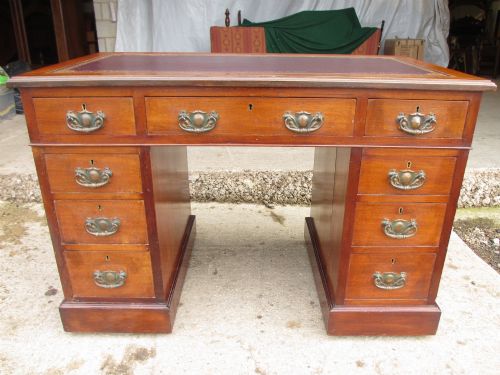
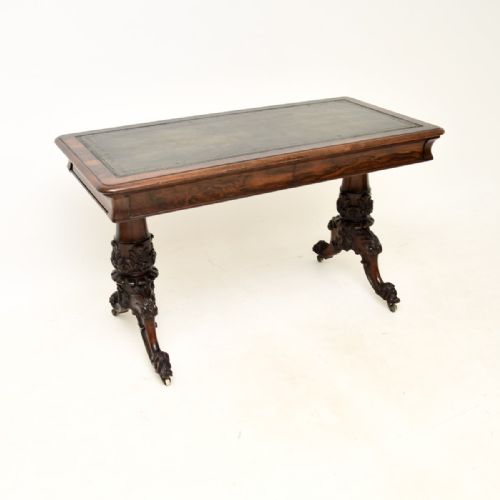
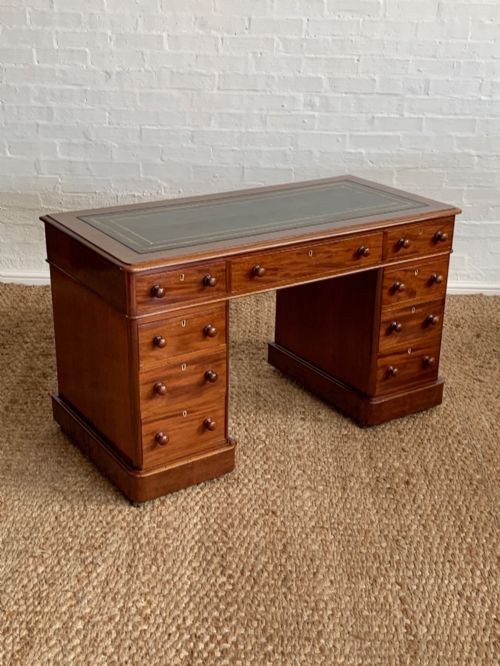
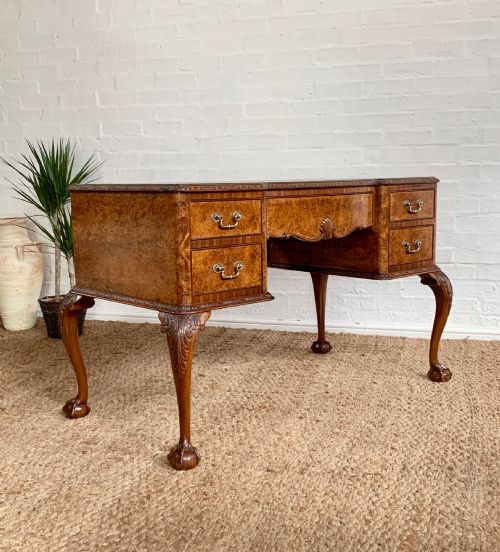
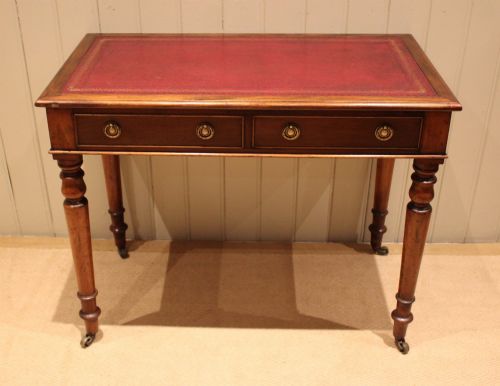
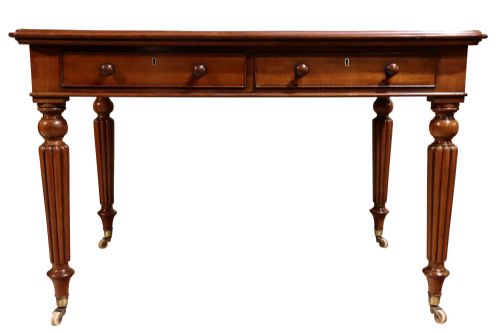
A tooled leather writing desk is a functional piece designed for correspondence and administrative work, frequently taking the form of a pedestal desk, kneehole desk, or freestanding writing table. These pieces emerge across the nineteenth and early twentieth centuries, spanning Victorian, Edwardian, William IV, and Regency periods.
The materials reflect the cabinet-making standards of their respective eras, utilising solid timbers and fine veneers alongside inset writing surfaces. Walnut, mahogany, and rosewood form the primary structural woods, while oak and burr walnut appear in specific regional or stylistic variations.
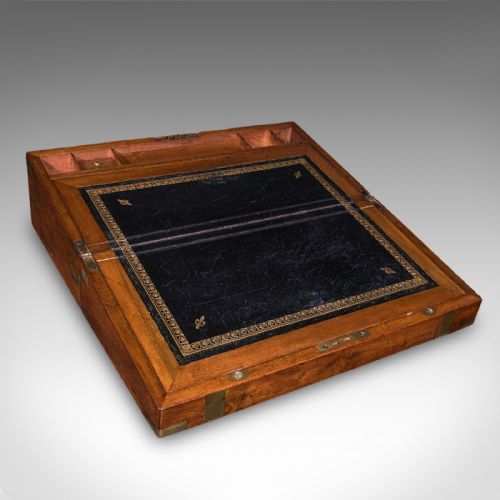
Buyers encounter multiple formats ranging from large partner desks intended for shared office use to compact ladies' writing tables and portable writing slopes. Many incorporate drawers for stationery storage, while library tables and centre tables utilise the inset leather top for general study.
Materials and Construction
Makers constructed the primary carcases using durable timbers such as mahogany, walnut, and rosewood, often enhanced by decorative veneers like flame mahogany or burr walnut. Brass hardware, including handles, key escutcheons, and occasional ormolu mounts, provides functional and decorative accents.
The writing surfaces utilise leather inset into the timber top, decorated with blind or gilt tooling along the perimeter. Cabinetmakers employed traditional joinery techniques for the drawers and pedestals, ensuring stability across both pedestal desks and lighter writing tables.
Listings feature pedestal desks, writing tables, and writing slopes in walnut, mahogany, oak, and rosewood across the Victorian, Edwardian, and Regency periods.
Evaluating Quality and Detail
The distinction between standard and superior pieces rests on the selection of timber figures, the intricacy of the cabinet work, and the preservation of the original leather. Higher-tier examples display figured veneers, substantial secondary woods, and refined proportions that indicate skilled workshop production.
Hardware and secondary details further separate pieces, where original brasses, finely cast mounts, or careful inlay elevate the object. The crispness of the gilt tooling on the leather insert and the smooth operation of drawers demonstrate the level of care invested in the construction.
Maple & Co
The Tooled Leather Writing Desk Glossary
- Pedestal desk
- A heavy desk comprising two separate pedestals of drawers supporting a single top, often fitted with a leather writing surface.
- Kneehole desk
- A compact desk featuring a central recess for the user's legs, flanked by banks of small drawers.
- Writing slope
- A portable box with a hinged sloping lid that opens to reveal a velvet or leather-lined writing surface and compartments for ink and paper.
- Partner's desk
- A large double-sided desk designed to accommodate two people working opposite one another, featuring drawers on both sides.
- Gilt tooling
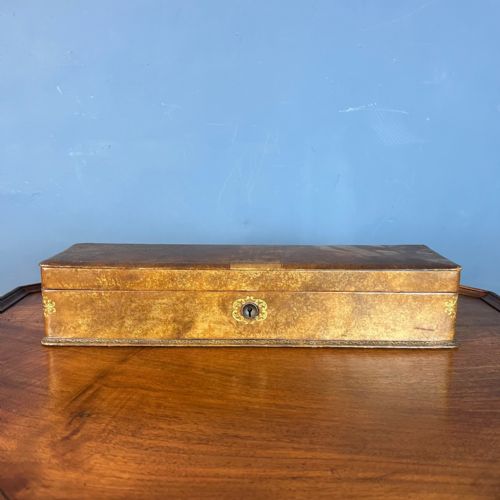
- The decorative process of pressing gold leaf into leather using heated brass stamps to create ornate borders.
- Reformed Gothic
- A nineteenth-century revival style drawing on medieval architectural motifs, notable for geometric lines and structural honesty.
Tooled Leather Writing Desk: Frequently Asked Questions
How do I care for the leather top?
The leather top requires gentle cleaning with a dry or slightly damp cloth, avoiding harsh modern chemical cleaners that strip the original finish. Periodic application of specialised leather balsam helps maintain suppleness and protects the gold tooling from fading.
Keep the desk away from direct sunlight and excessive heat sources to prevent the leather from drying out or cracking over time. Natural wax can be used lightly on the surrounding wood frame while avoiding direct contact with the inset hide.
Are these desks practical for daily work?
These desks accommodate contemporary writing and laptop use while providing substantial drawer storage for stationery and documents. Their historical dimensions often offer a comfortable working height, though chair clearance should be verified against kneehole heights.
Free-standing pedestal versions and library tables allow placement in the centre of a room, while smaller ladies' writing tables suit compact studies or bedrooms.
How can I distinguish a Victorian desk from a Regency one?
Regency desks typically exhibit cleaner architectural lines, classical proportions, and brass inlay inspired by ancient Roman or Greek designs. Mahogany and rosewood predominate in this earlier period, often featuring sabre legs or delicate turned supports.
Victorian examples tend to be heavier and more robust, frequently utilising walnut and incorporating elaborate carving, raised panels, and pedestal configurations. The introduction of specific revival styles, such as Reformed Gothic or Queen Anne, also points towards the later nineteenth century.
What is a partner's desk?
A partner's desk is built with full sets of drawers on both sides, allowing two people to sit opposite each other and work simultaneously. These substantial pieces were traditionally used in libraries, banks, and large administrative offices.
They represent a larger format of pedestal desk and usually feature expansive leather writing surfaces bordered by generous mahogany or walnut frameworks.