

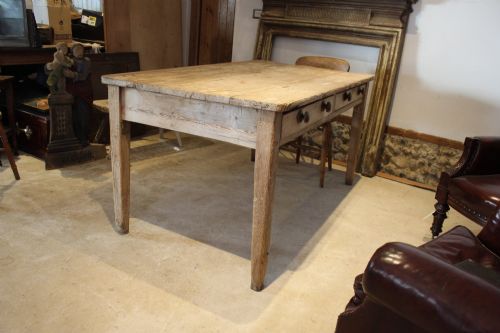
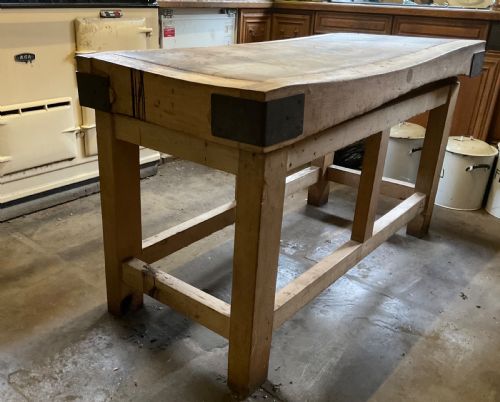
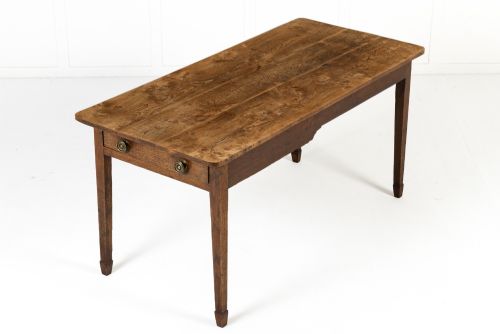
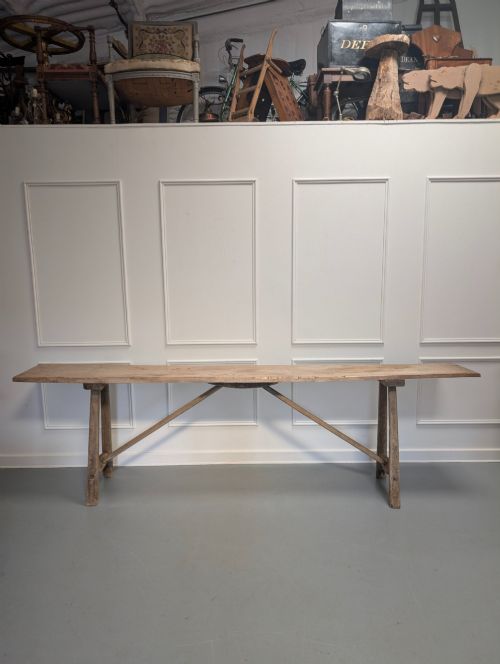
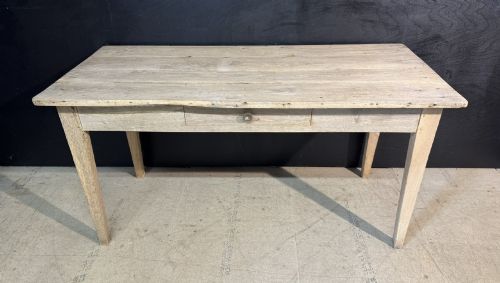
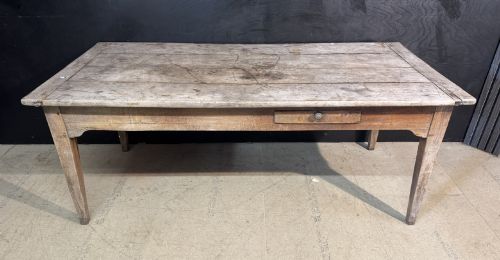
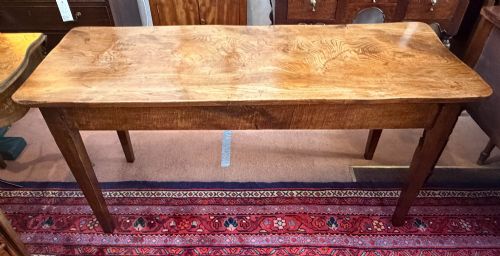
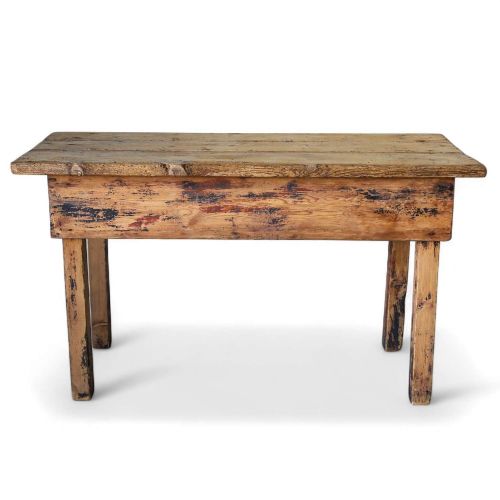


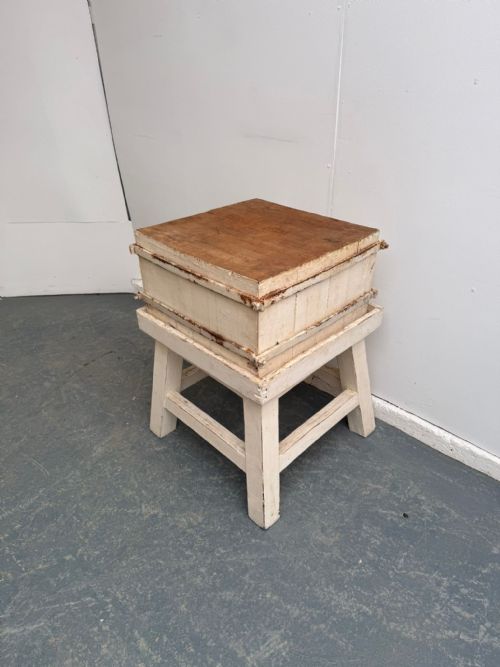
Timber Prep Table
A timber prep table is a hardworking surface designed for culinary preparation, offering robust utility and honest character.
Timber Prep Table
A timber prep table serves as a functional workspace originating from domestic and commercial kitchens, laundries, and dairies. When searching for a timber prep table, buyers encounter hardworking surfaces built to handle daily labour.
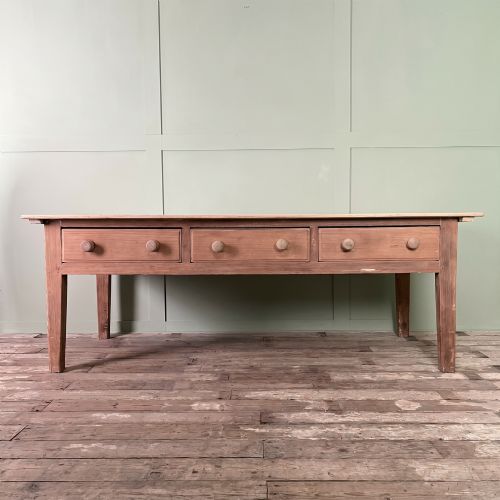
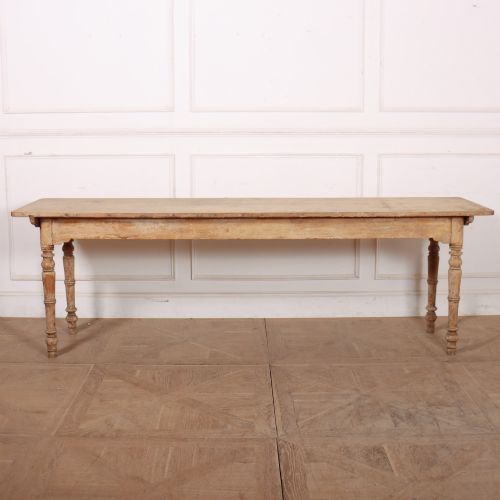
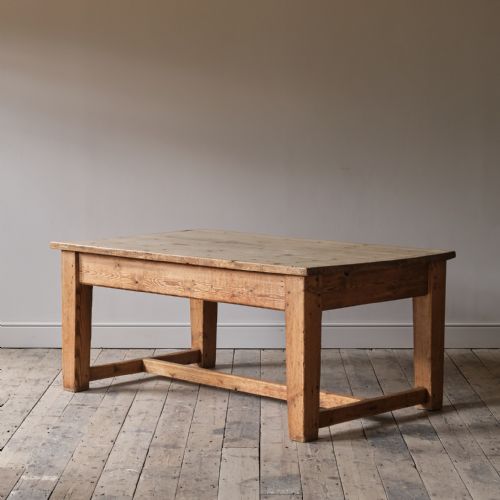
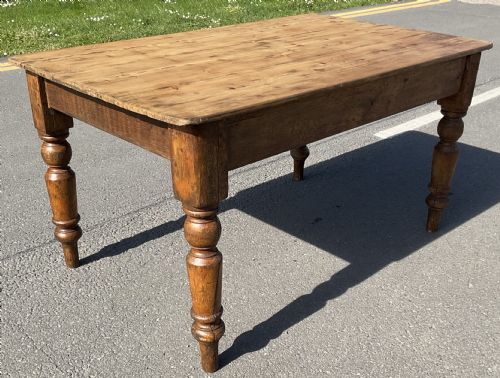
The pieces appearing here span the nineteenth century and early twentieth century, drawing from English, French, Scandinavian, and Welsh traditions. Common forms include scrub-topped kitchen tables, butchers blocks, drapers tables, and servers with drawers or pot-shelves.
Pine and oak dominate the selection, often accompanied by beech, elm, sycamore, and painted finishes. These tables embody utilitarian design, prioritising stability and ample working area over decorative flourishes.
How they were made
Construction relies heavily on dense native timbers such as pine, oak, beech, and elm, selected for resilience under heavy use. Scrubbed tops show the grain from decades of vigorous cleaning, while painted bases utilise traditional finishes like Falu red or white lead-based paint.
Joinery is straightforward and robust, utilising pegged mortise and tenon joints to withstand sustained pressure during food preparation or textile work. Iron and brass hardware appear on functional elements such as drawers and fittings.
Timber Prep Table Retail Price Guide 2026
Typical asking prices for timber prep table among the pieces listed under this phrase on Sellingantiques today, from the lower quarter to the upper quarter. They describe what is for sale here now, not the wider market.
Several tables retain generations of flour dust and knife marks embedded deep within the grain.
What varies in quality
Quality rests in the integrity of the timber and the depth of natural patina earned through decades of service. Tables with untouched original paint or deeply scrubbed, thick plank tops command greater appreciation among purists.
Proportion and structural honesty separate everyday utility pieces from exceptional examples. A well-balanced frame with original supports and minimal later intervention demonstrates superior heritage.
Trussant & Cie
The Timber Prep Table Glossary
- Scrub top
- A solid wooden tabletop left unsealed and repeatedly scrubbed clean with water and sand or soap. This process creates a pale, tactile surface with raised grain.
- Drapers table
- A long, wide table historically utilised in textile shops for measuring and cutting cloth. These pieces typically feature lower pot-shelves or multiple drawers.
- Butchers block
- A heavy, thick-topped wooden block designed for meat preparation and chopping. They are constructed from end-grain or heavy side-grain timber to absorb impact.
- Pot-shelf
- An open lower shelf fitted between the legs of a table or server. It provides convenient storage for pots, pans, and kitchen utensils.
Timber Prep Table: Frequently Asked Questions
What is a timber prep table?
A timber prep table is a sturdy, utilitarian wooden surface historically used for food preparation, butchery, laundry, or textile work in domestic and commercial settings.
These tables prioritise function and durability, featuring thick wooden tops and robust frames designed to handle heavy daily tasks.
How do I care for a scrub top?
Maintaining a scrub top involves regular cleaning with mild soap and warm water, followed by thorough drying to prevent the wood from warping.
Avoid harsh chemical sealants if you prefer to maintain the traditional matte, tactile finish characteristic of historic workspace tables.
Where were these tables used?
These tables served various practical roles across European and British households, farmhouses, dairies, and shops. They acted as the central hub for kitchen work and trade.
Regional variations reflect local timber availability and domestic needs, from French pot-shelf servers to Welsh pine work tables.
How do I date a prep table?
Dating relies on observing construction methods, tool marks, timber selection, and wear patterns. Hand-sawn boards and pegged joinery usually point towards nineteenth-century craftsmanship.
Hardware styles and accumulated layers of historic paint also provide reliable clues regarding the age and origin of the piece.