

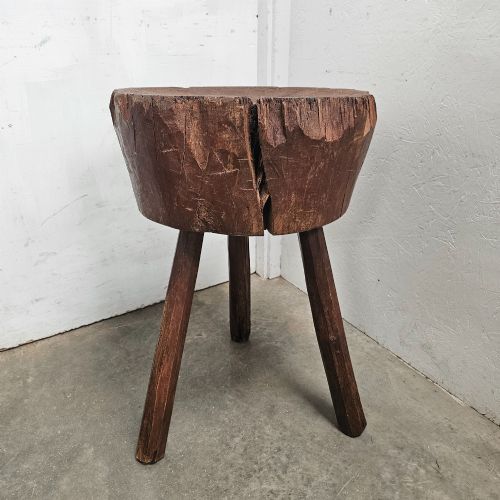


Wooden Butcher Block Table
A wooden butcher block table is a heavy-duty work surface built for daily food preparation, offering rugged utility and time-worn character to any kitchen.
Wooden Butcher Block Table
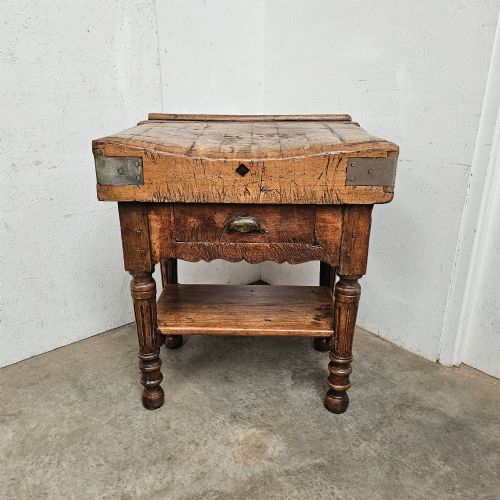
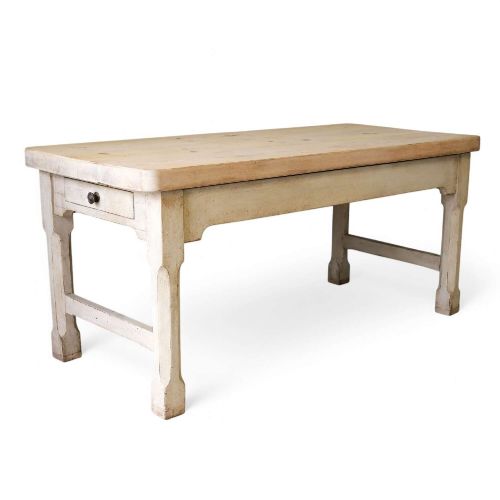
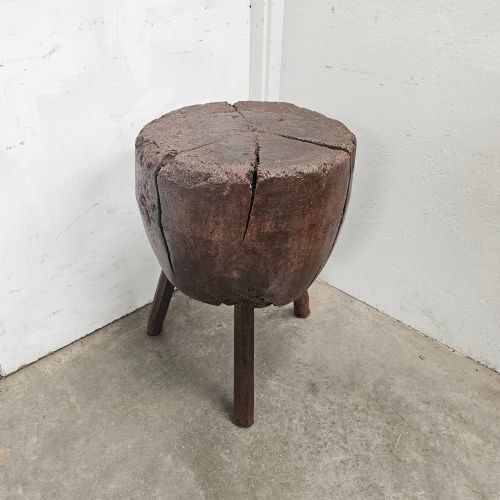
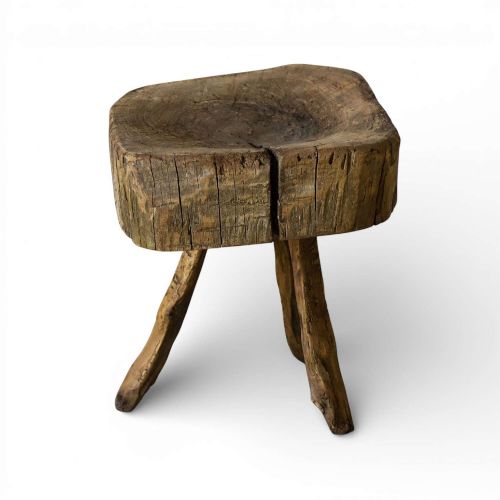
A wooden butcher block table is a robust prep surface designed for heavy culinary tasks, featuring dense timber tops built to withstand constant chopping and carving. When exploring a wooden butcher block table, you will encounter diverse forms ranging from French game blocks and kitchen islands to primitive country prep tables and pig benches.
The selections span from the nineteenth century into the mid-twentieth century, capturing utilitarian designs rooted in domestic and commercial food preparation. French provincial and rustic farmhouse styles dominate, reflecting vernacular rural traditions across Britain and continental Europe.
Most examples pair thick wooden tops with sturdy bases, occasionally resting on decorative stands, original gnarled legs, or trestle supports. These pieces served practical roles in dairies and kitchens before finding a second life as statement furniture in modern homes.
How they were made
Makers constructed these surfaces from dense hardwoods selected for durability and resistance to splitting under heavy use. Beech, oak, elm, ash, and sycamore appear frequently, paired with iron or metal hardware where structural reinforcement was required.
Construction methods prioritised absolute utility, utilising thick end-grain or edge-grain timber joined securely to endure relentless chopping. Bases range from simple timber legs and trestle frames to decorative iron stands and later painted wooden supports.
Wooden Butcher Block Table Retail Price Guide 2026
Typical asking prices for wooden butcher block table among the pieces listed under this phrase on Sellingantiques today, from the lower quarter to the upper quarter. They describe what is for sale here now, not the wider market.
Some heavy game blocks bear the deep, authentic scars of nineteenth-century cleavers.
What varies in quality
Quality rests in the integrity of the timber top and the originality of its supporting base. Heavy, thick working surfaces that retain their authentic scrubbing and patina represent the superior end of the range.
The relationship between the block and its stand dictates desirability, with original legs or matching bases commanding greater interest than later replacements. Condition reflects decades of genuine utility, where honest wear enhances rather than diminishes the object.
The Wooden Butcher Block Table Glossary
- Game Block
- A specialised heavy chopping block historically used for preparing wild game and fowl. These pieces typically feature exceptionally thick timber tops designed to absorb heavy blows.
- Pig Bench
- A long, sturdy wooden table traditionally utilised in rural settings for butchering and meat preparation. They are characterised by generous proportions and robust hardwood construction.
- Scrubbed Top
- A wooden surface cleaned repeatedly with water and a stiff brush over decades, removing surface finishes and creating a pale, tactile texture. This treatment highlights the natural grain of the timber.
- Trestle Support
- A structural framework where a horizontal beam is held up by pairs of sloping legs. This design provides exceptional stability for heavy working tables.
- Vernacular Rural
- A style of furniture shaped by local traditions, available materials, and practical needs rather than academic architectural fashions. These objects prioritise function above decorative ornament.
Wooden Butcher Block Table: Frequently Asked Questions
What is a wooden butcher block table used for?
These tables served as primary work surfaces for butchering meat, preparing game, and general kitchen tasks in domestic and commercial settings.
Today, they function brilliantly as kitchen islands, prep stations, or statement dining tables that bring industrial warmth to interior spaces.
How do I care for a antique wooden block?
Maintain the timber by cleaning it gently with damp cloths and avoiding harsh chemical detergents that strip natural oils. Regular applications of food-safe mineral oil help preserve the wood and prevent excessive drying.
Keep the table away from direct heat sources and dramatic humidity shifts to protect the historical timber joints from movement.
Are these tables suitable for daily food preparation?
Many people continue to use vintage and antique blocks for rolling pastry, chopping vegetables, and general food assembly. The dense hardwood construction remains remarkably resilient.
Examine the specific surface condition of individual pieces to determine whether you prefer using them for active culinary work or purely as display furniture.