




.jpg)
Timber Corner Cupboard
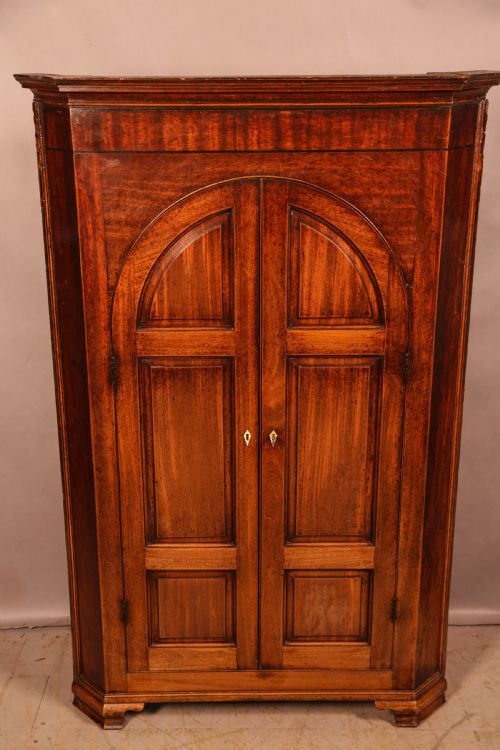
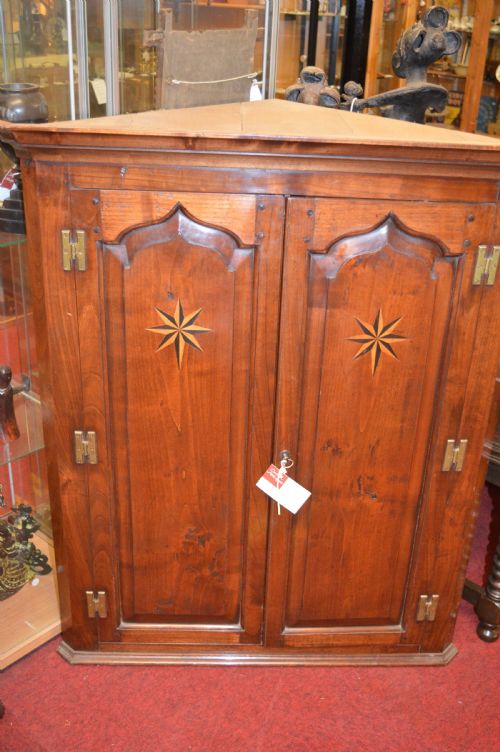
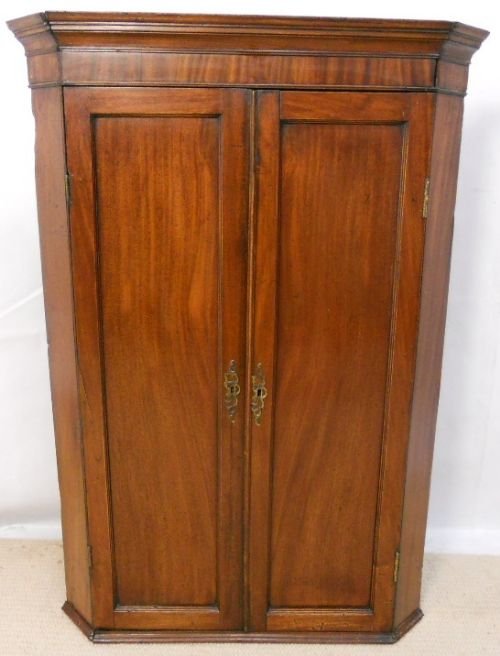
A timber corner cupboard fits flush into a room junction, turning unused angles into storage with architectural presence and figured grain.
Timber Corner Cupboard
A timber corner cupboard is a storage cabinet built specifically to occupy the junction of two walls, using an internal triangular footprint that saves floor space. The versions met most often on this page date from the Georgian period through to the nineteenth century, built either as wall-hanging units or taller freestanding floor cabinets.
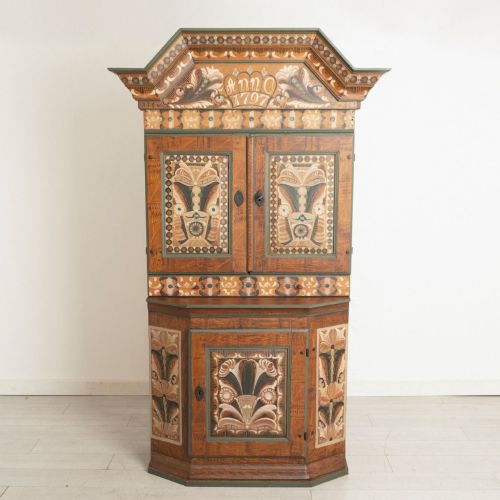
The regional and stylistic origins span English country workshops and formal urban cabinet makers alongside Scandinavian folk art and country traditions. These pieces utilise woods such as oak, mahogany, elm, yew and burr oak, often configured with single or double doors, glazed panels or painted surfaces.
Wall-hanging examples provide compact elevation whilst floor-standing architectural models anchor a room with stature and presence. Each piece reflects the functional requirements of eighteenth and nineteenth century interiors where domestic storage called for clever geometry.
How they were made
Cabinet makers constructed these cupboards using solid native timbers like oak, elm, fruitwood and pine for structural carcases, applying figured veneers of mahogany, burr oak and satinwood inlay to primary exterior surfaces. Door construction typically involved frame and panel techniques to accommodate seasonal wood movement without warping the door frame.
Glazed doors utilised timber glazing bars to hold individual panes of glass securely within the cabinet front. Hardware such as brass hinges, key escutcheon plates and working locks were fitted to secure the doors while adding metallic detail to the timber elevation.
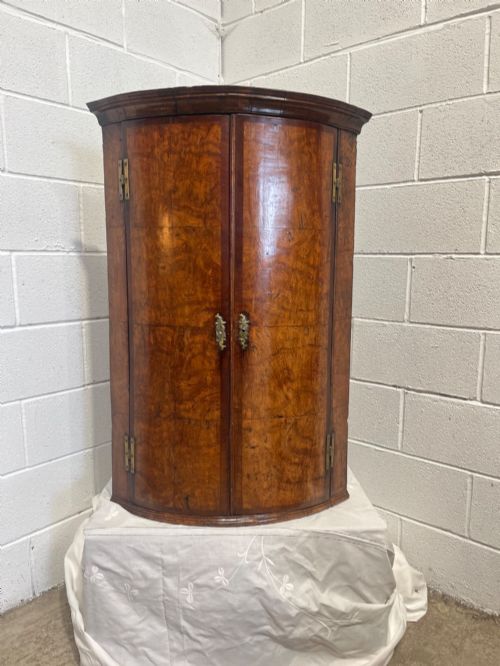
Some clever nineteenth-century makers curved the wooden fronts into gentle bows, proving even triangles like to bend.
What varies in quality
Quality rests in the selection of the timber and the crispness of the joinery and decorative details. Cabinets featuring highly figured burr oak, rich mahogany with satinwood inlay or sophisticated architectural pediments represent superior workshop output compared to plain pine carcases.
The integrity of the construction, including original brass hardware, stable door alignment and intact glazing bars, separates standard utilitarian cupboards from finer examples designed for formal reception rooms.
The Timber Corner Cupboard Glossary
- Architectural standing corner cupboard
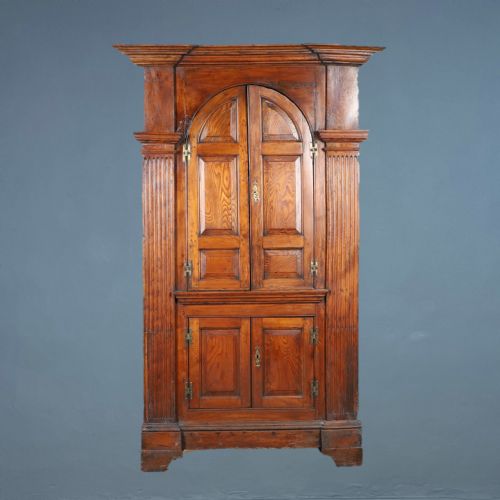
- A tall floor-resting cabinet featuring classical design elements such as dentil cornices, fluted pilasters or pediments. These grander pieces dominate a room corner.
- Hanging corner cupboard
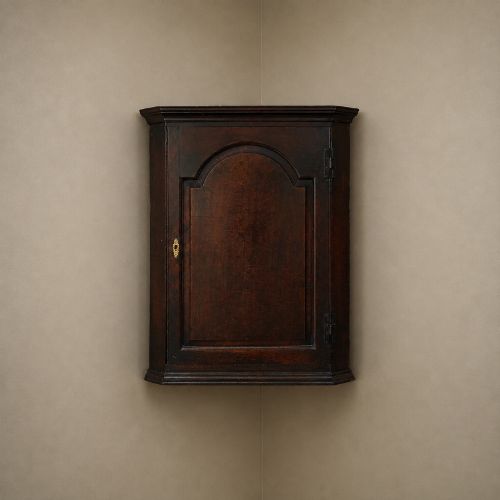
- A wall-mounted cabinet designed to be fixed securely at height using internal brackets or screw points. This format keeps floor space completely clear.
- Glazed door
- A door framework fitted with glass panes to display porcelain or glassware inside the cabinet. Timber glazing bars divide the glass panels structurally.
- Satinwood inlay
- A contrasting light exotic wood inserted into recesses cut into darker timber surfaces such as mahogany. This technique creates geometric or floral decorative borders.
- Bowfronted
- A convex curved front elevation that projects outward from the corner walls. This styling softens the sharp angles typical of standard triangular cabinets.
Timber Corner Cupboard: Frequently Asked Questions
How do I hang a wall cupboard safely?
Wall-hanging corner cupboards require sturdy fixings driven directly into wall studs or masonry rather than just plasterboard. The internal backboards usually feature robust hanging brackets or reinforced screw points designed to bear the weight of the timber and its contents.
Professional installation ensures the cabinet remains level and secure against the wall junction without straining the antique joints.
What is the difference between hanging and standing models?
Hanging models mount directly to the wall at eye level or above, leaving the floor area underneath completely open. Standing models rest on the floor, often incorporating a lower cupboard section or base plinth that provides greater overall storage capacity.
Standing versions tend to feature more architectural elements like cornices and plinths, whereas hanging variants focus on compact wall presence.
How do I date an antique timber cupboard?
Dating relies on examining the timber species, construction methods, hardware and stylistic details such as cornices and inlay work. Georgian pieces often show hand-cut dovetails, secondary woods like oak or pine inside, and characteristic proportions associated with eighteenth-century design.
Later nineteenth-century and revival pieces display machine-sawn timber elements and different nailing techniques that distinguish them from earlier workshop production.
Can these cupboards hold heavy items?
These cupboards were originally built to store household tableware, provisions or glassware on fixed internal wooden shelves. The internal triangular shelves are supported by wooden fillets fixed to the carcase sides, suiting everyday display and moderate loads.
Very heavy modern items should be avoided to prevent stress on the antique shelving supports and historical timber fixings.