
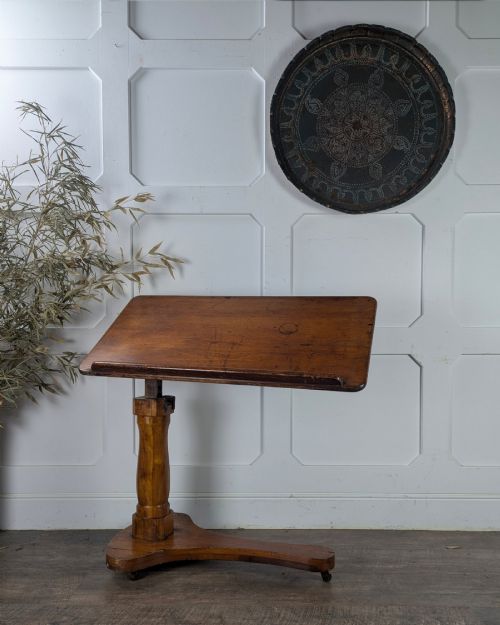
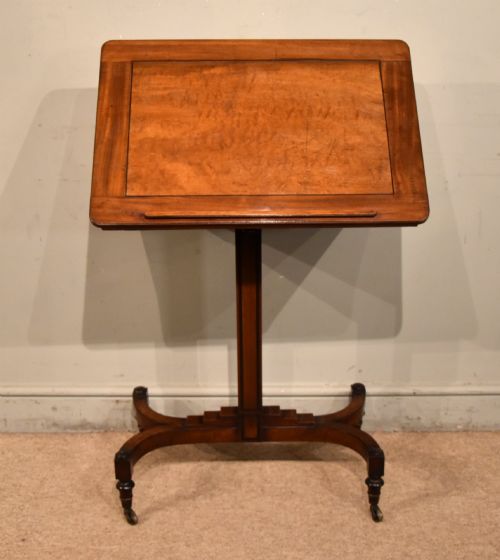
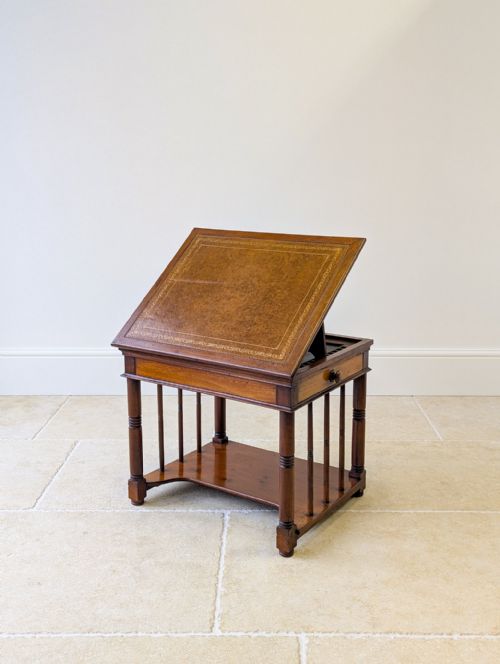

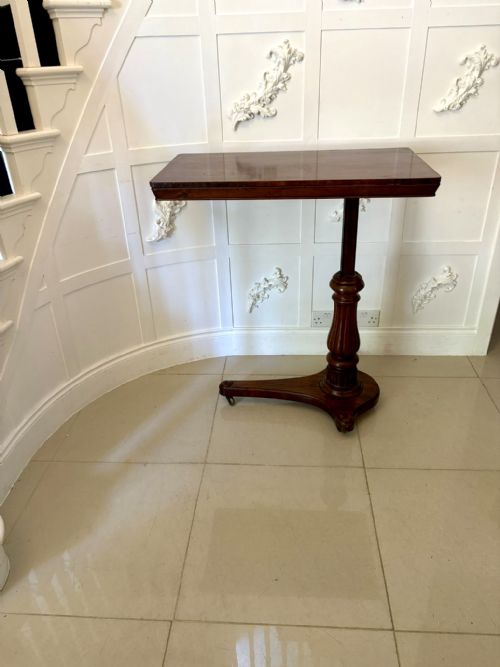
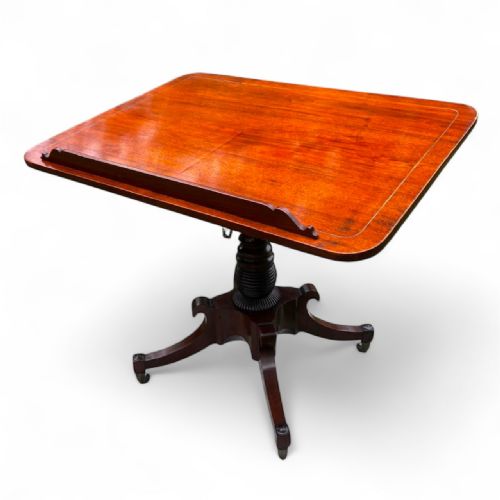


Tilting Reading Stand
These tilting reading stand pieces are solid mahogany or pine contrivances built for holding books at an angle, and you want one for practical desk work or hands-free study.
Tilting Reading Stand
A tilting reading stand is an adjustable table or lectern designed to support open volumes at a comfortable angle for the reader. When you search for this phrase, you will encounter diverse forms ranging from library chairside pieces to music tables and double reading stands.
The versions you are most likely to meet on this page hail primarily from the Regency and Victorian eras, alongside a selection of George II, George III, and Edwardian examples. These objects frequently integrate reading surfaces with side tables or mobility aids, constructed from timber or metal.
Origins span the eighteenth, nineteenth, and early twentieth centuries, reflecting changing domestic habits around study and leisure. Most surviving examples utilise mahogany as their primary wood, though pine and cast iron also appear in the record.
How they were made
Makers constructed these stands predominantly using solid mahogany, shaping timber frames that supported adjustable reading tops. Brass inlay and brass hardware frequently supplemented the woodwork, adding both structural movement and decorative contrast.
Heavier utility pieces employed cast iron and iron alongside pine, particularly in designs intended for bedside mobility or robust institutional use. Joinery techniques allowed the surfaces to tilt and the heights to adjust without compromising stability.
The listings span from George II and George III periods through Regency and Victorian eras down to Edwardian and early twentieth-century designs.
What varies in quality
Quality in these stands rests upon the sophistication of the adjustable mechanism and the selection of timber. Finer examples display carefully figured mahogany and precise brass fittings that operate smoothly.
Simpler pieces built from pine or heavy cast iron prioritize utility over cabinetmaking refinement, often serving specific mobility functions rather than formal library display.
The Tilting Reading Stand Glossary
- Tilting reading stand
- A piece of furniture with an adjustable top designed to hold books or music at an angle for easier reading. These items often feature mechanisms to alter both height and slope.
- Lectern
- A tall stand with a sloping top used to hold a book or notes for a standing reader. In older pieces, this form overlaps closely with adjustable reading tables.
- Double reading table
- A specialised reading stand designed to accommodate two books or readers simultaneously. These are often symmetrical in plan and allow independent adjustment.
- Chairside table
- A low table designed to sit immediately beside an armchair or library chair. When fitted with an adjustable top, it functions directly as a reading stand.
Tilting Reading Stand: Frequently Asked Questions
What is a tilting reading stand?
A tilting reading stand is an adjustable table or lectern designed to support books at an angle. They allow readers to study texts comfortably without holding them.
These pieces range from elaborate mahogany library tables to simpler cast iron mobility aids from the Victorian era.
How do you adjust the height?
Many examples utilise a central screw mechanism or ratchet system concealed within the pedestal or stem. This allows the reading surface to rise or fall according to the user's needs.
Other designs rely on sliding wooden struts and brass pins to secure the tabletop at the desired angle.
Where were they used?
These stands typically resided in libraries, studies, and drawing rooms of large houses. They served scholars, musicians, and readers who required hands-free support for heavy volumes.
Later Victorian versions occasionally served as bed tables for invalids, combining mobility aids with reading surfaces.
What woods were used?
Mahogany is the dominant timber found across the eighteenth and nineteenth-century examples. Its strength and rich grain made it the preferred choice for cabinetmakers.
Pine and various mixed woods appear in later or more utilitarian pieces, often paired with iron or cast iron components.