
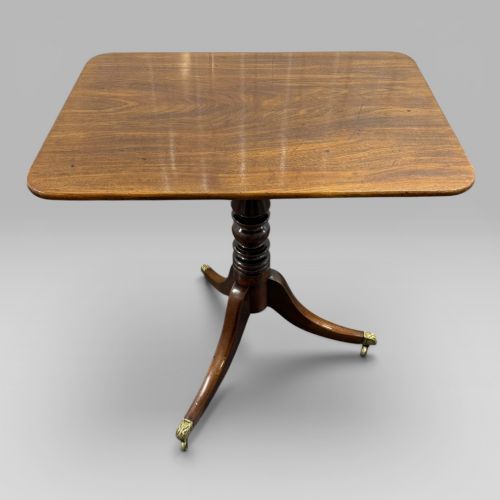
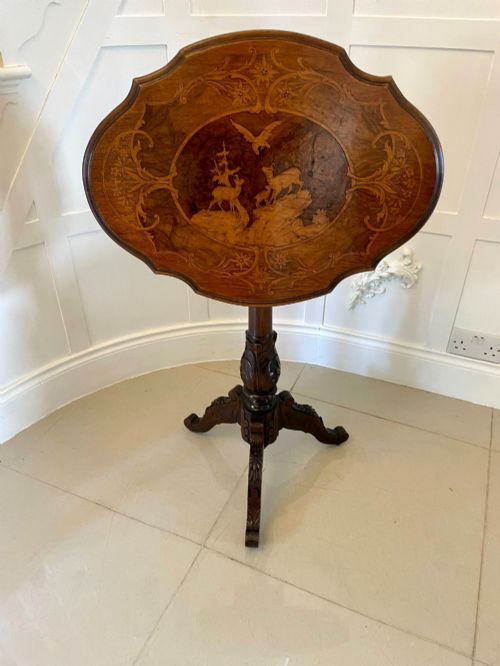
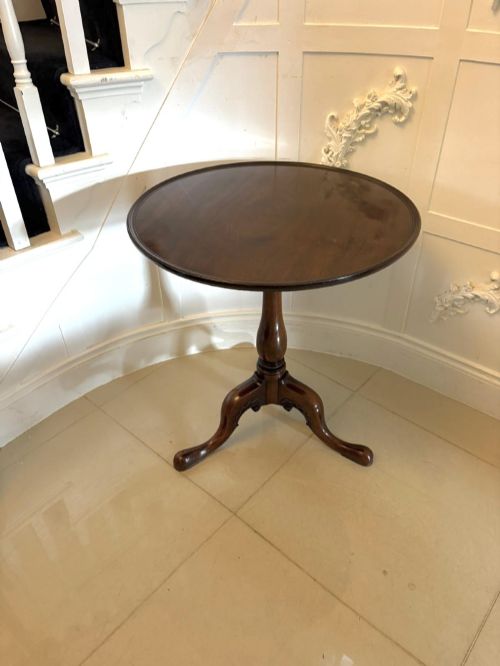
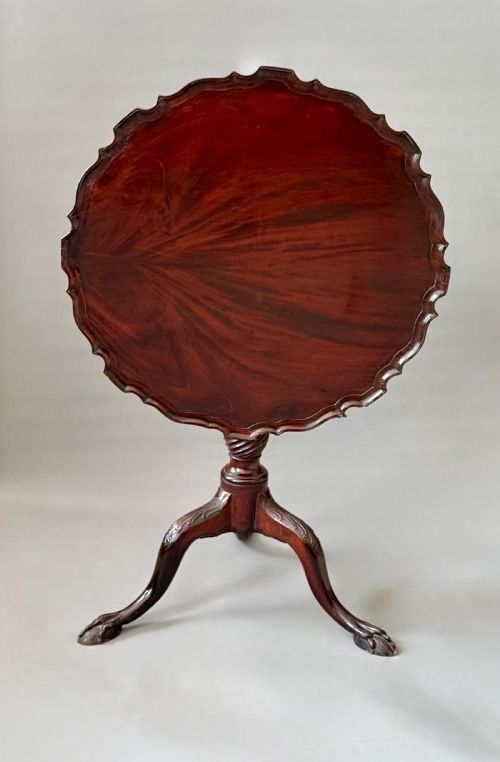
Tilted Top Wine Table
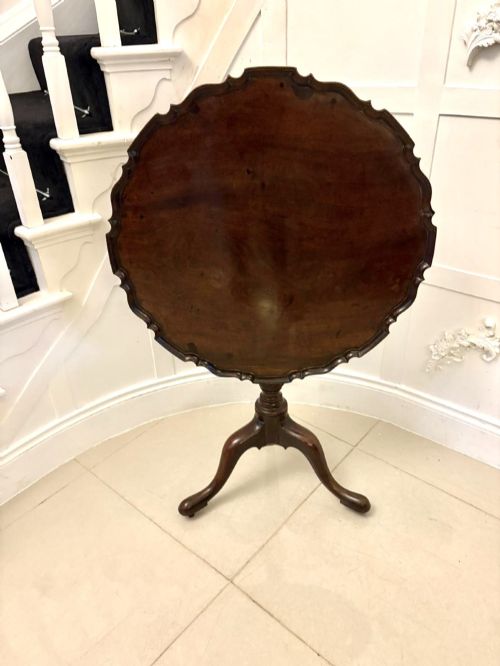
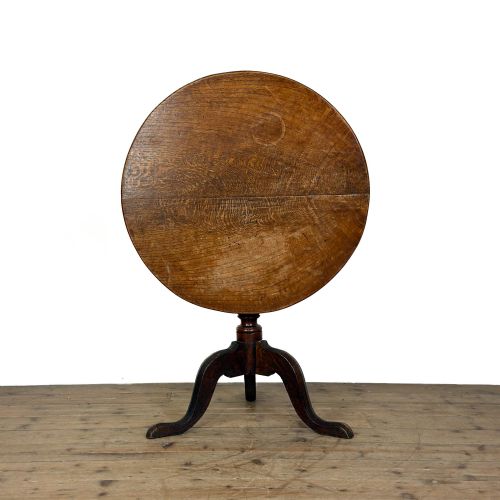
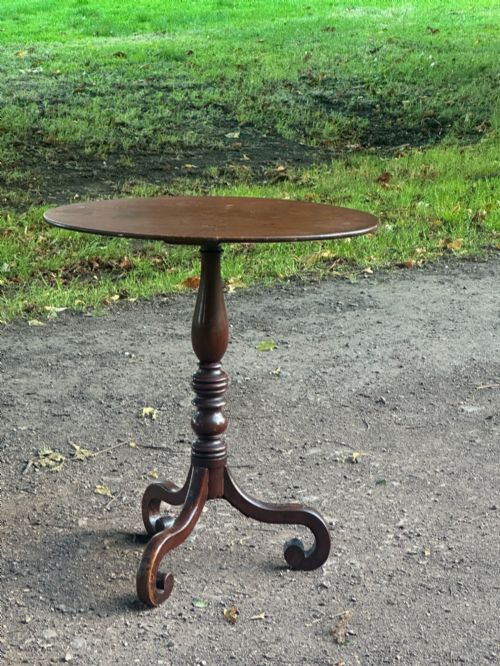
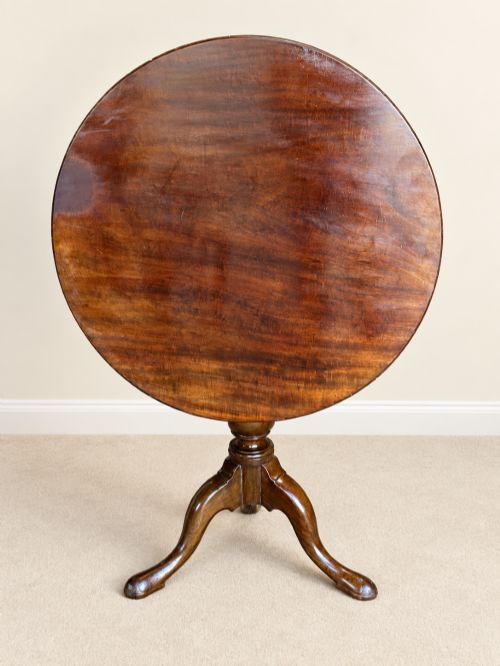
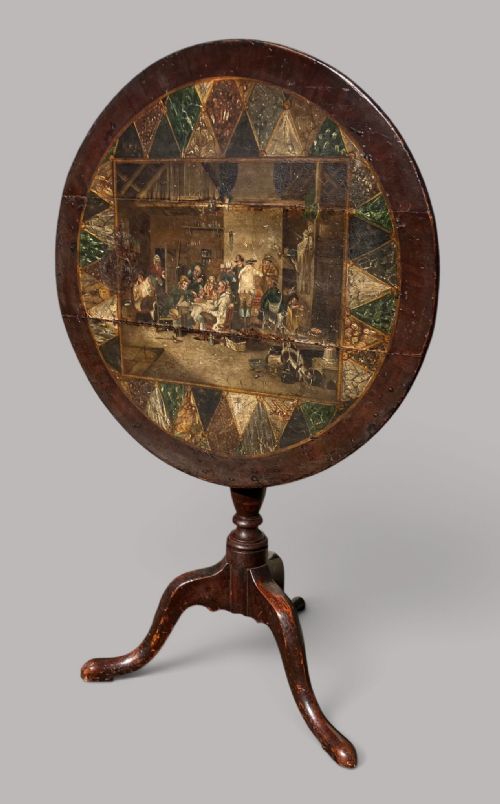
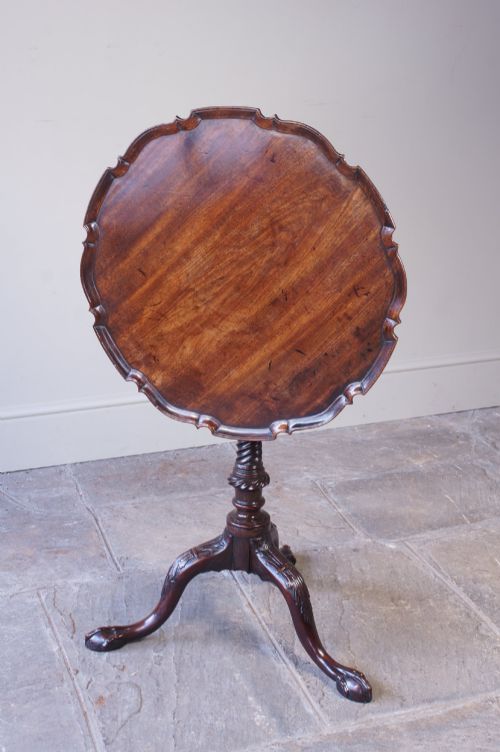
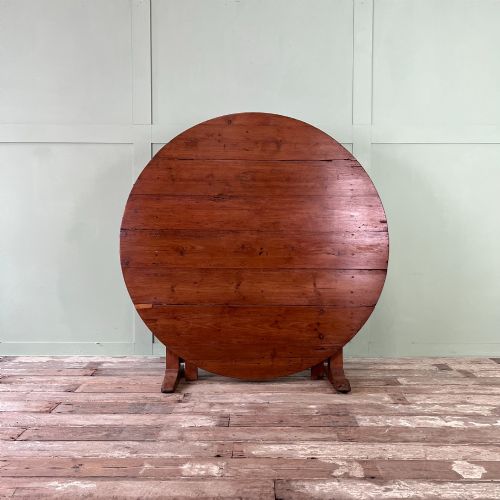
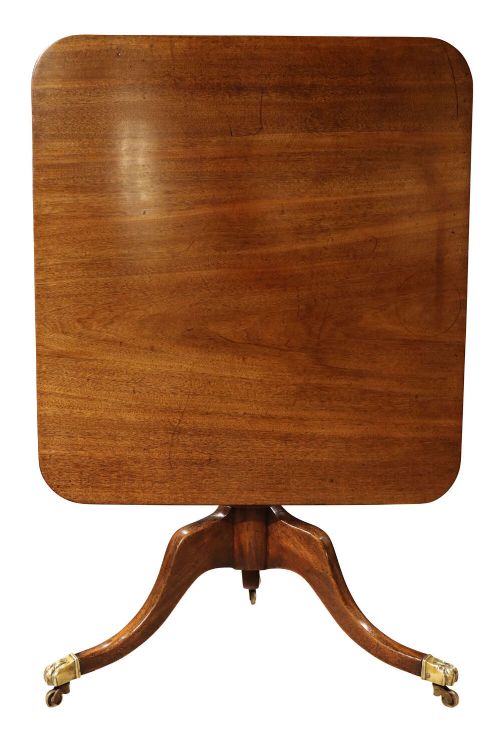
These tilted top wine table examples combine practical engineering with compact elegance, offering a surface that folds away when not in use.
Tilted Top Wine Table
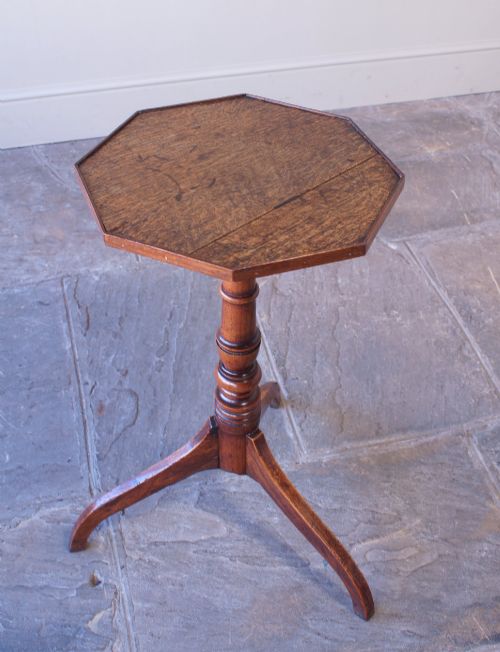
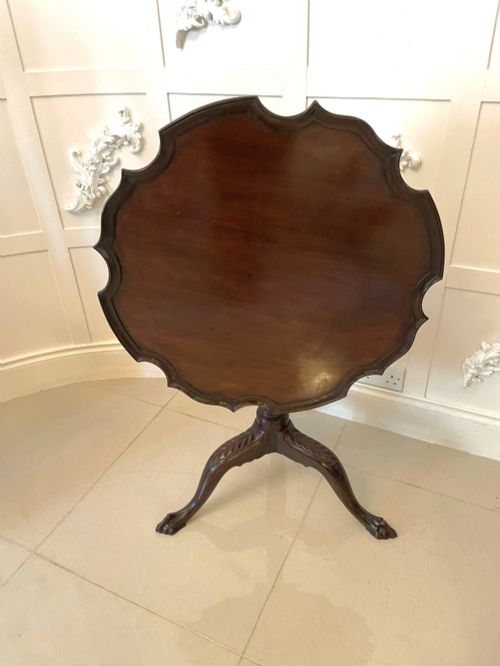
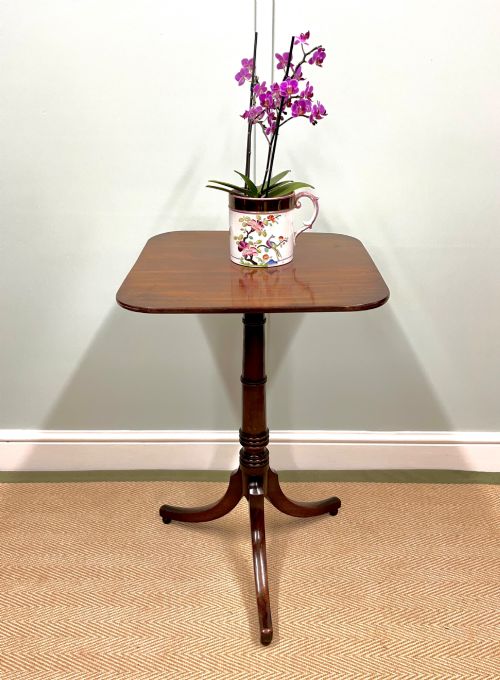
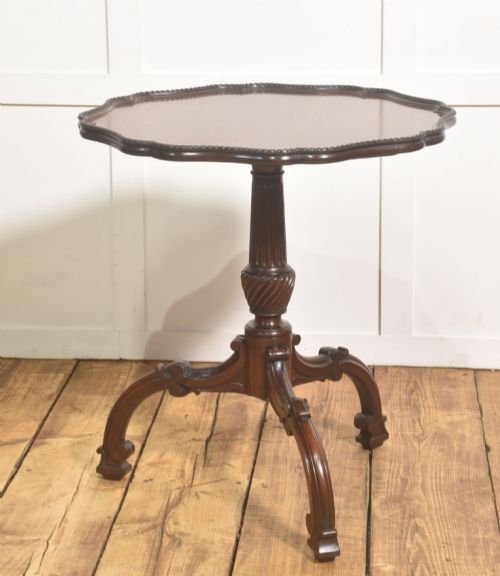
A tilted top wine table sits on a central pedestal supported by three legs, designed to hold a single glass or bottle beside a chair. When someone searches for a tilted top wine table, they encounter compact occasional pieces primarily originating from the eighteenth and nineteenth centuries.
The most common versions on this page are mahogany examples from the Georgian and Victorian eras, often featuring round or shaped tops on tripod bases. These pieces span George II, George III, and Regency periods, alongside later revival pieces and occasional provincial variations in oak or fruitwood.
How they were made
Cabinet makers constructed these tables predominantly from hardwoods such as mahogany, walnut, and rosewood, sometimes utilising fruitwood, oak, or pine for secondary framing. Timber selection depended on the desired finish, with dense grains allowing for carved edges and slender turned pedestals.
The defining mechanism involves a catch or birdcage pivot block that permits the tabletop to tip vertically against the column. This allowed the furniture to rest flat against a wall when floor space was required in smaller reception rooms.
Listings span the eighteenth, nineteenth, and early twentieth centuries, featuring mahogany, walnut, oak, fruitwood, and rosewood across British, Swedish, and Italian origins.
What varies in quality
The sophistication of the timber figure and the crispness of the carving dictate the distinction between standard examples and superior pieces. Mahogany with rich flame patterns or walnut with complex burrs elevates the visual weight of a small surface.
Engineering precision in the tilting mechanism determines structural longevity, where tight joints and smooth pivoting indicate skilled workshop assembly. Secondary details, such as carved tripod legs terminating in distinct pad or claw feet, separate routine carpentry from accomplished cabinet work.
Gillow
The Tilted Top Wine Table Glossary
- Tilt top table
- A small stand with a hinged mechanism allowing the surface to rotate into a vertical position for storage.
- Tripod base
- A central pillar supported by three radiating legs, providing stability on uneven historical floors.
- Pie crust edge
- A raised, carved moulding around the perimeter of the tabletop resembling pastry work on a pie.
- Birdcage mechanism
- A wooden frame beneath the top that allows the surface to both pivot and rotate independently.
- Snap top
- An alternative historical term for a table with a spring catch holding the top horizontal.
Tilted Top Wine Table: Frequently Asked Questions
What is a tilted top wine table used for?
These pieces served historically as portable stands for holding drinking vessels, candles, or books near seating areas.
Their folding tops allowed servants to clear floor space quickly in crowded drawing rooms after evening gatherings concluded.
How do I spot an eighteenth century example?
Early pieces often display dense Cuban mahogany, hand-turned pillars with distinct lathe marks, and pegged tenon joints.
Subtle irregularities in the timber and traditional hand-cut dovetails beneath the catch distinguish older workshop production from later revivals.
Why do some tops rotate and tilt?
The inclusion of a rotating pivot alongside the tilt function allowed the surface to turn flat against the central post.
This double articulation made storage against walls far more efficient in period interiors.
How do I maintain the tipping mechanism?
Keep the wooden pivot blocks clean and avoid applying modern oils that might swell the historical timber joints.
Support the weight of the top with one hand while operating the brass or wooden catch to prevent undue stress on the pivot.