

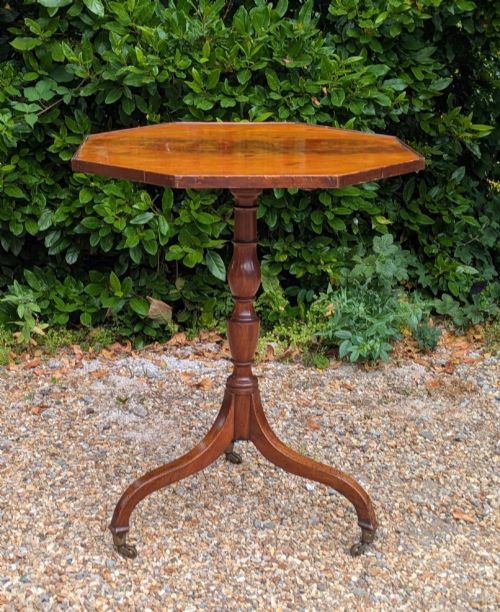
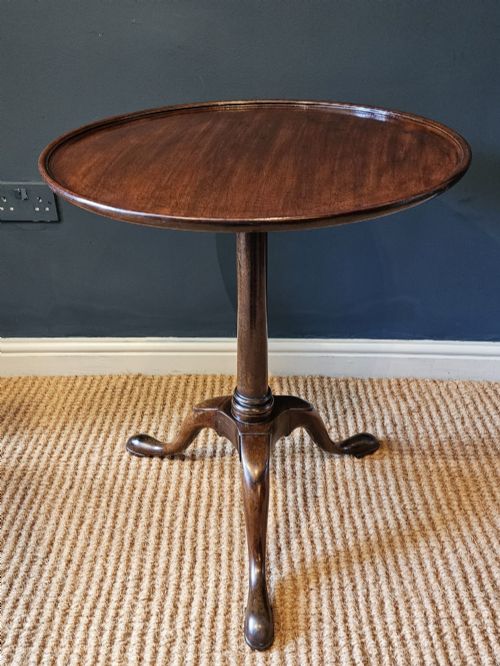
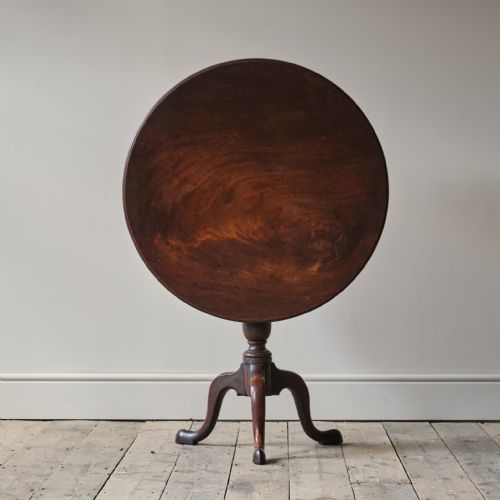
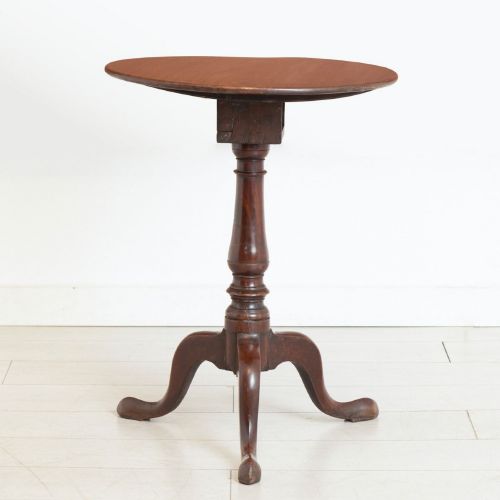


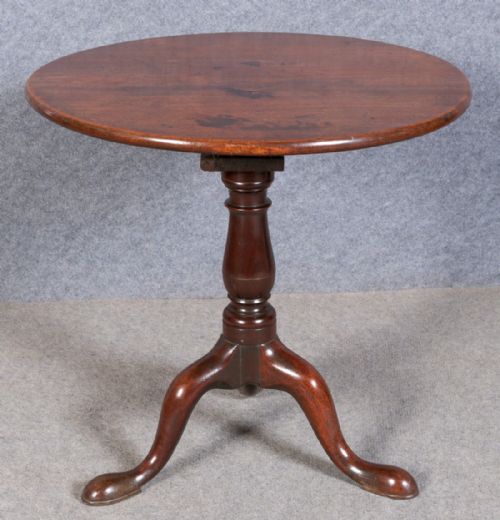

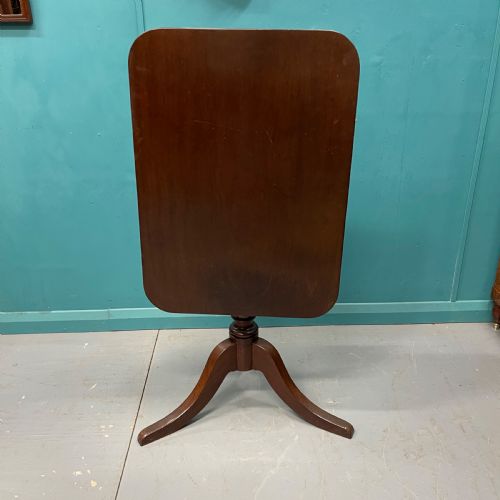
Tilt Action Tea Table
These tilt action tea tables combine ingenious folding mechanisms with sturdy tripod bases, offering a practical surface for period entertaining.
Tilt Action Tea Table
A tilt action tea table provides a versatile surface designed to pivot upright when not in use, saving valuable floor space in a room. You will frequently encounter examples from the Georgian and Victorian eras, spanning the eighteenth and nineteenth centuries.
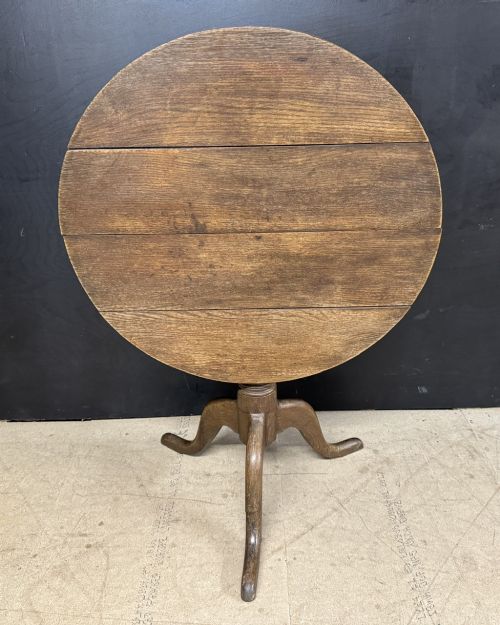
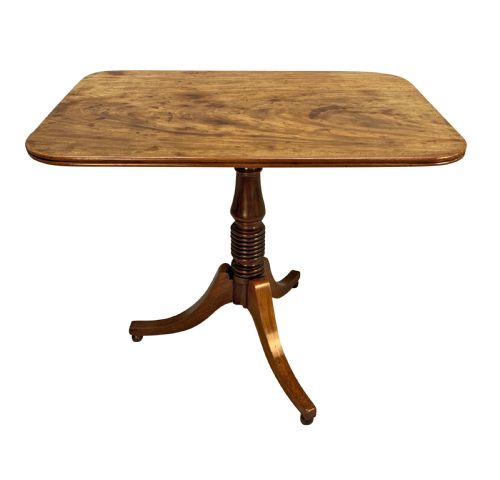
The pieces on this page appear in forms such as occasional tables, side tables, and centre tables. They typically feature round or oval tops supported by a central column and tripod legs.
Originating during periods that valued adaptability in interior furnishings, these tables served social functions centred around taking tea. The tilting mechanism allows the top to lie flat for service or fold vertically against the base.
How They Were Made
Cabinet makers utilised dense hardwoods such as mahogany, red walnut, oak, and rosewood to construct these tables, occasionally applying burr walnut veneer for decorative effect. Brass and iron components frequently form the pivots and locking mechanisms of the tilting frames.
The construction relies on stable tripod bases joined to central pedestals, paired with specialised moving joints. Many examples incorporate a birdcage mechanism above the column, allowing the top to both rotate and tilt.
Tilt Action Tea Table Retail Price Guide 2026
Typical asking prices for tilt action tea table among the pieces listed under this phrase on Sellingantiques today, from the lower quarter to the upper quarter. They describe what is for sale here now, not the wider market.
Early cabinet makers built these tables so the top could flip vertically, essentially inventing the eighteenth-century equivalent of a folding desk.
What Varies in Quality
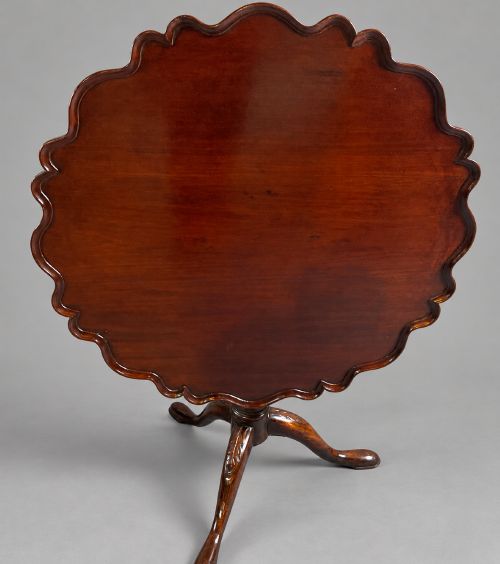
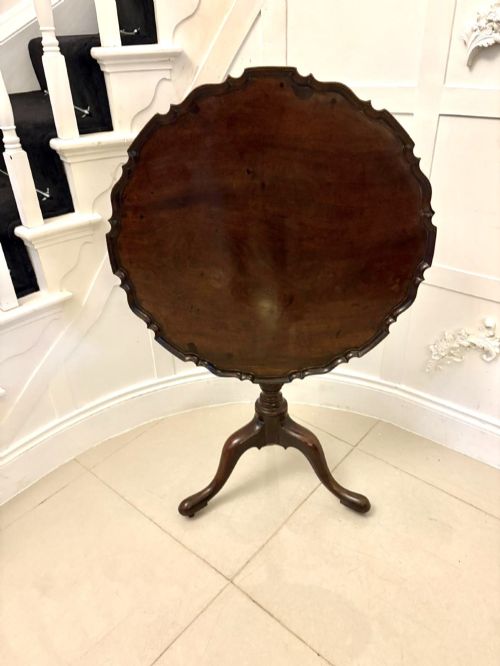
The refinement of the timber selection dictates much of the distinction among examples, particularly where figured grains or single-piece wooden tops are employed. Tables featuring carved tripod legs, dish tops, or shaped pie crust edges demonstrate greater artisan skill.
The precision of the birdcage action and the stability of the pivot mechanism determine how smoothly the top operates and locks into position. Heavier, well-balanced bases ensure the table remains firm when weighted on one side.
The Tilt Action Tea Table Glossary
- Tilt-top
- A table top hinged to a central pillar so it can be pivoted to a vertical position. This allows the furniture to be stored compactly against a wall.
- Birdcage
- A wooden framework beneath the table top that incorporates a revolving collar and pivot blocks. It permits the surface to rotate horizontally as well as tilt vertically.
- Tripod base
- A support structure comprising three spreading legs radiating from a central vertical column. This design ensures stability on uneven historical floorboards.
- Pie crust edge
- A decorative, raised circular border carved with small undulating curves resembling pastry work. It prevents tableware from sliding off the surface.
- Snap top
- An alternative term for a tilt action table equipped with a spring catch to secure the top in its horizontal position.
Tilt Action Tea Table: Frequently Asked Questions
What is a tilt action tea table?
A tilt action tea table is a piece of furniture featuring a top that pivots vertically on its base. This clever design enabled households to tuck the tables away against walls when tea service finished.
Most examples date from the Georgian and Victorian periods, constructed from timbers like mahogany and walnut. They typically stand on tripod legs and serve as versatile occasional or centre tables.
How do you operate the tilt mechanism?
The mechanism usually involves a catch or release mechanism beneath the top that unlocks the pivot. Once released, the wooden surface tips upwards to a vertical position against the central column.
In tables with birdcage fittings, the top can also rotate smoothly on its axis while flat. When returning the surface to horizontal, ensure the catch engages fully to lock the table securely.
Where were these tables placed historically?
These tables were positioned in sitting rooms and parlours where guests gathered for tea and social interaction. Because they could be folded flat and moved easily, they occupied minimal space during the day.
In modern interiors, they function well as side tables or display surfaces in living areas. Their compact footprint makes them practical for corners or beside seating.
How can I tell a Georgian table from a Victorian one?
Georgian examples often display restrained proportions, simpler mahogany or walnut timbers, and sometimes birdcage actions dating from the eighteenth century. Details like dish tops or tripod legs with pad feet point towards this earlier era.
Victorian pieces frequently utilise darker rosewood or figured walnut veneers, alongside larger oval tops intended as centre or loo tables. The carving styles and edge details generally reflect nineteenth-century revival tastes.