





Red Brown Tea Table
A red brown tea table brings rich timber tones and practical folding surfaces into a room, offering both historic charm and everyday utility.
Red Brown Tea Table
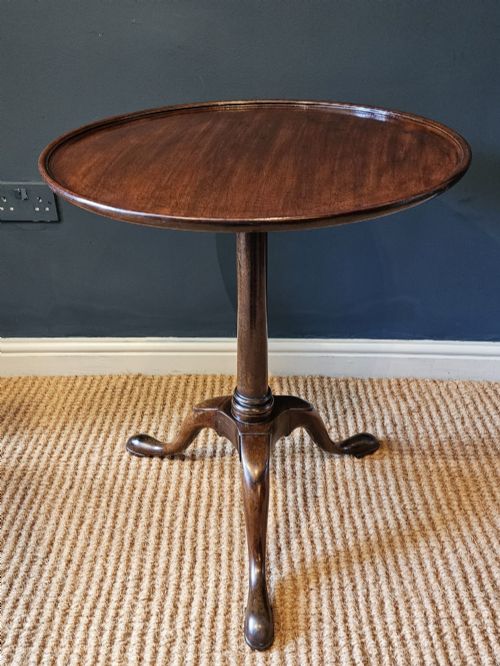
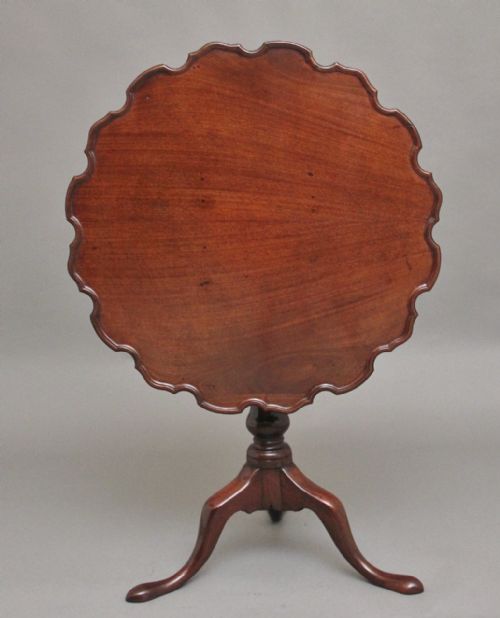
A red brown tea table encompasses versatile occasional furniture designed for social gatherings and daily domestic life across several historic periods. The selection here spans the eighteenth century through the Edwardian era, featuring forms such as tripod tables, folding tea tables, and games tables.
The most frequent examples on this page date from the Georgian and nineteenth-century periods, constructed in rich timbers like mahogany and red walnut. These pieces often exhibit circular tray tops, snap-top mechanisms, or serpentine edges suited to traditional interiors.
How they were made
Cabinetmakers utilised dense timbers such as mahogany and red walnut, often selecting stock with deep reddish-brown grain patterns. These woods were shaped into tripod bases, folding tops, and occasional tables using traditional joinery.
Detailing on these pieces frequently involves decorative elements like boxwood inlay and satinwood banding. Surfaces were polished to highlight the natural figure of the timber.
Red Brown Tea Table Retail Price Guide 2026
Typical asking prices for red brown tea table among the pieces listed under this phrase on Sellingantiques today, from the lower quarter to the upper quarter. They describe what is for sale here now, not the wider market.
Materials recorded across the inventory include mahogany, red walnut, brass, cherry wood, boxwood inlay, satinwood, and boxwood.
What varies in quality
The distinction between standard examples and superior pieces rests on the choice of timber figure and the crispness of the woodwork. Refined items display carefully matched grains and precise inlay work rather than plain secondary woods.
Construction methods also dictate standard, with well-executed tilt-top mechanisms and stable tripod bases representing higher levels of period craftsmanship. The integration of decorative elements like boxwood stringing adds to the overall merit of an item.
The Red Brown Tea Table Glossary
- Snap top
- A table top attached to a tilting mechanism that locks into a horizontal position when in use. This clever design allowed the table to be stored flat against a wall when not needed.
- Tripod table
- A small table supported by a pillar above three spreading legs. This form became popular during the Georgian period for flexibility and ease of movement around a room.
- Marquetry
- Decorative veneer work arranged in patterns or pictures using various coloured woods. Craftsmen cut precise pieces of timber like boxwood and satinwood to ornament table tops.
- Serpentine
- A gently undulating line curving outward and inward across the front or edge of a piece of furniture. This sophisticated shaping requires skilled hand-planing by the cabinetmaker.
Red Brown Tea Table: Frequently Asked Questions
What is a red brown tea table used for?
These tables originally served for the social ritual of serving tea, providing a stable surface that could often be folded away when the meal concluded. In a modern home, they function brilliantly as occasional tables or small accent pieces in a sitting room.
Their compact footprints make them adaptable for holding lamps, books, or decorative objects without dominating the floor space.
How do I tell Georgian from Edwardian examples?
Georgian pieces generally date from the eighteenth and early nineteenth centuries, relying on the rich grain of timbers like red walnut and mahogany for their primary visual appeal. They often feature robust tripod bases or simple folding mechanisms.
Edwardian tables, appearing around the turn of the twentieth century, frequently incorporate delicate marquetry inlay and satinwood banding, reflecting a lighter aesthetic inspired by earlier neoclassical revivals.
How do I care for mahogany and walnut surfaces?
Historic timber surfaces benefit from gentle dusting with a soft cloth and occasional treatment with traditional beeswax to nourish the wood. Avoid placing them in direct sunlight or near heat sources to prevent the timber from drying out.
Keeping moisture away from the polish ensures the deep red-brown colour remains rich and lustrous over time.