

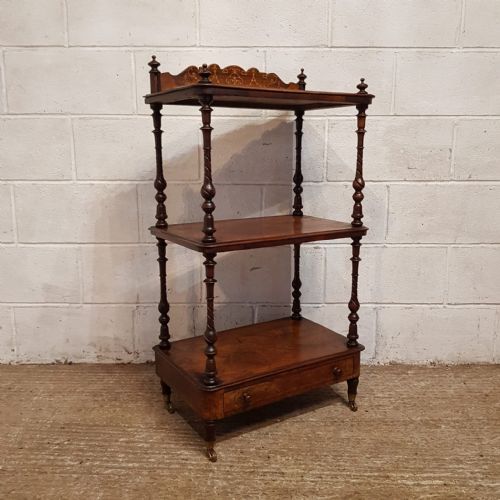
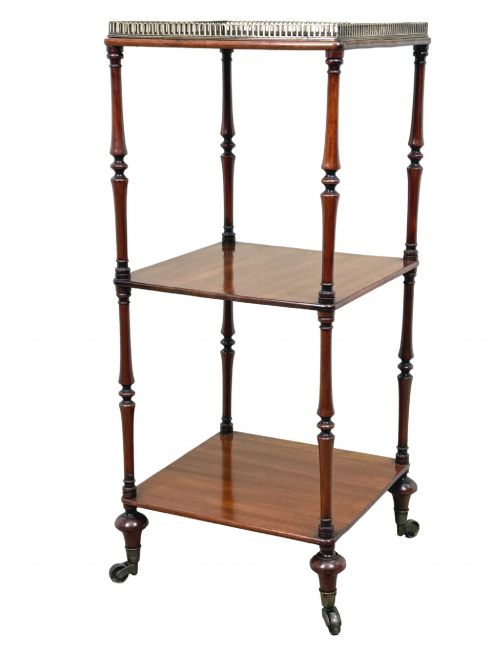
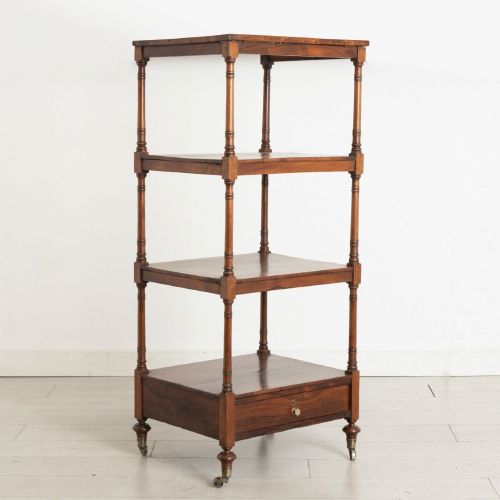
Tiered Shelf Unit Wood
These tiered shelf unit wood pieces organise books and display treasures across multiple levels, bringing architectural grace to any room.
Tiered Shelf Unit Wood
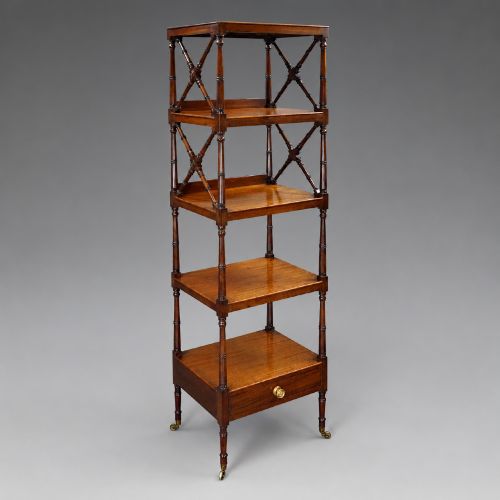
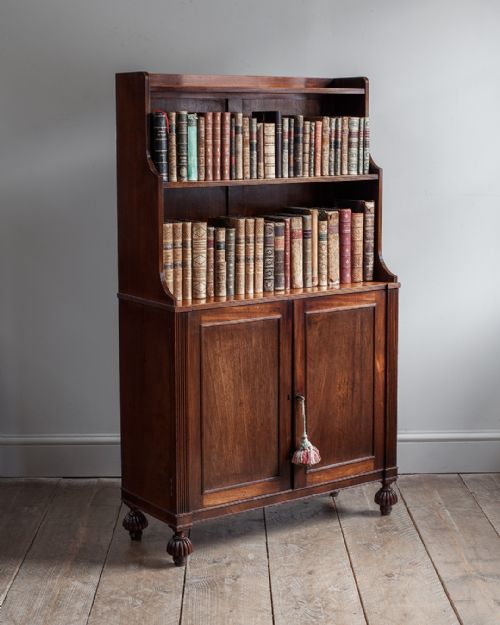
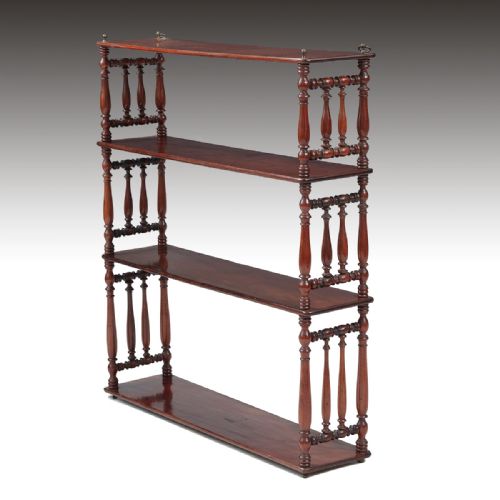
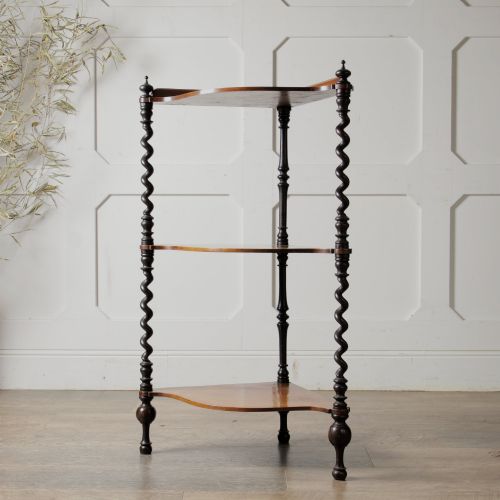
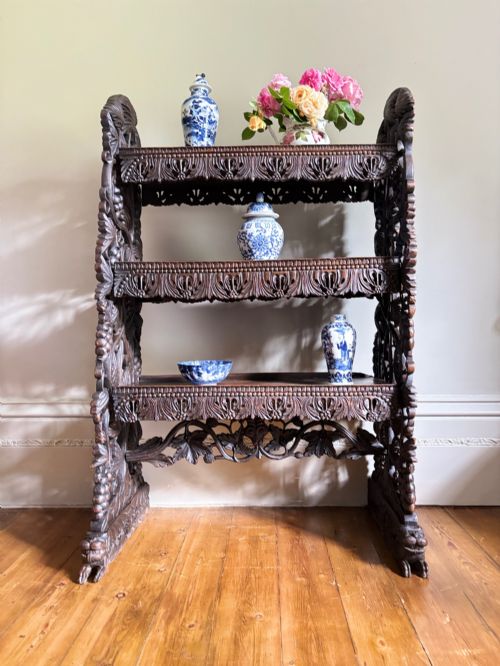
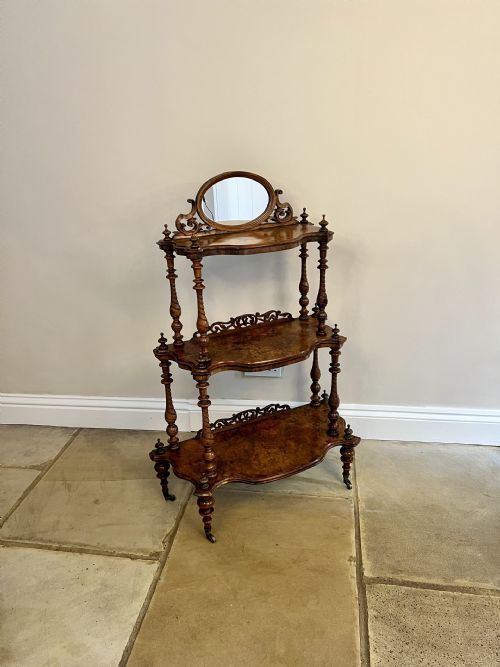
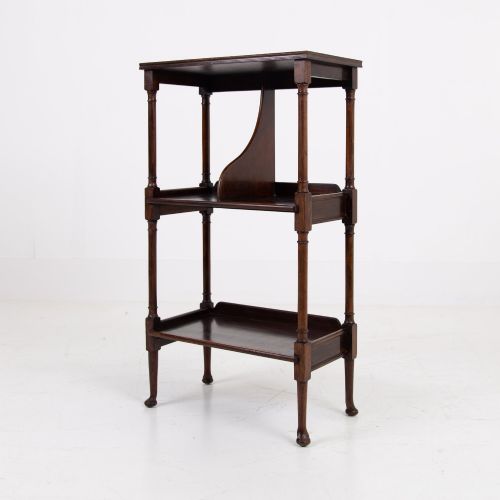
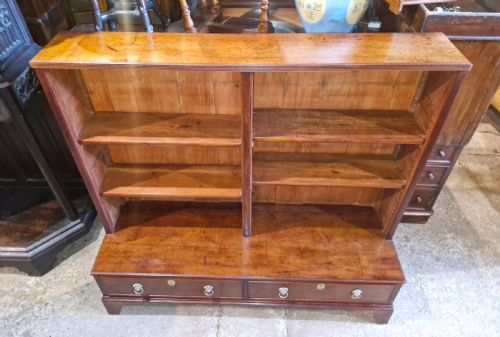
A tiered shelf unit wood provides open display and storage across several horizontal surfaces arranged vertically. When you explore this selection, you encounter whatnots, etageres, wall shelves, and bookcases spanning the Georgian, Regency, and Victorian periods.
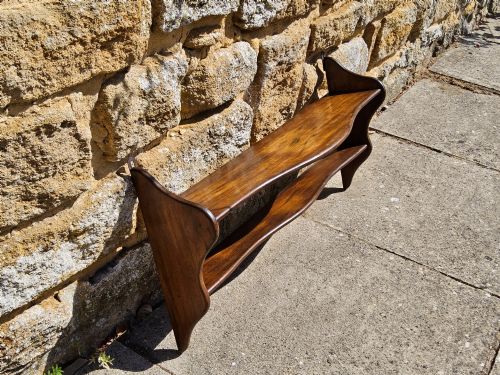
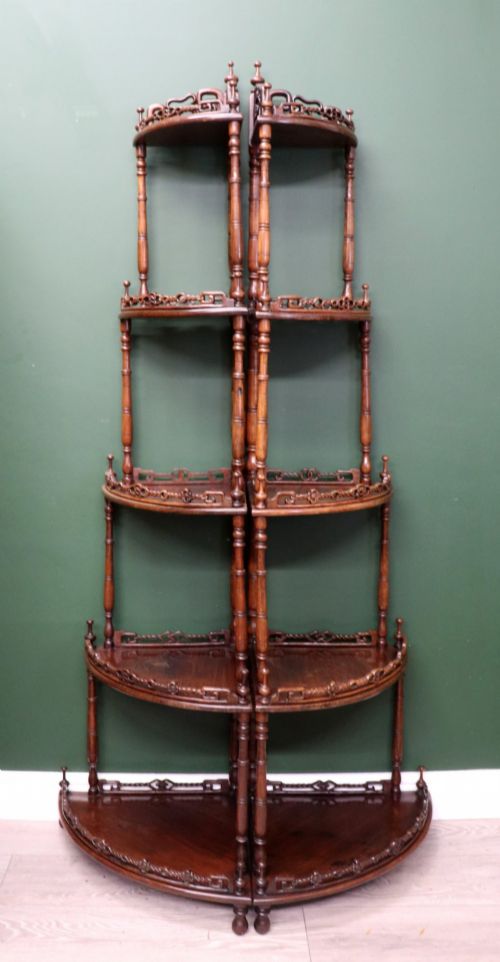
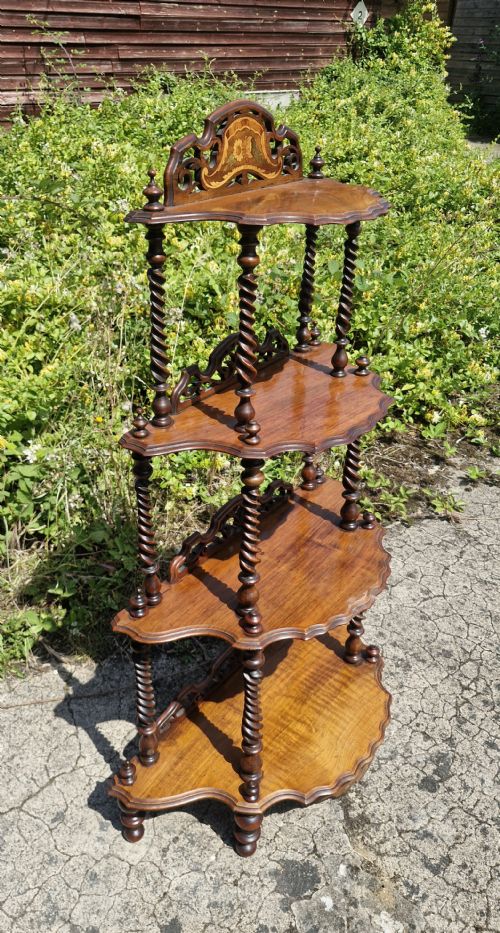
Freestanding whatnots and tiered corner shelves dominate the available forms, alongside hanging wall shelves and waterfall bookcases. These pieces originate primarily from nineteenth-century British workshops, with occasional Edwardian and Anglo-Indian examples appearing.
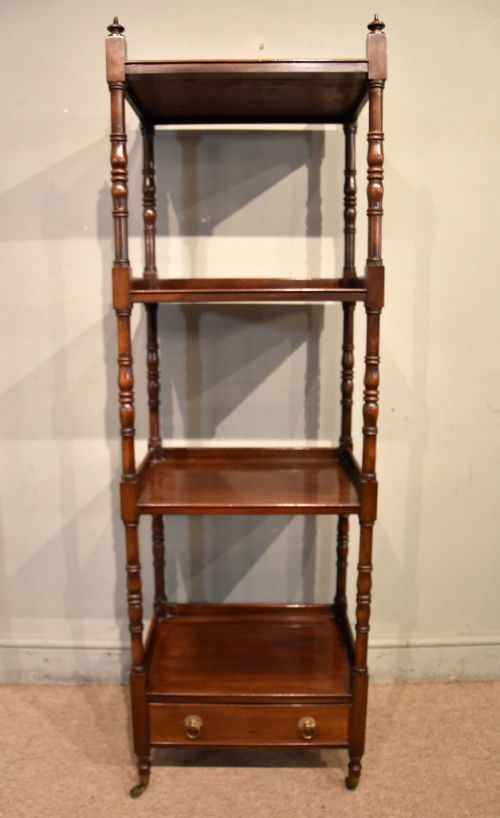
Makers designed these shelving units for domestic display, utilising multiple tiers to hold books, ceramics, and ornaments. The forms range from compact portable bookshelves to large freestanding display pieces and six-tier dumb waiters.
Materials and construction methods
Cabinetmakers constructed these pieces from dense tropical hardwoods and native timbers, selecting mahogany, rosewood, walnut, and burr walnut for their rich grain patterns. Workshops also utilised ebonised wood, padauk, teak, and brass details to enhance the visual appeal.
Joiners built tiered structures using turned supports, barley twist columns, and bracketed wall fixings to bear the weight of multiple shelves. Master craftsmen incorporated mirror glass panels and carved decorative elements into exhibition-quality pieces.
Distinctions in quality and execution
Quality rests upon the selection of timber veneers, particularly figured burr walnut and book-matched rosewood across the tiers. Superior examples display refined turning on the upright supports and crisp carving rather than plain, utilitarian assemblies.
Construction integrity separates standard production from exhibition pieces, evident in the stability of multi-tiered uprights and the precision of the joints. Finer pieces demonstrate thoughtful proportions and harmonious integration of brass and mirror glass components.
The Tiered Shelf Unit Wood Glossary
- Etagere
- A set of tiered open shelves used for small decorative objects. This French form shares similarities with the English whatnot.
- Waterfall bookcase
- A shelving unit where each successive tier is deeper than the one above it, creating a cascading profile. These often feature graduated shelves designed for books.
- Dumb waiter
- A multi-tiered freestanding piece utilised originally for serving food or holding tableware. Examples in this category feature multiple circular or shaped rotating or fixed tiers.
- Burr walnut
- A highly prized timber veneer harvested from the burl growths of walnut trees. It exhibits complex, swirling grain patterns favored for high-status Victorian cabinets.
Tiered Shelf Unit Wood: Frequently Asked Questions
What is a whatnot?
A whatnot is a multi-tiered open shelving unit designed for displaying decorative objects and books. These pieces became popular during the Georgian and Victorian eras.
Craftsmen built them to stand freely in a room or fit into corners, utilising slender columns to separate each shelf level.
How were hanging shelves used?
Hanging shelves were mounted directly to walls to provide accessible storage without occupying floor space. Victorians and Georgians utilised them for displaying ceramics and lightweight books.
They often feature shaped backboards and sturdy brackets to secure the tiered boards safely against the wall.
How do I identify a Regency piece?
Regency tiered shelves typically date from the early nineteenth century and showcase classical restraint in their design. They frequently employ mahogany or rosewood with restrained brass mounts.
Turned columns and precise joinery characterise the period, avoiding the heavier carving seen later in the Victorian era.
Where should I place a tiered shelf?
These versatile units suit living rooms, studies, and hallways where vertical display space is valuable. Freestanding whatnots work well against plain walls or in corners to break up empty angles.
Ensure the unit rests on level flooring, and distribute weight evenly across the tiers to maintain stability.