

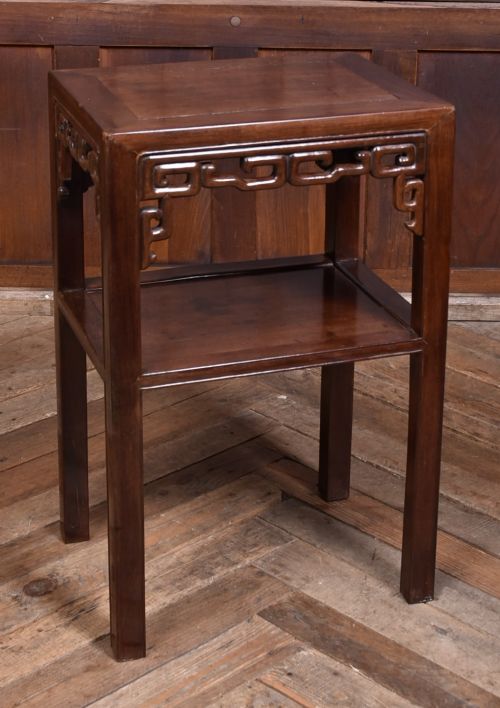

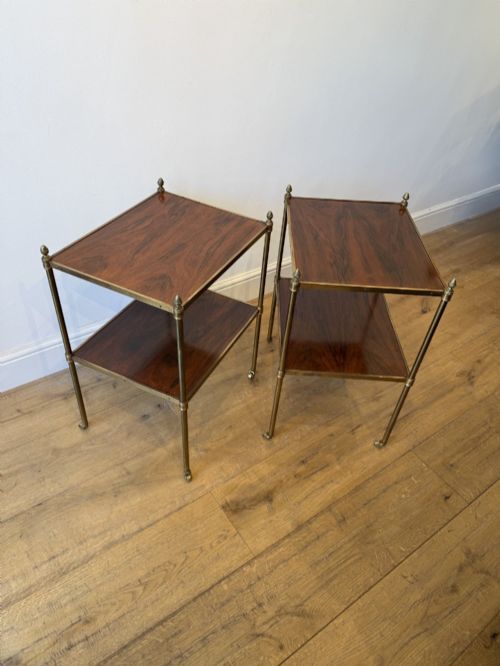
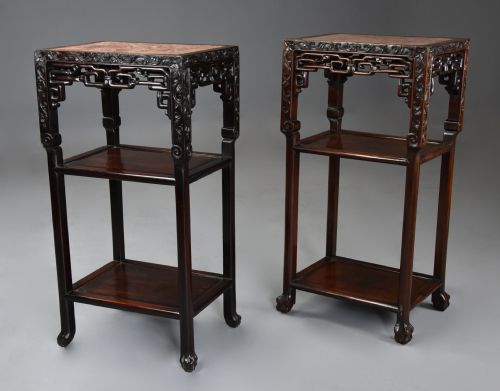
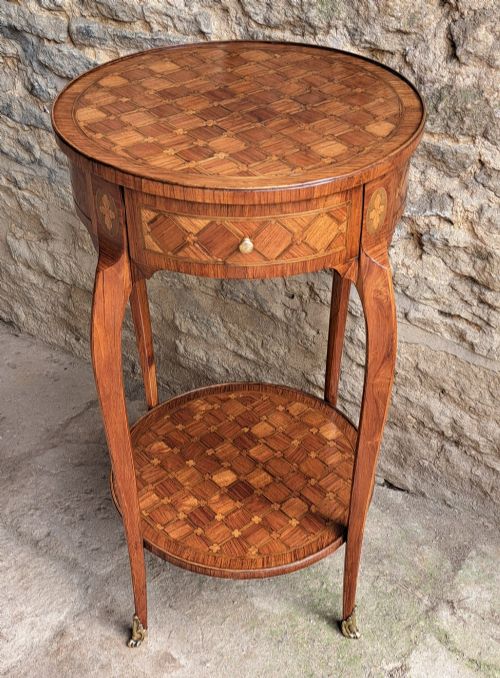
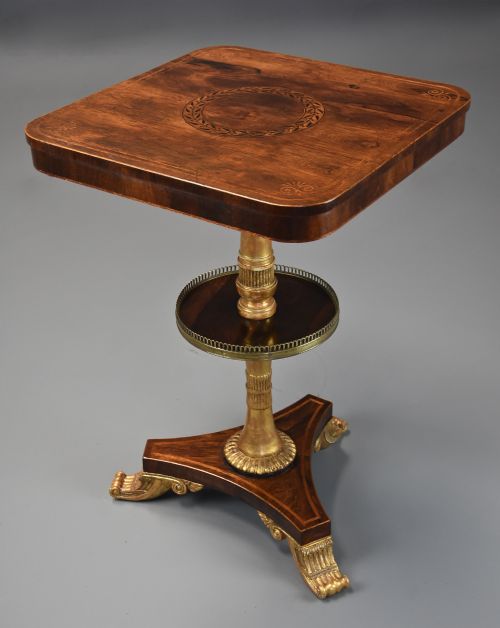
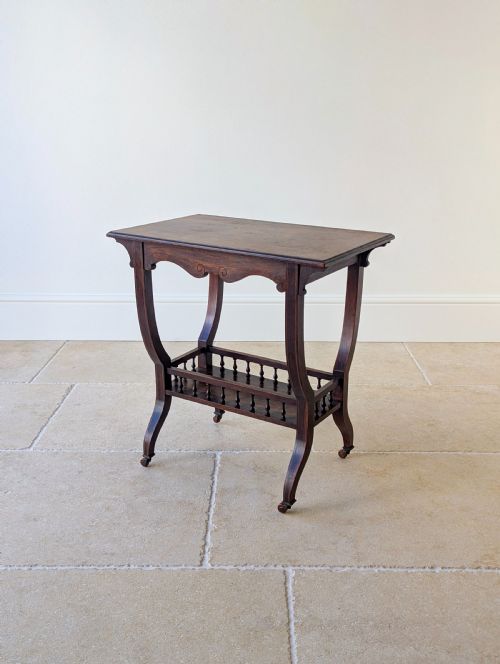
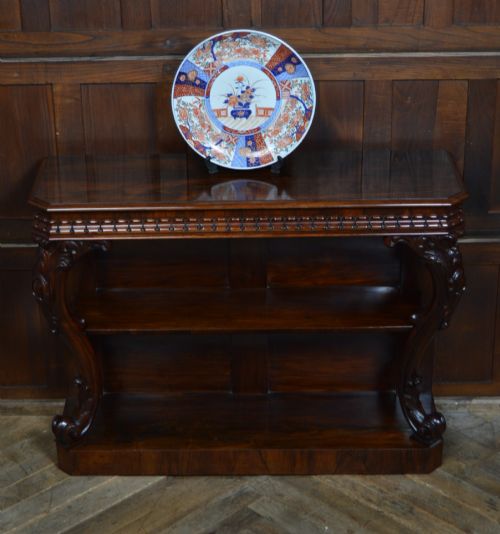


Tiered Rosewood Table
A tiered rosewood table brings multi-level display surfaces and rich timber grain to a room.
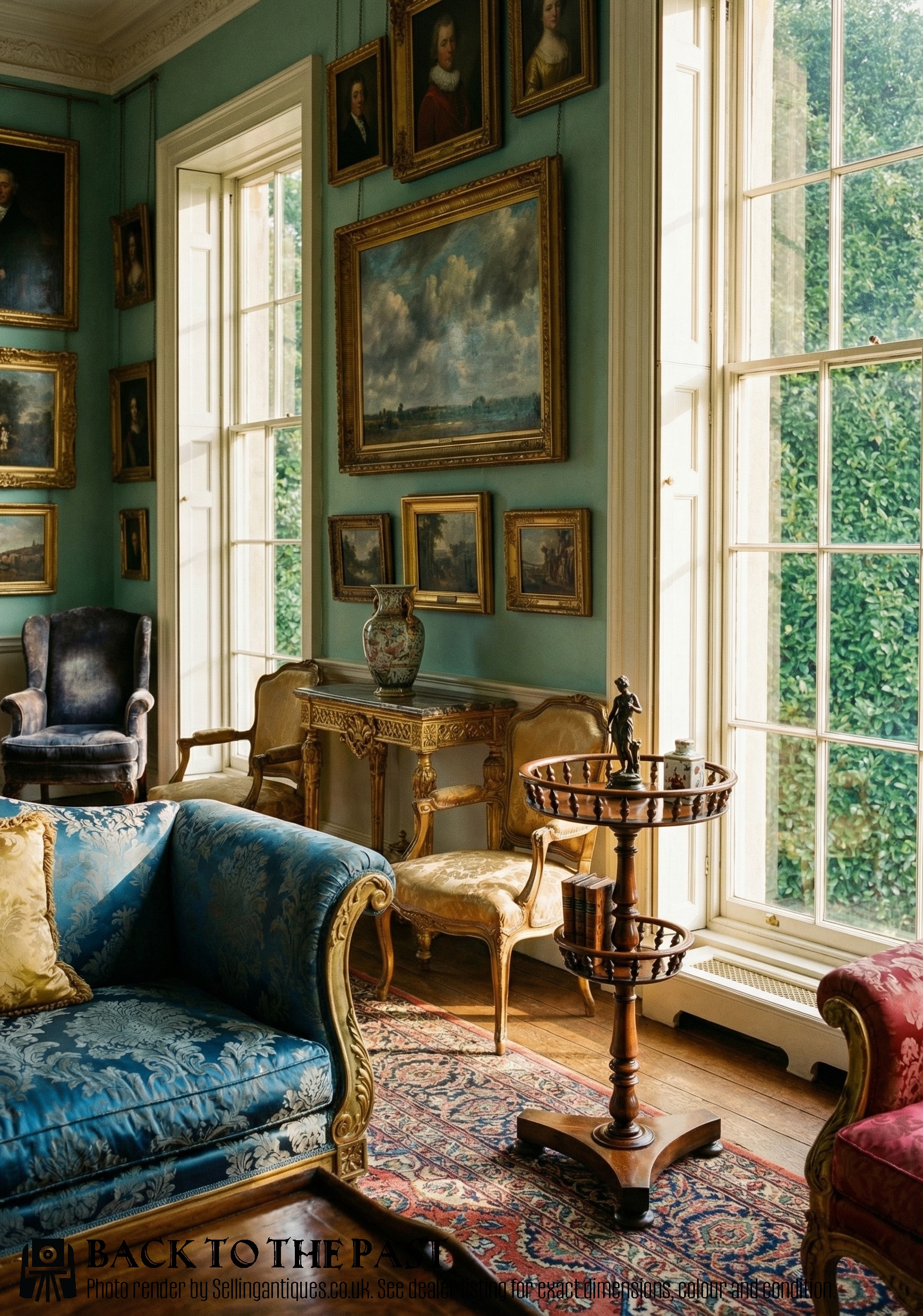
Tiered Rosewood Table
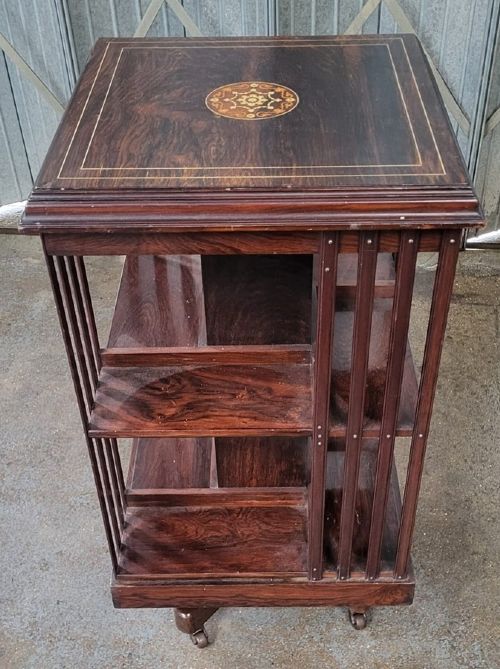
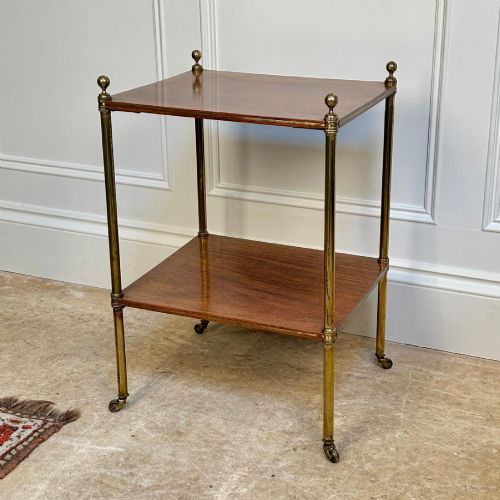
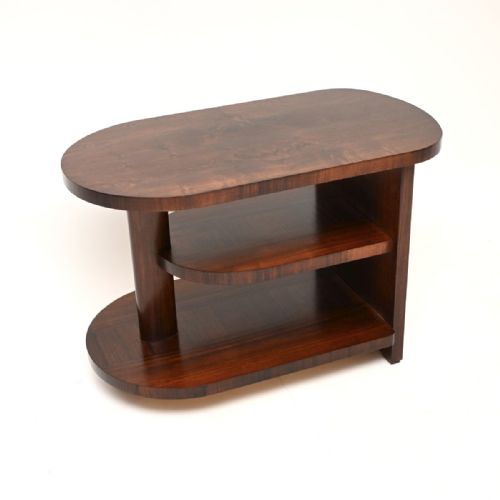
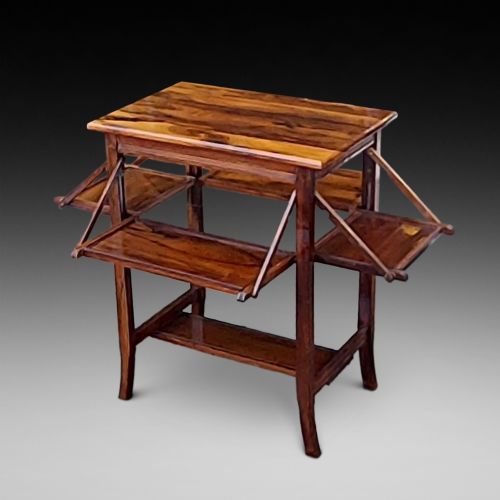
A tiered rosewood table encompasses multi-layered furniture pieces designed for display and utility, spanning periods from the Regency era through to Art Deco. Buyers seeking a tiered rosewood table typically encounter etageres, whatnots, and occasional tables with two or more levels linked by upright supports.
The selection ranges from compact Victorian lamp tables and Edwardian inlaid stands to architectural Regency pieces and French Louis XV style designs. Hardwood construction and secondary timbers such as satinwood, kingwood, and mahogany frequently accompany the primary rosewood surfaces across these various formats.
Origin points visible in the inventory stretch across English workshops, French makers, and Chinese hardwood traditions, incorporating decorative elements like brass mountings, marble inserts, and marquetry inlays.

Materials and Technique
Construction relies heavily on dense rosewood veneers and solid timbers, often supported by secondary hardwoods like mahogany, satinwood, and kingwood. Artisans shaped these materials using precise cabinet-making techniques, integrating crossbanding and marquetry inlays into the multi-tiered surfaces.
Metal elements such as brass galleries, castors, and ormolu mounts provide structural accent and mobility, whilst marble tops offer durable surfaces on specific plant stands and occasional tables. Joinery techniques secure multiple tiers, columns, and shelves to ensure stability across tall etageres and multi-level whatnots.
One multifunctional Victorian cabinet hides its tiered ambitions behind closed doors, proving that even a proper whatnot enjoys a secret life.
Distinctions in Standard
Quality separates ordinary utility pieces from exhibition standard items through the precision of marquetry work, the choice of secondary timbers like coromandel, and the crispness of brass or ormolu mounts. Finer examples display meticulous grain matching across multiple tiers and refined turning on the supporting uprights.
Attribution to documented makers or specific London and Paris workshops elevates an object, as seen in labeled pieces and documented designs. The integration of functional elements, such as revolving mechanisms or well-executed drawers, further distinguishes superior examples from standard production.
Mallett·Robert Strahan·Edwards & Roberts·Collingson & Lock·Gillow·John MaClean·Haentgos Freres Paris
The Tiered Rosewood Table Glossary
- Etagere
- A set of open shelves or tiers designed for displaying small objects, ornaments, or books. These pieces often feature slender upright supports and multiple levels.
- Whatnot
- A multi-tiered piece of freestanding furniture used for storage or display in nineteenth-century interiors. It typically incorporates three or more open shelves.
- Marquetry
- Decorative patterns formed by fitting together thin veneers of wood and other materials onto a structural surface. This technique creates complex pictorial or geometric designs.
- Ormolu
- Gilt bronze ornamentation applied to furniture and decorative objects, popular in French revival and Regency styles. It provides metallic contrast against dark rosewood and kingwood.
- Crossbanding
- A border veneer applied around the edges of a table top or shelf with the wood grain running perpendicular to the centre panel. This method frames the primary timber surface.
Tiered Rosewood Table: Frequently Asked Questions
What is a tiered rosewood table used for?
These pieces function as versatile display surfaces for lamps, plants, books, and decorative objects across multiple levels. Their tiered structure maximises vertical display space in sitting rooms and bedrooms without demanding a large floor footprint.
Historically, specific variants acted as dumb waiters, bedside stands, or specialised parlor furniture. Today, they serve the same practical display role while adding rich timber tones to interior schemes.
How do I identify a Regency tiered table?
Regency examples often display clean architectural lines, classical proportions, and dark rosewood timber enhanced by brass stringing or fine turning. Dating typically centres around the early nineteenth century.
Look for structural cues such as robust column supports and restrained brass mounts rather than heavy Victorian carving. Attributions to notable makers like John MaClean occasionally accompany these sophisticated pieces.
What distinguishes an etagere from a whatnot?
An etagere generally emphasises lighter decorative display with delicate uprights and French stylistic influences, often incorporating marquetry. A whatnot is traditionally a sturdier English multi-tiered shelving unit used for general household storage and display.
Both terms describe multi-level furniture found within the selection, though etageres frequently lean toward lighter ornamental work.
How should I care for rosewood furniture?
Rosewood benefits from stable indoor humidity levels and protection from direct sunlight to preserve its deep colour and grain. Regular dusting with a soft, dry cloth maintains the polished timber surface.
Avoid placing damp items directly onto unsealed wood, utilising coasters or the table's original marble inserts where appropriate. Wax polishes formulated for antique hardwoods can be applied sparingly.