

Tiered Brass Side Table
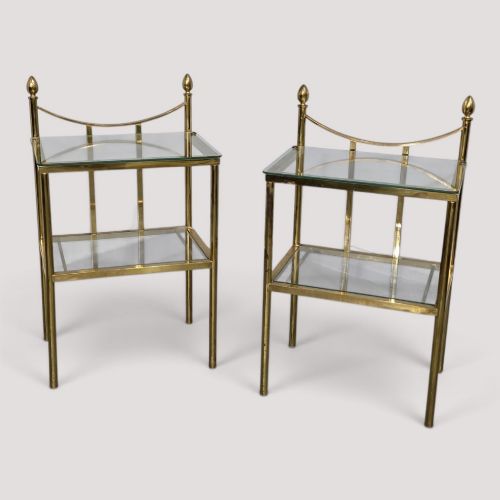
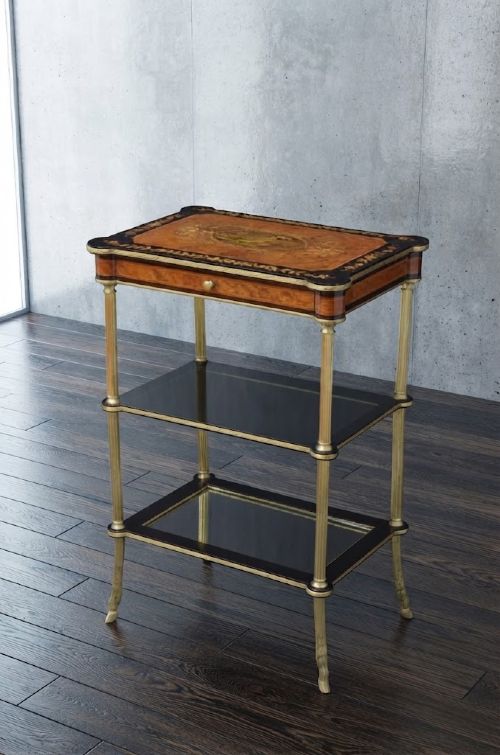
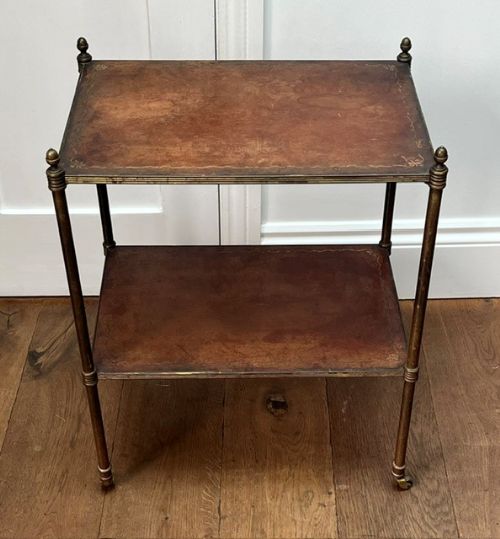
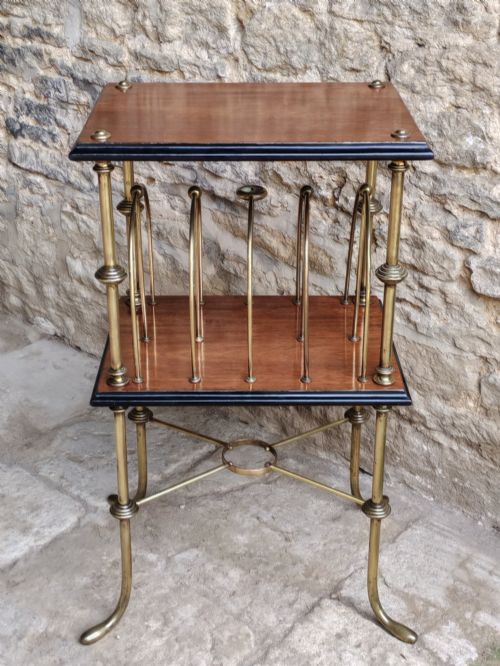
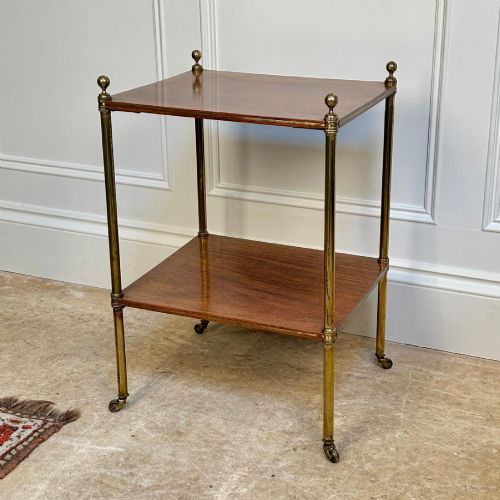
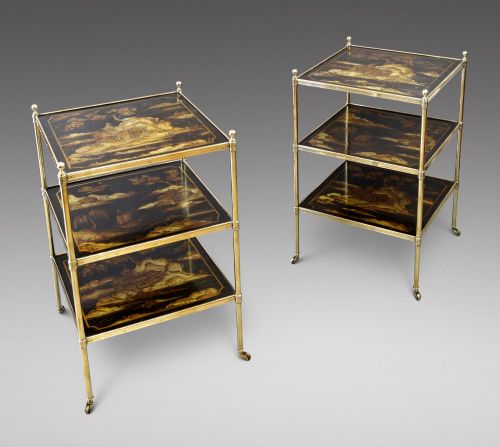
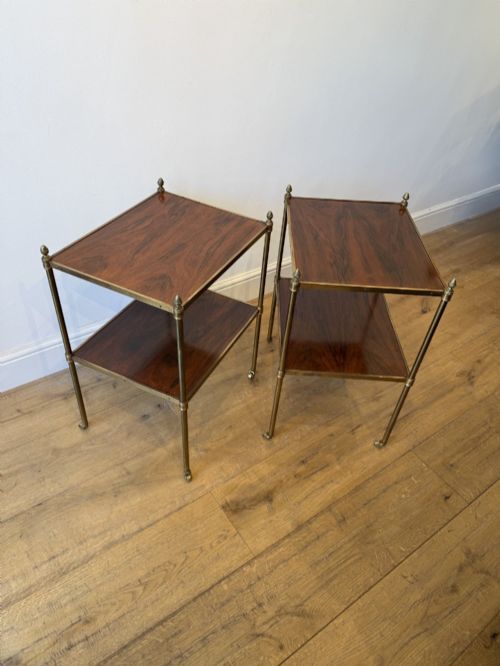
These tiered brass side tables combine multi-level surfaces with metallic framework, offering practical display space and distinct period character.
Tiered Brass Side Table
A tiered brass side table brings together multi-level surfaces and metallic framing to create compact display furniture. When you search for a tiered brass side table, you encounter forms that span side tables, occasional tables, etageres, and whatnots.
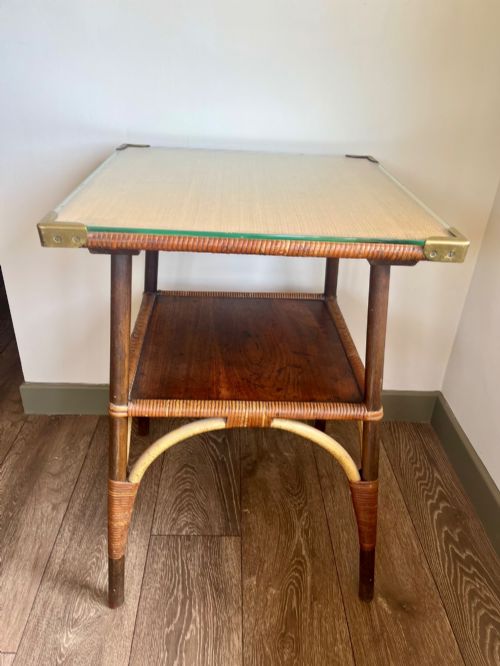
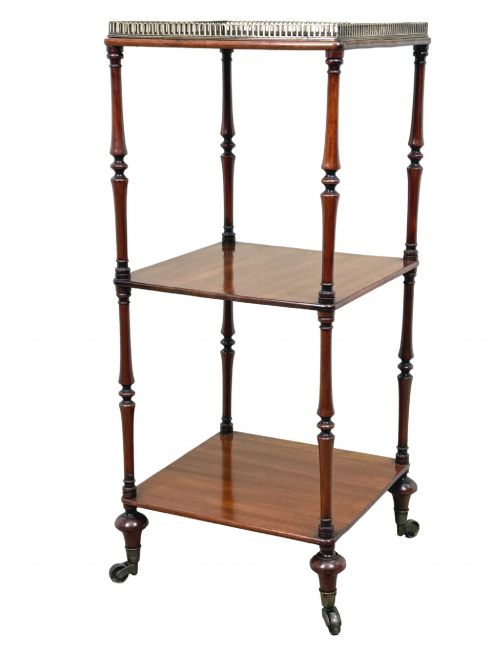
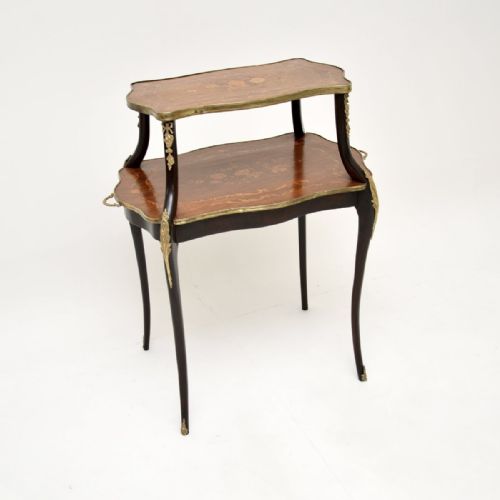
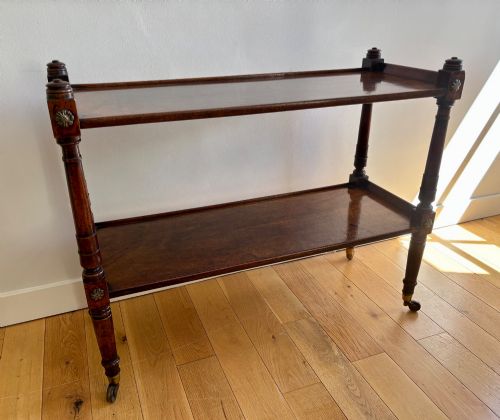
The versions most common on this page range from nineteenth-century mahogany and rosewood pieces mounted in brass to twentieth-century lamp tables and glass-topped designs. These furnishings function as versatile stands for lamps, books, or decorative objects across various rooms.
Materials and Construction
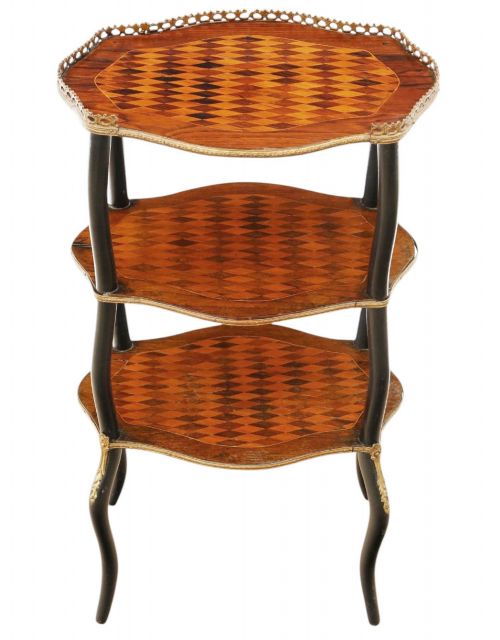
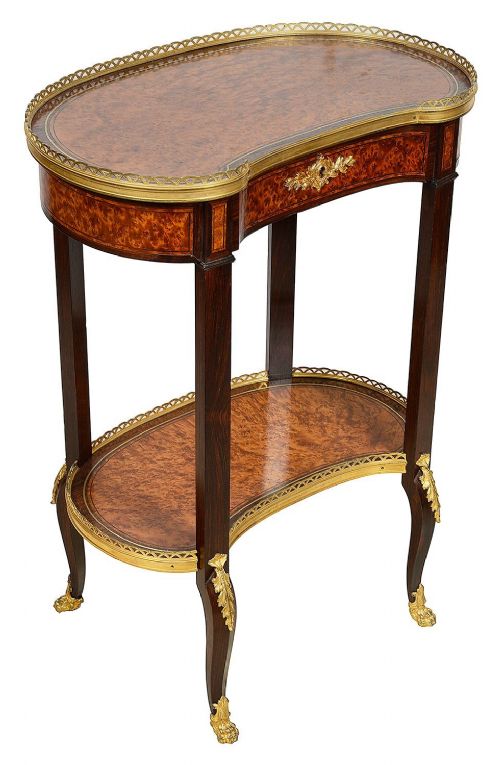
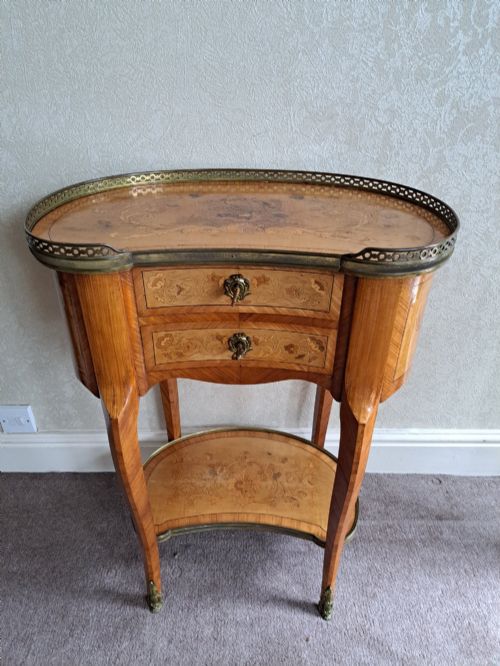
Frames combine cast or lacquered brass, ormolu, and bronze mounts with robust timber carcasses. Cabinetmakers utilised mahogany, rosewood, walnut, and ebonised wood for the tiers, often incorporating parquetry, marquetry, and satinwood inlay.
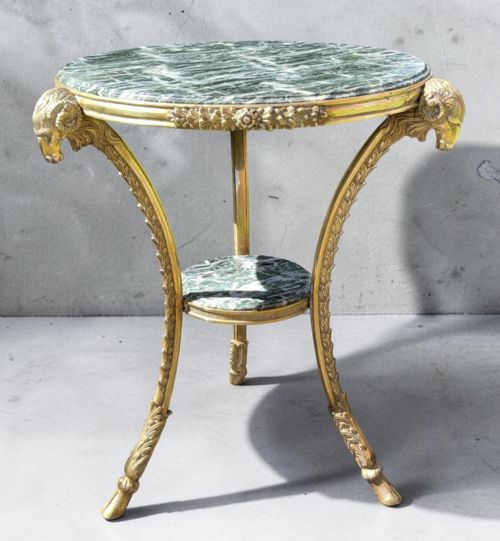
Surfaces frequently feature inset tooled leather, mirrored glass, or marble slabs fitted within metallic galleries. Joinery methods reflect traditional cabinetmaking standards of the Regency, Victorian, and Edwardian eras, paired with secure metal fixings.
Some tables boast rams' heads on their brass columns, proving that classical Greek mythology had a soft spot for holding up tea things.
Evaluating Quality
Distinction across the range lies in the precision of the brass casting, the crispness of ormolu mounts, and the depth of timber figure. Superior examples display refined proportions, meticulous marquetry, and high-grade secondary woods.
Simpler interpretations rely on standard turned supports and modest veneers, whereas finer pieces incorporate detailed mounts, custom leather tops, and integrated galleries that showcase skilled craftsmanship.
Mallett of London·Tehan·François Linke·George Bullock·W. Turner Lord & Co·Dryad Leicester
The Tiered Brass Side Table Glossary
- Etagere
- A set of open shelves or tiers designed for displaying ornaments, books, or small objects. This form became popular during the eighteenth century and persisted through the Victorian period.
- Whatnot
- A piece of freestanding furniture consisting of several open shelves above one another, used for general storage and display. They frequently appear in mahogany or rosewood.
- Ormolu
- Gilded bronze mounts applied to furniture for decorative effect. French cabinetmakers employed this technique extensively during the nineteenth century.
- Parquetry
- Geometric wood mosaic work used for surface decoration on tabletops and tiers. Artisans arranged contrasting timbers like satinwood and rosewood into precise patterns.
- Gueridon
- A small circular table supported by one or more columns, often featuring a marble top and brass gallery. Originating in seventeenth-century France, the form evolved through various revival styles.
Tiered Brass Side Table: Frequently Asked Questions
What is the difference between an etagere and a whatnot?
An etagere generally emphasises display with decorative open tiers, often incorporating French stylistic elements and fine brass mounts. A whatnot tends to serve a more utilitarian function with multiple sturdy shelves for general storage.
Both forms offer tiered surfaces, but the etagere usually carries lighter proportions and more ornate marquetry or inlay.
How do I style a tiered brass side table?
Place the table beside a sofa or armchair to utilise the multiple tiers for lamps, books, and smaller decorative items. The lower shelves provide convenient space for stacking magazines or displaying glassware.
Keep heavier objects on the lowest shelf to maintain visual and physical stability, allowing the brass framework to remain prominent.
Are these tables sturdy enough for daily use?
Most pieces are built with solid timber frames and secure brass supports designed for everyday placement of lamps and decorative objects. The multiple tiers distribute weight effectively across the structure.
Care should be taken with mirrored or glass tiers to avoid heavy impacts, ensuring the furniture remains stable during daily handling.
How do I identify nineteenth-century French styles?
Look for characteristic ormolu mounts, amboyna or mahogany veneers, and intricate marquetry inspired by Louis XV and Louis XVI designs. French pieces frequently incorporate marble tops and delicate brass galleries.
Proportions tend to be refined, with curved cabriole legs or slender fluted columns defining the silhouette.