



Three Tier Server Table
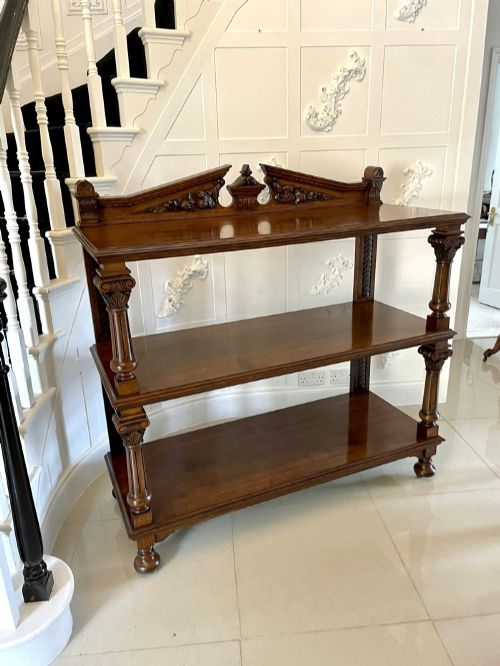
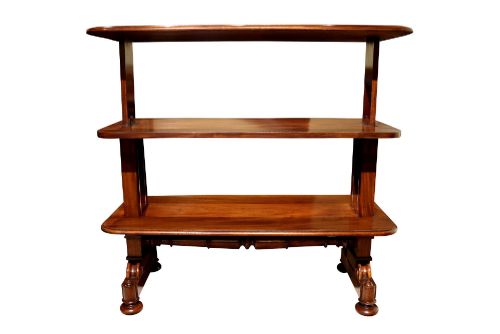
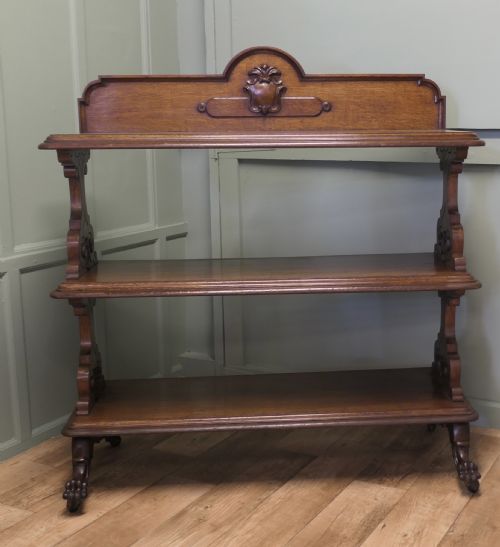
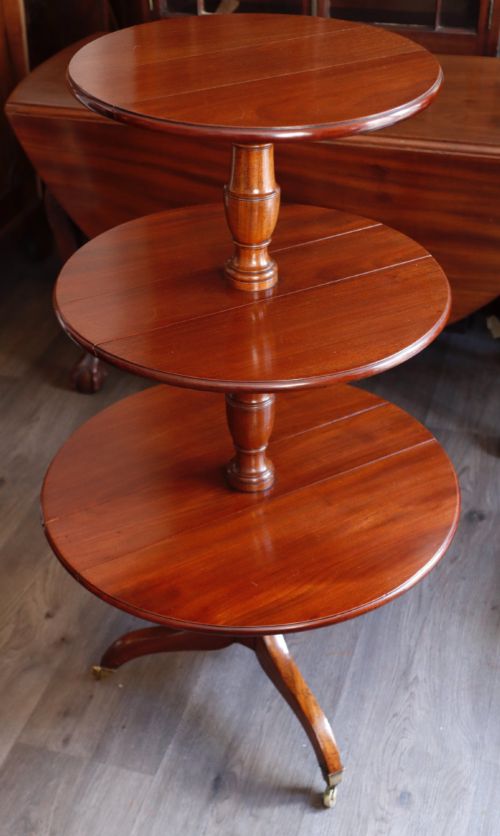
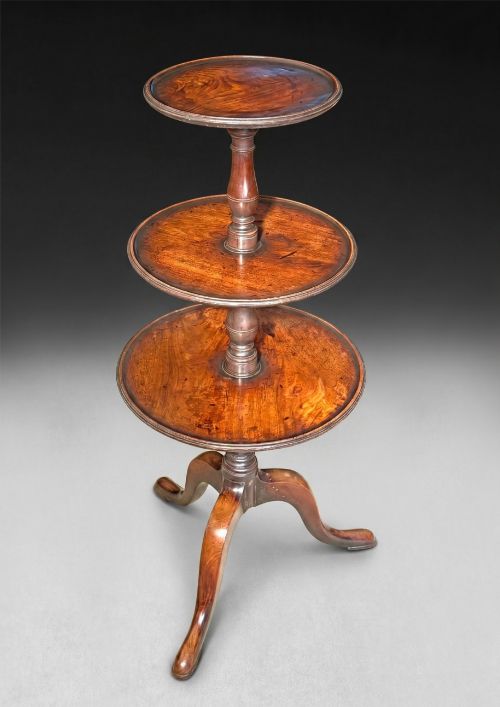
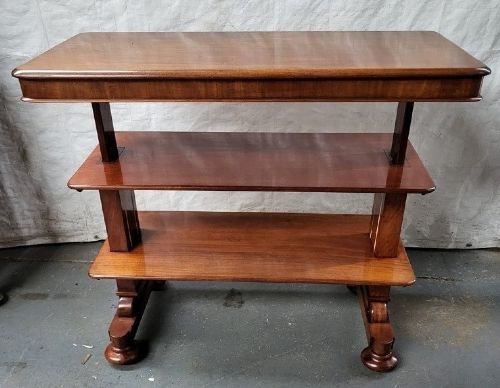
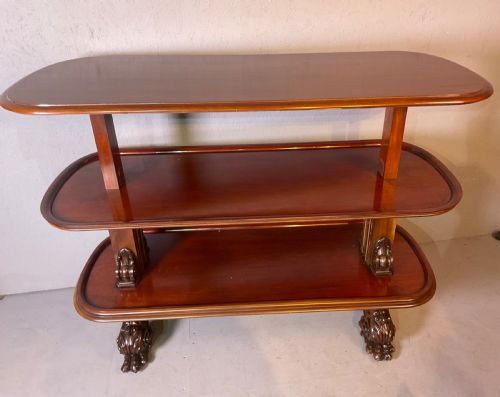
These three tier server table examples are tiered dining furniture designed to hold dishes and serving pieces during meals.
Three Tier Server Table
A three tier server table, frequently known in the trade as a dumb waiter or buffet, provides stepped tiers for holding food and tableware in dining spaces. Buyers searching for a three tier server table encounter pieces spanning the Georgian, Regency, William IV, and Victorian periods.
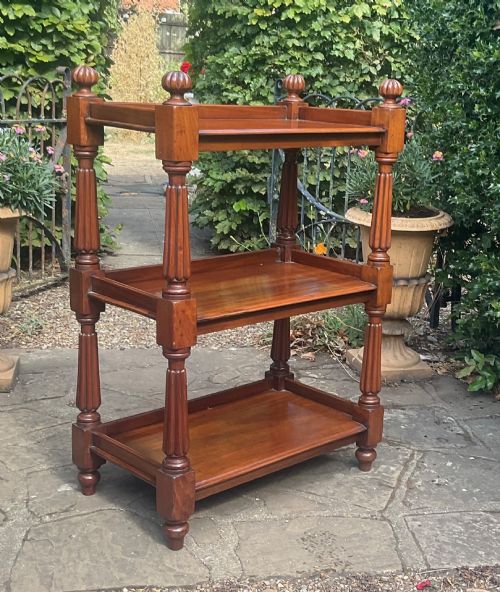
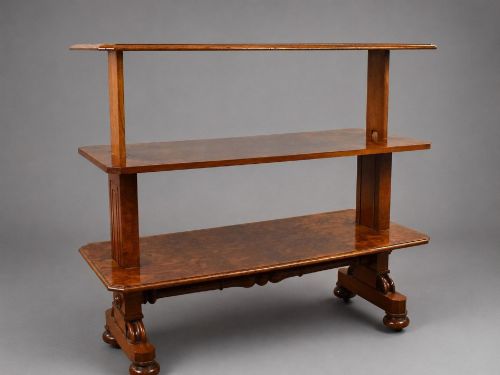
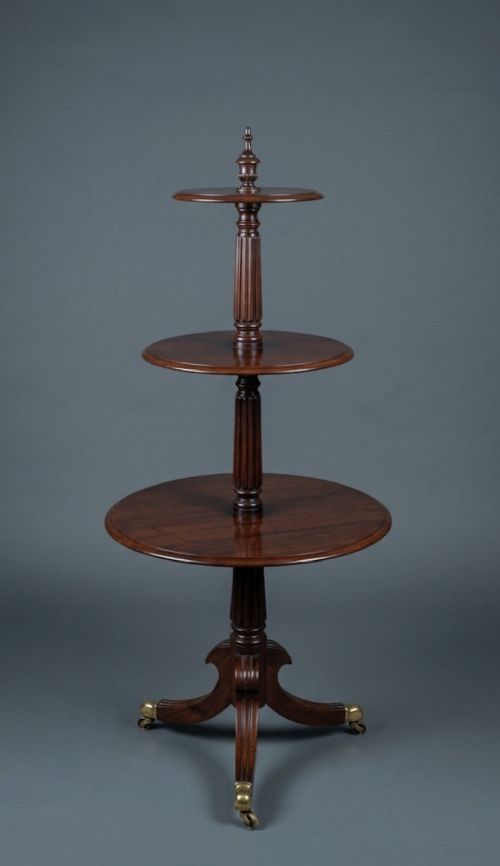
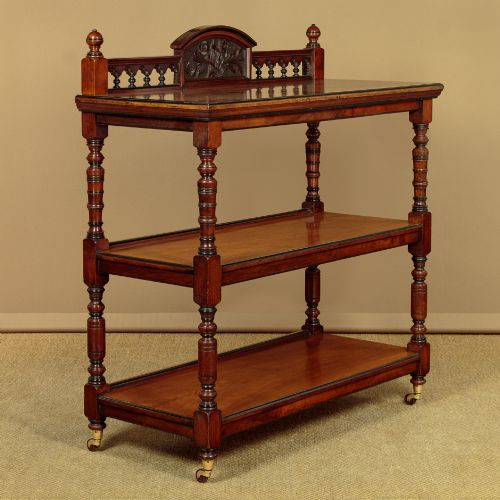
The form appears in several distinct structural formats, including circular graduated tiers on a central pillar, rectangular drop-leaf designs, and upright frameworks with castors. Mahogany remains the most prevalent timber, though walnut, burr walnut, pollard oak, and carved oak also appear.
Makers designed these items to assist dining rooms by keeping dishes close to the table without cluttering the main surface. The selection here ranges from compact circular tables to large architectural sideboards with multiple shelves.
Construction and Materials
Cabinet makers utilised dense hardwoods such as mahogany, oak, and walnut, frequently selecting figured veneers like burr walnut and pollard oak for visual depth on the tiers. Turned central columns, substantial tripod legs, and brass castors provided the necessary support for heavy multiple shelves.
Early dining tables were often cleared between courses so servants could leave the room, making these tiered helpers essential dining companions.
Evaluating Quality
The grade of timber and the quality of the turning distinguish finer pieces from standard production, particularly where highly figured mahogany or burr walnut grain is selected for the tiers. The precision of mechanical actions in rise and fall or telescopic models indicates the skill of the original workshop.
Proportions and stability dictate the standing of a piece, as taller tiered structures require robust central columns and sound joints to prevent wobbling. Original brass castors and untouched surface patination add to the integrity of older examples.
Maple & Co·Gillows
The Three Tier Server Table Glossary
- Dumb Waiter
- A tiered piece of dining furniture designed to hold plates and dishes without the aid of servants. These typically feature circular revolving trays on a central pedestal.
- Buffet
- A serving table or sideboard with shelves or tiers used for displaying and serving food. They often incorporate cupboards or drawers alongside open surfaces.
- Rise and Fall
- A mechanical arrangement allowing shelves or tiers to adjust vertically. This mechanism is frequently found in Victorian dining furniture.
- Etagere
- A piece of furniture consisting of a set of open shelves for displaying small objects or serving items. The form relies on slender supports rather than heavy columns.
- Fiddleback Mahogany
- Mahogany timber exhibiting a undulating grain pattern that resembles the back of a violin. Cabinet makers chose this wood for its reflective qualities under polish.
Three Tier Server Table: Frequently Asked Questions
What is a three tier server table used for?
These tables served dining rooms by holding extra dishes, wine bottles, and tableware within reach of the dining table. The multiple tiers maximised vertical space during large meals.
Today they function effectively as serving surfaces, plant stands, or display tables in living spaces and hallways. Their stepped design allows for the arrangement of decorative objects at different heights.
How do I identify a Georgian dumb waiter?
Georgian examples usually feature circular graduated tiers supported by a turned pillar and three arched legs, often terminating in brass castors. The timber is typically dense mahogany with a rich, dark patina.
Earlier pieces emphasise clean classical proportions and subtle turning rather than heavy carving. Brass hardware and swing brackets on drop-leaf versions help confirm the period of construction.
What is a metamorphic three tier server?
A metamorphic piece incorporates internal mechanisms that alter its shape, height, or function for different uses. These examples often feature rising centre columns or folding leaves.
Such engineering allowed dining furniture to double as compact side tables when not holding food. The movement relies on threaded wooden screws or metal ratchets concealed within the central shaft.
Are these tables sturdy enough for daily use?
The original construction utilised heavy hardwoods designed to support dense ceramic and silver tableware. Sound joints and solid timber cores ensure they remain stable for modern duties.
Care should be taken with adjustable or telescopic mechanisms to avoid straining the internal wooden threads. Placing them away from direct heat sources protects the polished veneer surfaces.