

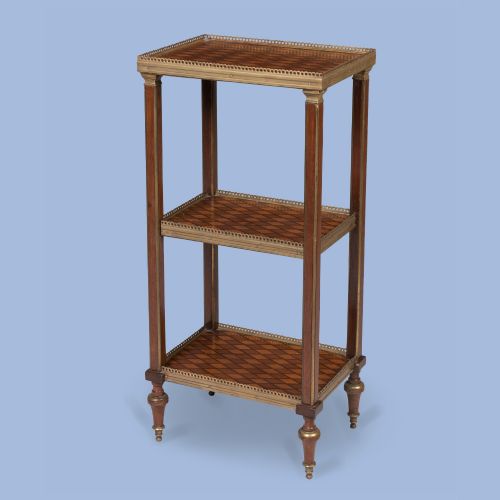


Three Tier Display Table
A three tier display table brings multiple graduated tiers to a room for vertical presentation, drawing the eye upwards through stacked surfaces.
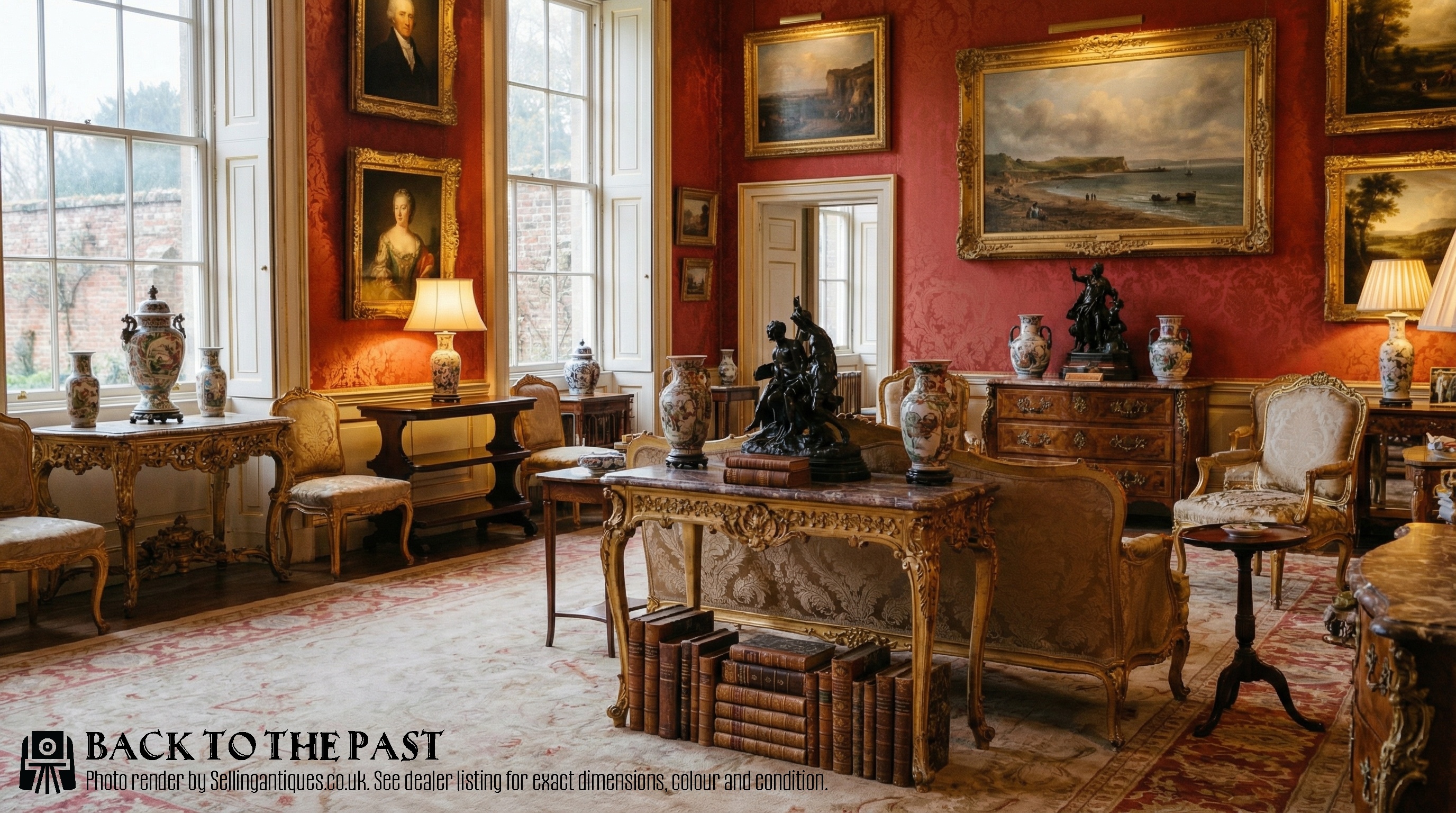
Three Tier Display Table
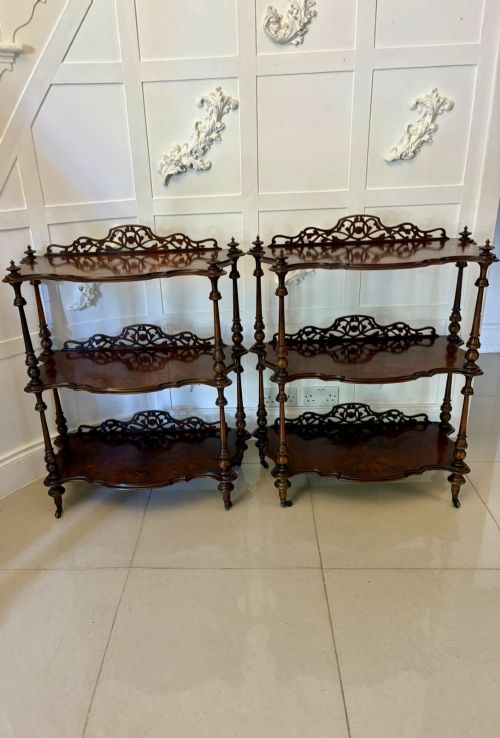
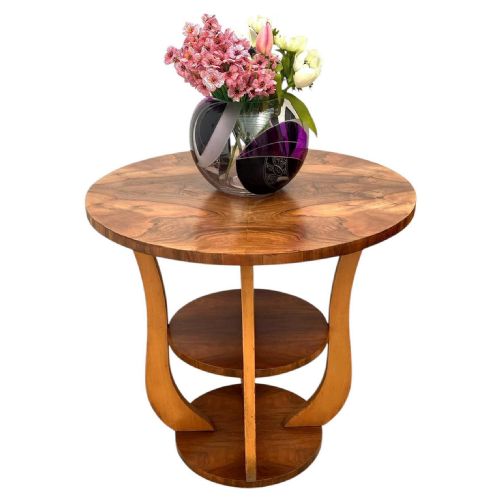
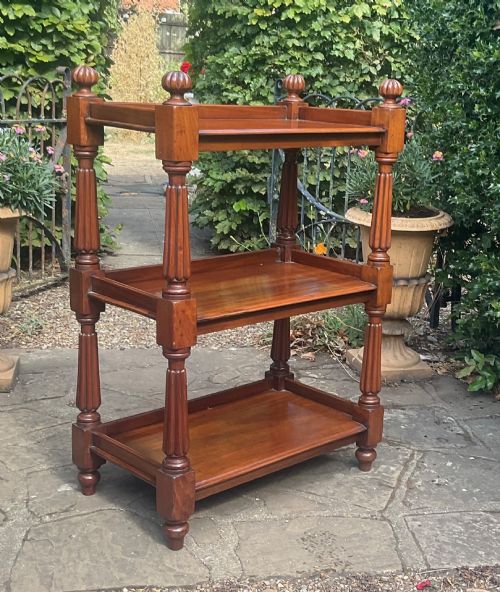
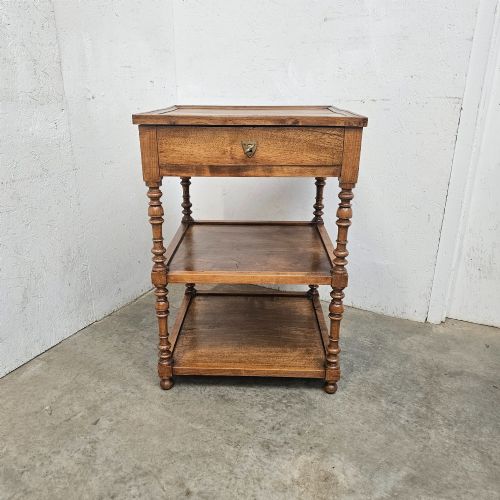
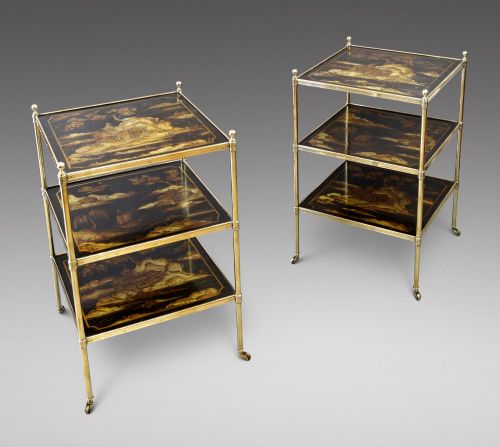
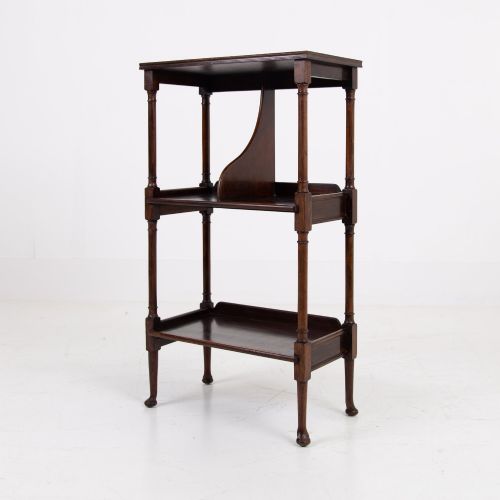
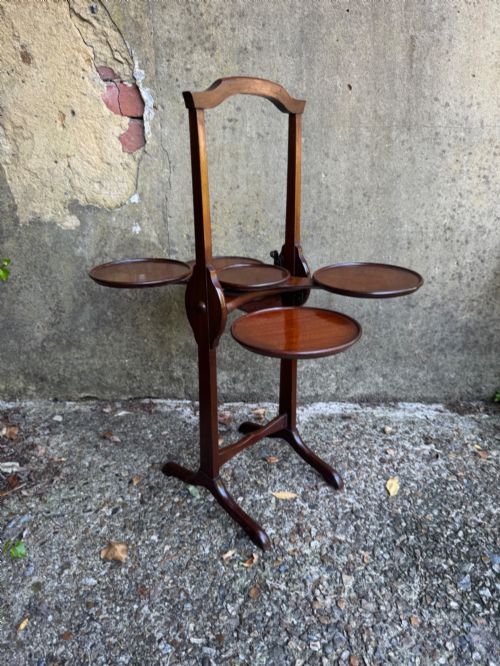
A three tier display table provides stacked surfaces for storage and presentation, appearing in forms such as etageres, whatnots, side tables, and occasional tables. These pieces span multiple eras including the Georgian, Regency, and Victorian periods, alongside later twentieth-century Art Deco designs.
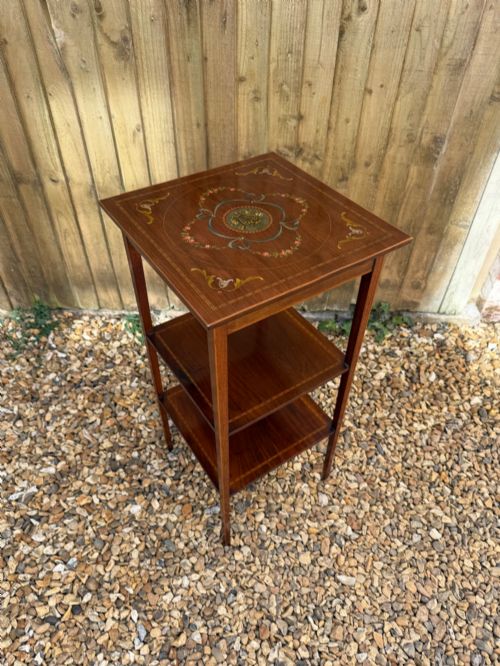
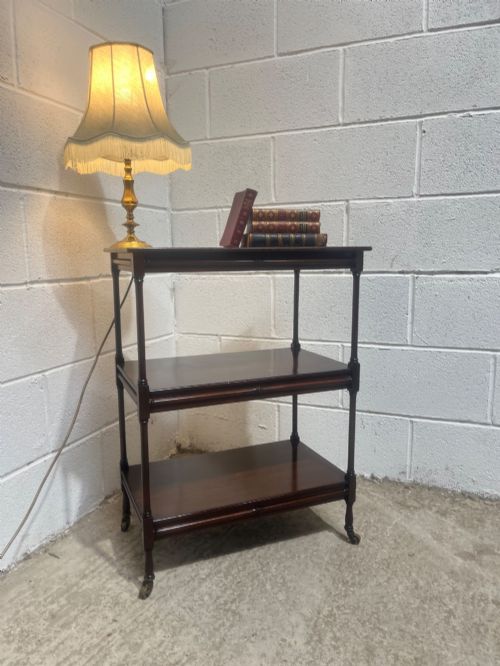
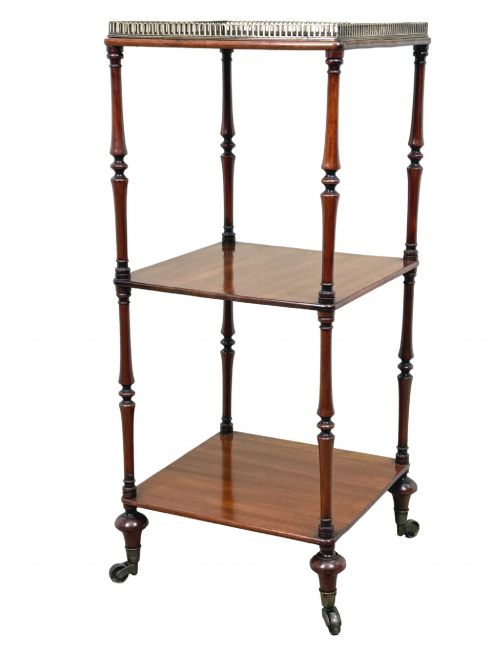
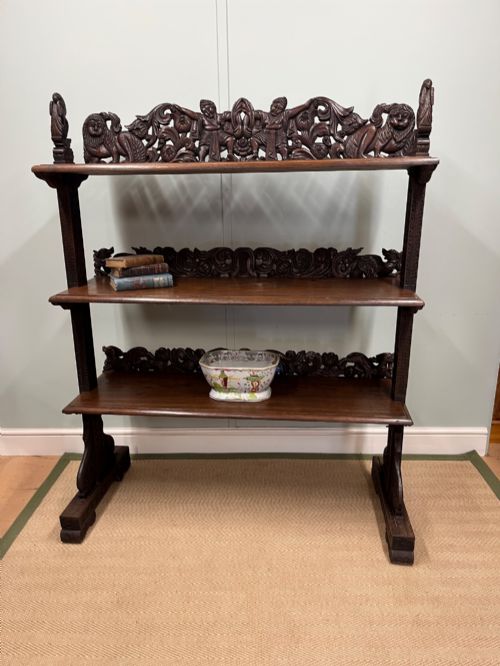
The versions most common here take the form of open wooden shelving units or small occasional tables supported by turned legs, slender columns, or tripod pedestals. They function primarily to hold books, decorative objects, and small items across three distinct horizontal planes.
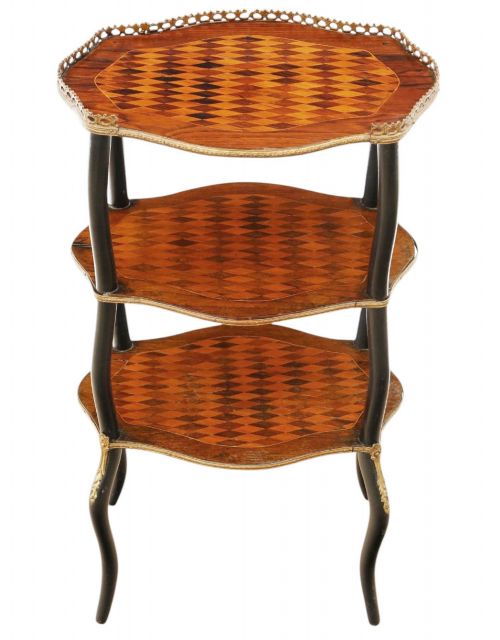
Origins range widely from English workshops to French provincial makers, utilising native and exotic timbers like mahogany, walnut, rosewood, and ebonised wood. Some examples incorporate brass mounts or marquetry inlay to enhance their decorative appeal in a reception room or study.
Materials and construction methods
Makers constructed these pieces predominantly from solid timbers and fine veneers, selecting mahogany, walnut, and rosewood for their durability and grain patterns. Burr walnut and birdseye maple frequently appear on top surfaces to provide decorative figuring.
Joinery techniques involve turned supports, slender uprights, and fitted tiers secured by internal fixings or brass mounts. Finer examples integrate parquetry, brass stringing, and marble inserts into the tiers to elevate the visual weight of the structure.
Three Tier Display Table Retail Price Guide 2026
Typical asking prices for three tier display table among the pieces listed under this phrase on Sellingantiques today, from the lower quarter to the upper quarter. They describe what is for sale here now, not the wider market.
Periods represented range from the Georgian era through the Victorian age to nineteen-thirties Art Deco.
Distinctions in construction and finish
Quality rests in the selection of timber veneers and the crispness of turned or carved supports. Superior examples display dense grain matching across shelves and precise joinery at every tier junction.
Secondary elements like brass galleries, ormolu mounts, and inlaid marquetry separate standard production pieces from exhibition standard items. The weight and stability of the frame indicate the structural integrity underpinning the stacked shelves.
The Three Tier Display Table Glossary
- Whatnot
- A piece of furniture consisting of shelves for books or ornaments, popular throughout the nineteenth century. It stands on legs and often includes turned corner posts.
- Dumb waiter
- A tiered serving table used to hold dishes or utensils beside a dining table. The form shares the stacked circular or square tiers seen on display tables.
- Marquetry
- Decorative veneer work forming pictures or geometric patterns using various coloured woods. Craftsmen apply these thin wood sections to the top tiers of display pieces.
- Ormolu
- Gilded bronze mounts applied to the corners and legs of furniture. This material provides metallic contrast against dark woods like walnut and mahogany.
Three Tier Display Table: Frequently Asked Questions
What is a three tier display table used for?
These pieces serve as multi-level surfaces for holding books, ceramics, and decorative objects in a drawing room or study. The stacked tiers allow owners to display items vertically without taking up excessive floor space.
Historically, similar tables functioned as serving aids or receptacles for small personal possessions. Today, they remain practical furniture for corners and spaces beside seating.
How do I date a three tier display table?
Dating relies on identifying the primary timber, construction methods, and stylistic cues present in the turned legs and shelf supports. Georgian and Regency pieces often feature simpler mahogany frames, while Victorian examples lean towards burr walnut and heavy carving.
Art Deco versions from the nineteen-thirties display cleaner geometric lines and French walnut veneers. Examining the underside and joint construction provides further clues to the manufacturing era.
Where should I place a three tier display table?
These tables fit well against walls, in narrow hallways, or beside armchairs where the vertical tiers remain easily accessible. Their open shelving prevents them from dominating a smaller room.
Positioning them away from direct sunlight protects vulnerable wood veneers and delicate marquetry inlay. Ensuring a stable floor surface keeps the stacked tiers secure.
Are etageres and whatnots the same thing?
Etageres and whatnots share the common trait of tiered open shelving, though their historical origins differ slightly. Etageres originated in France primarily for decorative display, while English whatnots often served practical storage functions for books and small items.
Over time, makers used the terms interchangeably for multi-tiered wooden furniture. Both describe the same fundamental style of stacked display surfaces.