

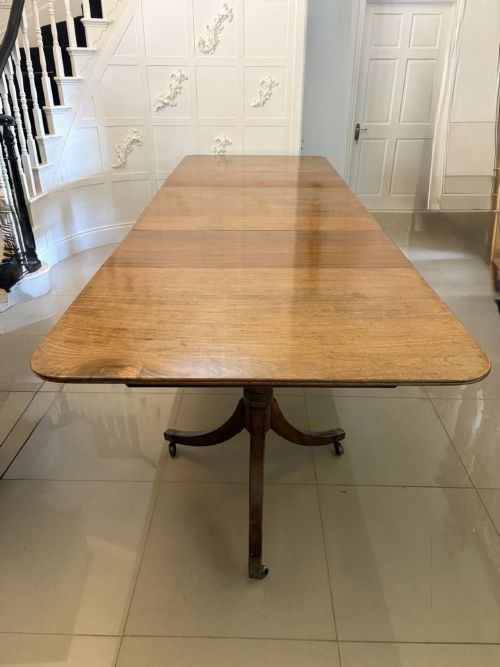
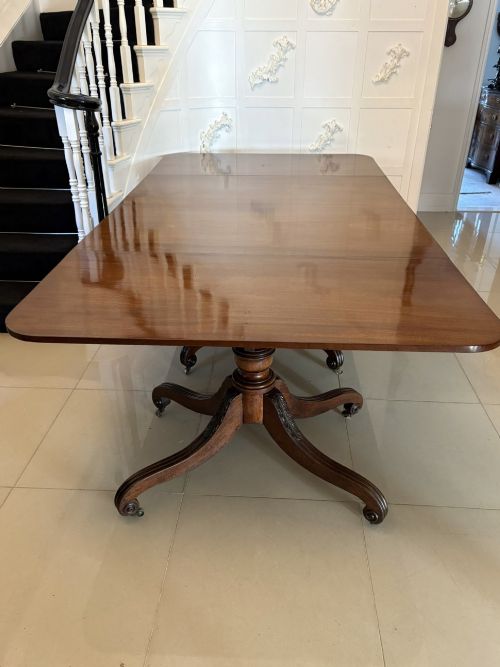
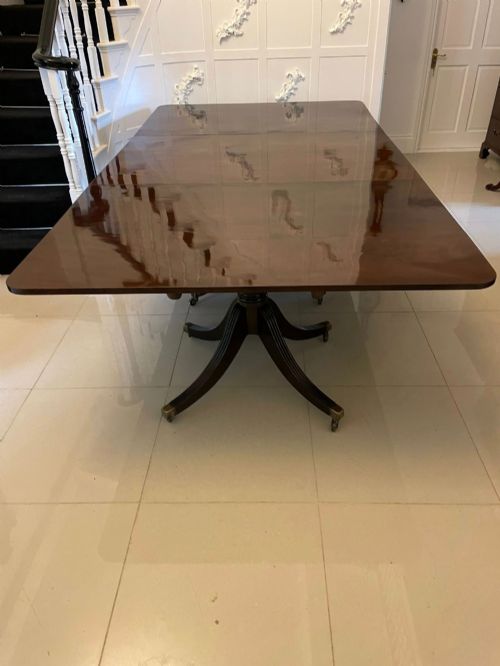
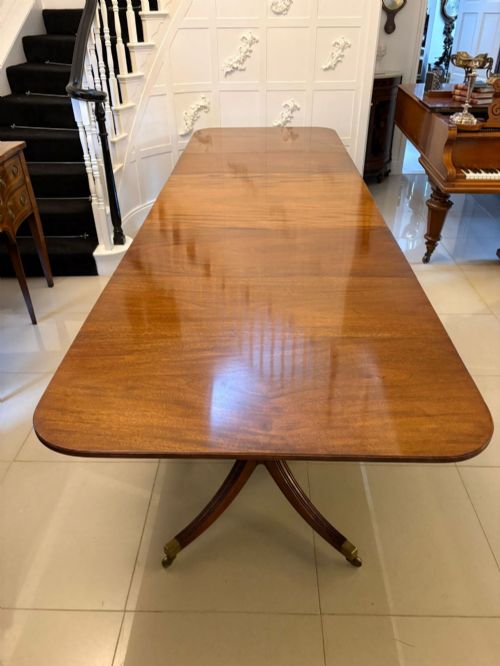
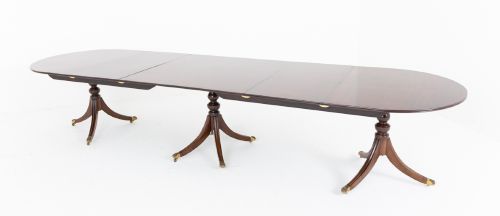

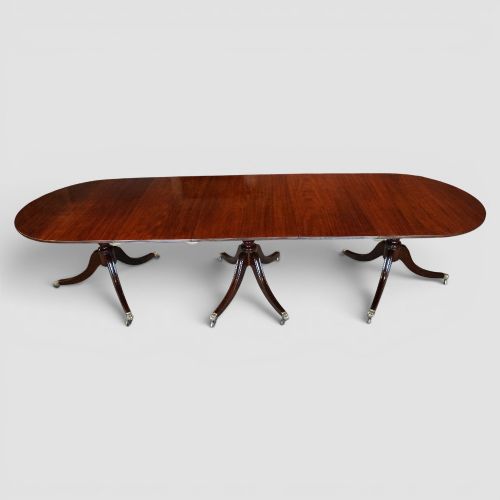
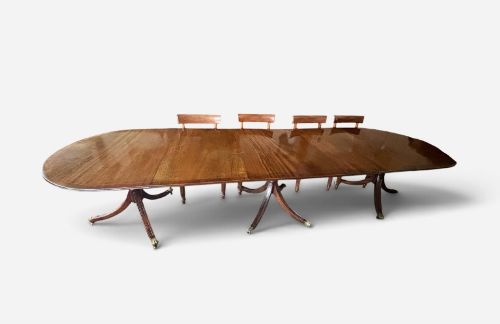
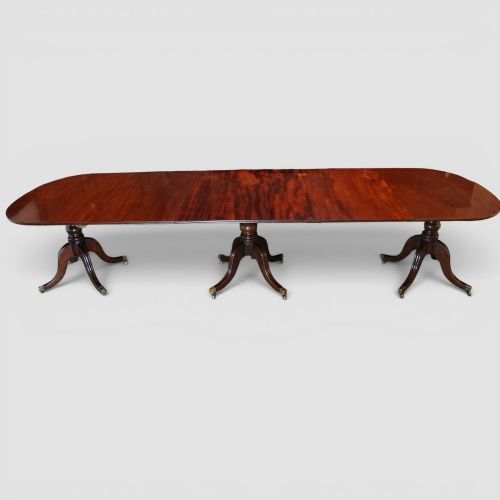
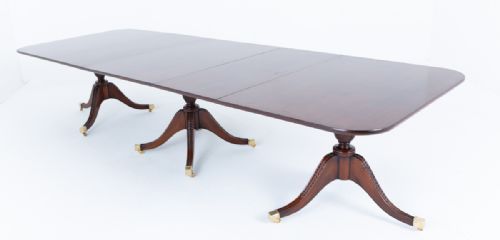


Three Pedestal Conference Table
A three pedestal conference table anchors a room with scale, offering substantial seating for meetings or gatherings through its timber pillars.
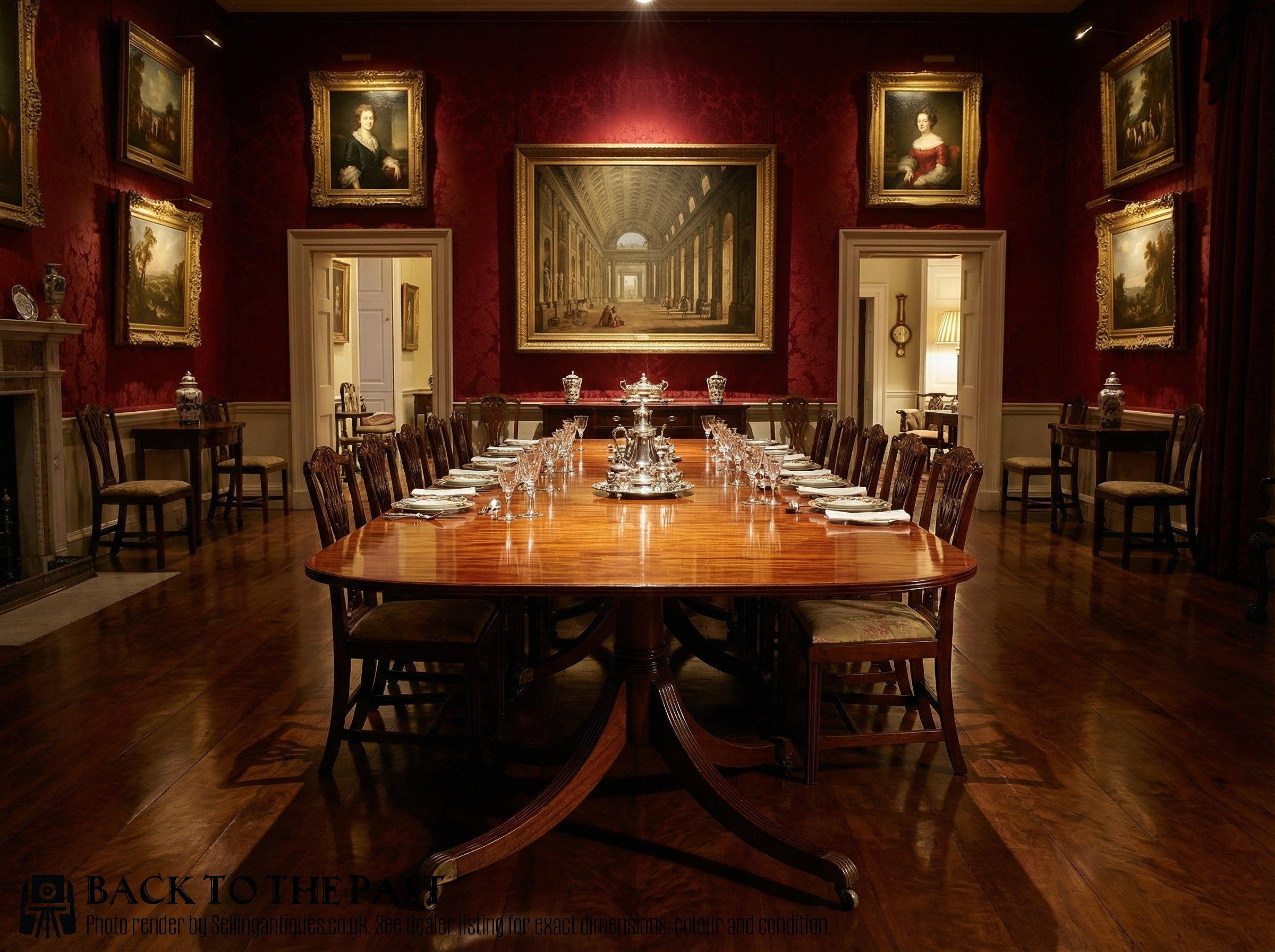
Three Pedestal Conference Table
When you search for a three pedestal conference table, you are looking at large extending dining tables adapted for boardrooms and offices, frequently found in rich mahogany or walnut. These tables span periods from the Georgian era through the nineteenth century and into Edwardian revivals, offering generous seating for ten to twenty-four guests.
The most common examples on this page date from the nineteenth century and the early twentieth century, built in Regency and Georgian styles with multiple leaves. They rest upon three or four turned timber pillars supported by brass-capped legs, combining functional surface area with classic proportion.
Materials and construction methods
Cabinetmakers constructed these large surfaces primarily using figured mahogany and occasionally rosewood or walnut veneers over stable secondary timbers. Sections were joined with clever extending mechanisms and supported by heavy pillar bases that distributed weight evenly across the floor.
Brass castors and subtle inlay work often finished the feet and borders, while drop-in leaves allowed the central span to expand or contract according to the number of seats required.
Three Pedestal Conference Table Retail Price Guide 2026
Typical asking prices for three pedestal conference table among the pieces listed under this phrase on Sellingantiques today, from the lower quarter to the upper quarter. They describe what is for sale here now, not the wider market.
Some nineteenth-century tables hide clever metamorphic designs beneath their polished tops, transforming standard dining surfaces with secret mechanical actions.
Judging the quality of the timber and pillars
Quality rests upon the choice of timber figure across the tabletop panels and how well the grain matches when the leaves are inserted. Tables with deeply figured mahogany or walnut show superior selection by the original maker.
The stability of the three pillars and the crispness of their turning also set better pieces apart, alongside the smooth operation of the extending mechanism and the originality of the brass fittings.
The Three Pedestal Conference Table Glossary
- Pedestal
- The central vertical pillar supporting the tabletop. It often splits into multiple reeded legs with brass castors.
- Extending table
- A dining table designed with removable leaves. These allow the centre section to grow longer for large gatherings.
- Figured mahogany
- Timber cut to reveal distinctive grain patterns. Cabinetmakers selected these boards for prominent display on the main top surfaces.
- Regency style
- A design movement drawing on neoclassical lines. Pieces from this tradition feature clean proportions and dark polished woods.
- Metamorphic table
- An antique table with mechanical parts. These hidden mechanisms alter the height or form of the furniture.
Three Pedestal Conference Table: Frequently Asked Questions
How many people can sit at these tables?
These large tables commonly seat between ten and eighteen guests depending on the number of inserted leaves. Some exceptionally long versions accommodate twenty-four people for formal dining or meetings.
The inclusion of multiple leaves allows the overall length to adapt to smaller spaces when fewer seats are needed.
How do I maintain the polished wood surface?
Regular dusting with a soft dry cloth keeps the polished finish clean and free from abrasive particles. Applying traditional beeswax periodically nourishes the timber without building up heavy chemical layers.
Keep these tables away from direct sunlight and steady heat sources to prevent the timber from drying or cracking.
How do I spot a later revival piece?
Revival pieces from the early twentieth century often show standardised machine turnings on the pillars and uniform colour across all leaves. Earlier examples from the Georgian and Regency periods display hand-finished joints and subtle variations in timber age.
Examining the underside of the leaves and the construction of the pillar blocks reveals the true age of the timber.
Can I remove the leaves for daily use?
The central leaves lift out easily from the frame, allowing you to shorten the table for everyday requirements. The remaining sections lock back together using internal brass pins or clips.
Store unused leaves flat in a dry room with stable temperatures to prevent them from warping.