
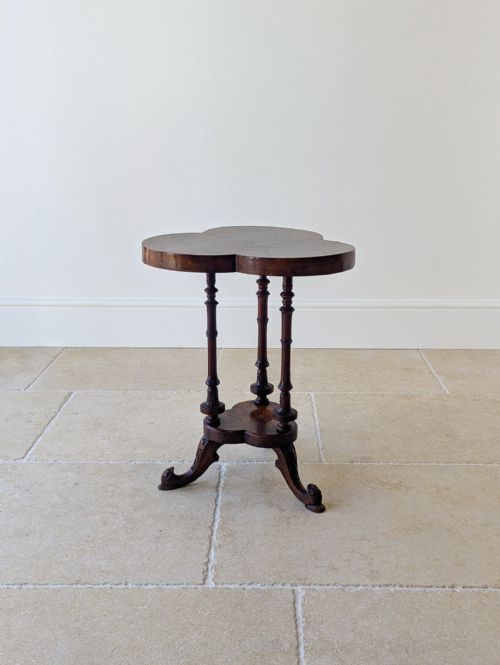
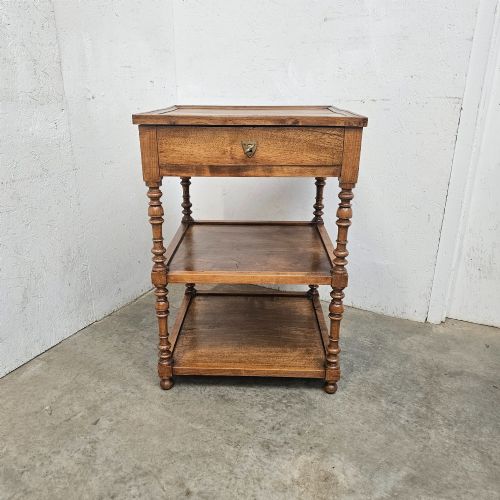
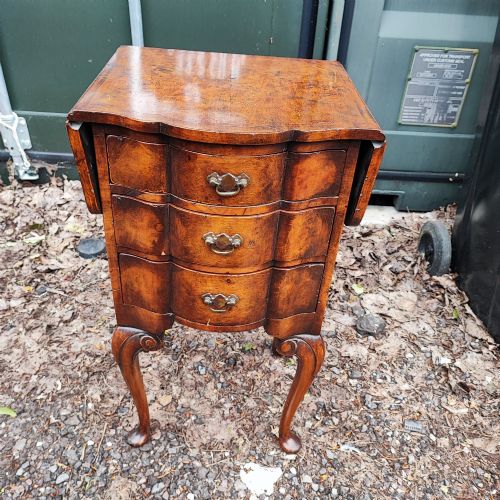
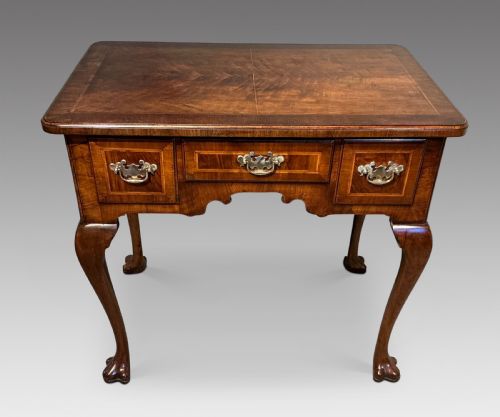


Three Legged Walnut Table
A three legged walnut table brings warmth and compact utility to a room, offering rich timber grain and traditional form in a versatile piece of furniture.
Three Legged Walnut Table
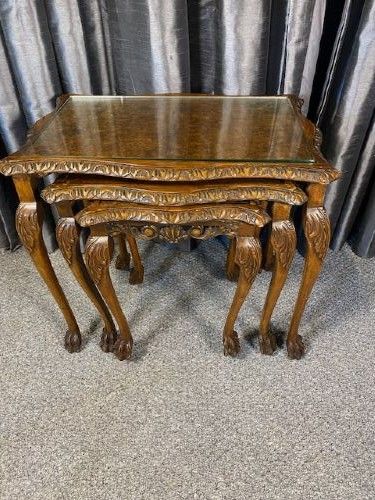
A three legged walnut table encompasses a range of compact occasional forms designed for practical placement beside seating or in hallways. Pieces matching this search appear across several periods, from 18th Century examples to Edwardian and 1930s creations.
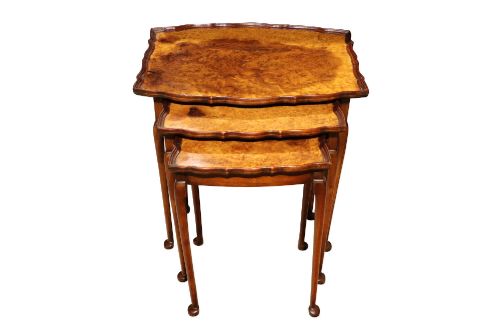
The selection frequently includes occasional tables, tripod lamp tables, and trefoil designs utilising solid timber or burr walnut veneers. These items reflect enduring styles such as Queen Anne, Georgian, and Victorian revivals.
Buyers encounter variations ranging from simple turned supports to intricate marquetry and tripod configurations. Each variation serves a functional role while displaying the distinct figure of walnut wood.
Evaluating quality and execution
Quality rests in the selection of the timber veneer and the precision of the joinery connecting the legs to the top. Superior examples display balanced grain matching and crisp carving on cabriole or tripod supports.
Proportion and stability distinguish finer pieces from simpler utilitarian items. The treatment of edges, inlay work, and the retention of original surface patination indicate the level of craftsmanship involved.
Listings feature walnut tables spanning the 18th Century, 19th Century, Victorian, Edwardian, and 1930s periods.
The Three Legged Walnut Table Glossary
- Burr walnut
- A highly figured wood grain obtained from tree growths, producing swirling patterns prized for decorative veneer work on tabletops.
- Cabriole leg
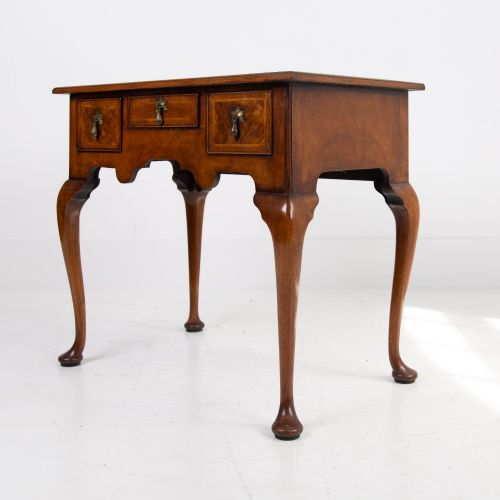
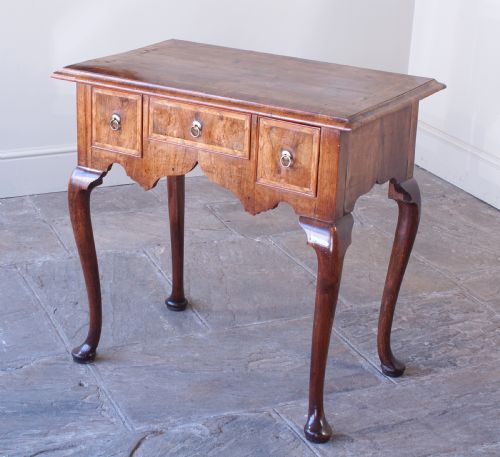
- A furniture leg that curves outward and then tapers inward, mimicking an animal limb and commonly seen on Queen Anne and Georgian pieces.
- Lowboy
- A small side table with drawers, often standing on tall cabriole or turned legs, frequently produced in walnut during the 18th Century.
- Tripod table
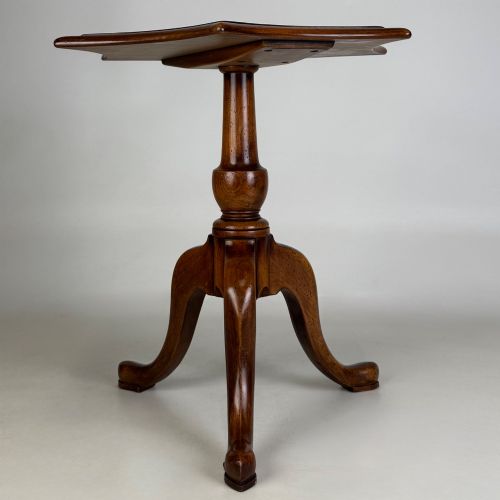
- A small freestanding table supported by a central pillar resting on three individual feet or legs.
- Marquetry
- Decorative inlay work using various coloured woods to create pictorial designs across the surface of the timber.
Three Legged Walnut Table: Frequently Asked Questions
Where should I place a three legged walnut table?
These tables fit easily beside armchairs, in small hallways, or as bedside surfaces where floor space is limited. Their compact footprints allow them to function as lamp stands or display spots without dominating a room.
Because they feature three legs, they remain stable on uneven floors compared to four-legged alternatives. This makes them practical for corners and alcoves throughout the home.
How do I care for walnut furniture?
Walnut benefits from occasional polishing with appropriate traditional wax to nourish the timber and maintain its natural sheen. Avoiding direct sunlight prevents the rich brown tones from fading over time.
Keep these tables away from extreme temperature fluctuations and radiators to prevent the wood or veneer from drying out and splitting.
What is the difference between solid walnut and burr walnut?
Solid walnut uses planks cut directly from the tree trunk, displaying straight grain lines and robust structural integrity. Burr walnut utilises knotty growths sliced into thin veneers, creating complex, swirling patterns.
Cabinetmakers typically applied burr walnut veneers over stable hardwood carcasses to showcase decorative surfaces on prominent tabletops.
How can I tell an 18th Century table from a later revival?
Early pieces often show hand-cut joinery, pegged joints, and timber characteristics typical of 18th Century workshop practices. They develop a deep patination through centuries of handling and polishing.
Revival pieces from the Edwardian or 1930s periods utilise machine assistance, standardised fixings, and distinct finishing techniques while imitating earlier styles.