


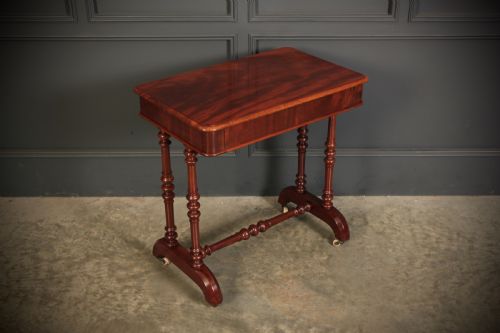


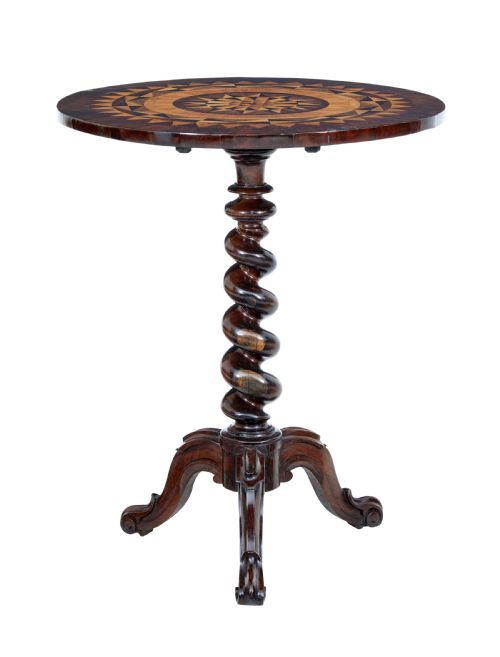

Early Victorian Lamp Table
An early victorian lamp table brings warmth to a corner, combining the practical timber stands and bright brass lighting of the nineteenth century.
Early Victorian Lamp Table
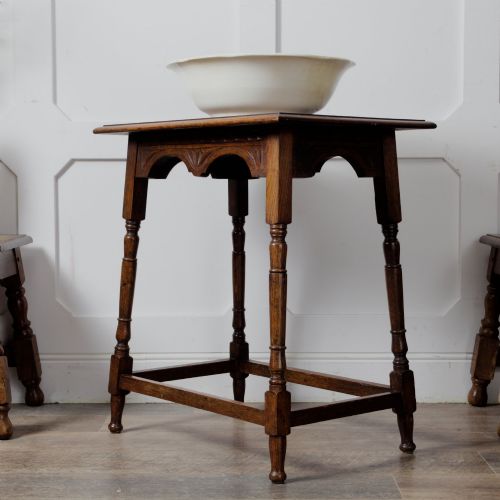
When you search for an early victorian lamp table, you encounter diverse timber surfaces designed to hold lighting or rest beside seating. The selection relies heavily on mahogany, walnut, and occasional oak examples spanning the nineteenth century.
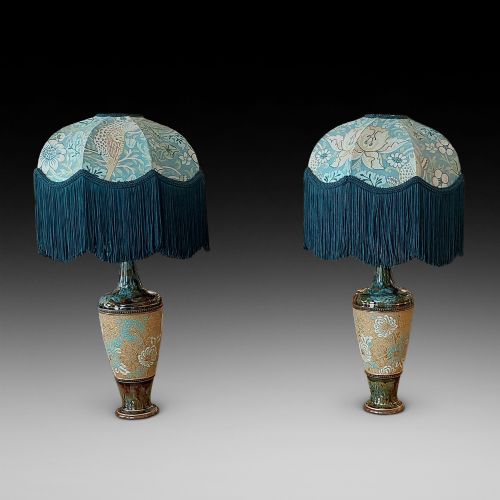
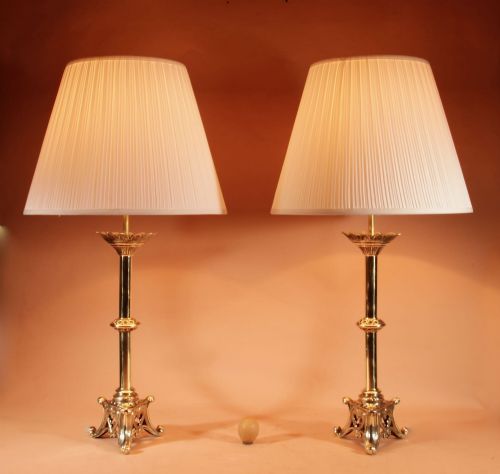
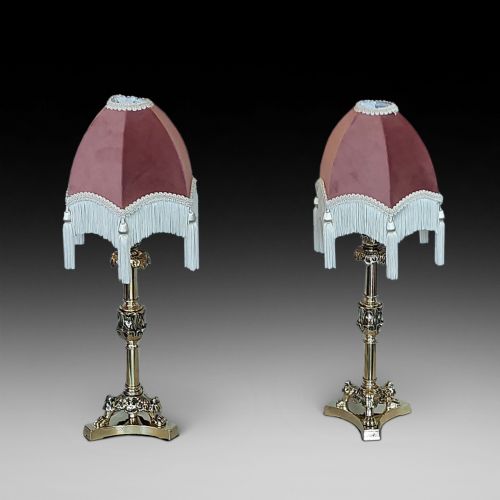
Side tables, occasional tables, and tilt-top forms frequently double as lamp stands, often sharing space with converted candlesticks and classical column lamps in brass.
The dominant aesthetic draws upon early Victorian and William IV proportions, with occasional Regency influences surfacing among the circular and octagonal timber formats.
Materials and Construction
Cabinet makers utilised dense hardwoods such as mahogany and burr walnut, frequently applying fine veneers, marquetry inlay, and carved details to tops and pedestals.
Metal components rely on cast and pressed brass, forming structural columns, candlesticks, and decorative mounts that complement the dark timber frames.
The inventory records solid oak, burr walnut, mahogany, and cast brass utilised across nineteenth-century tables and column lamps.
Distinctions in Standard
The distinction between ordinary and superior pieces rests on the choice of timber figure, the crispness of carved mouldings, and the precision of inlaid marquetry work.
Substantial brass casting and heavy gauge columns elevate metal lamp forms, whereas lighter, pressed alternatives offer a simpler visual weight.
Heal & Son·Holland & Sons·Gillows
The Early Victorian Lamp Table Glossary
- Tilt-top
- A table mechanism allowing the surface to fold vertically when not in use. This space-saving design is common in nineteenth-century occasional pieces.
- Marquetry
- Decorative patterns formed by fitting together thin slices of various woods and materials. It creates elaborate floral or geometric designs on table tops.
- Corinthian column
- A classical architectural order featuring an ornate capital decorated with acanthus leaves. Many nineteenth-century brass lamps adopt this distinct vertical shaft.
- Demi-lune
- A half-moon shape used for console and side tables designed to sit flush against a wall. This format maximises floor space in narrow hallways.
Early Victorian Lamp Table: Frequently Asked Questions
What is an early victorian lamp table?
These pieces are nineteenth-century timber stands and occasional tables originally built to support lighting or serve alongside seating in parlours and drawing rooms.
They appear in various woods like mahogany and walnut, often featuring circular or octagonal tops supported by central pedestals or turned legs.
Were these tables made for lamps?
Many tables served multiple domestic purposes, acting interchangeably as wine tables, worktables, or general occasional stands for various household objects.
As domestic lighting evolved from candles to oil lamps and electricity, sturdy timber tables easily accommodated the shift in function.
How do I identify early victorian furniture?
Characteristics include solid timber construction, rich mahogany or walnut grains, and architectural details influenced by neoclassical and Gothic revivals.
Proportions tend to be heavy yet balanced, avoiding the lighter satinwood elegance of the preceding century or the busier ornamentation found in later decades.
Can I use antique brass lamps safely?
Many solid brass columns and candlesticks from the nineteenth century are adapted with modern wiring to function as functional desk or table lamps.
Their heavy cast metal bases provide the necessary stability to support modern fittings and shades securely.
Where should I place a lamp table?
These pieces suit living room corners, beside armchairs, or as console surfaces in hallways where a compact footprint is required.
Their decorative timber tops and warm brass lighting elements add focal points to traditional and eclectic room schemes alike.