



Three Legged Armchair
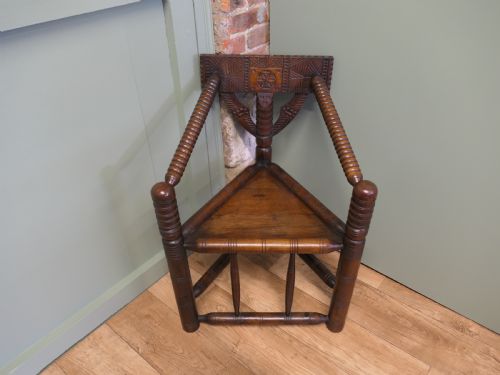
A three legged armchair brings sturdy nineteenth century character to a room, offering solid oak construction and traditional turned spindles that command attention.
Three Legged Armchair
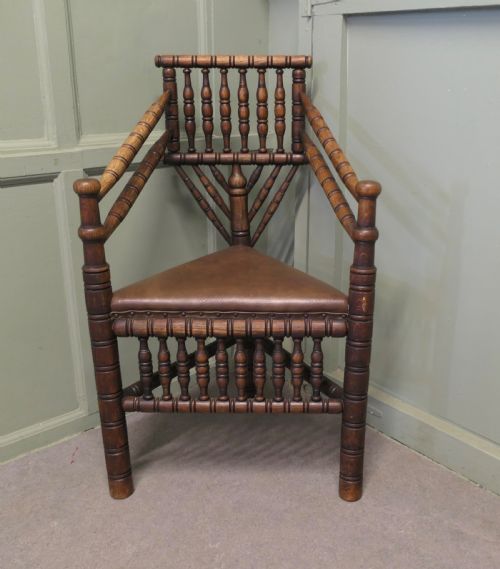
A three legged armchair on this page typically takes the form of a nineteenth century turner's chair, also known as an old saxon chair, constructed from English oak or beech with a characteristic elbow seat. These seating pieces connect modern interiors to Victorian craftsmanship through tripartite supports and traditional turned spindles.
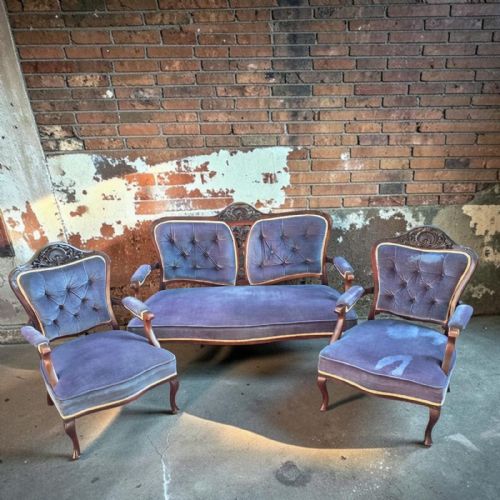
Buyers also encounter related Victorian salon suites and upholstered lounge chairs alongside these sturdy turners chairs, though the three legged format remains the defining local speciality. The selection spans the mid nineteenth century up to the early twentieth century, reflecting varied interpretations of Gothic and Saxon revival styles.
How they were made
Makers utilised solid timbers like English oak, beech, and mahogany, turning structural spindles on a lathe to build rigid frameworks that supported heavy wooden seats. Turners relied on traditional joinery techniques, pegging joints securely without modern adhesives to ensure enduring stability.
Upholstered variations incorporated deep buttoning and damask fabric, velvet, or leather, secured with brass tacks over supportive internal stuffing. Exposed woodwork was typically polished to a deep patina, highlighting the natural grain of the timber.
Some nineteenth century makers thoughtfully added lion paw feet to armchairs, ensuring even turned oak seats could indulge in a little royal ambition.
What varies in quality
The distinction between ordinary examples and superior pieces rests upon the crispness of the wood turning and the density of the timber selected. Denser English oak and well figured beech command greater appreciation for their structural integrity and weight.
Proportion and symmetry in the turned spindles dictate the visual harmony of the seat, whilst untouched original surfaces retain a richer historical character than heavily refinished timber.
Ben Gilling
The Three Legged Armchair Glossary
- Turner's chair
- A sturdy seat constructed entirely from turned wooden spindles and members, often featuring a triangular seat base supported by three legs. This ancient form enjoyed a revival during the Victorian era.
- Old Saxon chair
- A nineteenth century term applied to heavy oak turned armchairs intended to evoke early medieval or Saxon seating designs. They are instantly recognizable by their low backs and stout proportions.
- Salon suite
- A coordinated set of seating furniture comprising a sofa and matching armchairs designed for formal reception rooms. These suites often share identical carved wooden frames and upholstery fabrics.
- Deep buttoning
- An upholstery technique where twine is pulled through padding and secured with buttons to create a diamond pattern. This method adds firmness and visual texture to upholstered backs and seats.
- Gothic Revival
- An architectural and decorative movement from the nineteenth century that reinterpreted medieval forms, arches, and heavy carved details in domestic furniture.
Three Legged Armchair: Frequently Asked Questions
Where did three legged armchairs originate?
These chairs trace their lineage back to medieval turned seating, though the examples on this page are nineteenth century interpretations of those earlier forms. Cabinetmakers and local turners in England produced them drawing on vernacular traditions.
Victorian craftsmen revived the style under names like old saxon or turner's chairs, adapting ancient construction methods for contemporary nineteenth century homes.
How do I date an oak armchair?
Dating relies upon examining the tooling marks on the wood, the species of timber used, and the style of turning employed in the spindles. Nineteenth century revival pieces often display machine assisted turning alongside hand finished joints.
Comparing the specific proportions and revival motifs, such as gothic arches or saxon turned rails, helps narrow the production window between eighteen-fifty and nineteen-hundred.
How do I style a turner's chair?
A turner's chair makes a striking focal point in a study, hallway, or corner of a living room where its sculptural wooden frame can be viewed from multiple angles. Its compact footprint suits smaller spaces.
Pairing the dark oak timber with neutral walls or placing a simple textile on the wooden seat softens the heavy aesthetic while preserving the historic character.