

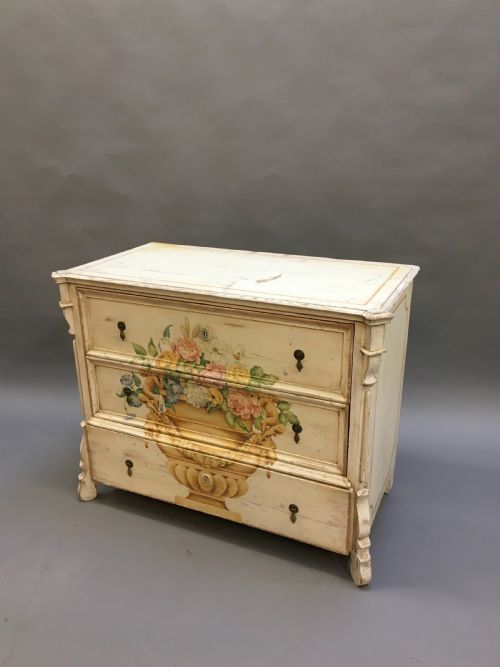


Three Drawer Painted Chest
A three drawer painted chest brings texture and colour into a room through layered historical finishes on practical timber.
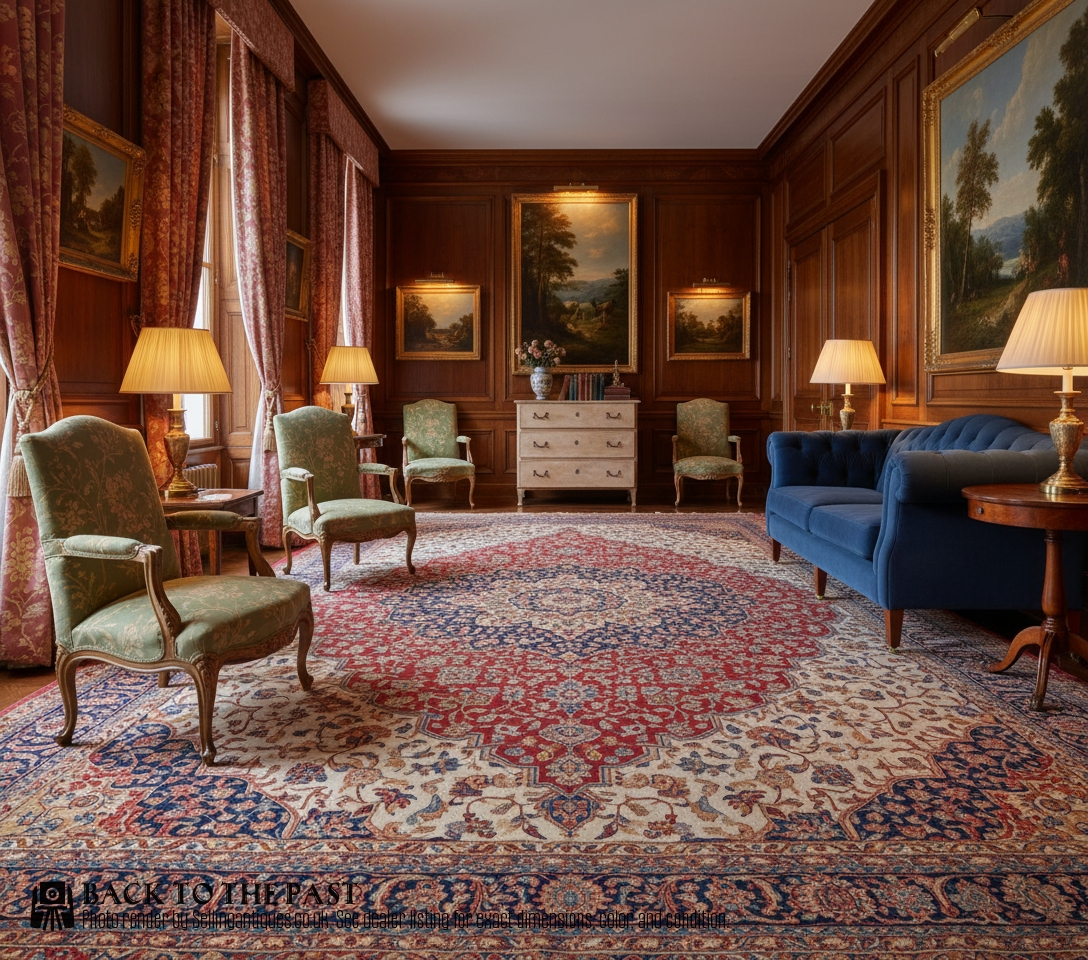
Three Drawer Painted Chest
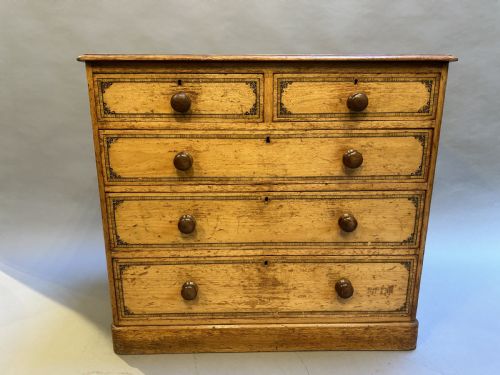
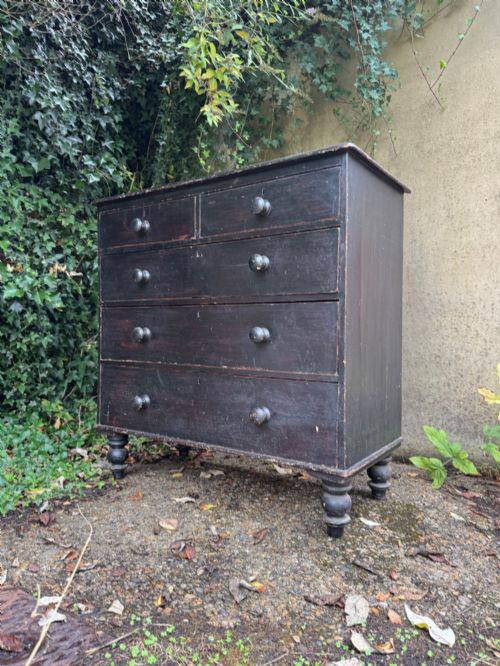
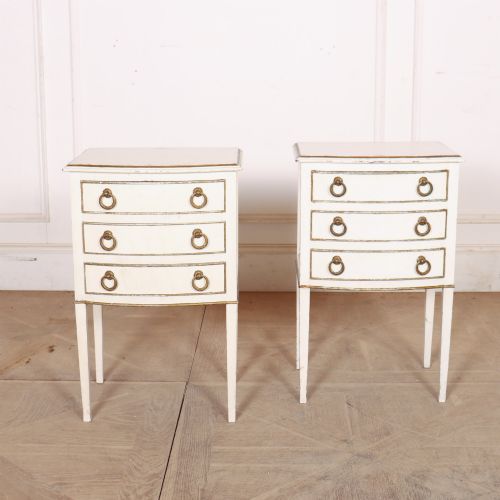
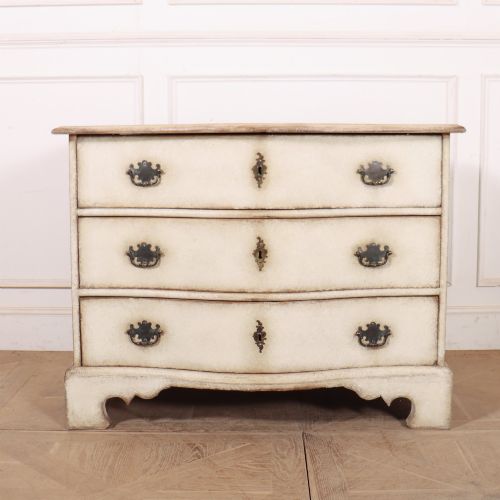
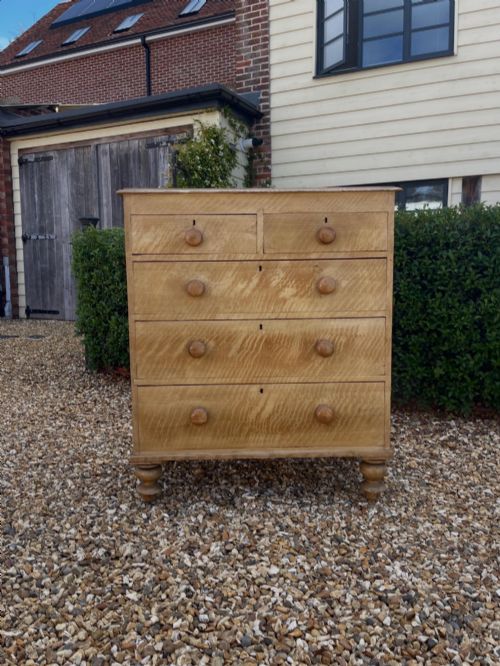
A three drawer painted chest provides compact storage across utilitarian domestic forms and grander continental commodes. Pieces range from straightforward Victorian pine to serpentine Swedish and French commodes shaped with curved fronts.
The selection centres on nineteenth and eighteenth-century examples alongside early twentieth-century variations. Buyers encounter regional English country pieces alongside imported continental furniture bearing decorative painted surfaces.
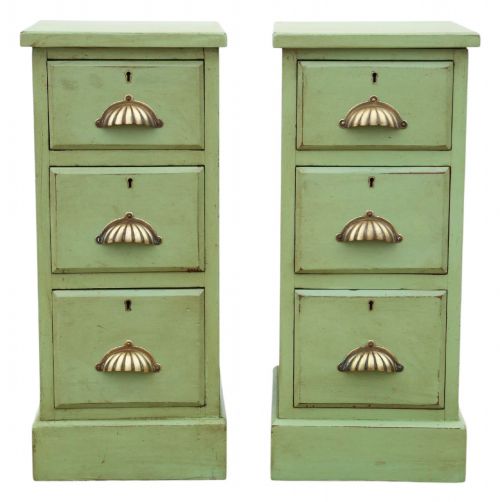
Formats extend beyond standard chests to include bedside cabinets and low commodes designed for specific domestic rooms. Pine and oak serve as the primary foundations for these painted storage pieces.
How they were made
Carpenters constructed these carcasses primarily using solid pine, oak, and occasionally satinwood, joining structural timbers with traditional framing methods. Drawer boxes frequently feature hand-cut dovetails that secure the corners against daily stress.
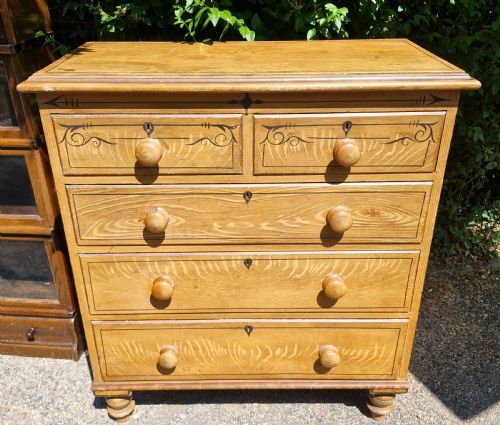
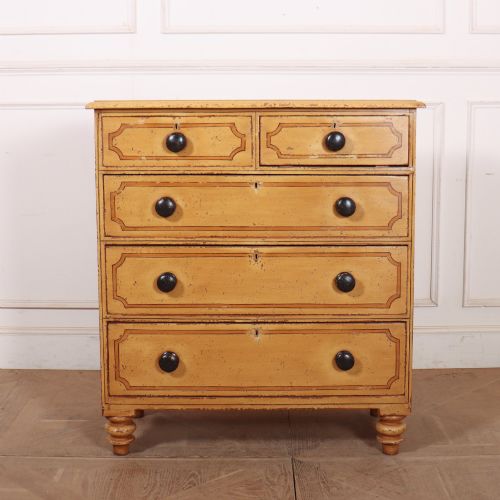
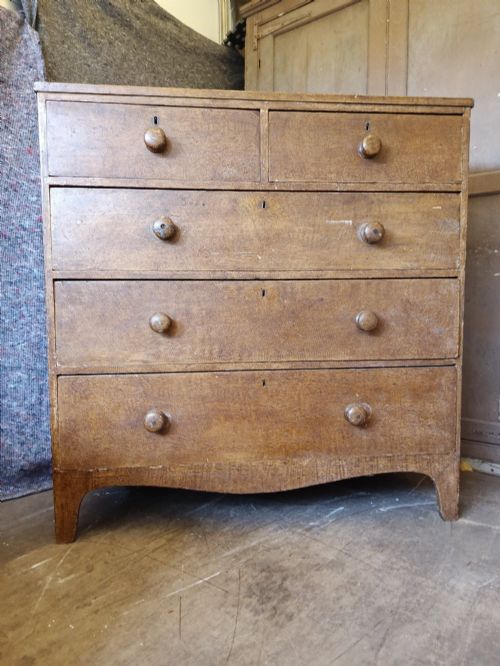
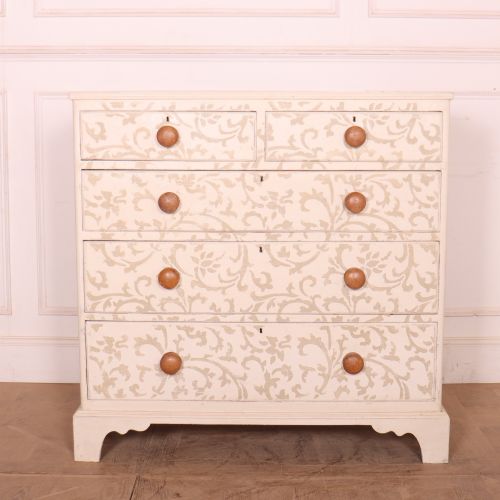
Surfaces received applied coats of pigment, sometimes utilising scumbling techniques to simulate richer grain patterns over a pale ground. Brass and iron hardware such as handles and escutcheons were fitted directly to the drawer fronts.
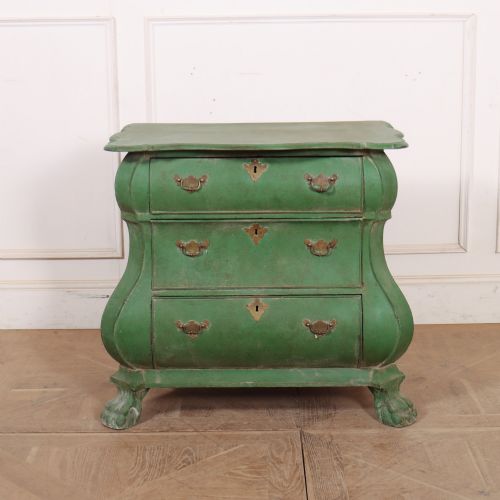
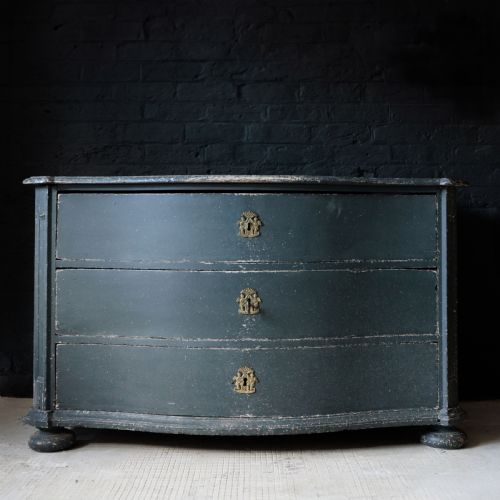
Several chests wear dark black or bright green coats applied generations ago, proving our ancestors loved a bold splash of colour just as much as we do.
What varies in quality
The integrity of the original surface finish dictates much of the character, separating pieces retaining their historical patina from those with later overpainting. Depth in the carved detailing, particularly on serpentine and bombe profiles, distinguishes provincial work from finer cabinet-making.
Structural soundness in the drawer construction and timber movement management determine longevity. Well-fitted drawers slide smoothly within their carcases, reflecting the original builder's precision.
The Three Drawer Painted Chest Glossary
- Serpentine
- A front profile curving outward in the centre and inward at the sides. This shape demands considerable skill from the joiner.
- Scumble
- A decorative paint technique involving translucent layers dragged over a lighter base colour. It mimics the appearance of figured timber.
- Commode
- A low chest of drawers originating in France. The term often describes decorative continental examples.
- Bombe
- A chest form featuring strongly convex, bulging sides and fronts. It represents an ornate style of continental case furniture.
- Gustavian
- The Swedish neoclassical style characterised by restrained classical motifs and pale painted finishes. It developed during the late eighteenth century.
Three Drawer Painted Chest: Frequently Asked Questions
How do I clean a painted chest?
Dust surfaces gently with a dry, soft cloth to remove everyday particles without disturbing old finishes.
Avoid liquid cleaners and wax polishes unless the specific type of paint surface is fully understood.
Where should I place this chest?
Bedside tables and compact chests function well in bedrooms for storing folded garments and personal items.
Larger commodes suit hallways or living spaces where surface display area matters alongside drawer capacity.
Are these chests heavy?
Solid timber construction means pieces possess substantial weight, particularly versions incorporating marble tops.
Enlist assistance when moving larger nineteenth-century examples to protect both the furniture and flooring.
How do I date a painted chest?
Examine the timber construction methods inside the drawers and the style of applied hardware.
Paint layers and overall proportions also point toward specific historical periods like the Regency or Victorian eras.