


Three Door Wardrobe Mirror
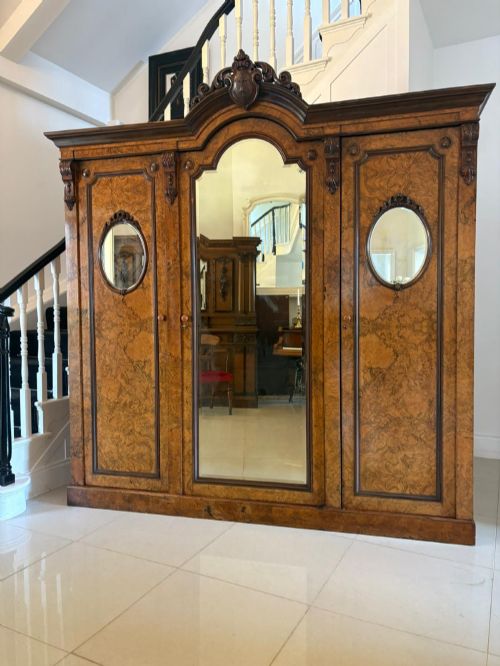
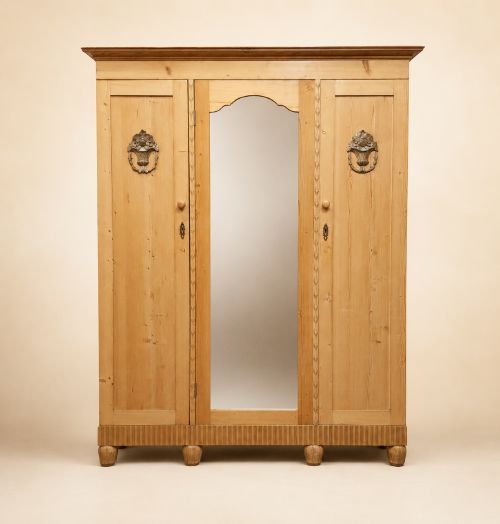
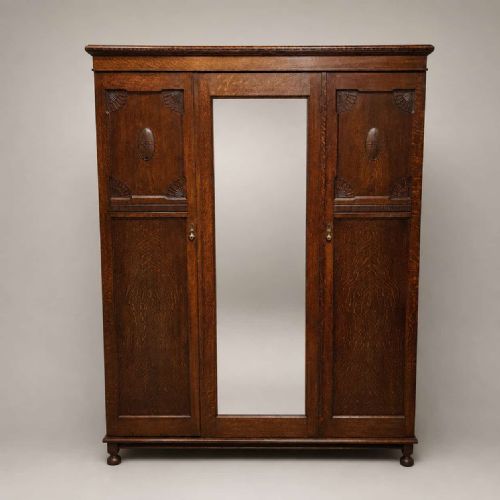
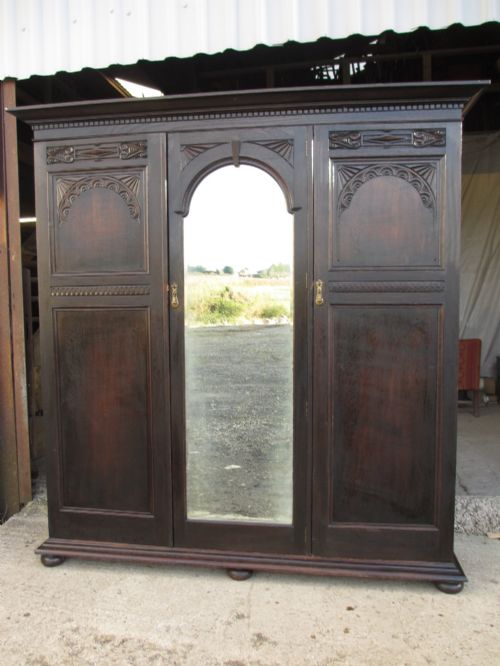
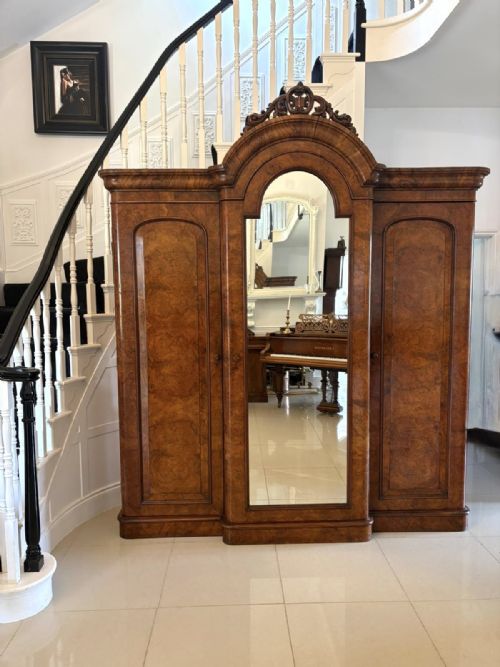
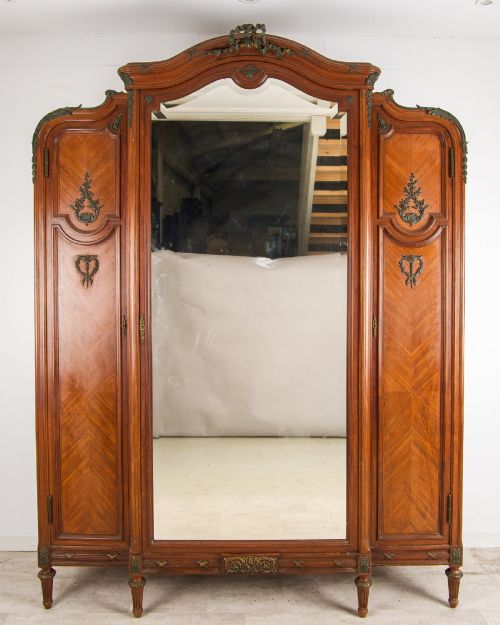
A three door wardrobe mirror provides substantial clothes storage with full-length glass panels, uniting grand scale and domestic utility in one imposing piece of furniture.
Three Door Wardrobe Mirror
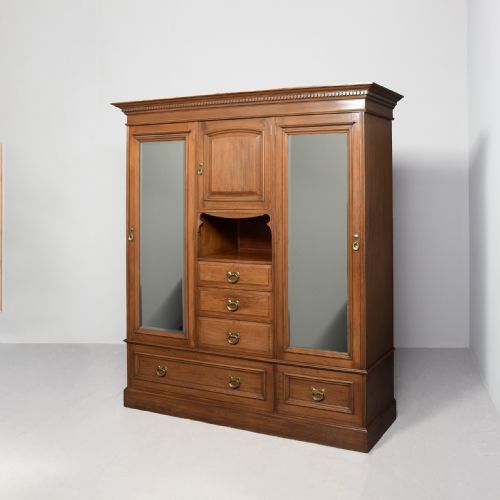
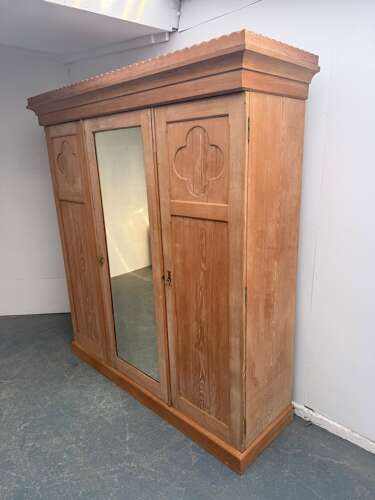
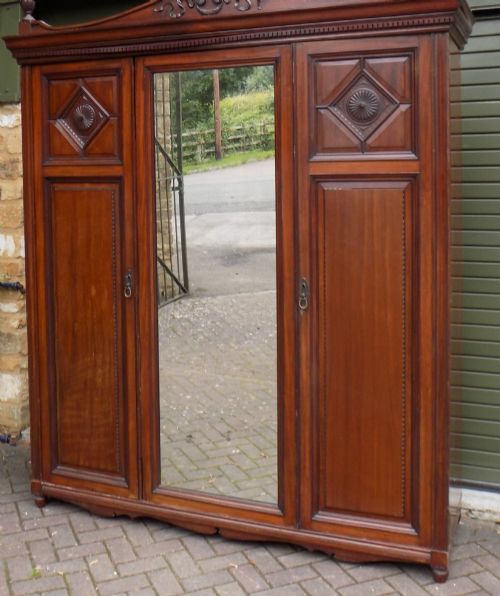
A three door wardrobe mirror is a large storage piece typically featuring a central mirrored door flanked by two side compartments, frequently designed as a compactum or breakfront format. These grand furniture items appear across several historic eras, spanning the Victorian and Edwardian periods alongside earlier nineteenth-century examples.
The most common formats met on this page are Edwardian and Victorian constructions, often rendered in timbers such as mahogany, oak, or walnut. These multi-section units combine hanging space with internal drawers and linen shelves, serving as the primary chamber storage of their day.
Makers utilised various regional traditions, resulting in pieces influenced by French Provincial designs, Aesthetic Movement principles, or Arts & Crafts ideals. Buyers encounter both British architectural forms and continental armoires bearing mirror glass doors.
Markers of distinction
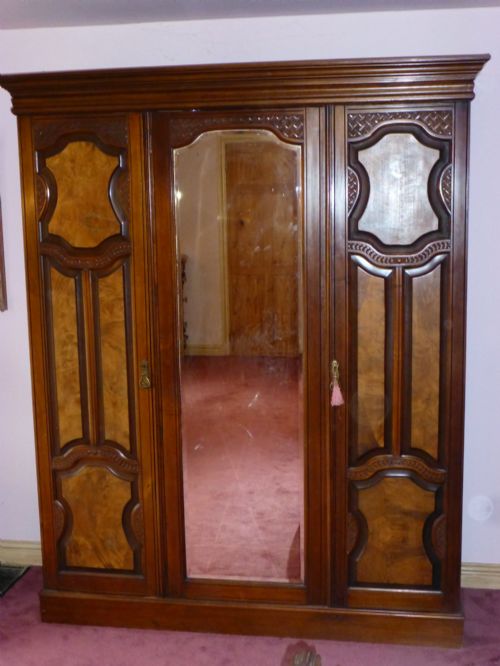
Quality in a three door wardrobe mirror rests upon the selection of timber veneers and the crispness of carved or inlaid decoration. Pieces exhibiting figured burr walnut, pollard oak, or detailed marquetry stand apart from simpler utility items through visual depth and material cost.
Structural sophistication also dictates standing, with breakfront configurations and combination compactum layouts requiring advanced cabinet-making skill. The integration of bevelled mirror glass, heavy brass fittings, and signed or attributed workshop provenance elevates certain pieces above standard domestic furniture.
Some Victorian gentlemen required hidden compartments for walking canes tucked inside the depths of their mirrored compactums.
Holland and Sons·Jean Faure
The Three Door Wardrobe Mirror Glossary
- Compactum
- A fitted wardrobe featuring a combination of hanging space, linen slides, and internal drawers within a multi-door carcass. This format maximises internal organisation for personal attire.
- Breakfront
- A piece of furniture where the central section projects forward from the flanking wings. This architectural arrangement creates shadow lines and visual depth across the front facade.
- Armoire
- A large standing cupboard of continental European origin used for storing clothes. These pieces often feature single or multiple mirrored doors and heavy decorative mounts.
- Marquetry
- Decorative woodwork where pieces of contrasting veneer are fitted into a glued wood foundation to form geometric or floral patterns. It requires considerable skill to execute on large wardrobe doors.
- Pollard Oak
- Timber taken from trees that have been pollarded, producing a dense, highly figured grain pattern with clustered knots. Cabinet makers prized this wood for decorative panels.
Three Door Wardrobe Mirror: Frequently Asked Questions
How do I assemble a large triple wardrobe?
Most historic three door wardrobes were designed to dismantle into manageable sections, including a cornice, a plinth, and separate side and centre carcase pillars. Securing the heavy mirror doors requires careful alignment of original brass hinges.
Professional installation is often recommended due to the sheer scale and weight of solid timber and glass components. Ensuring the base sits level on historic floors prevents the tall doors from binding in their frames.
What is a compactum wardrobe?
A compactum is a specialised multi-door wardrobe that integrates hanging compartments, linen trays, and multiple internal drawers into one unified piece of furniture. These interior layouts allowed Victorians and Edwardians to store an entire wardrobe within a single footprint.
They represent a more complex form of cabinet work than standard hanging wardrobes due to the internal partitioning. The central section often houses the mirror door alongside banks of small drawers.
How do I date a mirrored wardrobe?
Dating relies on combining stylistic clues, timber choices, and construction methods. Victorian pieces frequently employ heavy mahogany or burr walnut with deep mouldings, while Edwardian examples often showcase lighter inlaid mahogany or waxed oak.
Mirror glass characteristics also provide clues, as older bevelled plates display subtle imperfections and mercury backing in nineteenth-century pieces. Aesthetic Movement and Art Nouveau influences point precisely to the late nineteenth and early twentieth centuries.
Will a triple wardrobe fit in a modern bedroom?
Historic triple wardrobes are exceptionally tall and deep, requiring high ceilings and substantial wall space to accommodate their proportions. Measuring both the room height and the access stairways is essential before introducing these large pieces to a home.
Their substantial presence makes them the natural focal point of a bedroom, offering immense storage capacity that replaces modern fitted furniture. Careful placement away from direct sunlight protects the antique wood finishes and mirror silvering.