




Three Door Linen Cupboard
A three door linen cupboard offers substantial storage for textiles, merging generous proportions with practical shelving and hanging space.
Three Door Linen Cupboard
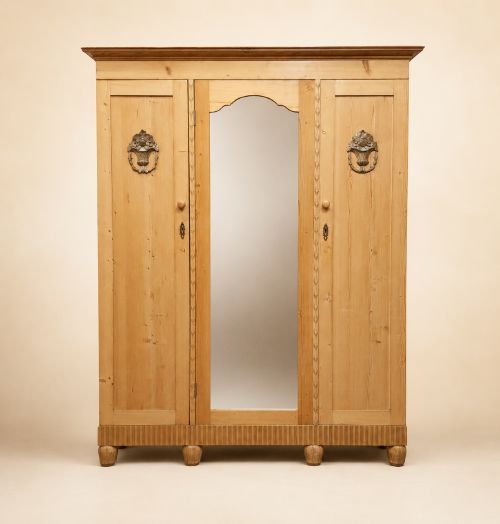
A three door linen cupboard provides an expansive storage solution for domestic interiors, frequently appearing under related designations such as wardrobes, armoires, and compactums. Buyers exploring this category encounter substantial cabinetry designed to house garments and household textiles in an organised manner.
The pieces available span several distinct periods, notably the nineteenth century, the Edwardian era, and the nineteen-thirties, reflecting diverse historical tastes. Common forms include breakfront configurations and compactum layouts which integrate multiple internal compartments alongside central hanging space.
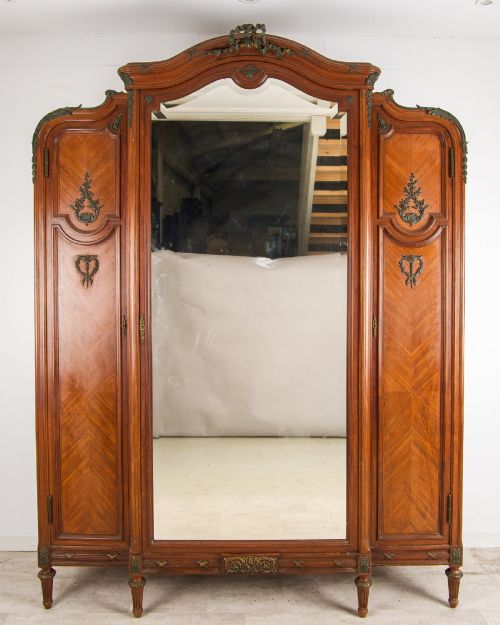
Origins and styles vary widely, encompassing English country house designs, French provincial pieces, and revivalist movements like the Gothic and Jacobean styles. This variety ensures that every example brings a distinct architectural presence to a room, ranging from simple pine builds to ornate inlaid facades.
How they were made
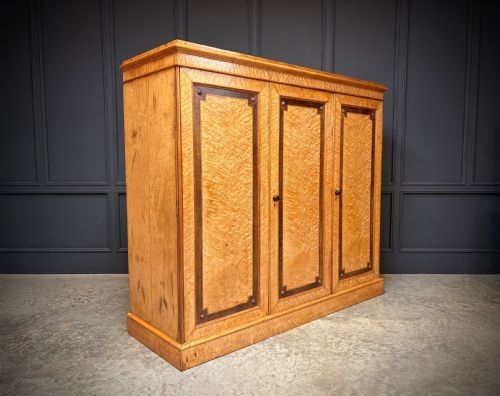
Construction relies heavily on traditional cabinet timbers such as mahogany, oak, and pine, often enhanced with secondary woods like satinwood and pollard oak for decorative contrast. Artisans utilised these durable materials to build robust carcasses capable of supporting large panelled doors and internal shelving.
Surface ornamentation frequently incorporates intricate inlay work and hand-carved detailing, particularly on Edwardian and revivalist pieces. Metal hardware such as brass fittings and gilt bronze ormolu mounts provide both structural functionality and visual refinement to the exterior.
Some nineteenth-century wardrobes hide secret compartments deep within their compactum drawers, originally intended for confidential documents and family ledgers.
What varies in quality
The standard of timber selection and grain matching distinguishes superior examples from more utilitarian constructions, with choice veneers and solid hardwoods elevating the piece. The precision of the joinery and the integrity of the internal fittings dictate the overall durability and tactile experience of the cabinet.
Subtlety and execution in decorative details, from carved mouldings to ormolu mounts, separate exceptional craftsmanship from standard workshop production. The balance of proportions across a wide triple-door facade also determines the visual harmony of the finished item.
The Three Door Linen Cupboard Glossary
- Breakfront
- A piece of furniture where the central section projects forward from the flanking outer sections. This architectural arrangement creates depth and visual interest on large cabinetry.
- Compactum
- A multi-functional wardrobe featuring a combination of hanging space, drawers, and linen shelves enclosed behind doors. It maximises internal storage efficiency within a single footprint.
- Ormolu
- Gilt bronze mounts applied to furniture for decorative enrichment, popular in French and revivalist cabinet making. The technique involves applying a finely ground gold-mercury amalgam to bronze.
- Pitch pine
- A durable, resinous pine variety prized for its strength and prominent grain pattern. It frequently appears in nineteenth-century utilitarian and domestic storage pieces.
- Pollard oak
- Oak timber taken from trees that have been pollarded, resulting in a dense, highly figured burr grain. Cabinet makers used veneers of this material to create striking decorative surfaces.
Three Door Linen Cupboard: Frequently Asked Questions
What is a three door linen cupboard?
A three door linen cupboard is a large storage item designed for textiles and garments, often functioning as a wardrobe or compactum.
These pieces provide extensive internal capacity through a combination of hanging space, shelves, and drawers enclosed by three full-height or partial-height doors.
How do I date a three door linen cupboard?
Dating involves examining the primary timbers, construction methods, and stylistic influences present in the piece. Nineteenth-century examples often display solid mahogany or pitch pine builds, whilst Edwardian pieces frequently feature delicate satinwood inlay.
Hardware details and stylistic revivals, such as Gothic or Jacobean elements, also offer clear indicators of the period of manufacture.
Where should I place a three door linen cupboard?
Due to their generous width and substantial presence, these cabinets suit large bedrooms, dressing rooms, or wide hallways where ample wall space is available.
Ensuring adequate clearance for the three doors to open fully is essential for practical everyday access to the internal storage compartments.
How do I care for wooden wardrobes?
Maintaining wooden furniture requires stable room temperatures and protection from direct sunlight to prevent the timber and veneers from drying out or cracking.
Regular dusting with a soft, dry cloth preserves the finish, whilst occasional application of appropriate wax feeds the wood and maintains its natural lustre.