
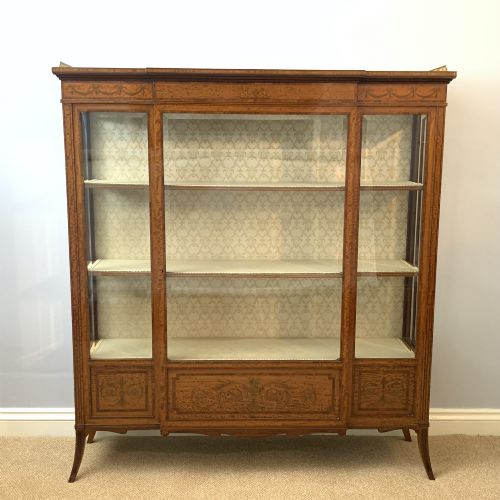
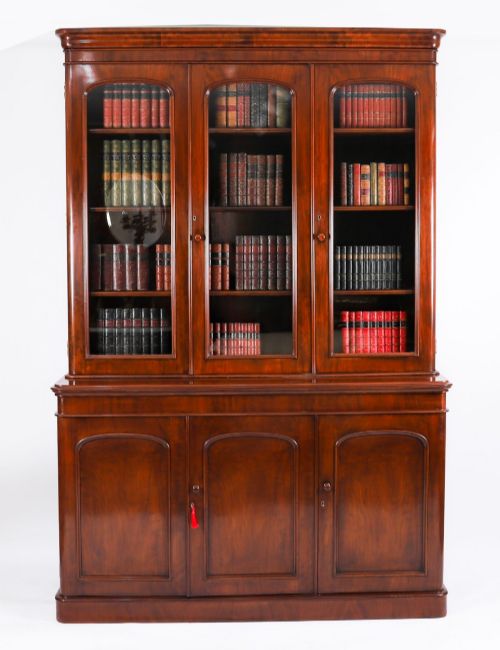
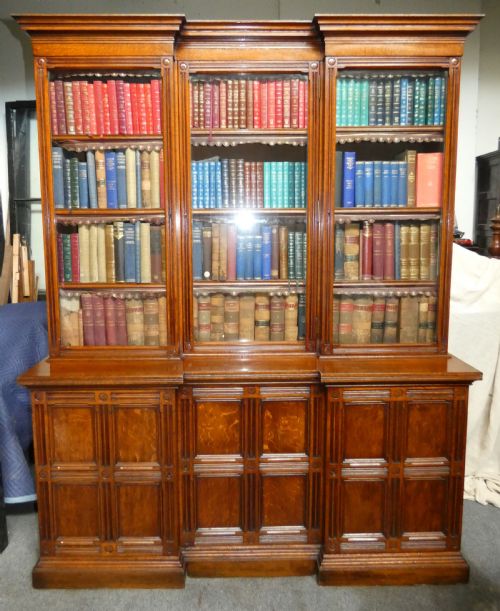
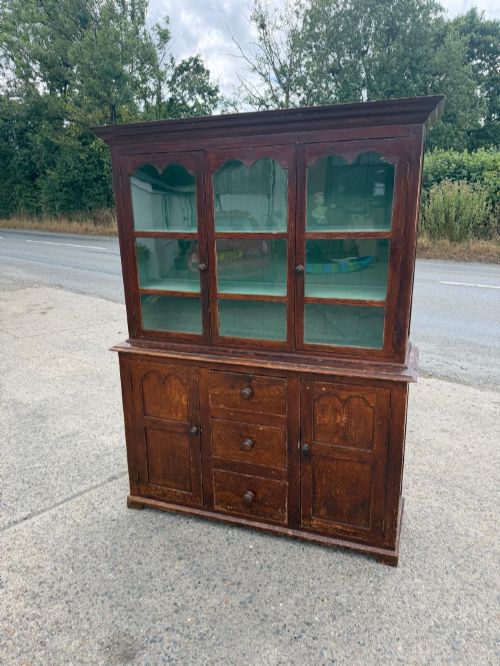


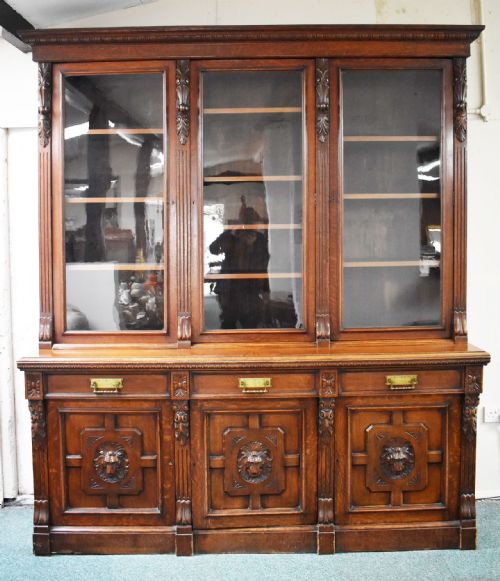

Three Door Glazed Cabinet
A three door glazed cabinet offers generous proportions and clear display space, making it a practical choice for housing a substantial library or collection.
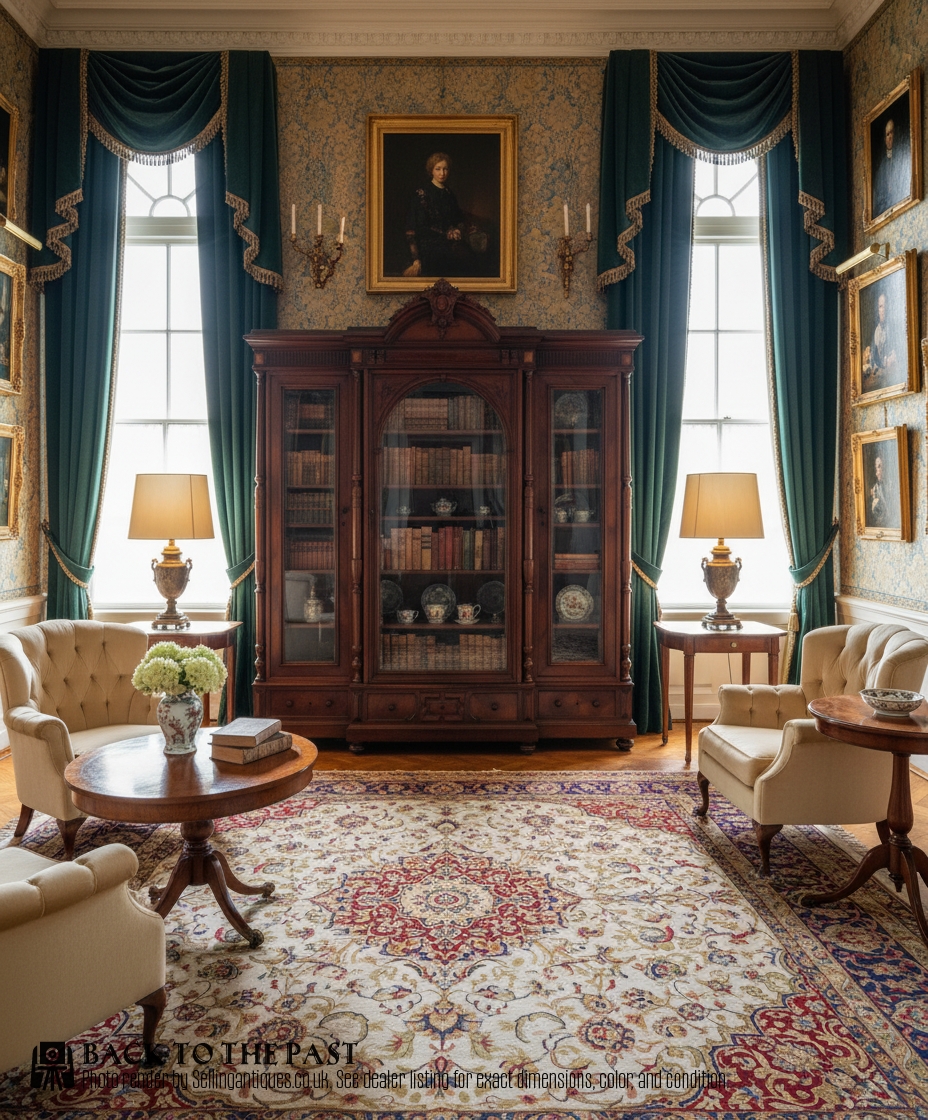
Three Door Glazed Cabinet
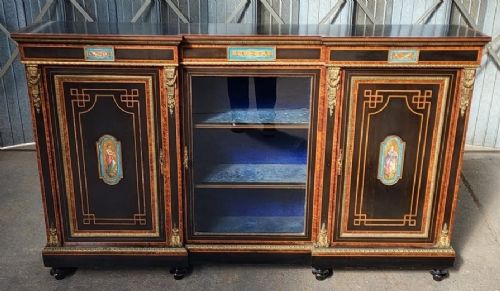
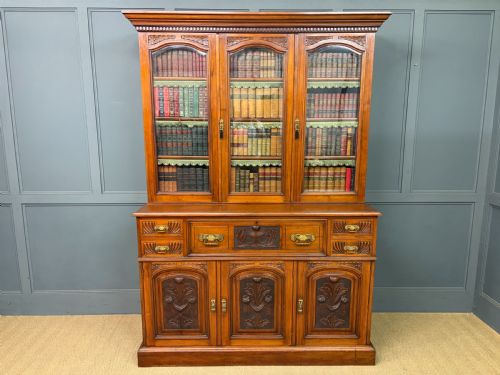
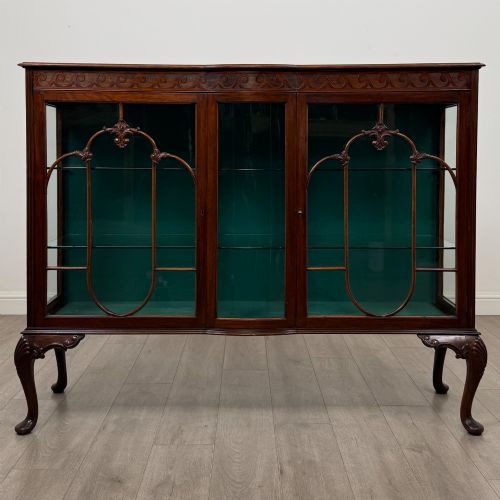
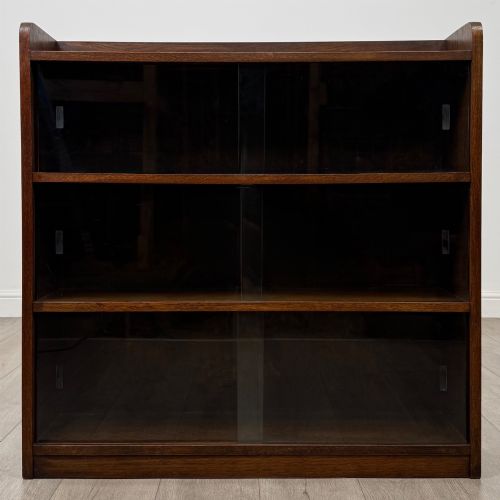
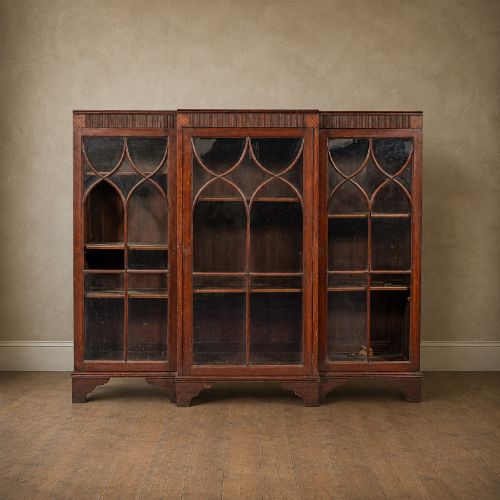
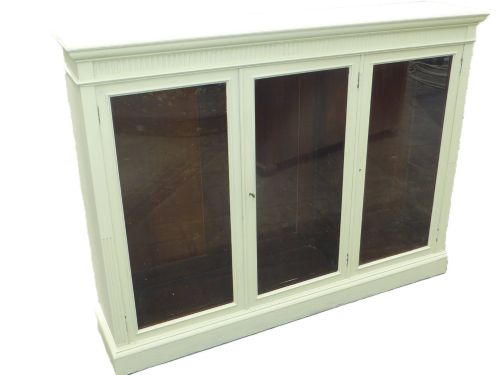
When searching for a three door glazed cabinet, you are looking at large storage furniture designed to display and protect books or decorative objects behind glass panels. The pieces on this page span the Victorian and Edwardian periods through to the early twentieth century, taking forms such as breakfront bookcases, side cabinets, and large display cases.
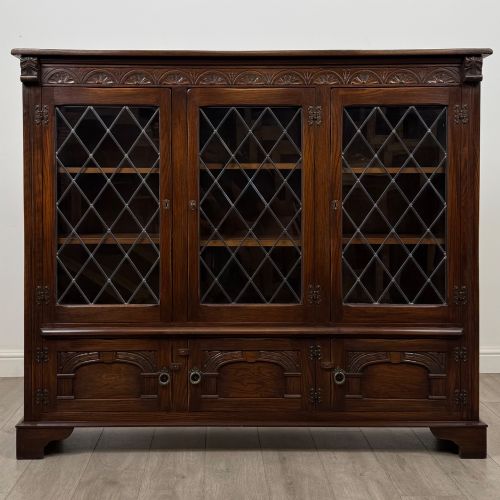
Most examples you will meet here are constructed from oak, mahogany, or walnut, often featuring three distinct glazed sections to divide the front elevation. These large cabinets originate from English, French, and Irish workshops, showing styles that range from plain country oak to elaborate revival designs mounted with ormolu.
How they were made
Cabinet makers utilised dense hardwoods such as oak, mahogany, walnut, and satinwood, frequently applying burr veneers to large flat surfaces to create striking grain patterns. Brass fittings, ormolu mounts, and inlaid banding add detail to the timber framework.
Glazing bars divide the glass panels into geometric or Gothic patterns, whilst carved wooden elements and painted finishes appear on specific revival and regional pieces.
Three Door Glazed Cabinet Retail Price Guide 2026
Typical asking prices for three door glazed cabinet among the pieces listed under this phrase on Sellingantiques today, from the lower quarter to the upper quarter. They describe what is for sale here now, not the wider market.
Some sets even come with a provenance from eccentric nineteenth-century reading rooms.
What varies in quality
The standard of a three door glazed cabinet rests on the choice of timber veneer, the crispness of any carved ornamentation, and the balance of the proportions across the three sections. Finer examples display carefully matched burr walnut or flame mahogany veneers and refined brass or ormolu mounts.
Interior fittings also distinguish the build, with adjustable shelving and high-grade glass panes marking out superior library bookcases and display cabinets from simpler utility pieces.
Edwards & Roberts·Waring & Gillow·Globe Wernicke·Linke
The Three Door Glazed Cabinet Glossary
- Breakfront
- A cabinet design where the central section projects forward from the flanking two sections. This arrangement creates depth and breaks up the long line of a three door piece.
- Ormolu
- Gilt bronze mounts applied to furniture for decoration. It appears on finer Victorian and French cabinets to highlight corners and keyframes.
- Vitrine
- A glass-sided display cabinet designed primarily for showing porcelain, silver, or curiosities rather than holding books. These pieces emphasise visibility through extensive use of glass.
- Sectional bookcase
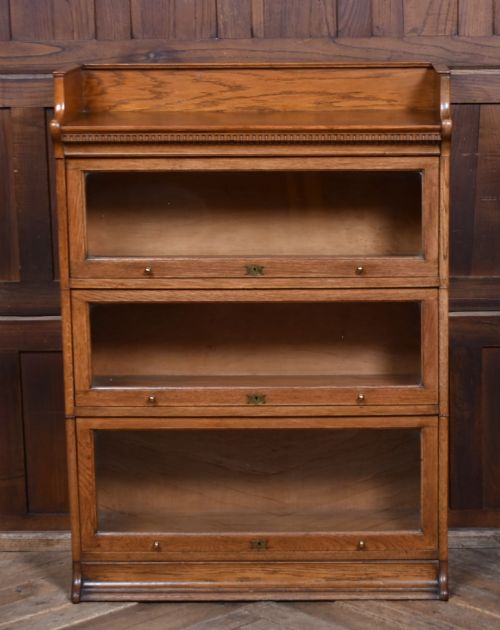
- A modular bookcase built from stacked separate tiers with glass lift-up doors. Brands such as Globe Wernicke popularised this practical office format.
- Flame mahogany
- A veneer cut from the fork of the mahogany tree where the branches join the trunk. It produces a fiery, undulating pattern highly prized in nineteenth-century library furniture.
Three Door Glazed Cabinet: Frequently Asked Questions
What is a three door glazed cabinet?
A large piece of furniture featuring three distinct glass-fronted sections designed for storing and displaying books or collections.
These cabinets take the form of breakfront bookcases, library pieces, and display vitrines dating from the Victorian period onwards.
How do I date a wooden cabinet?
Dating relies on identifying the primary timber, construction methods, and stylistic revival influences present in the piece. Victorian examples often utilise heavy mahogany or burr walnut, while later Edwardian and twentieth-century pieces introduce limed oak and sectional formats.
Comparing the handle types, interior shelving adjustments, and glass clarity also helps narrow down the era of manufacture.
Where were these cabinets used?
They originated primarily in formal libraries, drawing rooms, and studies of large homes to house substantial book collections and prized possessions.
Later examples also served office environments, particularly modular sectional bookcases designed for working spaces.
How should I care for timber and glass?
Keep wooden cabinets away from direct heat sources and sudden temperature shifts to prevent the timber and veneers from splitting or warping. Dust the carved details and glass panels regularly with a soft, dry cloth.
Apply a suitable beeswax polish occasionally to nourish the oak, mahogany, or walnut surfaces without building up heavy residue.