
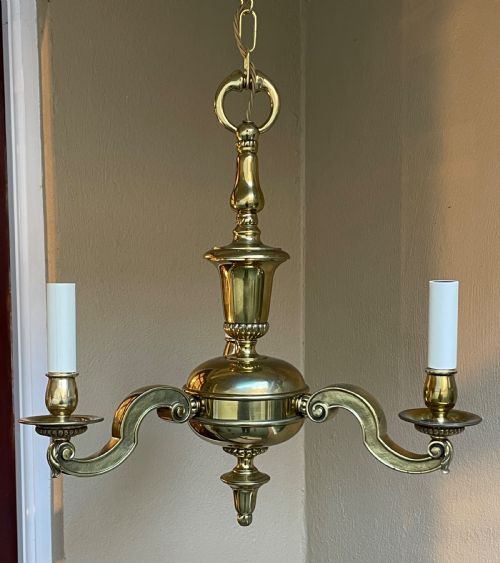
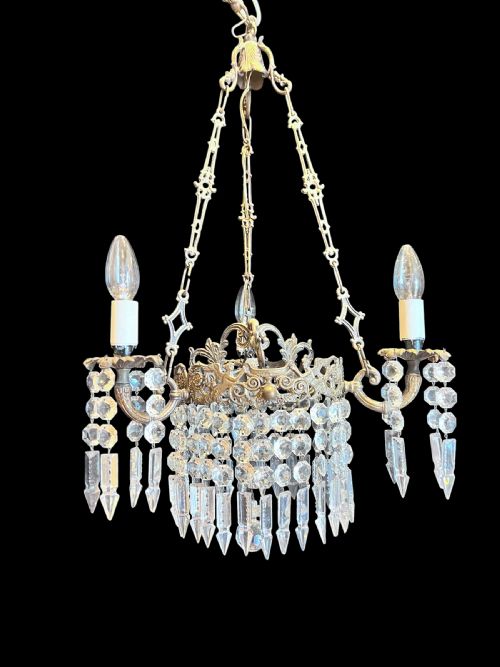
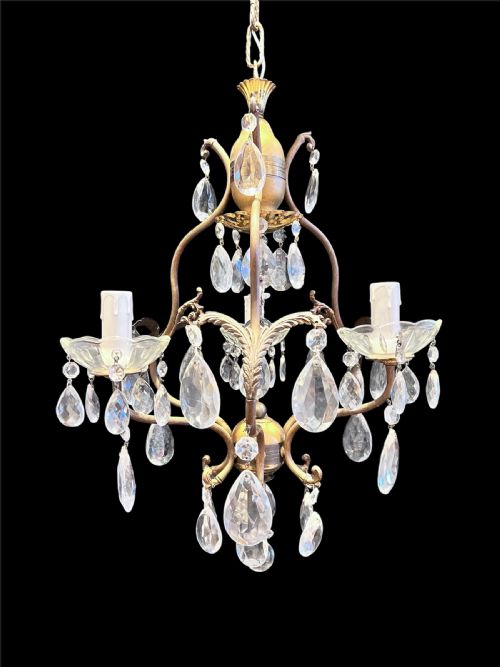


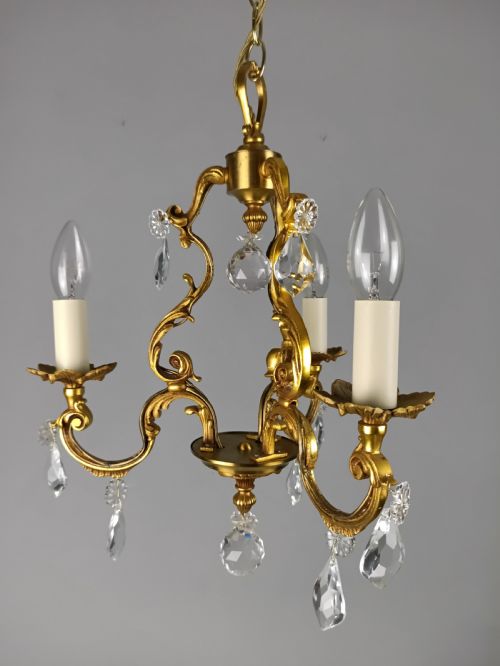


Three Arm Ceiling Chandelier
A three arm ceiling chandelier brings concentrated illumination and period character to a room, offering a balanced triple-branch design.
Three Arm Ceiling Chandelier
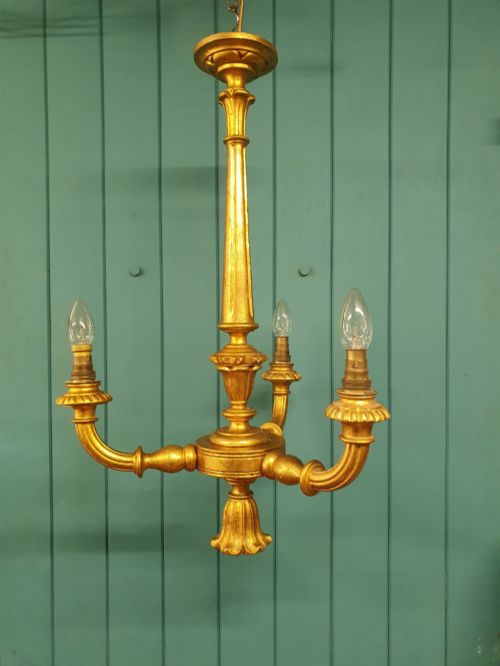
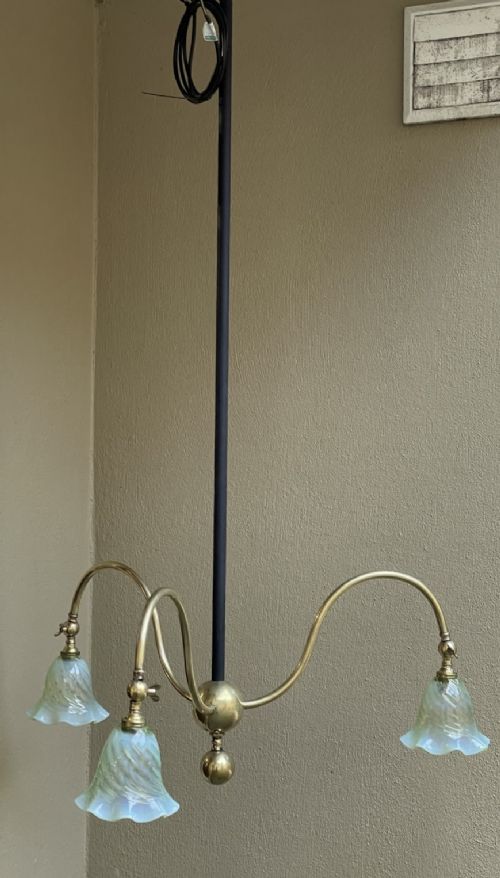
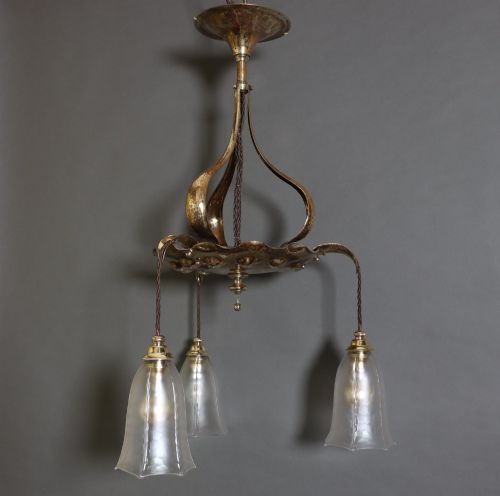
When searching for a three arm ceiling chandelier, buyers encounter hanging light fixtures featuring three distinct branches, arms, or lights designed for ceiling suspension. These pieces span periods from the nineteenth century through the Edwardian era and the nineteen-thirties, reflecting diverse international origins including French, Italian, Dutch, and British workshops.
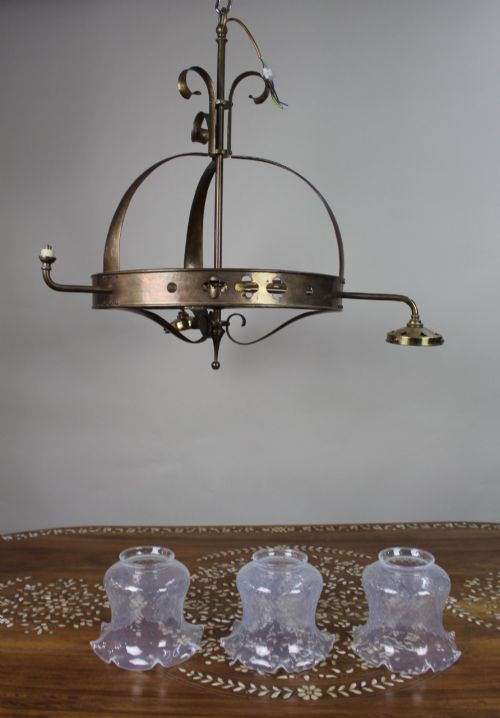
The selection here encompasses various forms such as brass gasoliers, crystal-draped fixtures, giltwood frames, and Arts and Crafts designs. Buyers most frequently meet cast brass and gilt metal examples from the early decades of the twentieth century, alongside nineteenth-century gilt bronze and carved wooden pieces.
How they were made
Construction relies heavily on cast and forged metals including brass, bronze, wrought iron, and silver-plated or gilded surfaces. Workshops shaped these structural elements to support three branching arms, incorporating decorative elements such as gesso and giltwood.
Lighting components integrate glass elements, ranging from moulded crystal drops and opalescent shades to pink crimped glass shades. Metalwork frames receive gilt finishes or patination to achieve their final appearance.
Certain chandeliers feature cherub arms that hold the branching lights aloft.
What varies in quality
The refinement of the casting and carving separates standard production from finer examples. Superior pieces display crisp detailing in the brass work, delicate chasing on bronze, and intricate carving on giltwood frames.
Material selection and ornamentation define the upper tier of these chandeliers. The inclusion of high-grade crystal drops, hand-shaped glass shades, and documented provenance elevate the overall execution of the fixture.
F&C Osler
The Three Arm Ceiling Chandelier Glossary
- Gasolier
- A light fixture originally designed to burn coal gas before conversion to electricity. These often feature heavier brass tubing and specialised keys.
- Giltwood
- Timber treated with gold leaf or a gold-coloured finish over a gesso ground. This technique provides a luminous decorative surface on carved frames.
- Opalescent glass
- Glass containing ingredients that create a milky, iridescent appearance. It diffuses light softly across the room.
- Wrought iron
- Iron beaten and heated by hand into shape rather than cast in a mould. This material provides structural strength with visible smithing marks.
Three Arm Ceiling Chandelier: Frequently Asked Questions
How high should I hang a three arm ceiling chandelier?
Suspension height depends on the room function and ceiling clearance. In living spaces or hallways, the fixture generally hangs high enough to clear foot traffic.
Over a dining table, the lower edge typically sits closer to the surface to create an intimate pool of light without obstructing views across the table.
Can these antique chandeliers use modern bulbs?
Most antique fixtures accept standard modern bulbs once the internal wiring meets current safety standards. Rewiring is common for safe daily operation.
Low-wattage LED alternatives replicate the warmth of older lighting while generating less heat, protecting fragile glass and crystal components.
How do I clean a crystal chandelier?
Routine maintenance involves dusting the arms and glass components with a soft dry cloth. For a deeper clean, remove crystal drops individually and wash them in warm soapy water.
Avoid harsh chemical cleaners on gilt, brass, or silver-plated surfaces to preserve the original patina and finish.
How do I identify the period of a chandelier?
Dating relies on examining manufacturing techniques, material combinations, and stylistic motifs. Cast brass and heavy bronze structures often indicate nineteenth-century or Edwardian origins, while geometric lines point to the nineteen-thirties.
Component construction, such as threaded joints versus pinned joints, also offers clues to the era of manufacture.