


Italian Glass Light
An italian glass light brings together centuries of craftsmanship, brilliant crystal, and elaborate metalwork to illuminate interiors with distinct character.
Italian Glass Light
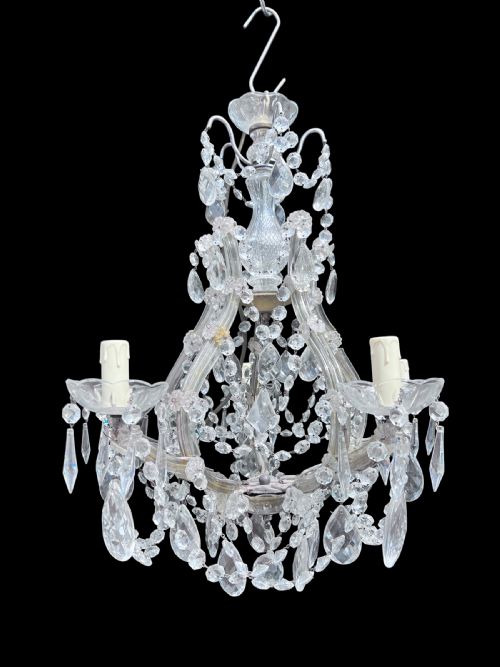
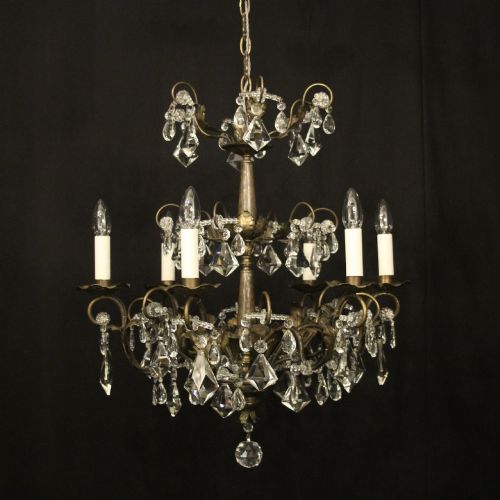
When searching for an italian glass light, buyers encounter a diverse range of forms spanning chandeliers, wall lights, table lamps, and ceiling lights. These fixtures emerge from various periods including the nineteenth century, Victorian era, and early twentieth century.
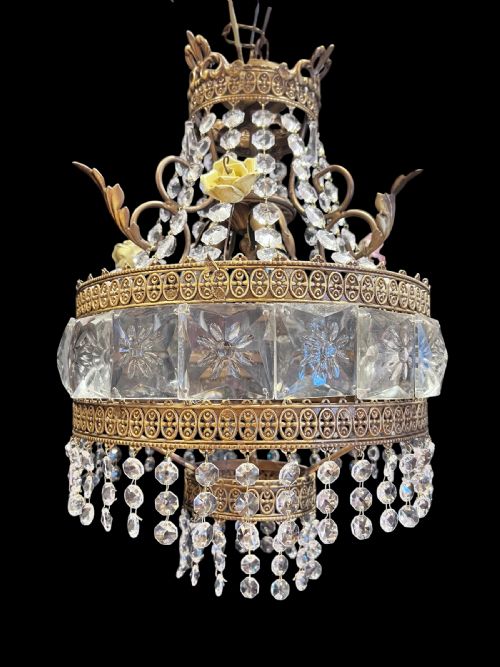
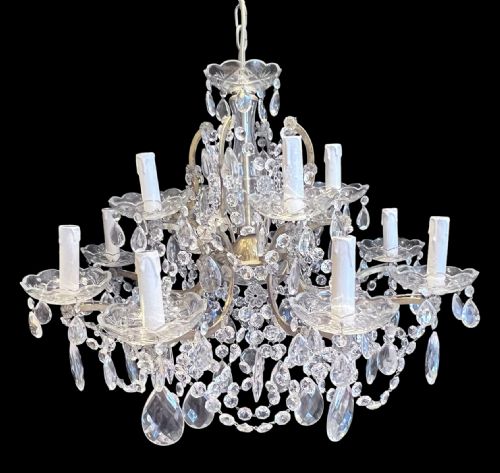
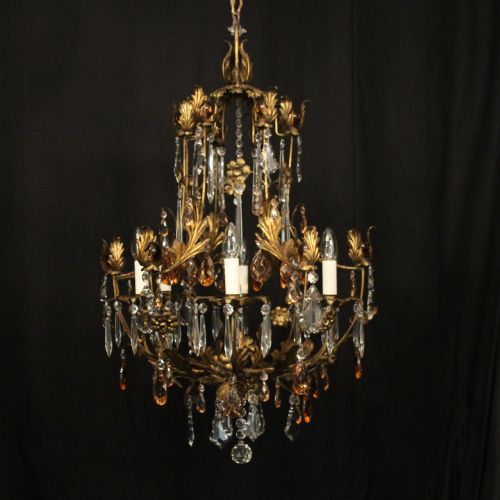
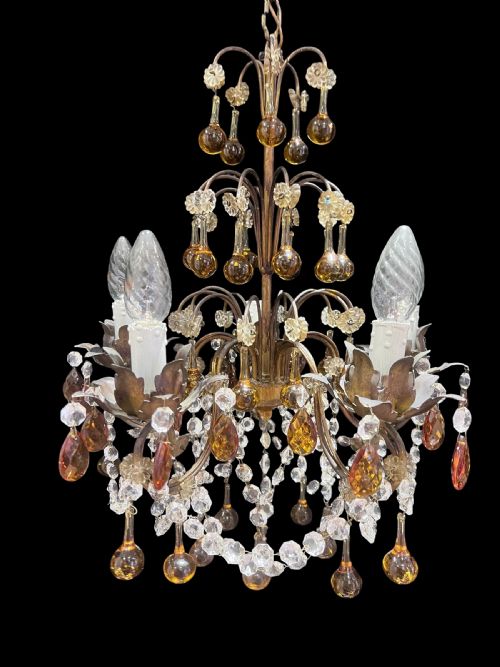
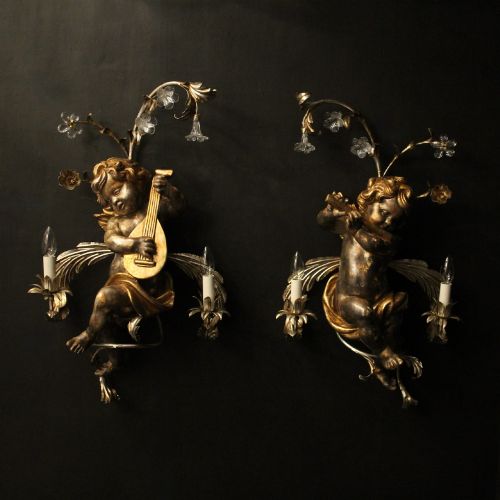
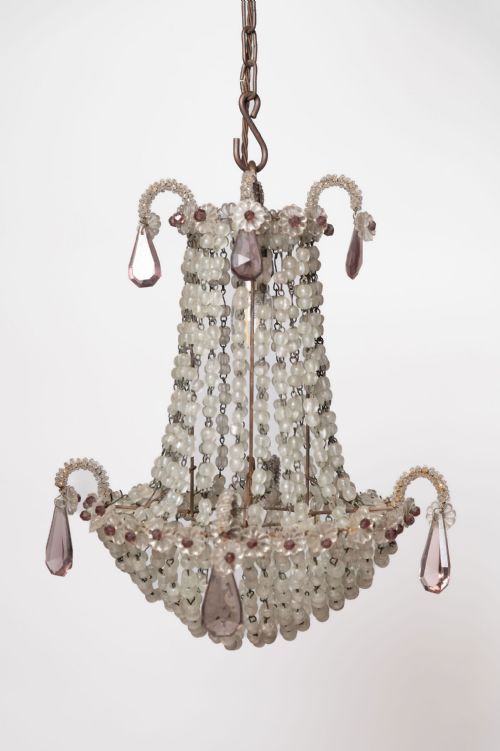
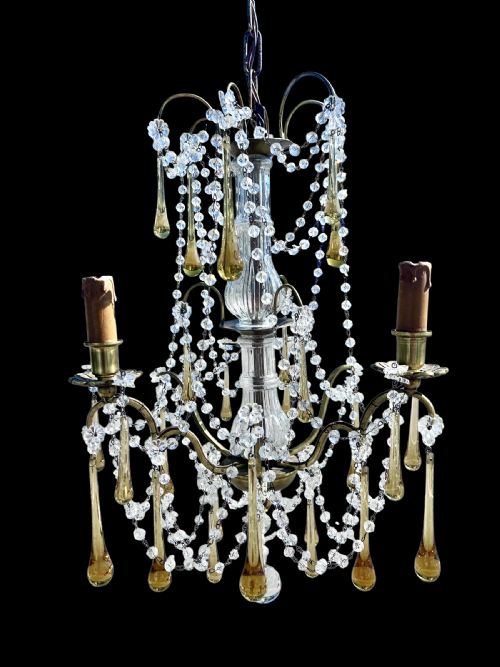
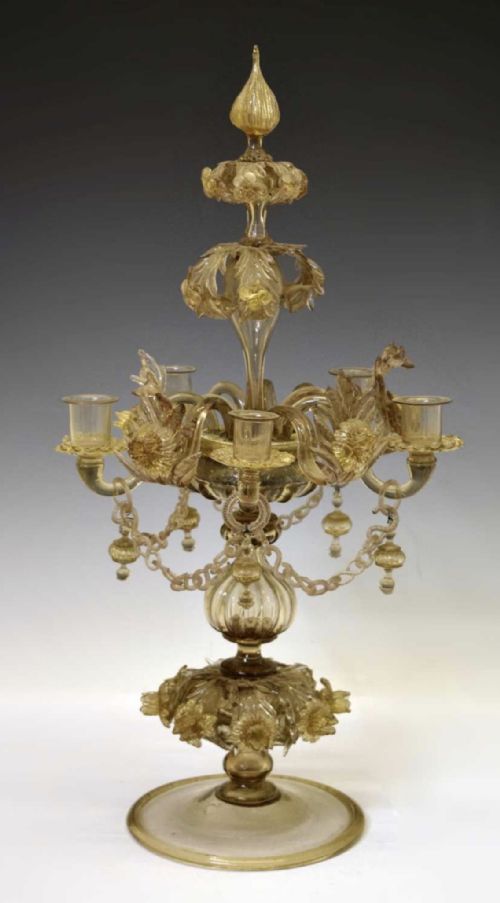
The most common examples on this page are multi-light chandeliers and wall lights originating from workshops in Venice, Murano, and Florence. Pieces frequently incorporate decorative elements such as porcelain flowers, coloured crystals, or glass fruit.
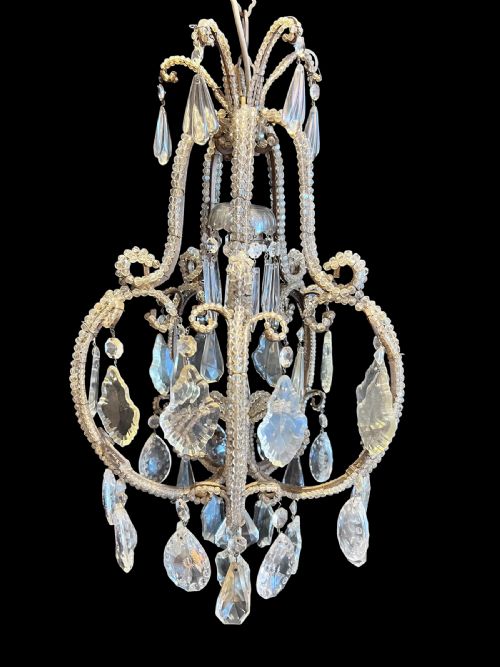
Designs stretch from classical Marie Theresa styles to ornate Florentine giltwood frames and distinct galleon or birdcage configurations. Each type reflects the particular decorative ambition of its period of origin.
Materials and Construction
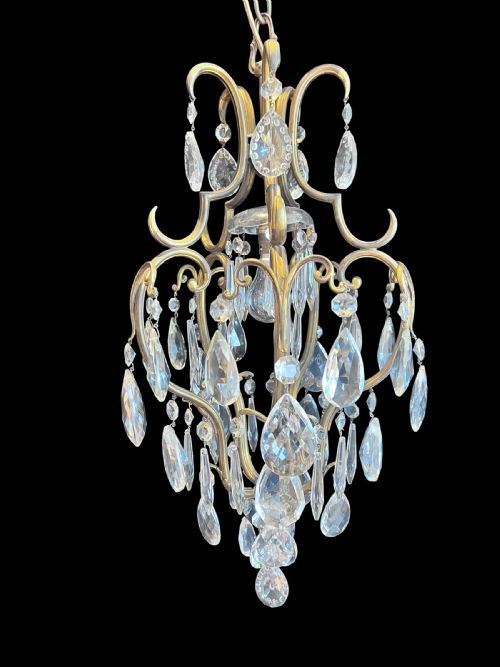
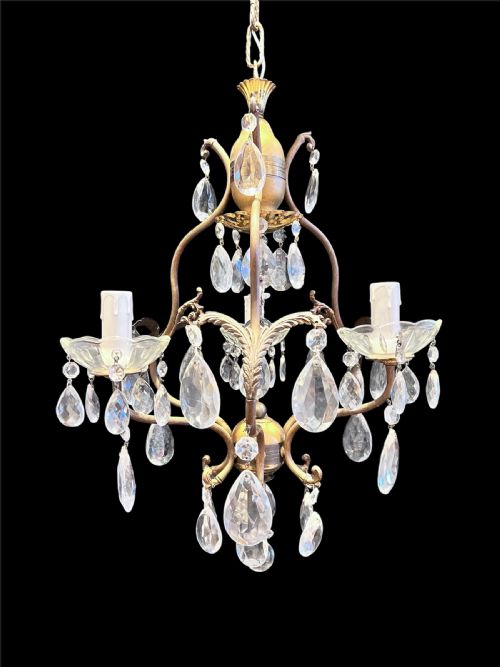
Makers constructed these fixtures using frameworks of brass, gilt metal, wrought iron, or carved giltwood to support intricate arrangements of glass and crystal components. Metal armatures receive gilding, silvering, or bronze finishes to complement the luminous quality of the hanging elements.
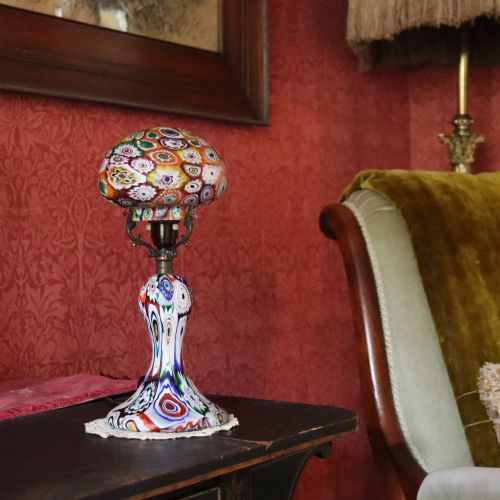
Glassmaking techniques encompass blown Murano elements, millefiori work, and precision-cut crystal drops threaded onto wire or pinned to metal frames. Artisans integrated opaque glass grapes, flowers, and beads directly into the structural and decorative scheme of each piece.
Several Italian chandeliers come decorated with glass apples, pears, and grapes, proving that illumination can double as an indoor orchard.
Distinctions in Quality
The sophistication of the metal framing and the complexity of the glass components dictate the standing of an individual piece. Heavy cast bronze or carved giltwood structures paired with hand-cut crystal and complex lampworked details represent the higher tier of production.
Subtleties in the assembly, such as the uniformity of the crystal drops, the density of the beadwork, and the artistic execution of secondary motifs like porcelain flowers or cherubs, separate standard fixtures from exceptional examples.
Fratelli Toso
The Italian Glass Light Glossary
- Murano glass
- Glass produced on the Venetian island of Murano, renowned for traditional techniques and vibrant colouration. This material forms the basis of many distinctive shades and decorative elements found on these lights.
- Marie Theresa
- A chandelier style characterised by a flat metal band frame completely covered in glass plates and drops, often featuring multiple tiers of arms. The design originates from Central European court aesthetics adopted by Italian makers.
- Florentine
- A decorative style associated with Florence, typically featuring carved, gilded wooden or metal frameworks adorned with foliage, scrolls, and floral motifs. These frames often support extensive glass beadwork and crystal drops.
- Millefiori
- A glasswork technique involving multi-coloured glass canes sliced to reveal complex patterns, resembling small flowers. Pieces utilising this method display intricate mosaic-like surfaces.
- Girandole
- An ornamental branched wall light or candelabra, frequently incorporating a mirrored backplate to multiply the effect of the illumination. The glass and crystal components reflect candlelight or electric bulbs across the room.
Italian Glass Light: Frequently Asked Questions
How do I clean an antique glass chandelier?
Maintenance requires gentle cleaning of individual glass and crystal components using a mild solution and a soft cloth while the pieces remain supported on their frame. Removing elements for washing should be done cautiously to avoid stressing historical wiring and metal attachments.
Harsh chemical cleaners can damage gilt surfaces and delicate coloured glass treatments. Regular dusting with a feather duster helps prevent heavy grime accumulation on intricate beadwork and arms.
Can these vintage lights be rewired for modern homes?
Most antique fixtures accommodate modern electrical standards with appropriate rewiring conducted by a qualified professional. Adapting the internal wiring ensures the piece operates safely while preserving the external historical framework.
Consulting an electrician allows for the integration of suitable lamp holders that match the scale of the original sockets. Care must be taken to ensure modern cabling fits discreetly through the historic metal or glass channels.
How do I identify a Florentine style light?
Florentine lights are distinguished by their ornate carved giltwood or metal structures adorned with decorative leaves, flowers, and scrolls. The framework often presents a rich gilded finish designed to complement clusters of coloured crystal fruit and glass foliage.
Unlike minimalist designs, these pieces embrace organic motifs and elaborate layering. The overall effect emphasises sculptural warmth and decorative abundance.