


Thoroughbred Horse Painting
These thoroughbred horse painting works capture famous runners, stable scenes and turf victories across the nineteenth and early twentieth centuries.
Thoroughbred Horse Painting
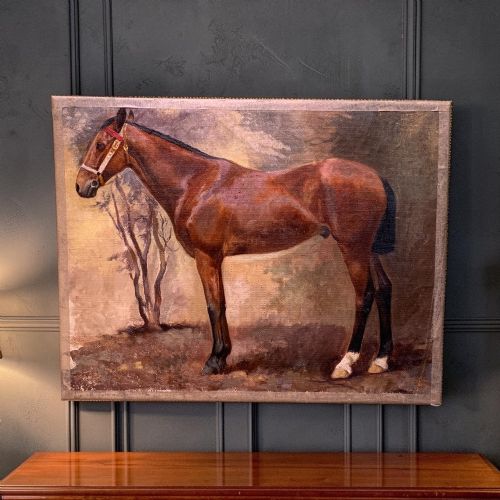
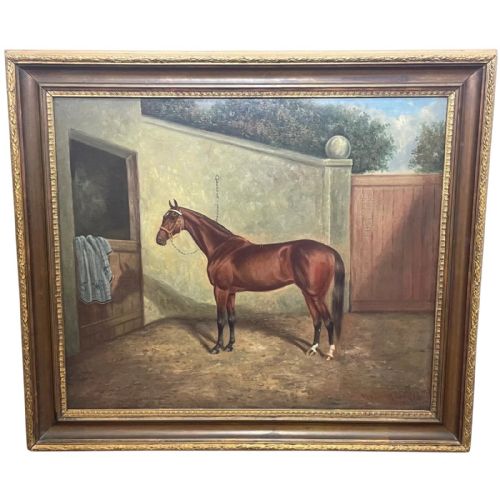
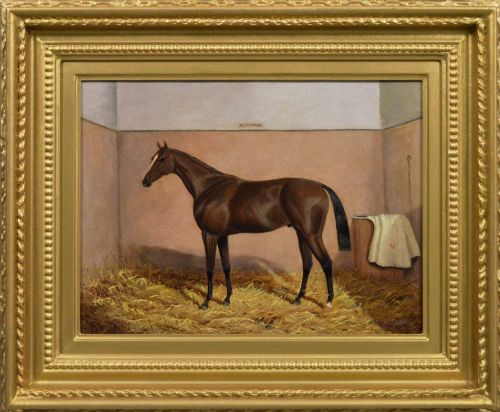
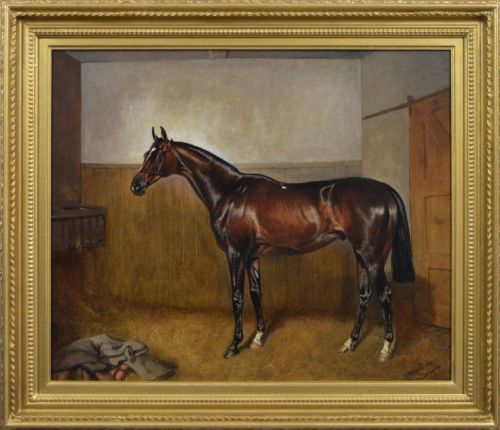
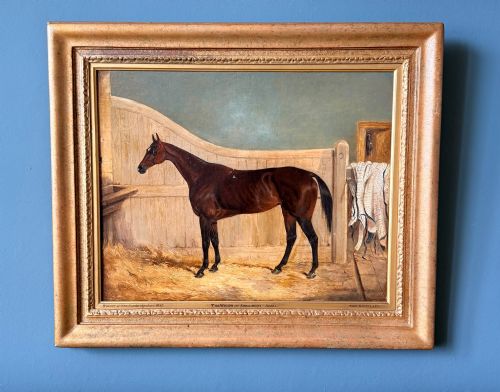
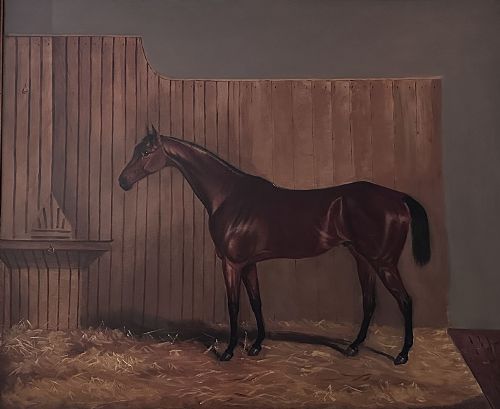
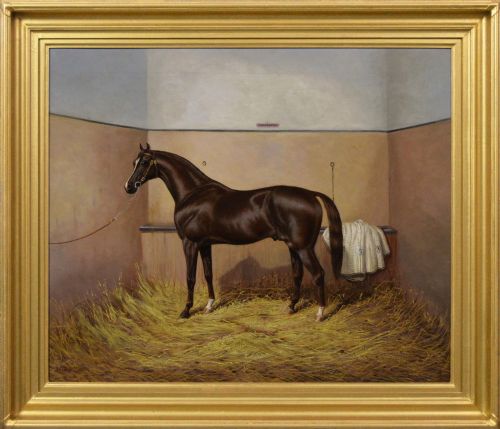
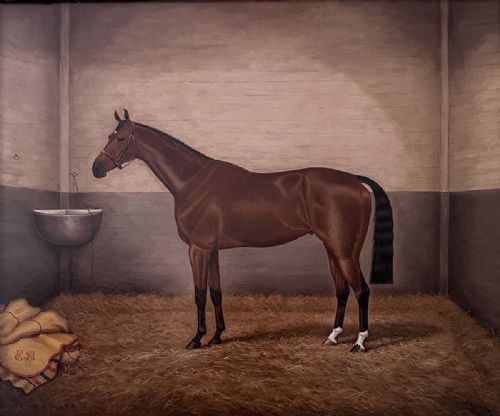
A thoroughbred horse painting depicts celebrated equine athletes, often named winners of historic stakes like the Epsom Derby or specific racecourses such as Kempton Park and Colombo. These works capture specific animals like Spion Kop, Flying Fox, Persimmon and Diamond Jubilee alongside their jockeys in silk colours or standing inside stables.
The pieces span the Victorian and Edwardian periods, stretching from the nineteenth century into the early twentieth century. Most examples on this page belong to British sporting art traditions, showing realistic portraits of bays and racehorses against landscapes or stable interiors.
Markers of quality
Quality rests upon the precision of the equine anatomy, the fidelity of the portrait to the named horse, and the skill in rendering the background landscape or stable interior. Works attributed to documented Victorian and Edwardian sporting artists demonstrate superior brushwork in the handling of muscle tone and coat sheen.
Framing materials also vary, with period giltwood and gold leaf surrounds enhancing the presentation of canvas works. The presence of clear inscriptions naming the horse, jockey, or race adds historical weight to the painting.
Thoroughbred Horse Painting Retail Price Guide 2026
Typical asking prices for thoroughbred horse painting among the pieces listed under this phrase on Sellingantiques today, from the lower quarter to the upper quarter. They describe what is for sale here now, not the wider market.
The featured styles draw primarily from Victorian sporting art, British realism and Edwardian equestrian traditions.
Frederick Albert Clark·Albert Clark·John Alfred Wheeler·Thomas Walker Bretland·Edward Lloyd of Ellesmere·Samuel Spode·Alfred Wheeler·Walter Herbert Wheeler·Frank Giggs·H C Evans
The Thoroughbred Horse Painting Glossary
- Sporting art
- A genre of painting focused on equestrian sports, racing, and animals. It documents the history of turf victories and famous thoroughbreds.
- Giltwood
- Wood carved and covered with gold leaf or gold paint. This material forms the traditional decorative frames enclosing many antique oil paintings.
- Bay
- A horse coat colour characterised by a reddish-brown body with black mane, tail and lower legs. This shade appears frequently in nineteenth-century equine portraits.
- Jockey up
- A phrase used to describe a racehorse depicted with its rider mounted in racing silks. These portraits often record specific historical races and owners.
Thoroughbred Horse Painting: Frequently Asked Questions
What do these paintings depict?
These artworks show named racehorses, stable portraits and turf winners from the nineteenth and early twentieth centuries. Many feature famous thoroughbreds alongside their jockeys and owners.
Subjects often include documented champions of historic races like the Epsom Derby, rendered in traditional British sporting art styles.
How do I identify the period?
Dating relies on costume details of the jockeys, canvas construction, framing materials and any inscribed names or dates on the canvas. Victorian and Edwardian works show distinct clothing and artistic conventions.
Artists frequently inscribed the horse's name and the year of its victory directly onto the painting or frame.
Where were these works displayed?
Historical sporting art typically hung in country houses, estate libraries, and sporting club rooms. Owners commissioned portraits to celebrate winning horses and racing achievements.
Today, these oil paintings suit traditional studies, hallways, and living spaces dedicated to equestrian history.
How do I care for an oil painting?
Keep canvas oil paintings away from direct sunlight and damp environments to protect the paint layer and gold leaf frames. Dust the surface gently with a dry, soft brush.
Avoid using liquid cleaners on the paint or giltwood to preserve the historic materials.